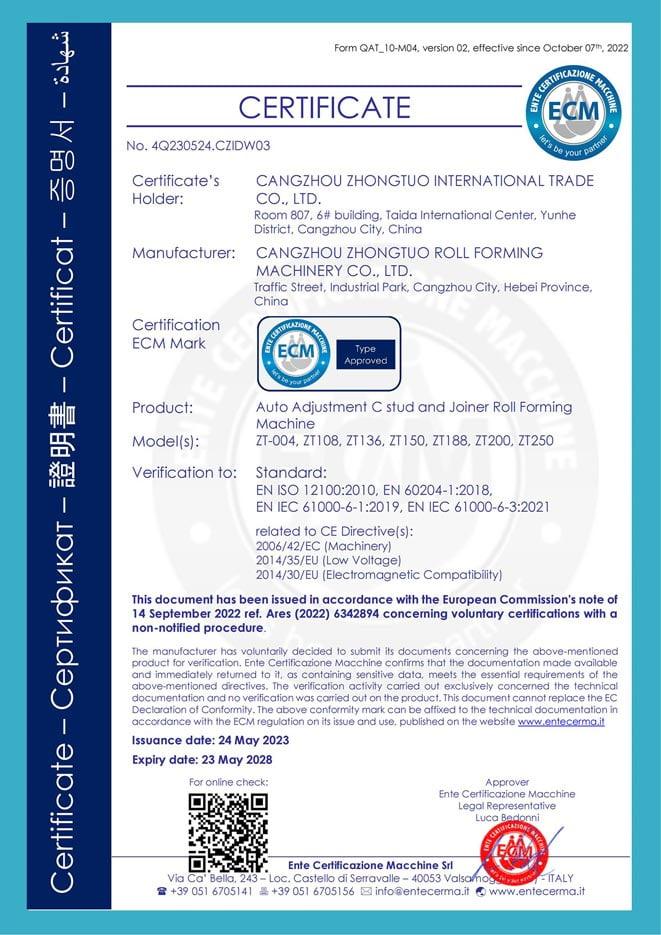


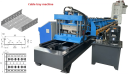

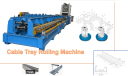
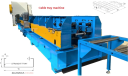


Description:Buy industrial cable tray roll forming machine. Auto punching + forming + cut. 0.8–2.8mm, 100–600mm width, PLC control, CE optional, factory direct.
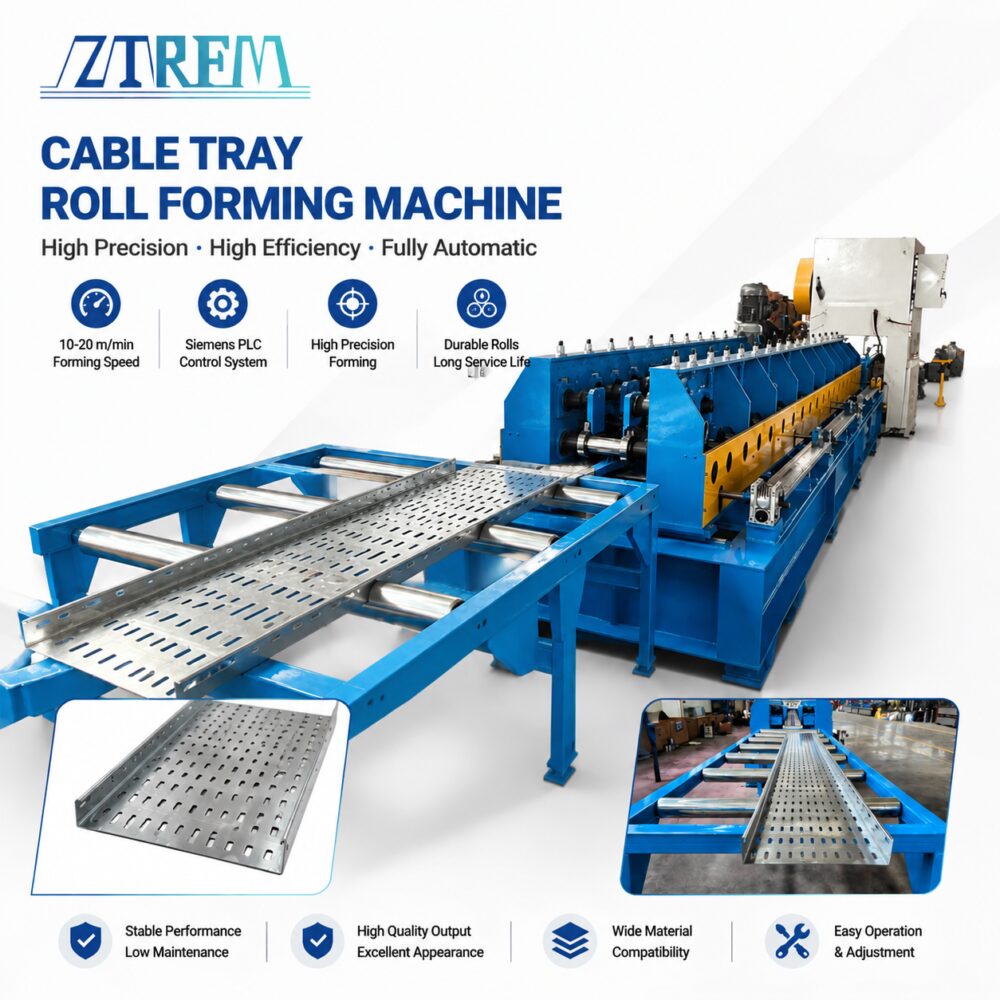
A cable tray roll forming machine is a continuous cold-roll production line that turns metal coils—galvanized steel, stainless steel, aluminum, or pre-painted steel—into finished cable trays through decoiling, leveling, punching, roll forming, and flying cut-off. It is the core equipment for manufacturers supplying perforated trays, ladder trays, solid-bottom trays, and channel trays to power, data center, rail, and commercial construction projects.
Unlike standalone bending presses, a roll forming line keeps dimensional tolerance stable at high speed and lets one machine cover multiple widths and heights through adjustable rollers and quick-change punching dies. This article explains how the machine works, what specifications matter for buyers, and how to choose the right configuration for your market.
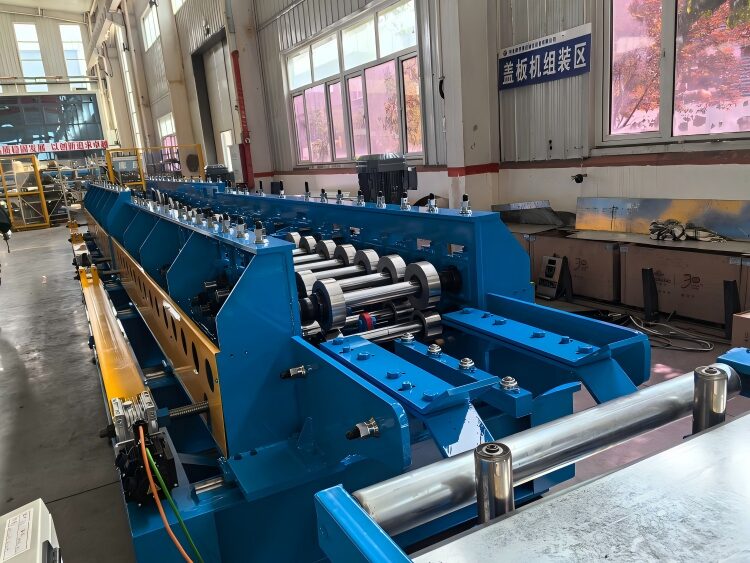
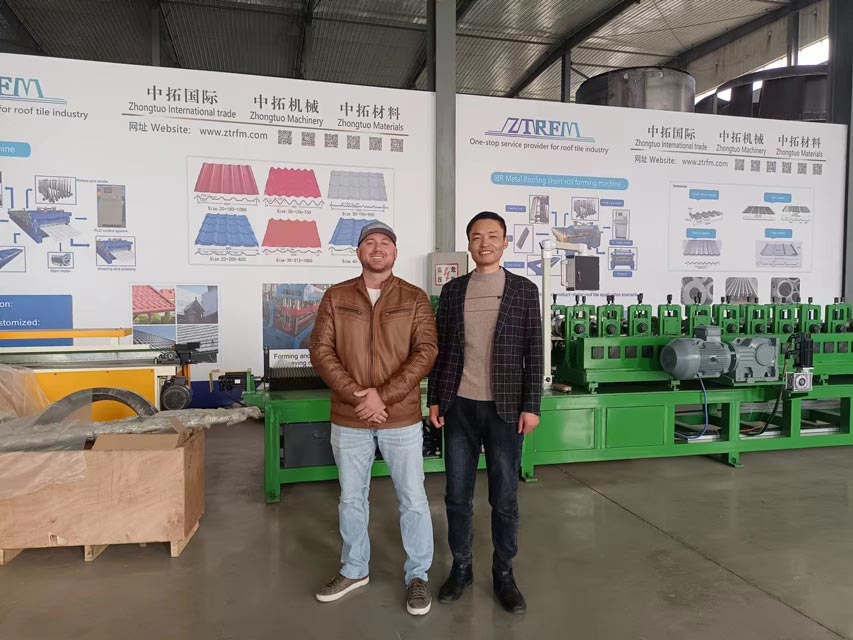
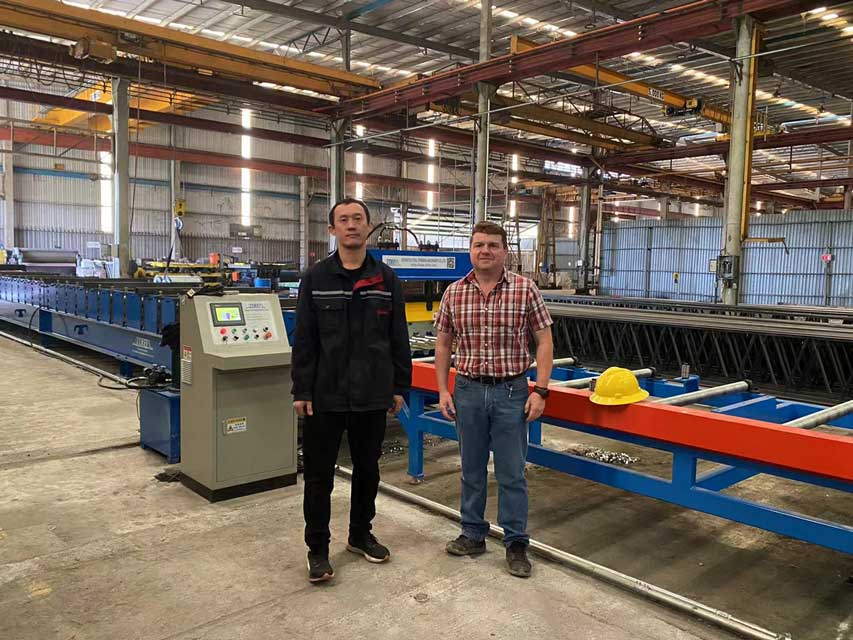
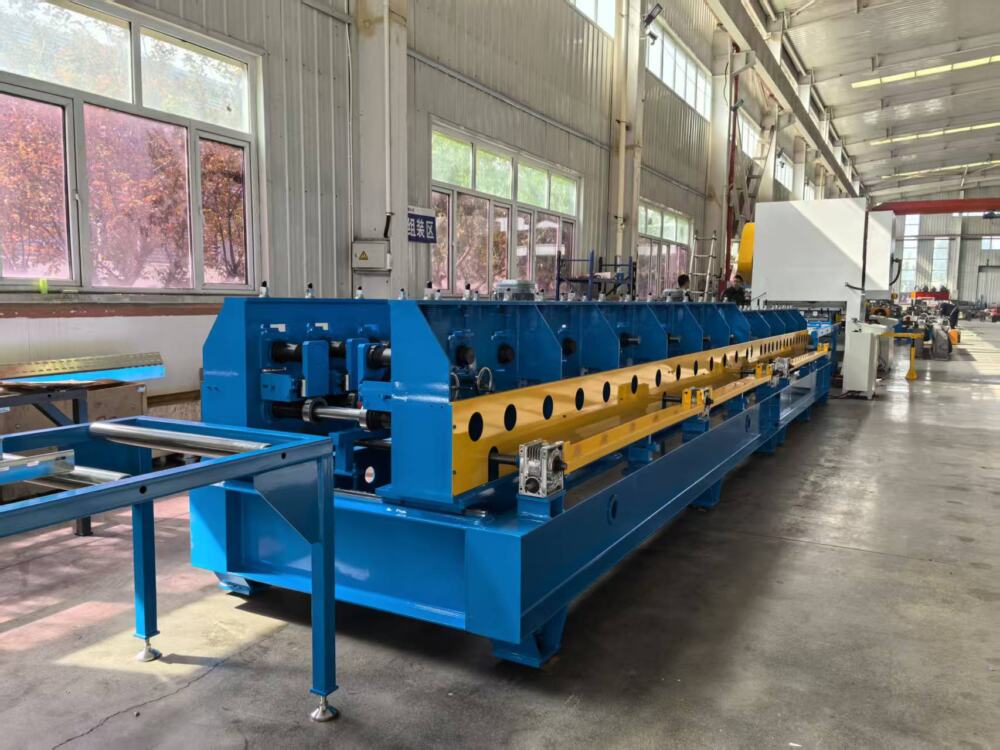
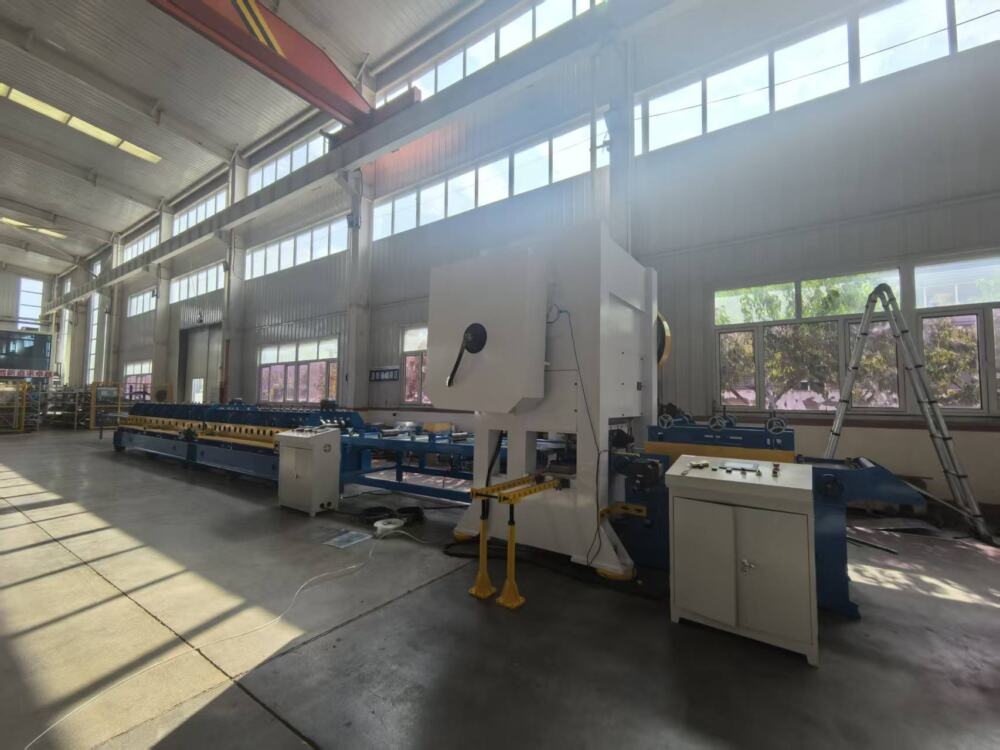
The machine is a non-standard customized roll former built around your tray profile drawing, material thickness, and daily output target. A standard automatic line contains:
Hydraulic decoiler (5–8 ton capacity)
Precision leveling unit
Servo feeder + hydraulic punch press with custom dies
Main roll forming stand (18–22 stations)
PLC + HMI touch screen control
Flying cut-off saw or hydraulic shear
Run-out conveyor and stacking table
Production flow: Decoiling → Leveling → Servo feeding → Punching → Roll forming → Flying cut → Collection.
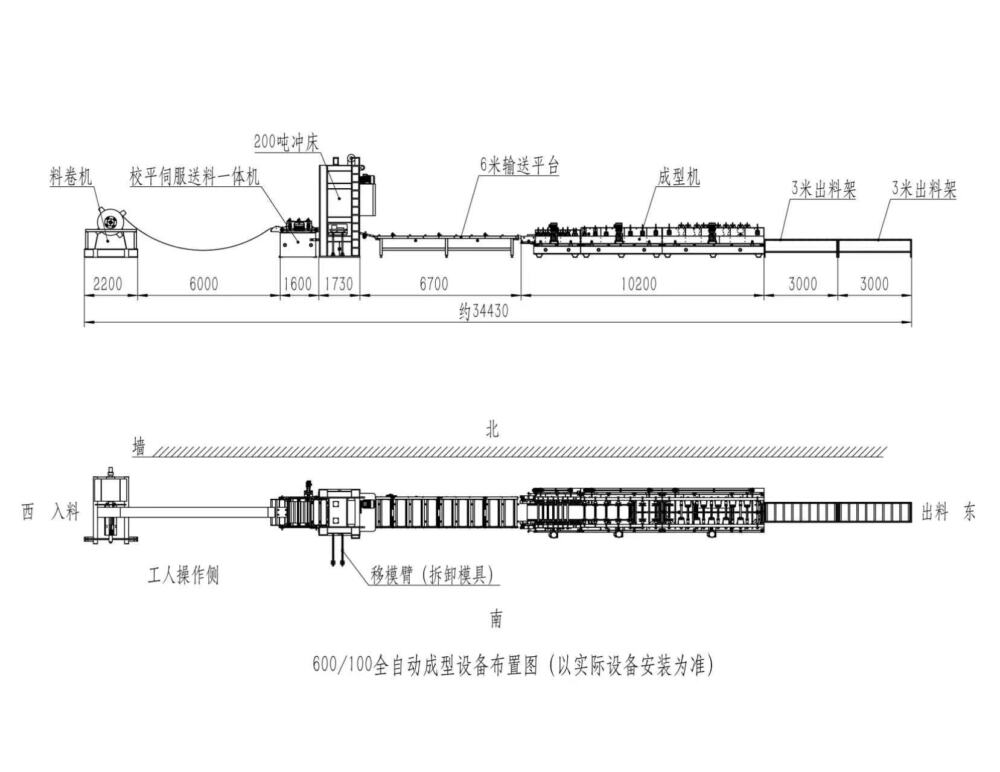
The table below reflects common export configurations. All values are customizable against your profile and workshop voltage.
| Parameter | Standard Range | Buyer Note |
| Material thickness | 0.8 – 2.8 mm | Covers light-duty to heavy-duty trays |
| Tray width | 100 – 600 mm (adjustable) | One line replaces multiple fixed-width machines |
| Tray height | 30 – 150 mm (adjustable) | Side-rail height changed without new rollers |
| Forming speed | 6 m/min (with punch) / 16 m/min (no punch) | Punching speed protects hole accuracy |
| Forming stations | 18 – 22 sets | More stations = less spring-back |
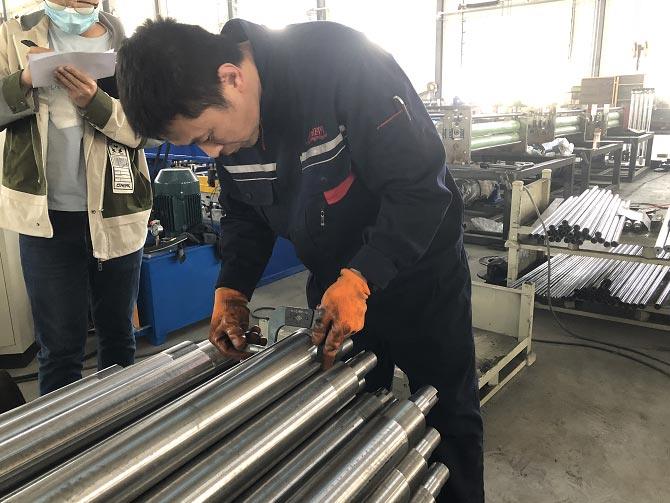
| Roller material | GCr15 / 45# steel, HRC 58–62 | 5–8 year roller life under normal maintenance |
| Main motor | 11 – 22 kW | Sized by thickness and width |
| Cut-off tolerance | ±1.0 mm (±0.5 mm servo) | Reduces scrap rate |
| Control | Siemens / Delta PLC + HMI | Stores 20–50 size recipes |
| Power supply | 380V/50Hz or local standard | Voltage customized per country |
These numbers directly affect scrap rate, labor count, and payback period. A tray maker running 8 hours/day at 10 m/min on 200-mm trays can output roughly 4.8 km of tray daily before punching downtime.
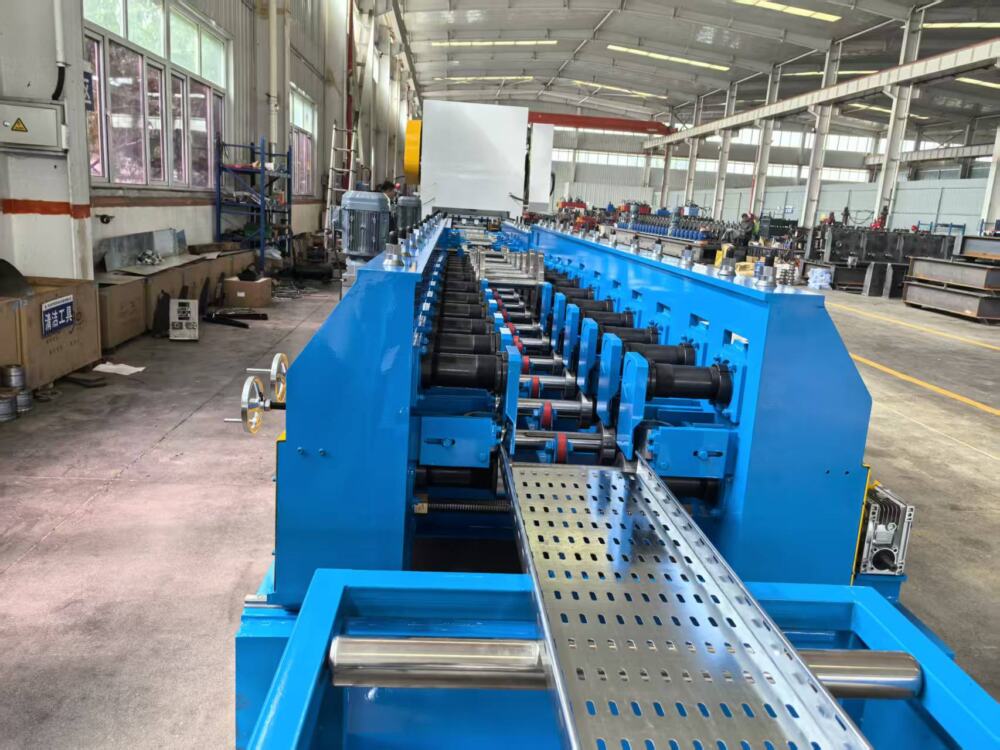
With corresponding punching dies and roller sets, the same line can make:
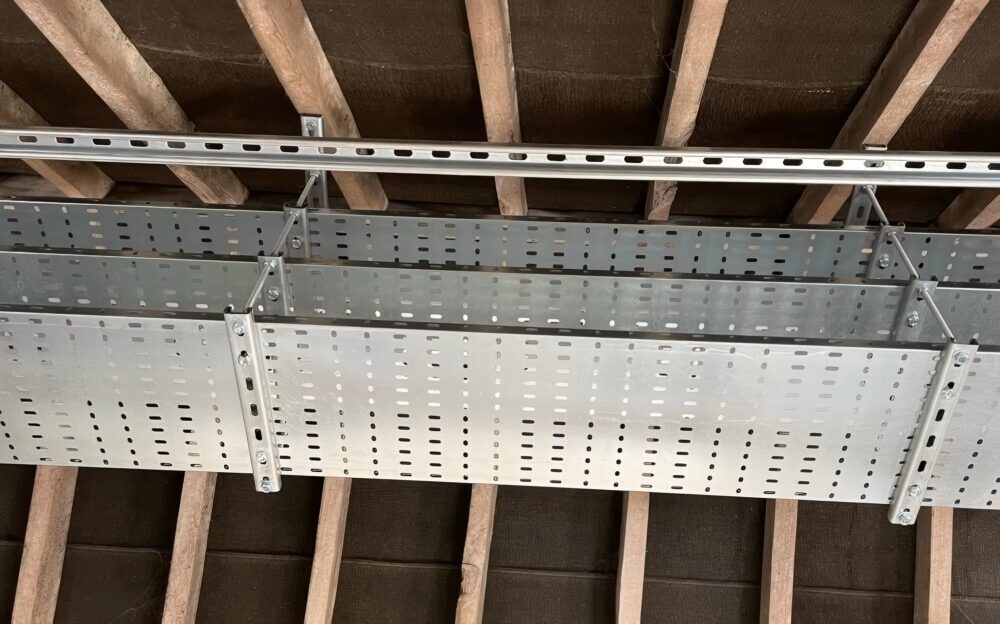
Perforated cable tray – ventilation holes, standard in commercial buildings
Solid bottom tray – for fragile fiber optic cables
Ladder tray – rungs punched before forming, used in heavy industrial plants
Channel / C-profile tray – smaller cable runs in HVAC and warehouse
Wire mesh tray – only if equipped with dedicated weld/mesh module (optional)
Switching width usually takes 10–30 minutes; switching height or hole pattern takes 30–90 minutes with quick-change dies.
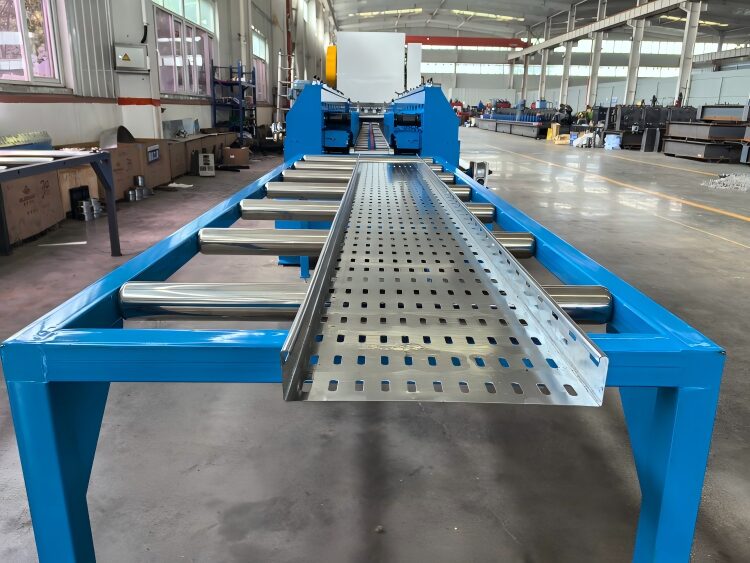
A press brake bends tray sections one piece at a time. A roll former runs coil continuously.
Labor: 1 operator manages 2–3 lines via PLC recipes
Tolerance: ±0.5 mm length control vs manual ±2 mm
Speed: 6–16 m/min vs 1–3 pieces/min on brake
Tooling cost: adjustable rollers beat dozens of fixed dies
Surface: no scratch marks from repeated clamping
For any order above 5,000 meters/month, roll forming cuts unit cost by 20–35% after the first year.
Finished trays serve:
Industrial factories and power plants
Data centers and server rooms
Rail transit, metro, and airport projects
Solar PV and wind farm cable routing
Commercial towers, hospitals, and campuses
Oil, gas, and petrochemical sites (with stainless or hot-dip material)
Because global buyers follow different norms (BS EN 61537, NEMA VE, IEC), the machine can be tuned for hole pitch, side height, and grounding lip per destination market.
Ask yourself four questions before requesting a quote:
What thickness do my clients order most? If 80% is 1.0–1.5 mm, do not overpay for 2.8 mm structure.
How many widths must I switch daily? Frequent change → auto width adjustment rack.
Is hole pattern complex? Center holes + side slots → servo feed + 315T press.
What is local voltage? Middle East 415V/60Hz, EU 400V/50Hz, US 480V/60Hz—confirm before production.
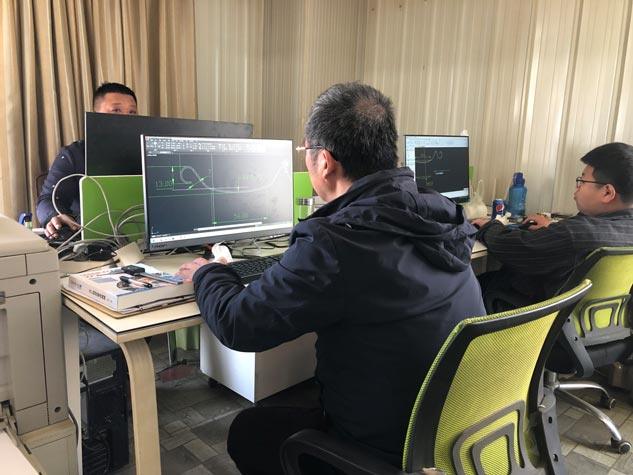
A good supplier sends a workshop layout drawing and confirms roller pass design from your CAD profile, not just a generic photo.
A: Yes, if you buy interchangeable punching dies and adjustable roller spacers. Ladder trays need rung punching before forming; perforated trays need slot/hole dies.
A: Standard lines start at 100 mm. Below 100 mm, a separate small-channel line is more economical.
A: Siemens/Delta PLC stores 20–50 size settings. Operator selects recipe, machine auto-adjusts rollers driven by motor.
A: 5–7 days with our remote guidance; 10–14 days if engineer visits (visa permitting).
A: Yes, with polished GCr15 rollers and reduced speed (4–6 m/min) to avoid surface marks.
A cable tray roll forming machine is a long-life asset: 15+ year frame life, 5–8 year roller life, and payback in 8–14 months at medium volume. Choose specifications from your real order mix, not the max catalogue number. Send your tray drawing, thickness, and daily meter target to get a tailored line layout.