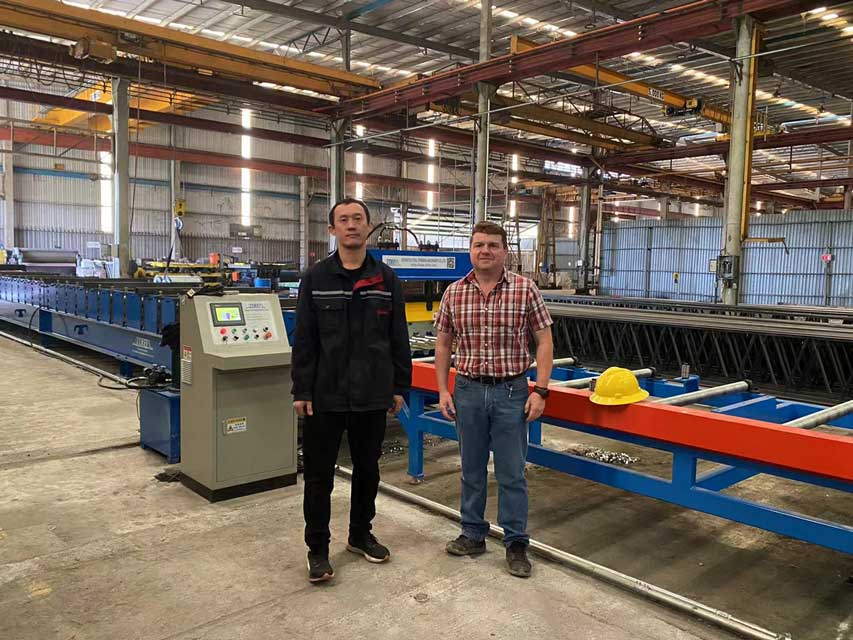



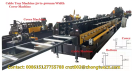


The cable tray forming machine is the core equipment in a cable tray production line, utilizing multiple sets of rollers for cold bending, hydraulic punching, and cutting to shape galvanized steel strips or aluminum-zinc coated steel strips into standard trough-type or ladder-type cable trays. Due to prolonged high-speed continuous operation, the equipment is prone to issues such as formation accuracy deviations, roller failures, hydraulic leaks, electrical control malfunctions, abnormal noises and vibrations, and lubrication failures, which can directly result in dimensional deviations, deformation leading to product rejection, or production line shutdowns. Below, based on practical mass-production scenarios, common equipment faults, their causes, and corresponding solutions are categorized and summarized.
Common defects include: Significant deviations in the width and height of formed cable trays; uneven and asymmetric heights on both sides; bending, warping, or edge lifting of tray surfaces; inclined cutting edges; excessive dimensional errors in length and width; and poor consistency among batch products.
Causes of the problem: Asymmetric clearance and misaligned spacing between multiple forming rollers; roller wear, material adhesion, or deformation; minor deformation of the equipment frame due to prolonged stress; deviation in steel belt feed direction and uneven tension; incorrect settings for positioning scales or CNC parameters; positioning errors at the cutting station.
Solution: 1. Regularly calibrate the levelness and clearance of each forming roller, make precise adjustments based on the equipment's standard parameters to ensure symmetrical alignment between left and right rollers and eliminate force deviations during forming;
2. Stop operation to clean material deposits and oxide scales from roller surfaces; replace rollers with severe wear or deformation promptly to prevent continuous scratching or compression of sheets;
3. Adjust the flatness of the equipment frame and feeding guide frame, and set the tension of the feeding pressure rollers to ensure uniform linear feed of the steel strip and prevent deviation;
4. Before production, verify CNC dimensions and length parameters, calibrate the cutting positioning baffle, perform precise measurements after initial production, and initiate mass production only upon passing inspection;
5. For batches of twisted or edge-bent products, make incremental adjustments to the roller pressing force per group and correct sheet forming stresses stepwise.
Common phenomena include: Intermittent feeding of steel strips with frequent jams or stagnation; slippage and idling of plates between rollers; fluctuating production line speeds resulting in unstable production rhythm, leading to inconsistent lengths of cable trays during the forming process.
Causes of the problem: Excessive clearance between upper and lower pressure rollers resulting in insufficient clamping force; smooth roller surfaces that are worn and slippery, leading to inadequate friction; excessive oil contamination or impurities on the steel belt surface; loose or slipping transmission chains and belts; misalignment of the feed guide wheel causing plate jamming.
Solution: 1. Adjust the pressure roller clearance according to the plate thickness and moderately increase the clamping pressure to ensure the steel strip adheres tightly to the rollers without slipping;
2. Clean oil stains and impurities from the roller surfaces; replace severely worn pressure rollers and forming rollers promptly to restore proper friction;
3. Before production, remove oil stains and oxide scales from the steel strip surface; prohibit the use of contaminated or impure plates in production;
4. Regularly tension the drive chains and belts, check their tightness, and prevent idling;
5. Calibrate the feeding guidance mechanism to ensure straight-line, centered material conveyance and eliminate lateral blockages.
Common phenomena: Irregular metallic impact sounds or abnormal friction noises during equipment operation; significant overall vibration with roller movement shaking, particularly evident during high-speed production.
Causes of the problem: Bearing wear, insufficient lubrication, or damage; loose transmission chain or excessive gear meshing clearance; loose roller mounting bolts or frame fasteners; uneven equipment placement or unstable base bolts; component wear and loosening leading to operational eccentricity.
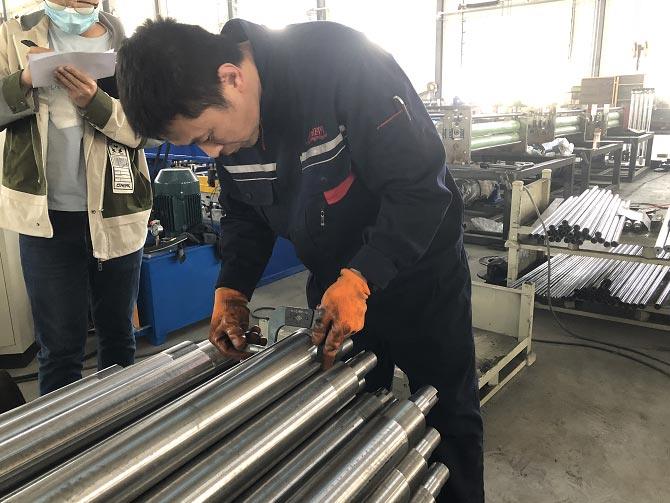
Solution: 1. Inspect roller bearings group by group, apply specialized grease, and replace any bearing that exhibits sticking, abnormal noise, or damage immediately;
2. Adjust the meshing clearance of gears and chains, tighten transmission components, and replace severely worn transmission gears and chains promptly;
3. Fully tighten all fastening bolts on the equipment frame, rollers, and supports to prevent component loosening and vibration;
4. Calibrate the equipment's levelness, adjust the base bolts, and pad the shock absorbers to reduce operational vibrations;
5. Conduct daily inspections to monitor equipment operation sounds, identify and address issues early to prevent accelerated wear from causing major failures.
Common phenomena: Oil leakage from hydraulic pipes, joints, or cylinders; insufficient pressure at punching and cutting stations resulting in large burrs, incomplete cuts, or severe sheet scoring; delayed hydraulic responses, hesitation, or lack of response.
Causes of the problem: Aging or wear of hydraulic sealing rings; damage to oil pipes or loose connections; deterioration of hydraulic oil with excessive impurities or insufficient oil level; malfunction of hydraulic pumps or pressure regulating valves leading to imbalance in pressure regulation; blockage of oil circuits or filter elements.
Solution: 1. Regularly inspect hydraulic pipelines, joints, and cylinders; tighten loose connections; replace aged or damaged seals and oil pipes to completely resolve leakage issues;
2. Periodically replace hydraulic oil and filter elements, clean the oil tank and oil line filters to prevent impurities from clogging the lines and maintain hydraulic oil purity;
3. Check hydraulic system pressure parameters and adjust pressure according to equipment specifications; if pressure is abnormal, inspect the hydraulic pump, pressure regulating valve, and relief valve;
4. When punching or cutting operations are ineffective, first investigate pressure levels and oil circuit conditions, then check mold wear and grind or replace worn molds;
5. Avoid prolonged operation of the equipment under overpressure; after shutdown, release pressure and allow the system to rest to extend the service life of the hydraulic system.
Common phenomena: Failure in device startup/stop operation, interruption of automatic operation; inaccurate counting or significant errors during fixed-length cutting; frequency converter alarms and motor overload; misconfigured touchscreen parameters, program lag, and automatic shutdown of production lines.
Causes of the issue: Incorrect modification of PLC and frequency converter parameters; aging wiring, loose connections, or poor contact; motor overload or inadequate heat dissipation; sensor misalignment, contamination, or malfunction; unstable workshop voltage or electromagnetic interference.
Solution: 1. Designate a dedicated person to manage equipment parameters; prohibit arbitrary modification of forming, length-setting, and counting parameters, and promptly restore any incorrect settings to factory defaults;
2. Regularly inspect the electrical control circuits, secure wiring terminals, replace aged or damaged circuits, and implement dust and moisture protection measures;
3. Clean dust and impurities from the surfaces of photoelectric sensors and counting sensors, calibrate sensor positions to ensure accurate signal transmission;
4. Remove dust from motor and frequency converter cooling fans to improve heat dissipation and prevent high-temperature overload alarms;
5. Install voltage stabilizers when workshop voltage is unstable to reduce electromagnetic interference; when frequent electronic control failures occur, investigate faults in the motherboard and modules.
Common phenomena include: Stiffness and overheating of rollers, bearings, and transmission components, accelerated wear rates, a year-by-year increase in equipment failure rates, and shortened service life.
Causes of the problem: Failure to perform periodic maintenance and lubrication; improper selection of grease or lubricating oil; oil circuit blockage, insufficient oil supply, or oil shortage; entry of dust and impurities into the lubrication area, exacerbating wear.
Solution: 1. Maintain a regular equipment maintenance log and apply appropriate lubricating oil or grease to bearings, rollers, chains, and gears periodically;
2. When replacing lubricants, clean the oil tank and filter simultaneously to thoroughly remove impurities from the oil circuit and prevent blockages;
3. In environments with high dust levels, increase maintenance frequency and implement proper dust protection measures for equipment;
4. Avoid operating equipment under dry-running conditions; always check the lubrication status before restarting after prolonged shutdowns.
Common defects include: Burr formation at cable tray punching and cutting positions, uneven tool edges; mold corner chipping, wear, or deformation; scratches or depressions on sheet cutting surfaces, resulting in substandard product appearance.
Causes of the problem: Prolonged use leading to wear of cutting dies and punching dies; excessive or misaligned die clearance; presence of dead bends, hard edges, or impurities in the feed sheet; loose fixation of dies or uneven force distribution.
Solution: 1.Regularly disassemble and grind the cutting edges and punching dies; replace dies with severe wear or chamfered corners promptly;
2. Precisely adjust the die engagement clearance to ensure accurate alignment between upper and lower dies without deviation;
3. Strictly prohibit processing sheets containing dead bends, wrinkles, or hard contaminants to prevent die damage;
4. Secure die fixing bolts to ensure stable operation and uniform force distribution, thereby reducing cutting edge wear and product burrs.
Common phenomena: Failure of emergency stop mechanisms, absence of protective devices; misoperation leading to material jamming or equipment shutdown; potential mechanical injury hazards.
Causes of the issue: Absence or removal of safety guards or protective covers; malfunctioning emergency stop buttons or failed safety interlocks; operators improperly extending hands into the roller area or violating feeding procedures.
Solution: 1.All safety protection devices must be installed during equipment operation; unauthorized removal of protective covers or shields is strictly prohibited.
2. Regularly test emergency stop and safety interlock functions, promptly repair or replace faulty components to ensure rapid shutdown in emergencies.
3. Standardize operator procedures; hands must not be extended into roller or mold working areas during operation to prevent violations.
4. Machine startup, mold replacement, and maintenance must involve complete shutdown and power disconnection, with warning signs displayed throughout the process to ensure both equipment and personnel safety.