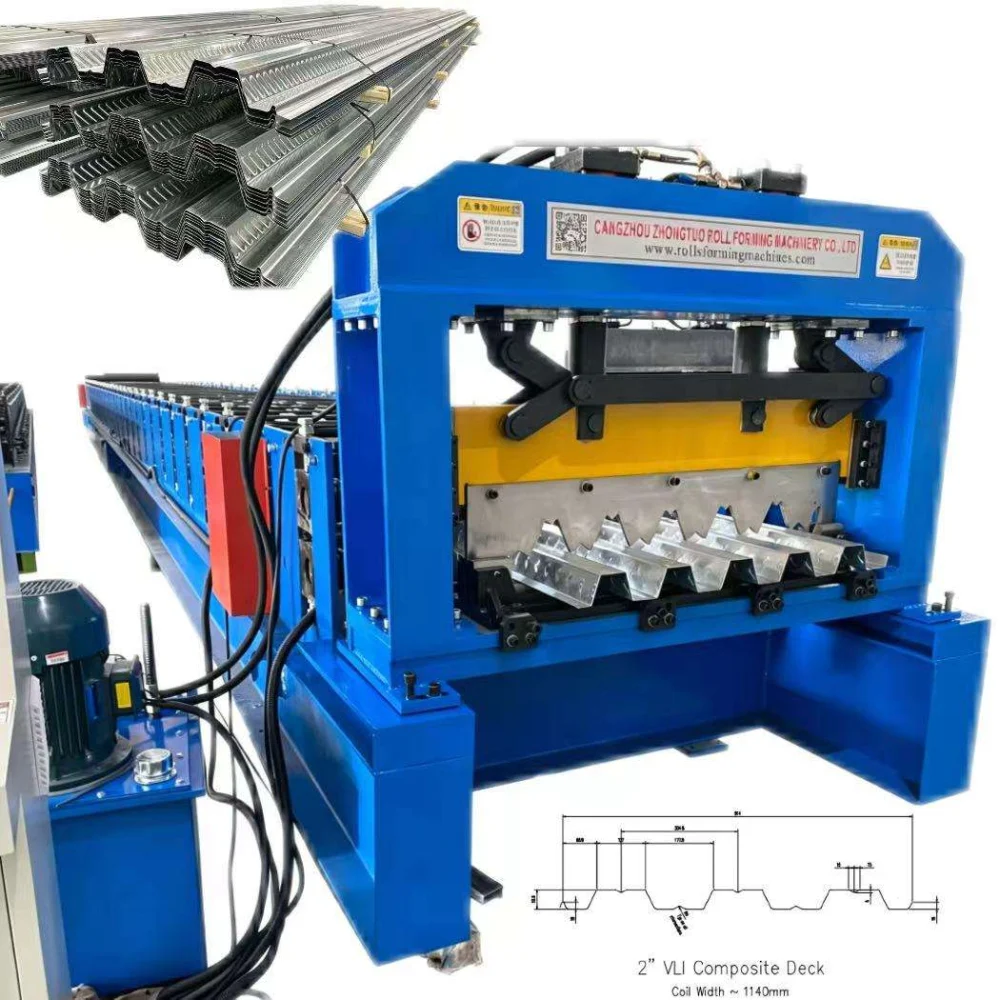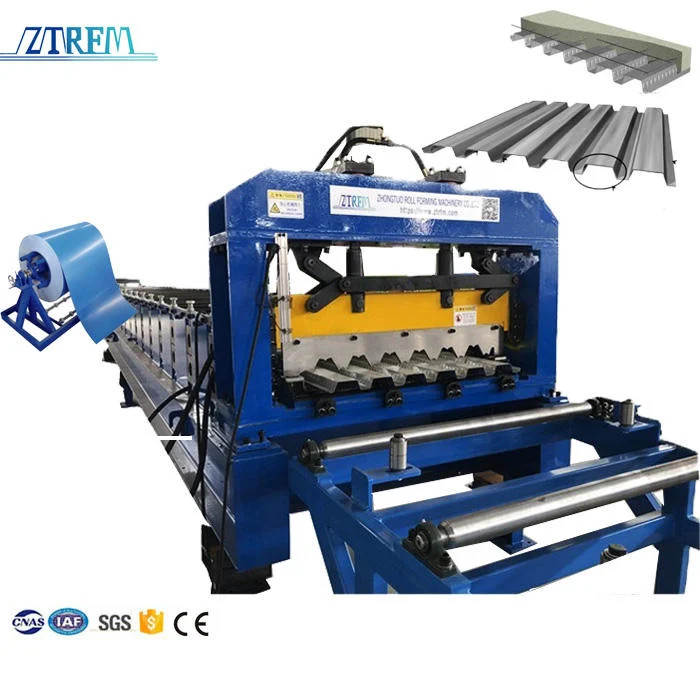

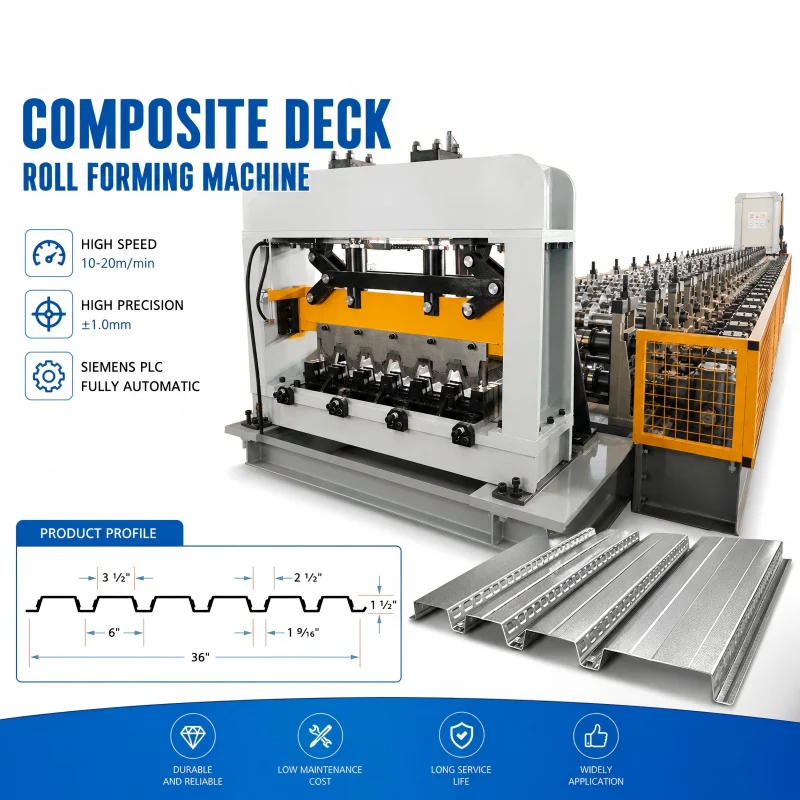


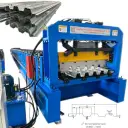
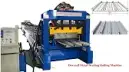


Description:A floor deck forming machine is a specialized cold roll forming equipment designed to process galvanized steel coils into structured metal floor deck panels for steel structure buildings, high-rise apartments, commercial plazas, and industrial workshops. It realizes continuous feeding, roll forming, punching, cutting, and automatic output in one process, featuring stable molding, high dimensional accuracy, and low production cost.
To help global customers select the most suitable equipment according to production scale, budget, and processing demands, we fully elaborate on the complete classification, mainstream deck profiles, and detailed configuration differences, advantages and disadvantages of low-speed, medium-speed and high-speed floor deck forming machines in this article.
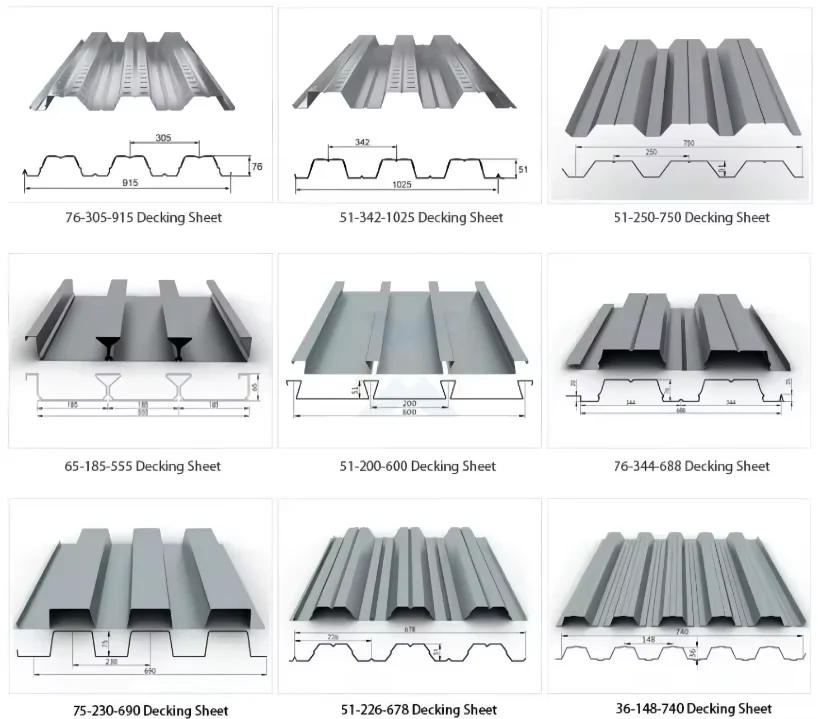
Floor deck forming machines can be classified from three core dimensions: structural deck type, production automation level, and operating speed grade, covering all mainstream models in the global construction steel market.
This is the most common classification standard, corresponding to different building load-bearing and construction scenarios:
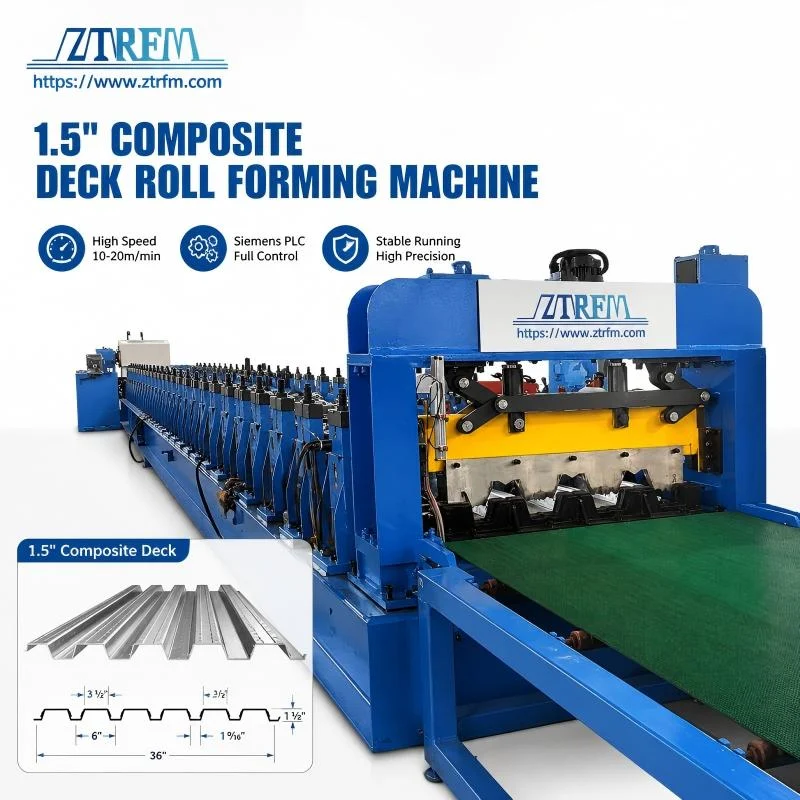
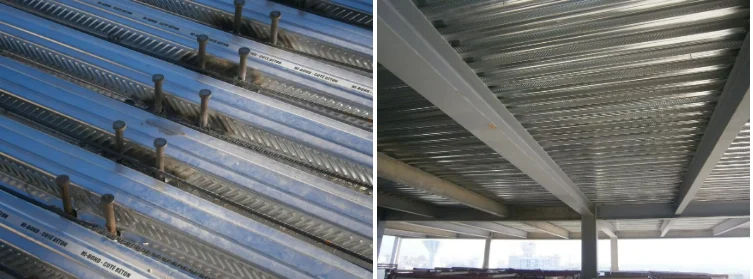
Composite floor slab = profiled steel sheet (base slab) + cast-in-situ reinforced concrete – both share the load; the steel sheet serves both as formwork during the construction phase and as the permanent structural load-bearing layer; this combined system is often referred to as a composite floor slab.
Composite floor decking panel: Steel plates participate in load-bearing; permanent load-bearing components
Non-combined floor decking panel (formwork type): The steel plate serves solely as a formwork; the concrete bears all the load-bearing capacity; the panel can be removed or retained at a later stage.
Form Deck = Permanent Template Floor Slab (Non-Composite Deck)
This serves solely as the permanent form work for the concrete; upon completion, the steel plate does not participate in the subsequent load-bearing process – all loads are borne independently by the reinforced concrete floor slab. The slab surface exhibits no indentations or embossments; no shear interaction occurs between the steel plate and the concrete, and thus no composite load-bearing system is formed.
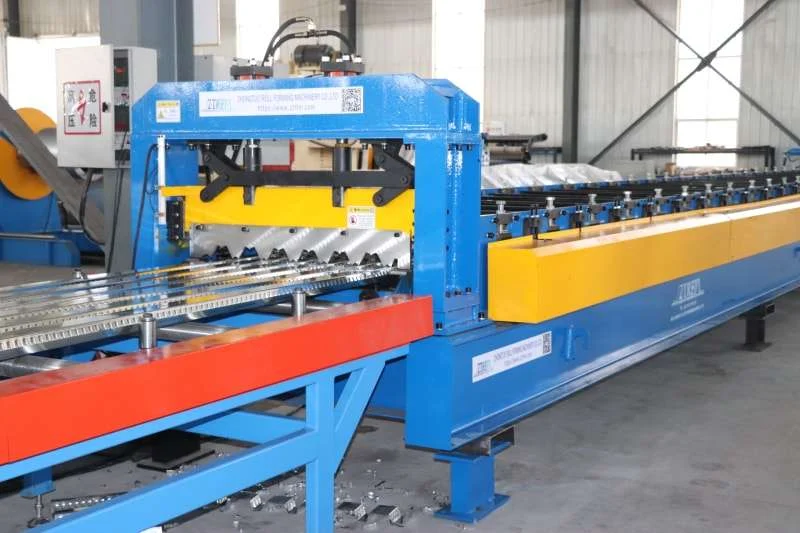
Floor Deck is a general term for floor decking systems and encompasses two main subcategories: Composite Deck (composite floor decking with shear embossment) and Form Deck (form work-type floor decking without embossment); these must be cast with concrete and are intended solely for floor slabs; they cannot be used on roofs.
Intended for use as a floor surface; cast-in-place concrete shall be poured above it; the surface must not be left exposed as a standalone floor surface.
Temporary construction work platform: Once the steel plate installation is complete, the platform can serve as a construction access route without the need for full-scaffolded support.
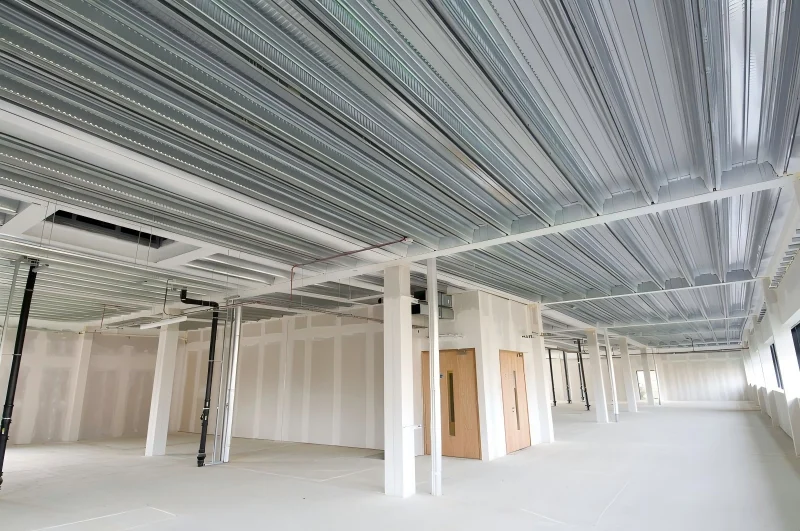
Serves as a permanent concrete formwork system, eliminating the need for wooden formwork and demolding operations, thereby significantly reducing construction duration.
Hot-dip galvanized substrate – corrosion and rust protection – ideal for indoor flooring applications.
The rib groove space allows for the installation of water and electrical pipelines, facilitating the pre-installation of mechanical and electrical components.
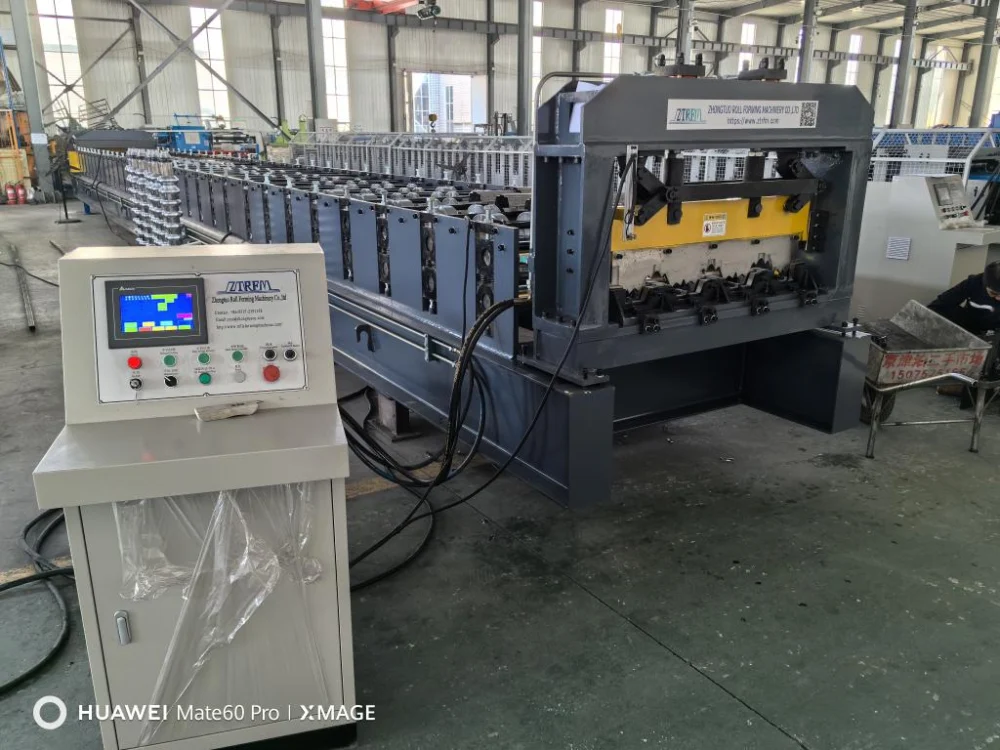
An independent roof structural substrate is installed above the steel beams without being cast with concrete; it serves to support the insulation layer, waterproofing membrane, and roofing materials. The steel plate features no embossments and does not participate in load-bearing interaction with the concrete. It offers excellent span support capability. The mainstream models – Bdeck (1.5 inches) and Ndeck (3 inches) – feature higher rib heights and longer unsupported spans compared to Formdeck, thereby reducing the number of required steel beams and lowering steel costs.
A deck – shallow ribs, small span
B deck —Most versatile wide-web type
N Deck —Deep Rib,Extra-Large Span
F deck – narrow ribs, high stiffness
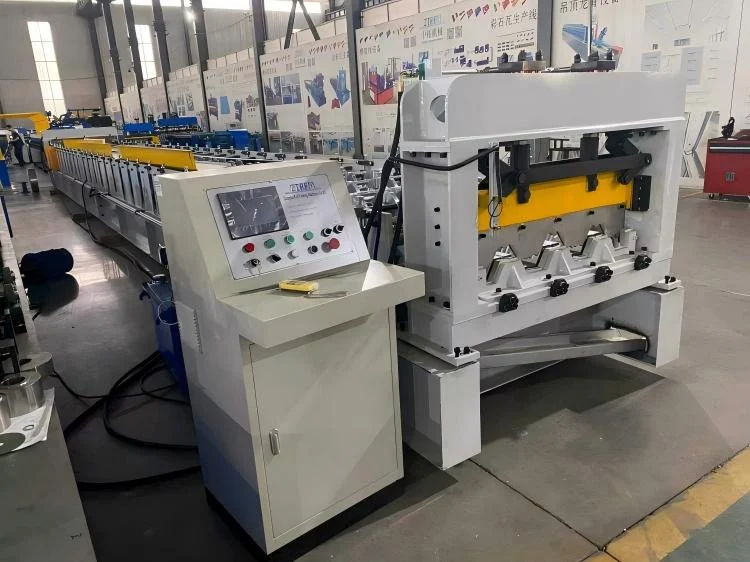
This is a closed-end composite floor slab system in which the upper edge of the rib is tapered inward, resulting in a dovetail-shaped cross-section; after concrete is poured, the concrete fits into the dovetail groove, ensuring a secure bond between the steel plate and the concrete – constituting a composite load-bearing floor slab system.
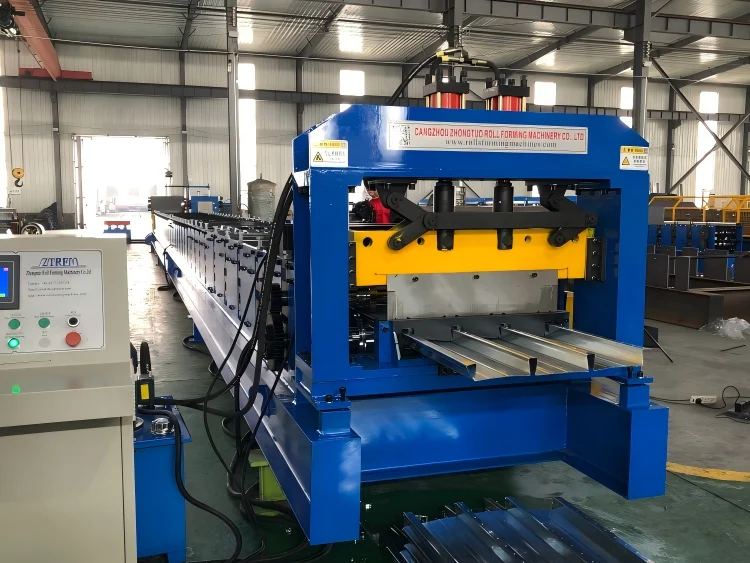
Semi-Automatic Floor Deck Machine: Manual feeding, manual parameter adjustment, fixed-length cutting. Simple structure, low price, suitable for small processing factories and intermittent production.
Fully Automatic Floor Deck Machine: PLC touch screen intelligent control, automatic feeding, fixed-length forming, automatic punching and cutting, one-key operation. Supports continuous 24-hour production, saving labor costs.
Multi-Model Quick-Change Floor Deck Machine: Upgraded fully automatic model, realizing stepless adjustment of rib height and bottom width without replacing rollers, compatible with multiple deck profiles, high equipment utilization.
Divided into low-speed, medium-speed and high-speed models, with obvious differences in configuration, production efficiency, applicable materials and investment cost, which is the key basis for customer selection:
Low-speed machine: 5–10 m/min
Medium-speed machine: 12–18 m/min
High-speed machine: 20–30 m/min
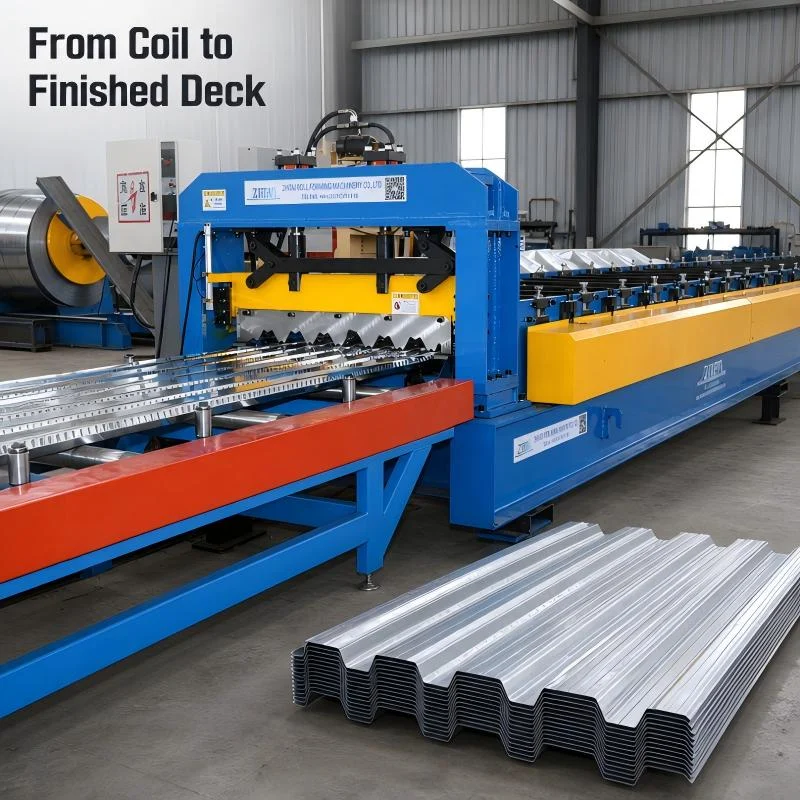
The three speed-grade machines have fundamental differences in transmission system, roller configuration, control system, production capacity and applicable scenarios. We make a detailed comparative analysis below:
Forming rollers: 12–15 rows, ordinary bearing steel rollers, ordinary carburizing treatment
Transmission mode: Ordinary chain drive, ordinary gear reducer
Power system: 7.5KW–11KW conventional motor
Control system: Basic PLC simple control, manual parameter setting, fixed single-size production
Cutting system: Ordinary hydraulic single cutting, conventional cylinder
Processing thickness: 0.8–1.2mm conventional galvanized sheet
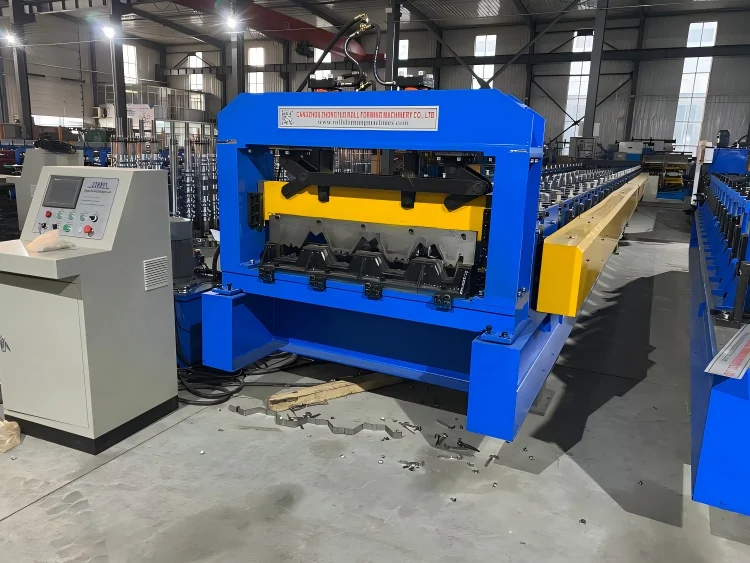
Ultra-low equipment investment cost, cost-effective for entry-level customers
Simple structure, low failure rate, extremely low daily maintenance cost
Easy operation, no professional technical training required
Low site requirement, small floor space, suitable for small factories and temporary processing sites
Flexible roller gap adjustment, good adaptability to conventional thin plates and special decorative plates
Low production efficiency, unable to meet large-volume and bulk orders
Single compatible profile, poor flexibility for multi-model production
Ordinary roller precision, slight dimensional error for long-time continuous production
No automatic quick-change function, time-consuming for model replacement
Applicable Scenarios: Small steel structure processing factories, sporadic order processing, start-up enterprises with limited budget and low daily output demand.
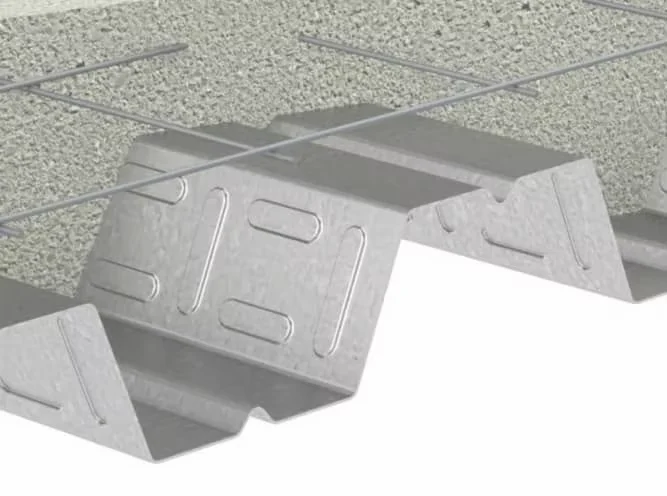
Forming rollers: 17–19 rows, Cr12 high-hardness bearing steel rollers, precision turning and integral quenching, high wear resistance
Transmission mode: Thickened national standard heavy-duty chain + hard-tooth surface reducer, stable transmission, no jitter
Power system: 15KW–22KW K-series professional motor, sufficient power reserve
Control system: Upgraded PLC full-automatic control, touch screen intelligent operation, automatic counting and fixed-length cutting
Cutting system: Four-guide-column high-stability hydraulic cutting, neat incision without burrs
Processing thickness: 0.8–1.5mm galvanized steel sheet, compatible with most mainstream building steel plates
Optional configuration: Single-station automatic punching device, surface anti-slip embossing device
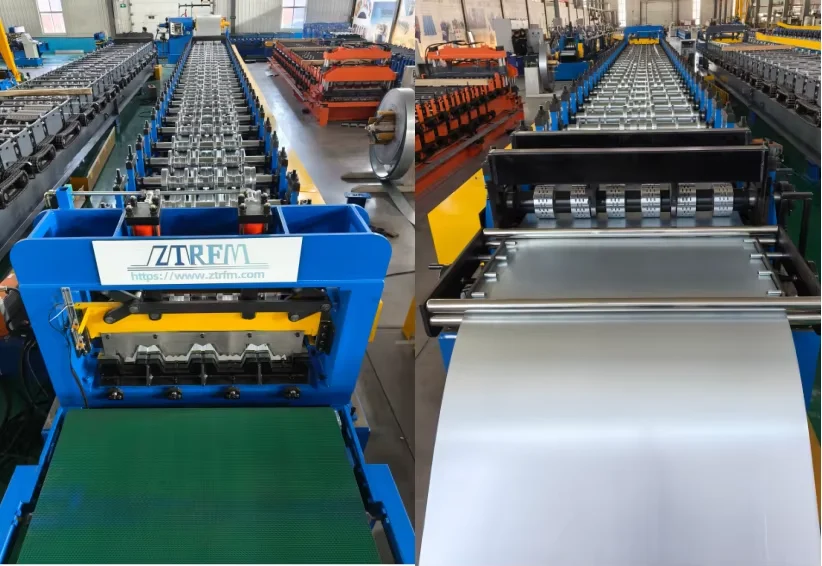
Balanced efficiency and cost, high cost performance, the most mainstream model for global mass production
High molding precision, stable board flatness, consistent dimensional tolerance, meeting engineering acceptance standards
Stable long-term operation, low failure rate, suitable for 24-hour continuous industrial production
Wide material compatibility, covering most conventional floor deck plate thicknesses
Simple model replacement, supporting multi-profile switching production
Higher investment cost than low-speed models
Cannot process ultra-thick steel plates above 1.5mm
Limited instantaneous output, unable to meet super-large batch urgent orders
Applicable Scenarios: Medium and large steel structure processing factories, engineering supporting manufacturers, customers with stable daily output and moderate budget, covering 80% of conventional floor deck production demands.
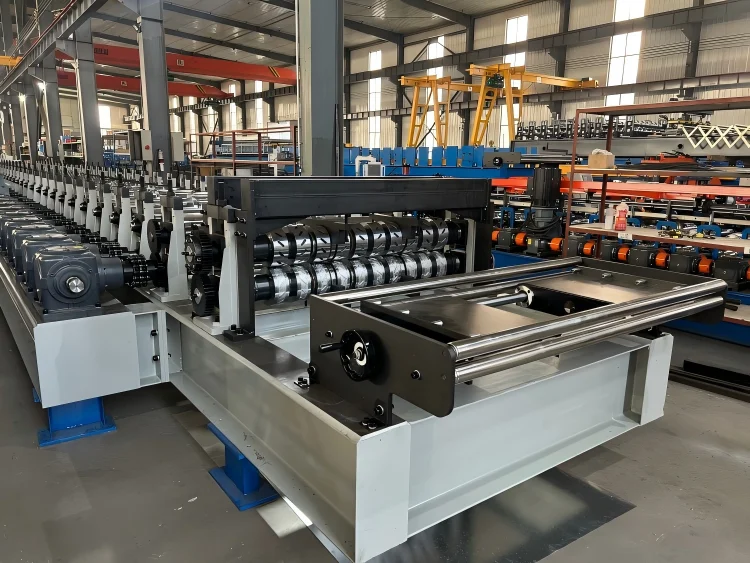
Forming rollers: 20+ rows of customized high-precision alloy rollers, secondary fine grinding treatment, anti-wear and anti-deformation
Transmission mode: Full servo synchronous drive + precision gearbox, zero-error synchronous operation
Power system: 30KW+ high-power servo motor, fast response and strong power
Control system: Intelligent PLC full-automatic linkage system, one-key quick model change, stepless size adjustment, no need to disassemble rollers
Cutting & punching: Front and rear dual hydraulic cutting + multi-station automatic punching, synchronous molding and punching
Processing thickness: 0.8–3.0mm thickened galvanized sheet and high-strength steel plate
Auxiliary functions: Automatic deviation correction, constant tension feeding, board surface detection, fault self-diagnosis
Ultra-high production efficiency, 2–3 times output of medium-speed machines, suitable for super-large batch orders
Industry-top molding precision, zero deformation of board surface, fully compliant with high-standard engineering requirements
Wide material and model compatibility, supporting ultra-thick plates and customized special floor decks
Intelligent unmanned production, greatly saving labor costs, high production automation
Long service life of equipment, low long-term operating cost and high return on investment
High equipment investment and high threshold for early-stage capital investment
High requirements for factory site, power supply and daily maintenance
Complex system operation, requiring professional technicians for maintenance
Applicable Scenarios: Large-scale steel structure manufacturing bases, large engineering supporting enterprises, customers with long-term large-volume orders and high requirements for product precision and production efficiency.
Choose Low-Speed Machine: Small business start-up, limited budget, small and intermittent orders, low daily output demand.
Choose Medium-Speed Machine: Most conventional processing factories, stable order volume, balanced cost and efficiency, priority recommendation for bulk purchase.
Choose High-Speed Machine: Large-scale factory mass production, high-precision engineering orders, long-term super-large batch demand.
As a professional floor deck forming machine manufacturer with 20+ years of experience, we provide full-series equipment from low-speed to high-speed models, covering all deck profile production demands. All equipment adopts thickened plate welding frame, high-hardness anti-wear rollers and stable hydraulic systems, with stable operation, high molding precision and long service life. We support customized non-standard machines, personalized profile mold development, and one-stop overseas installation, commissioning and after-sales service, helping global customers improve production efficiency and maximize economic benefits.