24년 이상의 경험과 지식 국제 표준, 기술 변화 및 산업 시스템, 우리는 다음과 같이 헌신합니다. 소중한 고객에게 최고의 경제적인 솔루션을 제공합니다.
Scaffold Plank Roll Forming Machine: Complete Buyer’s Guide for Scaffolding Manufacturers
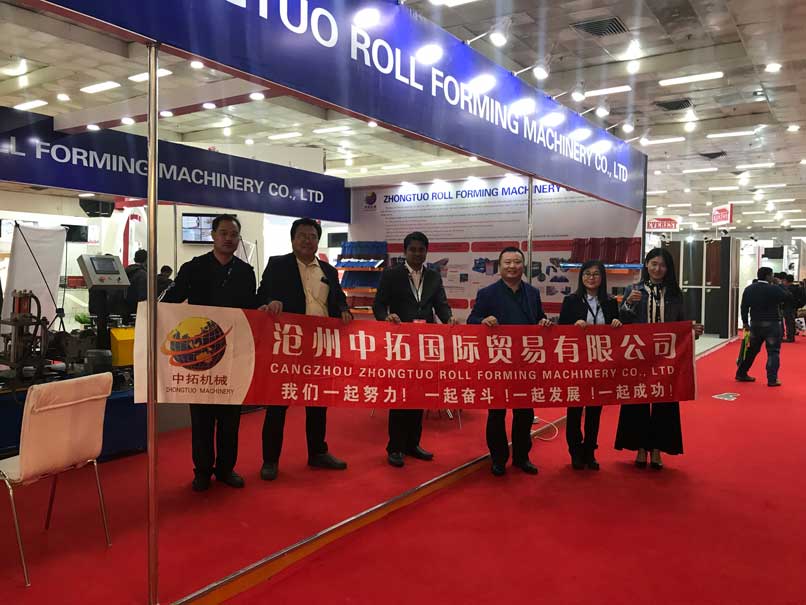
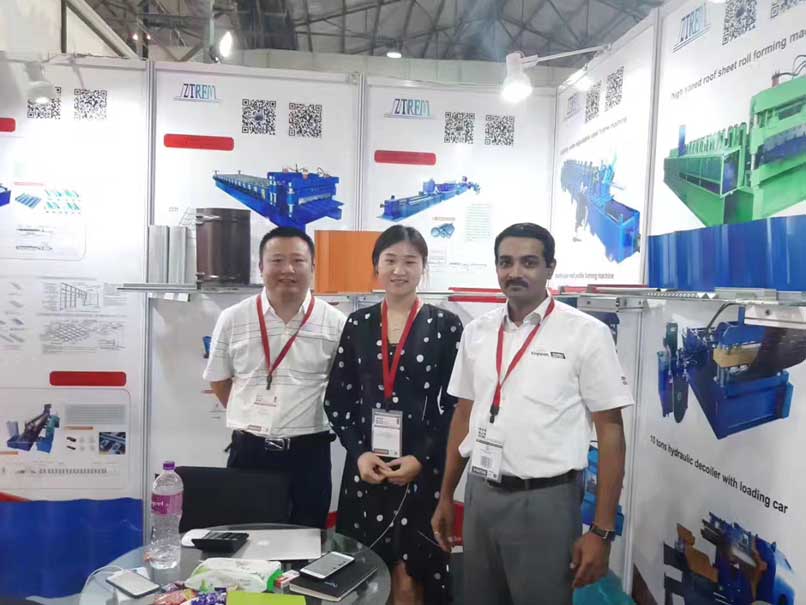
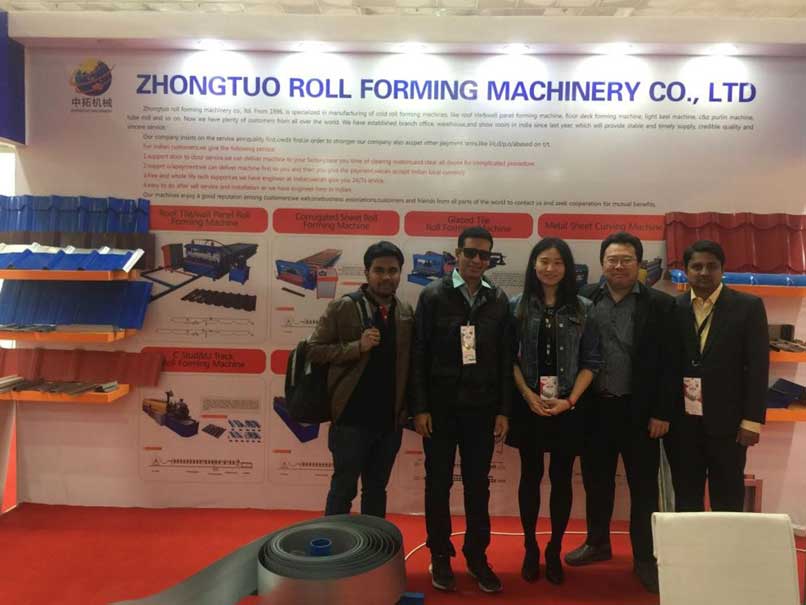
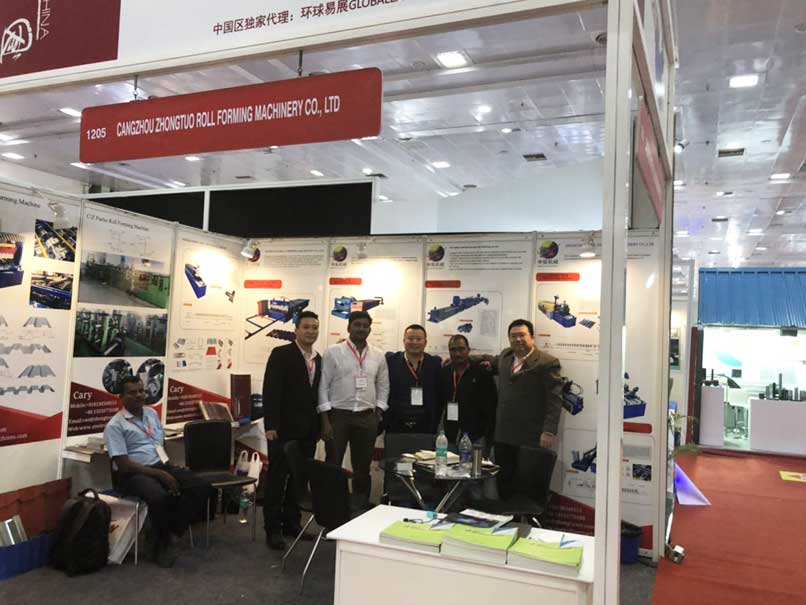
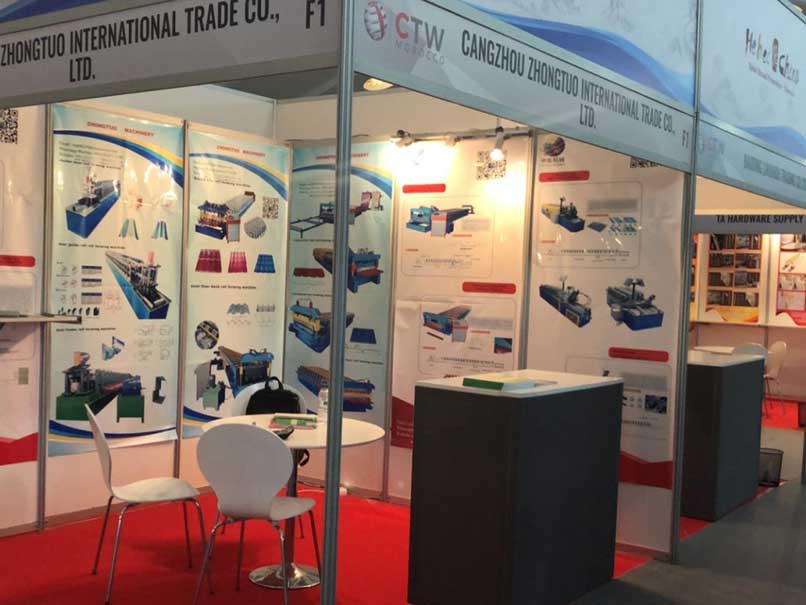
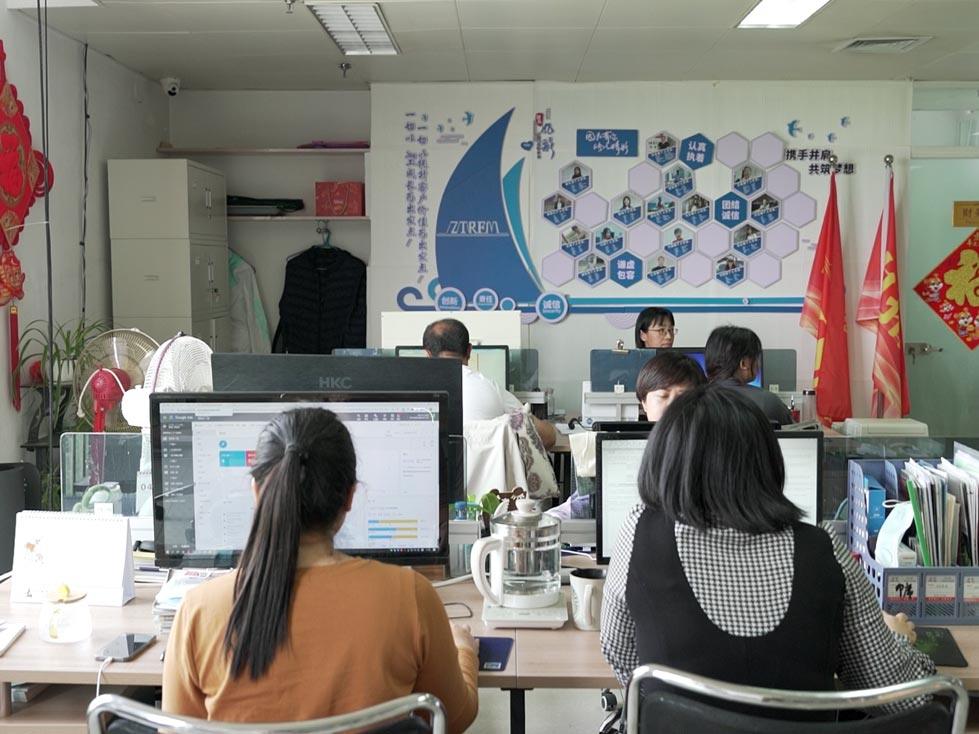
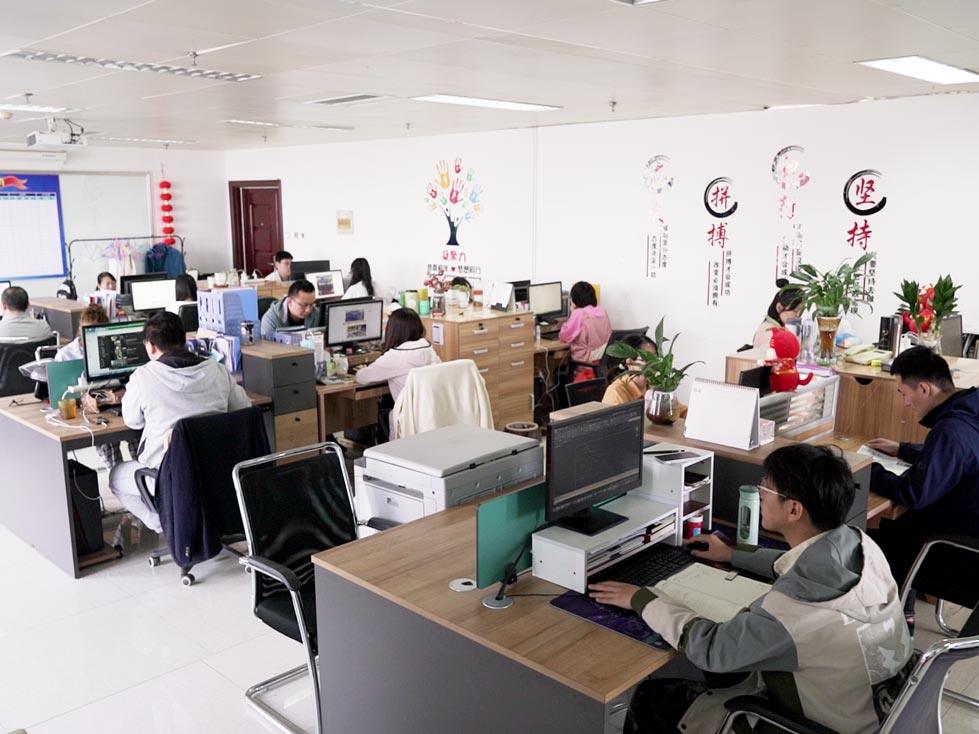
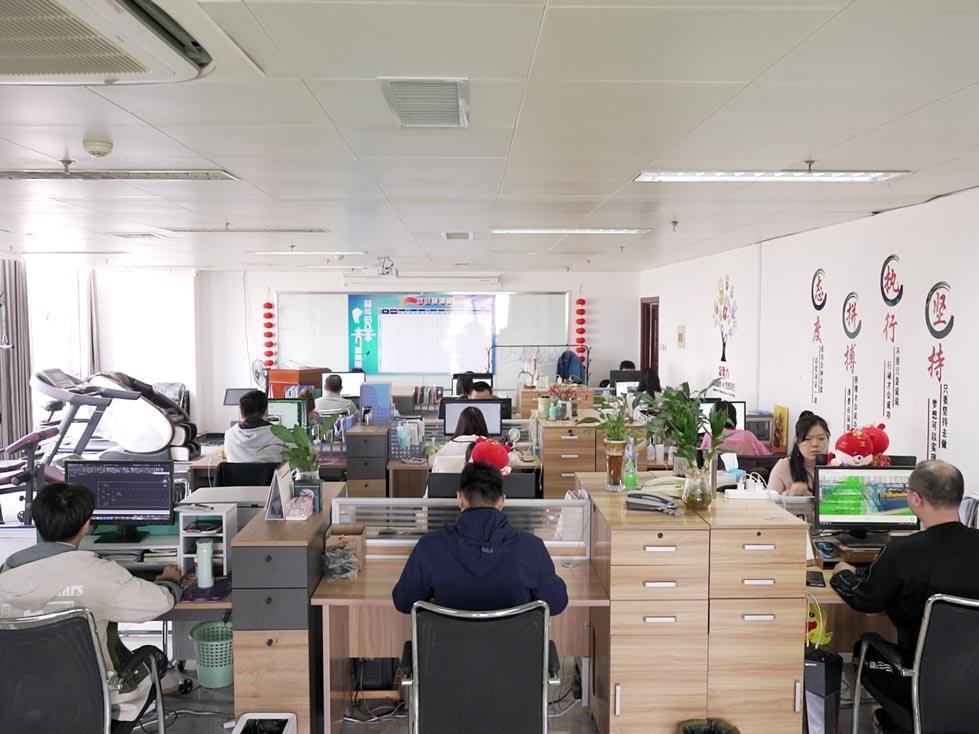
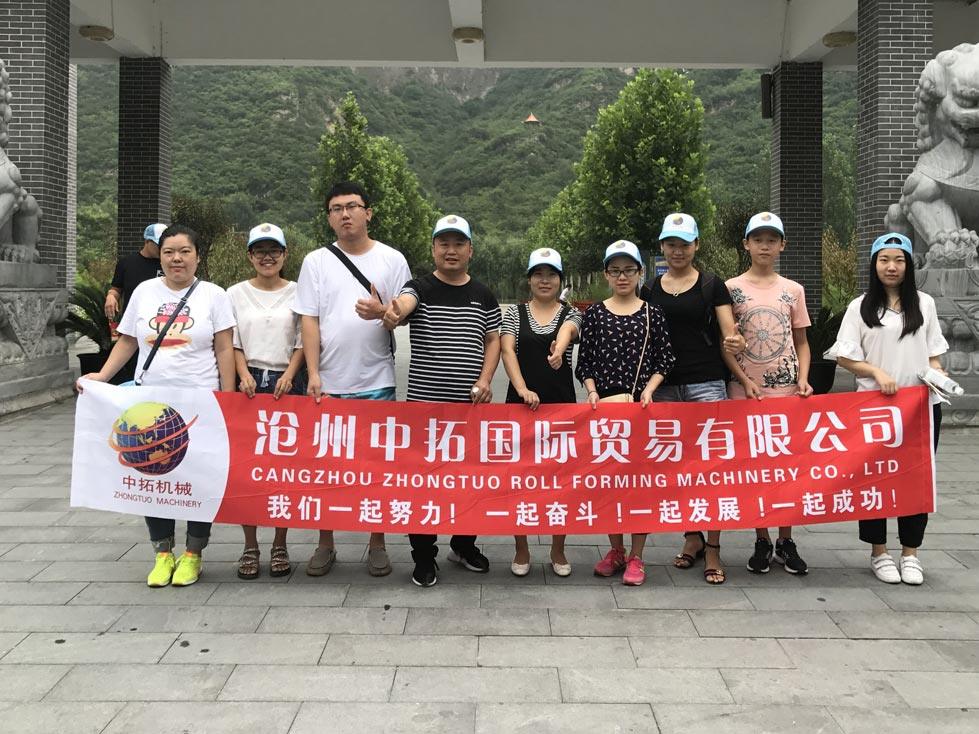
창저우 중퉈 롤 성형 기계 유한 회사는 중국 허베이성에서 왔습니다. 설계 및 제조에 전념하는 제조업체입니다. 다양한 유형의 냉간 압연 성형기. 우리는 2006 년부터 롤 성형 기계의 설계 및 제조에 종사하는 오랜 역사를 가진 공장입니다. 우리가 생산할 수있는 기계에는 지붕 타일 제조 기계, cz 도리 제조 기계, 경강 용골 제조 기계, 금속 엠보싱 기계, 도어 시스템 성형 기계, 천장 시스템 성형 기계, 고주파 파이프 용접기, 슬리 팅 라인, 절단 길이 라인, 선반 시스템 성형 기계, 바닥 데크 성형 기계, 컬러 석재 타일 생산 라인, 핫 라미네이팅 필름 기계 등이 있습니다.
Scaffold Plank Roll Forming Machine: Complete Buyer’s Guide for Scaffolding Manufacturers
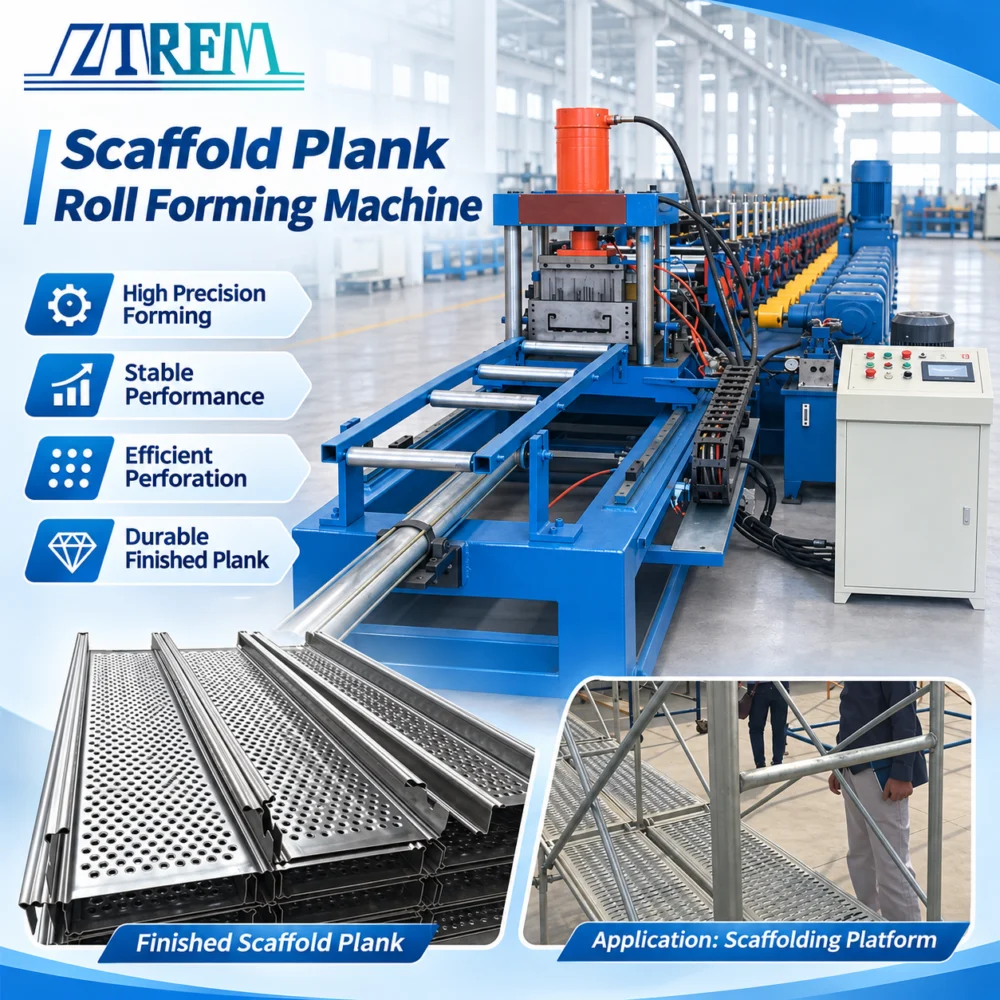
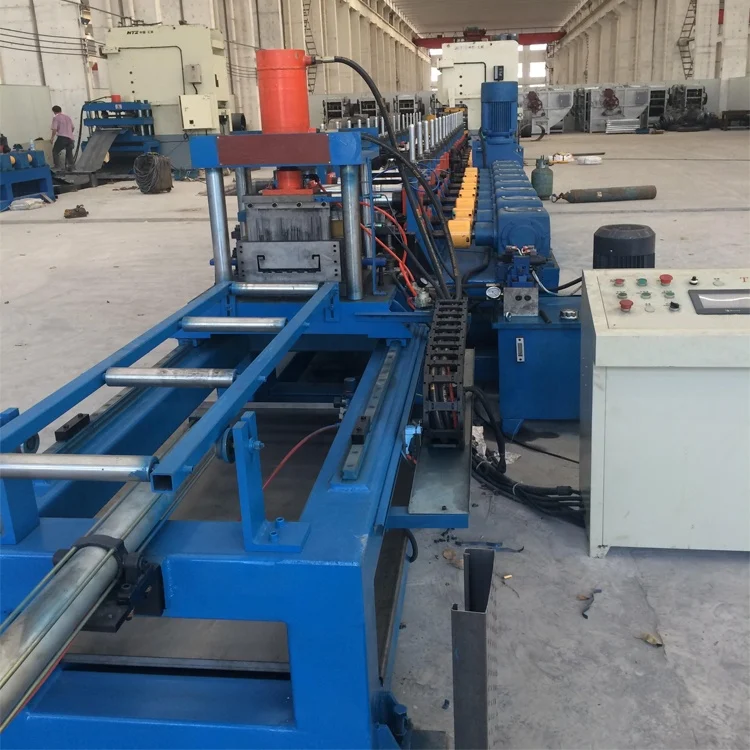
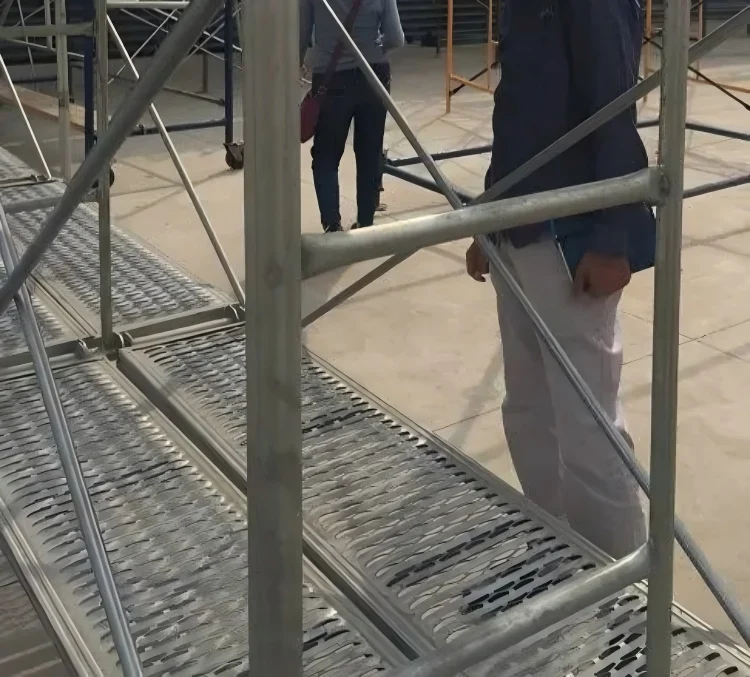
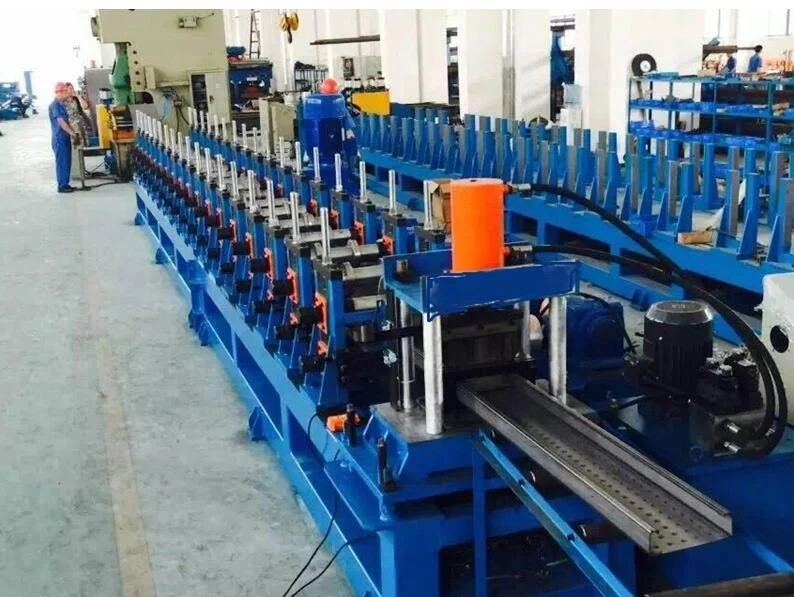
Steel scaffold planks (also known as walk boards, catwalk planks or scaffolding decking) are critical load-bearing components for ringlock, cuplock, frame and kwikstage scaffolding systems. A scaffold plank roll forming machine is a dedicated continuous cold forming line that converts galvanized steel coil into standardized anti-slip scaffolding planks in one pass.
For scaffolding fabricators, rental companies and construction material factories, in-house plank production removes reliance on third-party suppliers, stabilizes delivery cycles and keeps finished planks consistent with local scaffolding safety standards. This article explains the working flow, main components, key specifications, custom options and what you need to verify before requesting a quotation.
Scaffold Plank Roll Forming Machine: Complete Buyer’s Guide for Scaffolding Manufacturers- scaffolding forming machine
How a Scaffold Plank Roll Forming Line Works
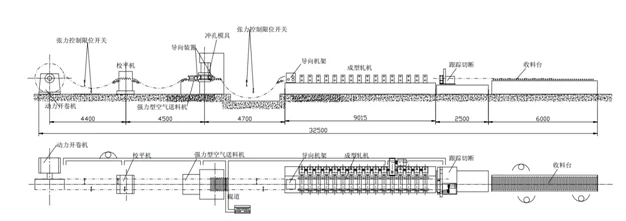
The whole line runs automatically from coil loading to finished plank stacking, with integrated punching, embossing, forming and cutting.
디코일러: Hydraulic expansion decoiler holds the steel coil and feeds material steadily. Heavy-duty decoilers are required for thick, high-tensile steel strips to avoid snaking and strip deviation.
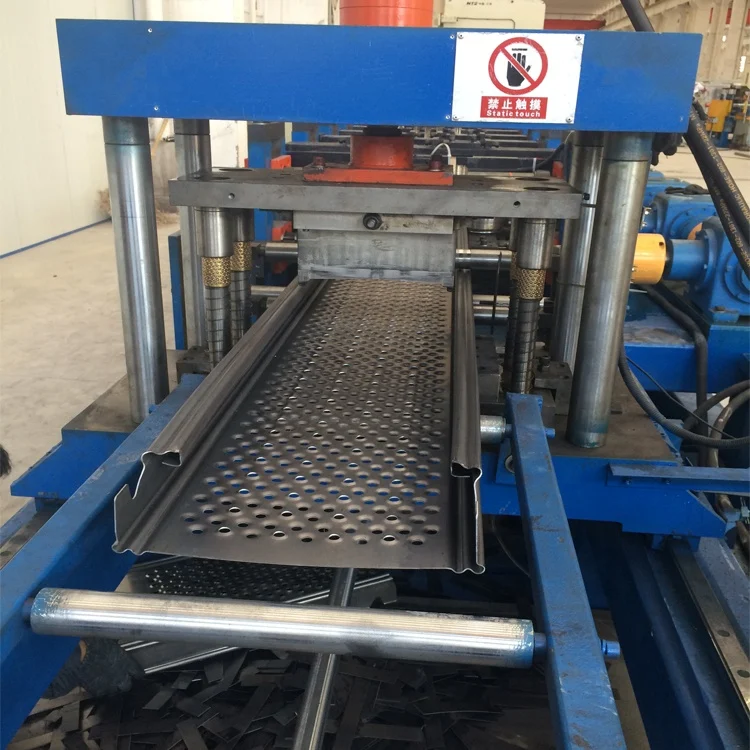
Feeding & Punching Station: The strip is guided and leveled first. Optional pre-punching unit creates anti-slip holes, hook holes or connection slots according to your profile drawing.
Anti-slip Embossing Unit: This section presses non-slip patterns on the plank surface. Anti-slip embossing is essential to meet construction safety requirements and reduce slip risks on site.
Roll Forming Stations: Multiple forming stations gradually bend the steel into the required plank profile, including side ribs, stiffeners and edge locking structures. More stations deliver smoother forming and better straightness for thick material.
Flying Cutting Unit: Servo flying cut cuts planks to preset length without stopping the line. Length tolerance is normally controlled within ±1 mm for standard production.
Receiving Table & Stacker: Finished planks slide onto the output table. An automatic stacker option saves labor and prevents surface scratching or edge deformation.
Scaffold Plank Roll Forming Machine: Complete Buyer’s Guide for Scaffolding Manufacturers - layout
Main Components of the Production Line
Quality differences are mostly reflected in these core assemblies:
디코일러: Hydraulic expansion, optional coil car for fast coil loading. Rated coil weight from 3 ton to 8 ton.
Punching Module: Hydraulic punching for anti-slip holes, end hook holes and mounting slots. Punch dies can be customized for different scaffolding systems.
Embossing Rollers: Hardened alloy rollers for uniform anti-slip texture; surface hardness directly affects pattern clarity and service life.
Forming Rollers & Shafts: Rollers made of 45# steel with hard chrome plating; shafts of larger diameter for heavy gauge steel. Good rigidity prevents profile twisting under load.
Transmission System: Gearbox drive is preferred for heavy-duty lines; chain drive is common for light-duty low-budget models.
Servo Flying Cut: Cr12MoV or D2 alloy blades for clean burr-free cuts.
PLC Control System: Touch screen for setting length, quantity, punching spacing and production speed. Multi-language interface and remote diagnostic support are available.
Safety Guards & Emergency Stop: Full protective covers for rotating rollers and moving punching parts, compliant with CE safety standards.
Typical Applications
This roll forming line is widely used for manufacturing steel walk boards for:
Ringlock scaffolding, cuplock scaffolding, frame scaffolding and kwikstage systems
High-rise building construction, bridge and tunnel projects
Shipyards, oil & gas platforms, industrial maintenance walkways
Scaffolding rental yards, prefab steel factories and construction material suppliers
It processes galvanized steel, hot rolled steel, cold rolled steel and ZAM steel strip. Most standard scaffold planks use 1.5 mm – 2.0 mm galvanized steel; heavy-load versions can be customized up to 2.5 mm or 3 mm.
Scaffold Plank Roll Forming Machine: Complete Buyer’s Guide for Scaffolding Manufacturers - application
Key Specifications to Confirm Before Quotation
Suppliers offer very different configurations under the same product name. Prepare these data to compare quotations fairly:
Material thickness range: 1.2–2.0 mm (standard), 2.0–3.0 mm (heavy duty)
Input strip width: usually 250 mm, 300 mm, 320 mm, 400 mm or customized
Max coil weight and inner coil diameter (508 mm / 610 mm)
Required plank length range: common from 0.5 m to 4 m
Punching requirement: anti-slip hole layout, end hook holes or no punching
Anti-slip embossing: yes / no, pattern drawing
Production speed: 8–16 m/min for standard lines
Length tolerance: standard ±1 mm
Voltage, phase and frequency on site
Container loading limit and workshop floor space
A common mistake is ignoring punching and embossing requirements. If you order a plain forming line without pre-punching or embossing, you will need extra secondary stamping equipment, which increases total investment and cycle time.
Available Custom Options
Scaffold plank standards vary greatly across markets, so customization is normal:
Quick-change tooling for multiple plank widths
Different end hook profiles for ringlock or cuplock systems
Adjustable punching spacing and hole diameter
Automatic stacker for continuous high-volume production
Reinforced frame and heavy-duty shafts for thick high-tensile steel
EPC edge guiding system for unstable coils
Scaffold Plank Roll Forming Machine: Complete Buyer’s Guide for Scaffolding Manufacturers - scaffolding forming machine
Advantages of In-house Scaffold Plank Production
Stable safety quality: One-pass forming without welding joints, eliminating welding crack risks. Uniform anti-slip texture meets construction safety codes.
Flexible order response: Produce different lengths and hook styles on demand, suitable for small orders and rush jobs.
Lower overall cost: Cut intermediate markup from plank traders; reduce material waste with precise fixed-length cutting.
Less labor dependency: One operator can run the whole line, replacing multiple workers in traditional cutting and stamping workflows.
Consistent spare parts supply: Match your own ringlock/cuplock system perfectly, no profile mismatch with your scaffolding frames.
Quality Inspection Points When Accepting the Machine
Check these items during factory test run or site acceptance:
Finished plank straightness: no camber, twisting or bending after forming
Cut edge quality: minimal burr, no tearing on galvanized coating
Embossing effect: clear, uniform anti-slip pattern across the whole surface
Punching accuracy: hole position tolerance matches your drawing
Running stability: no obvious vibration during continuous long-run production
Frame rigidity: no visible deflection under full coil load
Scaffold Plank Roll Forming Machine: Complete Buyer’s Guide for Scaffo - scaffolding forming machine
Frequently Asked Questions
Can this machine make planks for both ringlock and cuplock systems?
Yes, but you need to provide the end hook drawings for each system. The punching die and end forming tooling will be customized accordingly.
Is flying cut necessary for scaffold plank production?
Flying cut is recommended for mass production, as it keeps the line running continuously. Stop-cut is cheaper but lowers output.
What is the difference between light-duty and heavy-duty scaffold plank machines?
Heavy-duty models use thicker main frame, larger diameter shafts, reinforced gearbox drive and stronger punching cylinders, built for 2.0–3.0 mm thick steel and non-stop daily production.
How long is the lead time?
Standard lines with fixed punching and embossing take 25–35 working days. Highly customized tooling for special profiles will take longer. Confirm drawing approval and production schedule in writing.
Can the machine work with our existing slitting line?
Yes. The slit strip width from your slitting line should match the input width of the scaffold plank machine. Send your strip width to the supplier for matching.
왜 우리를 선택해야 할까요?
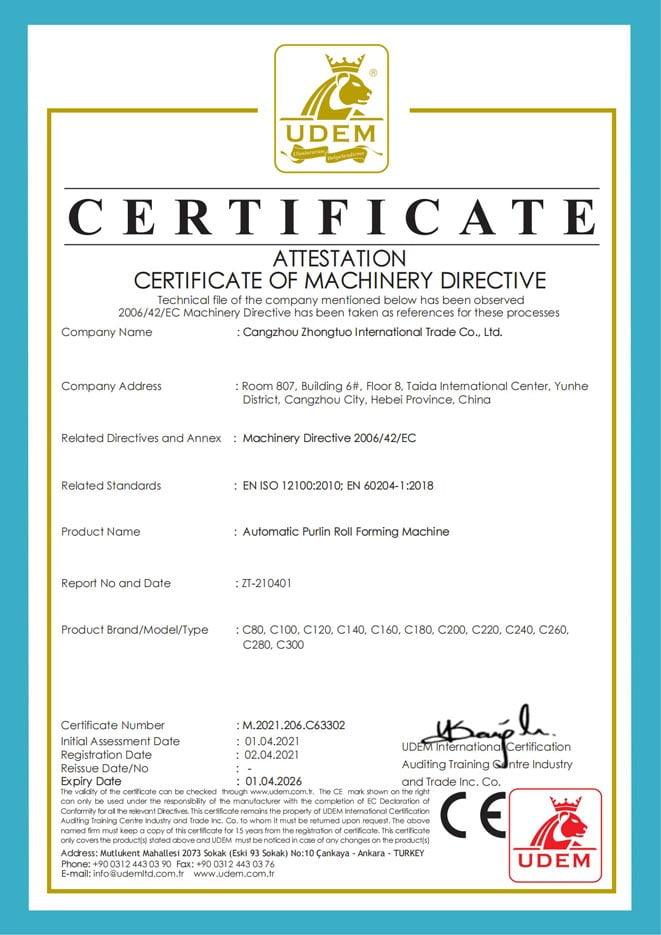
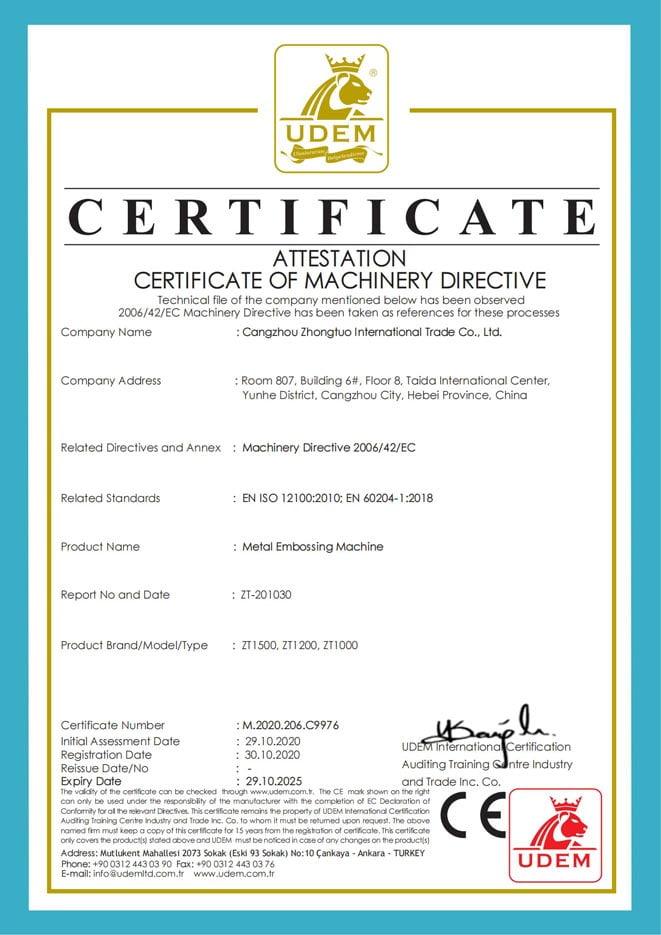
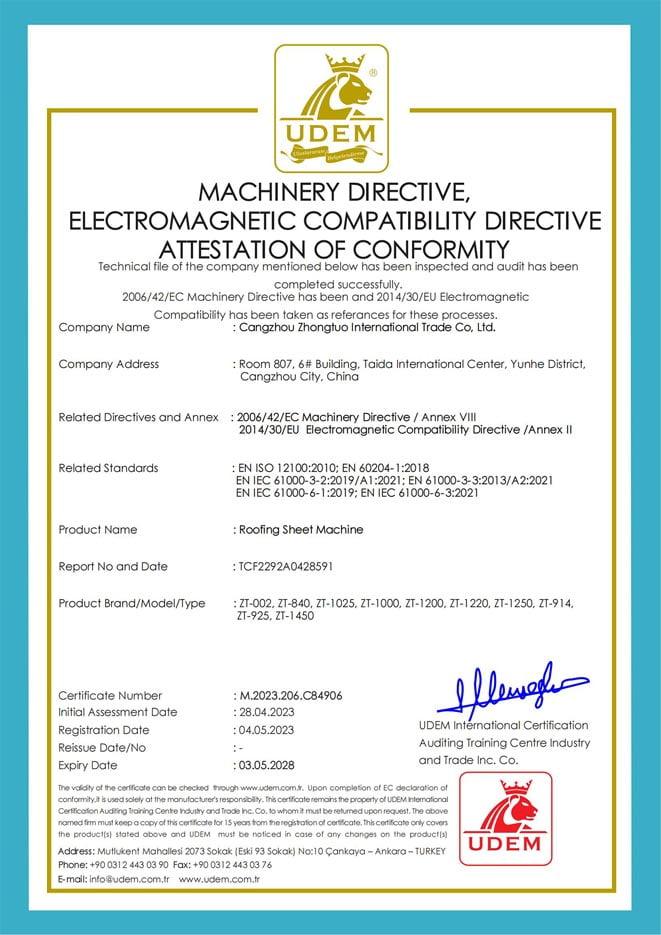
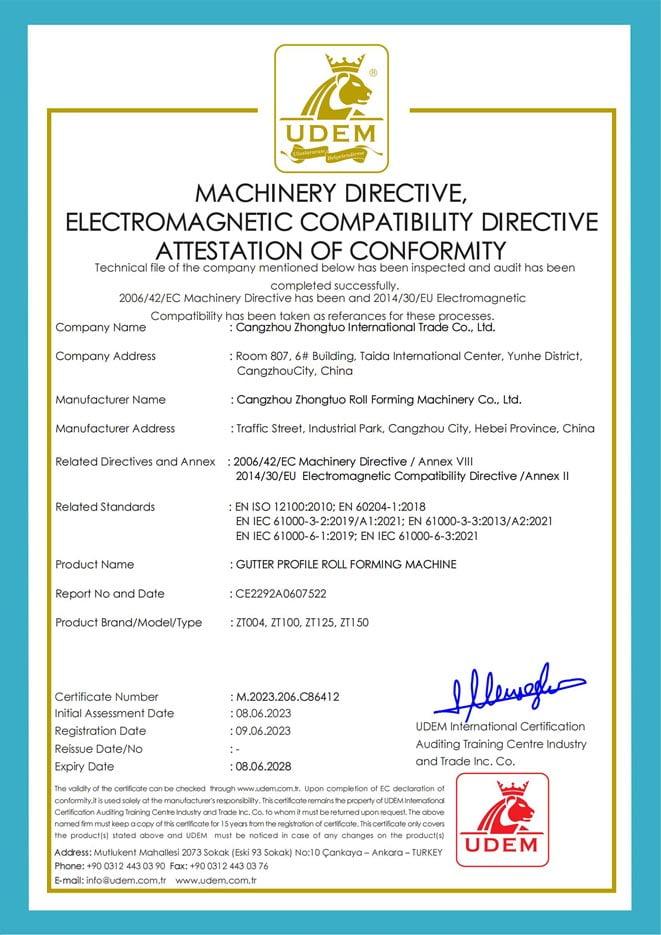
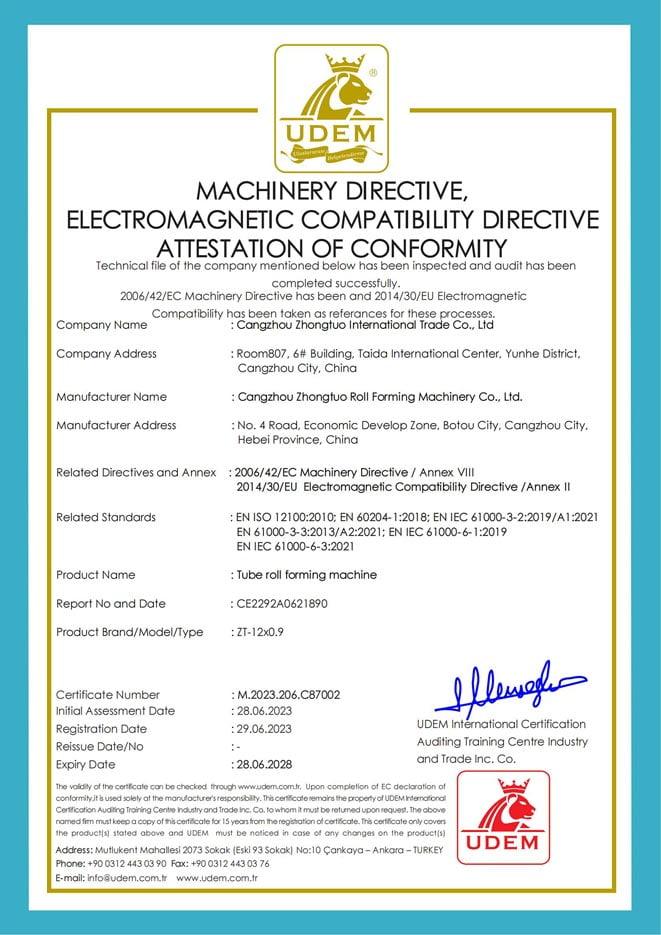
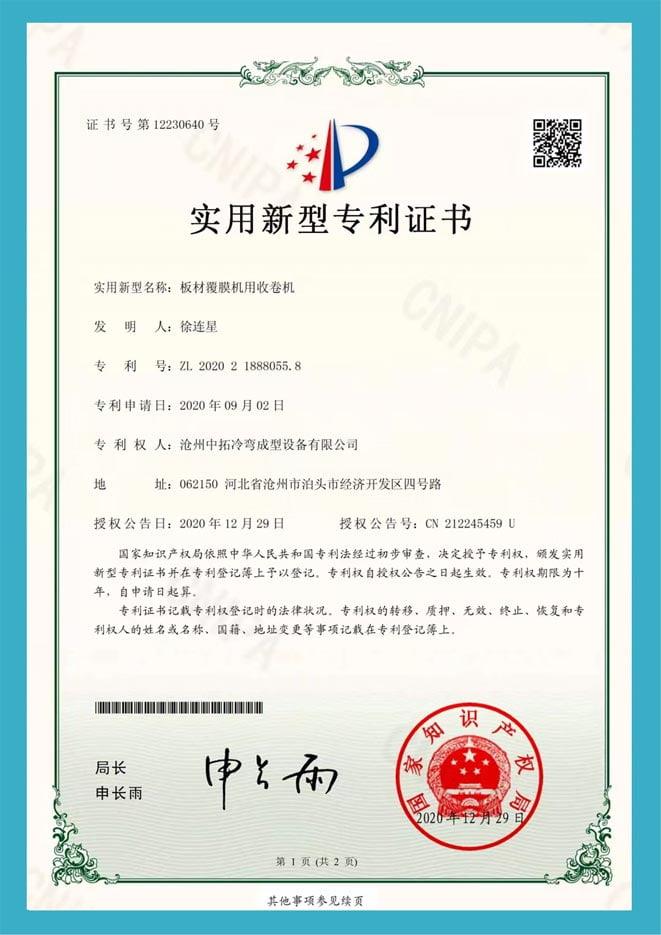
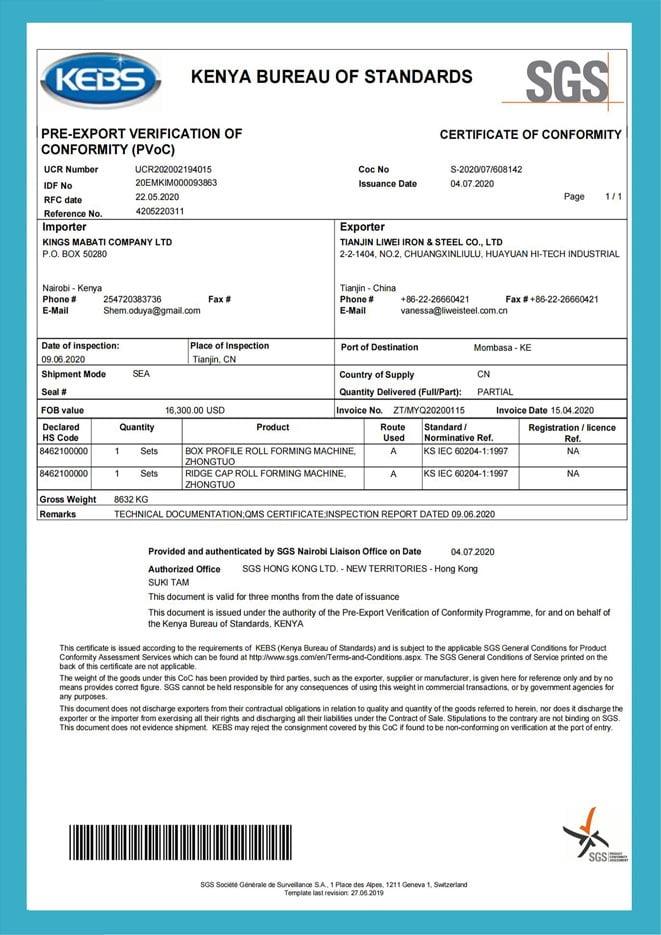
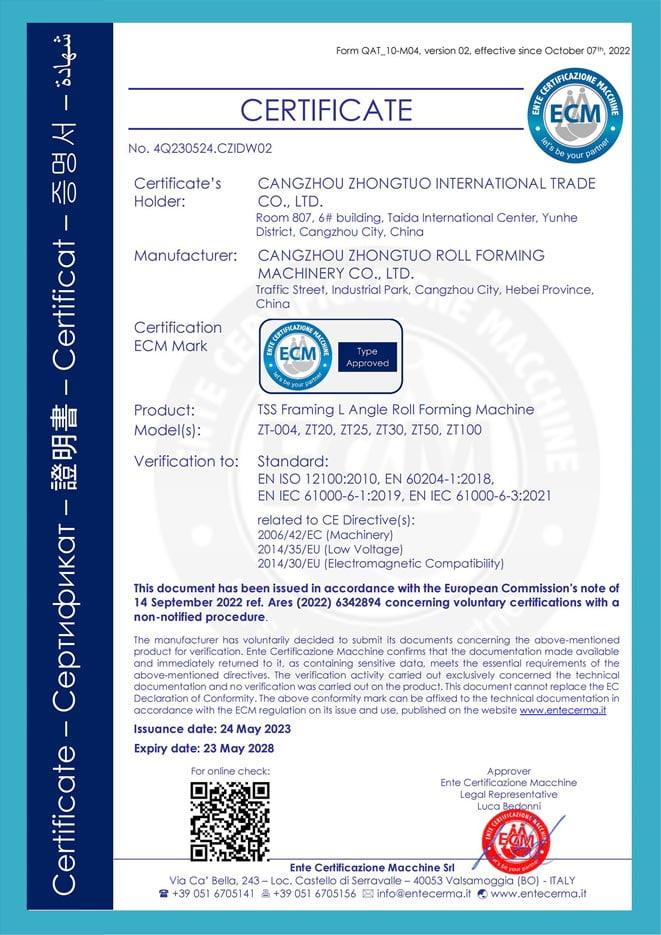
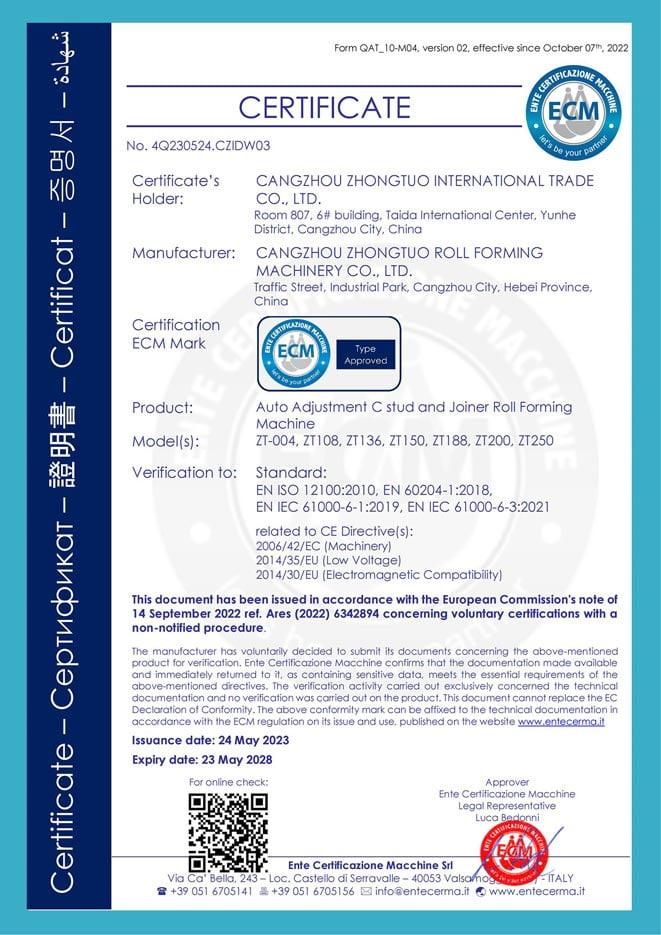
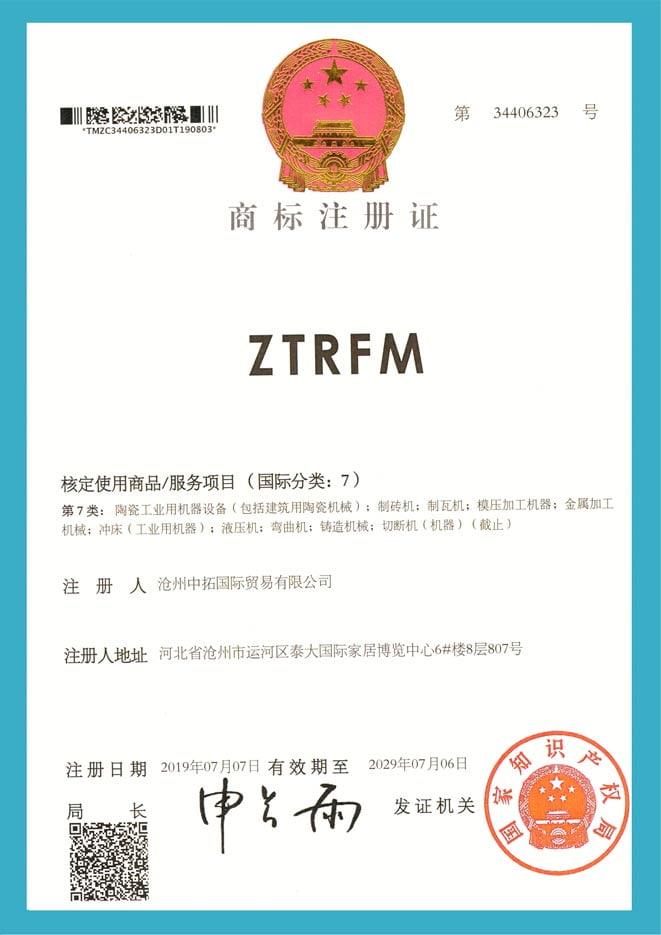
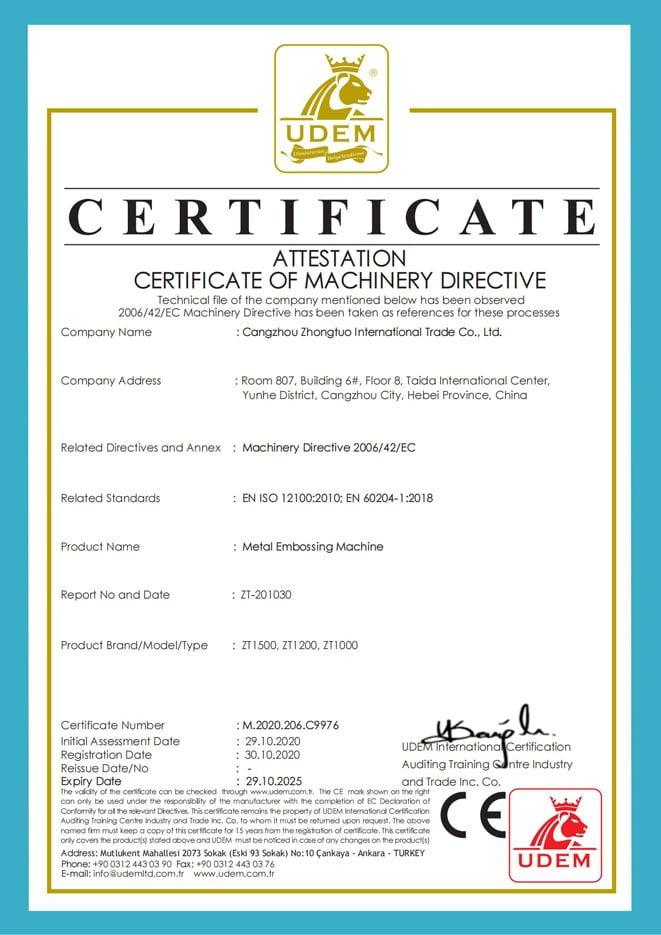
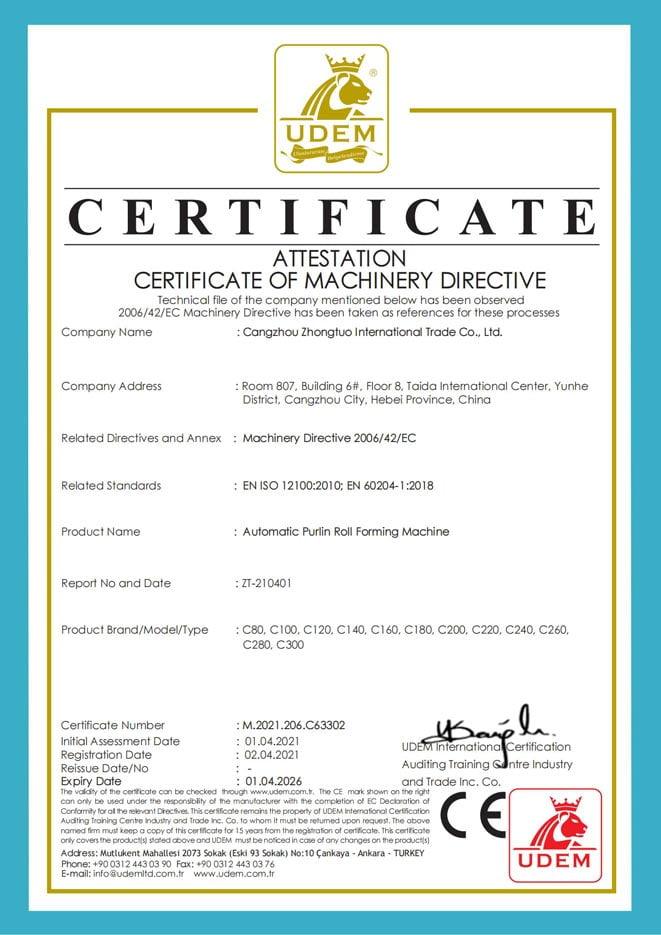
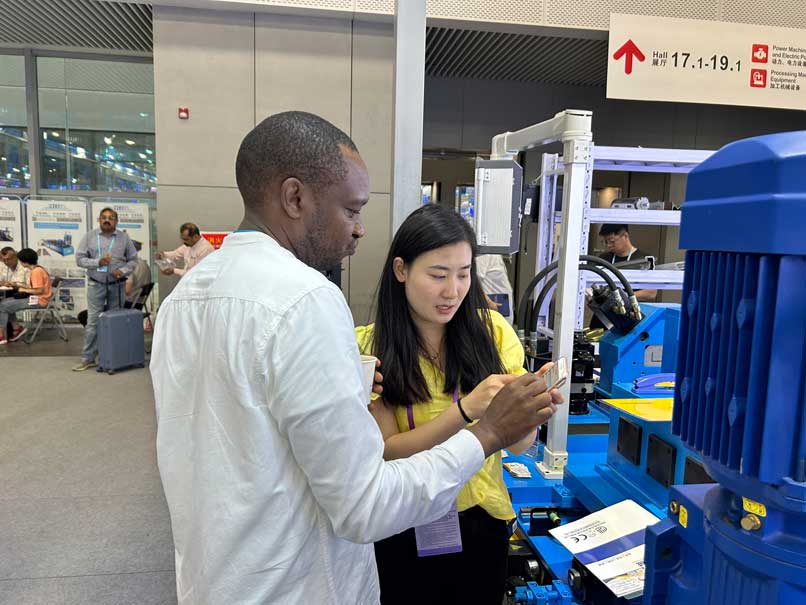
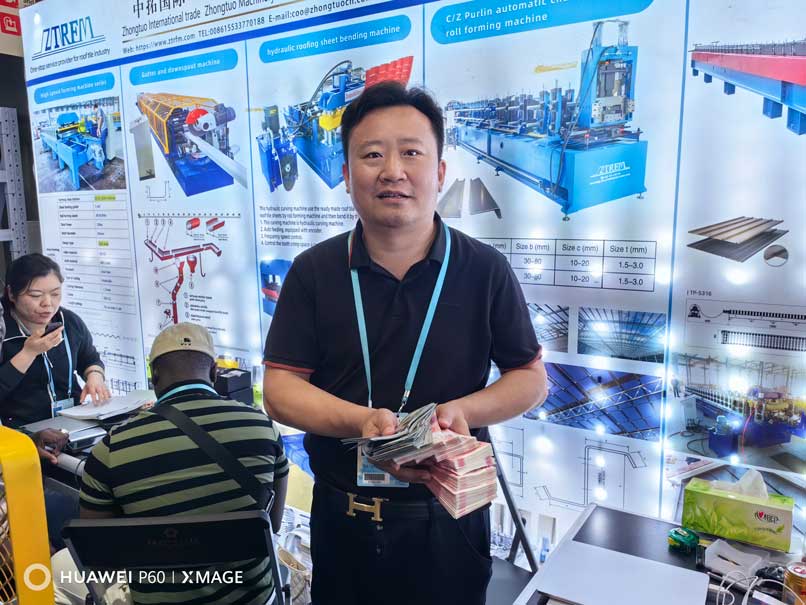
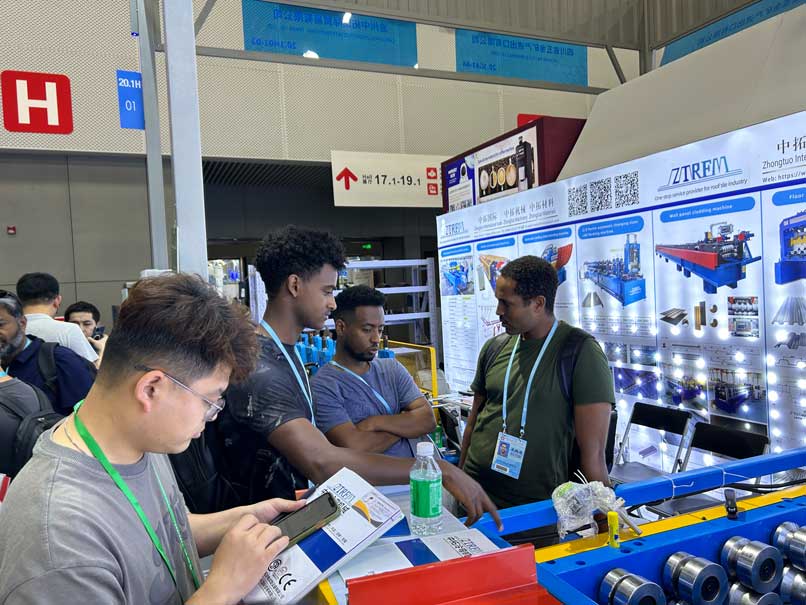
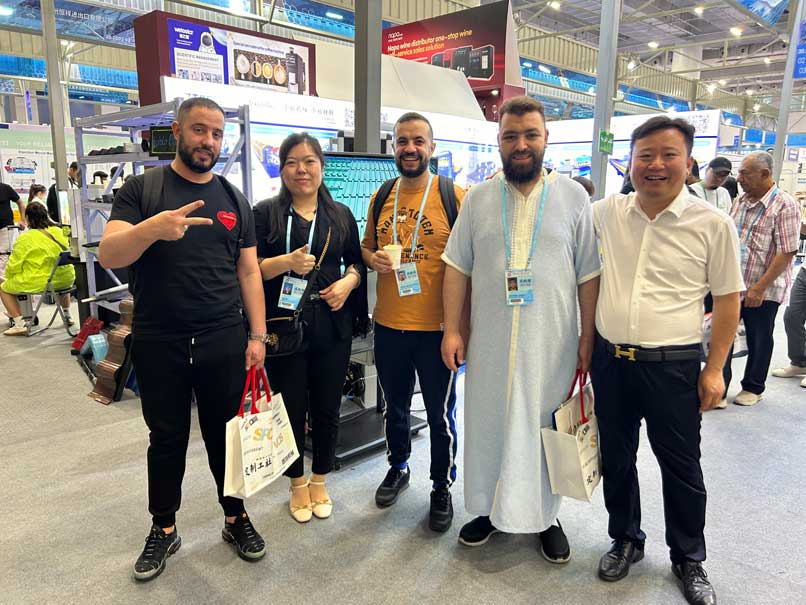
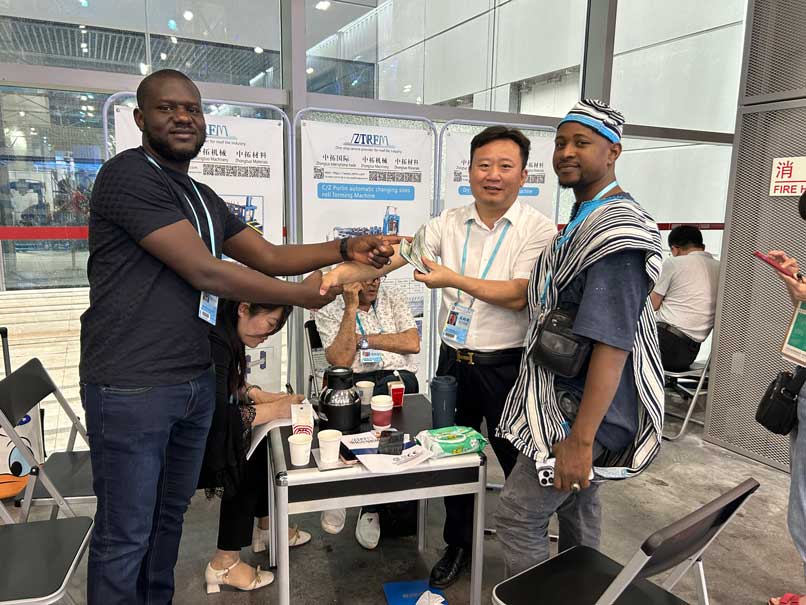
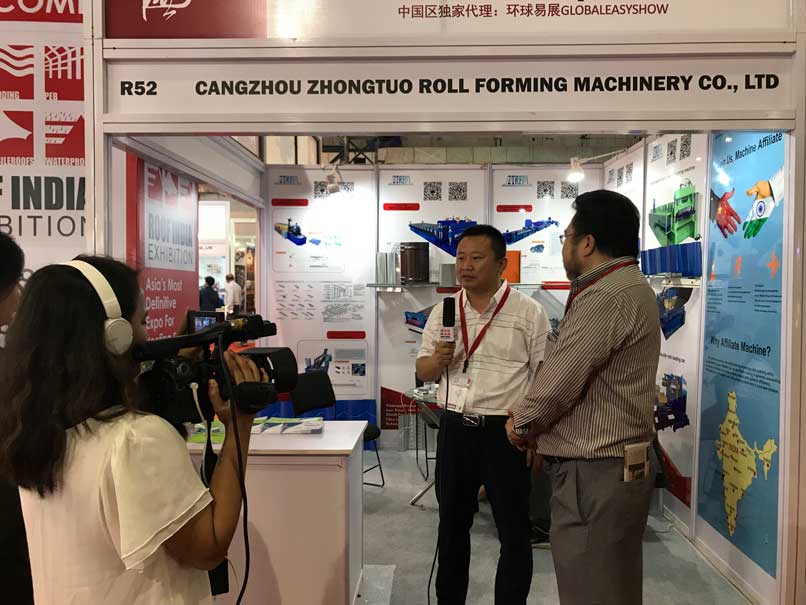
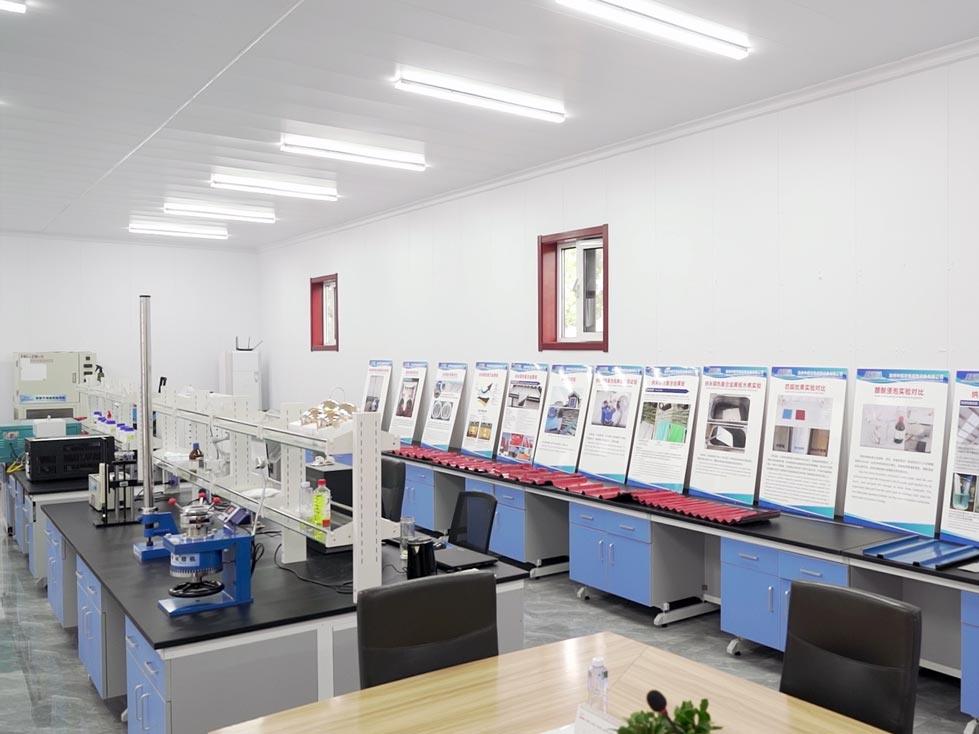
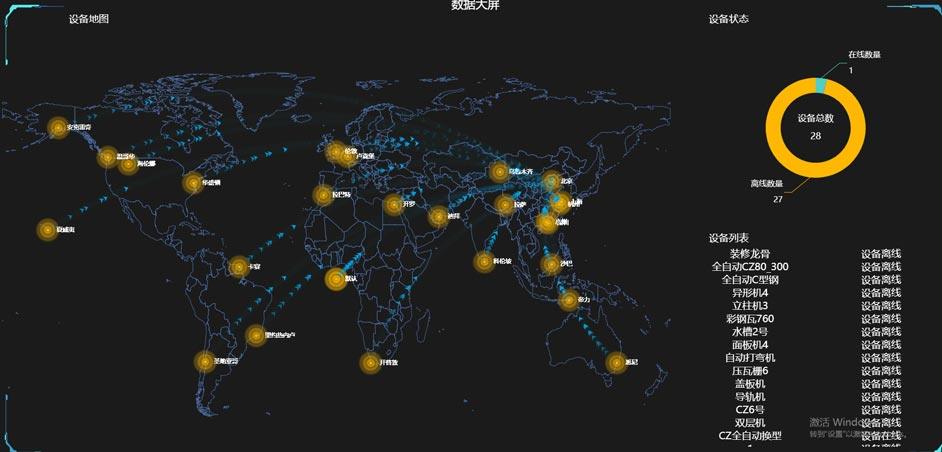
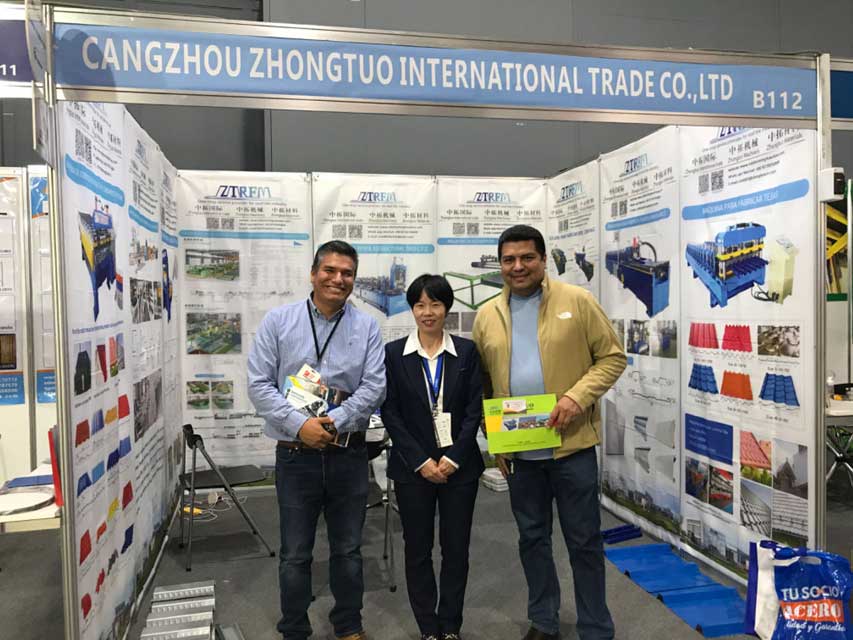
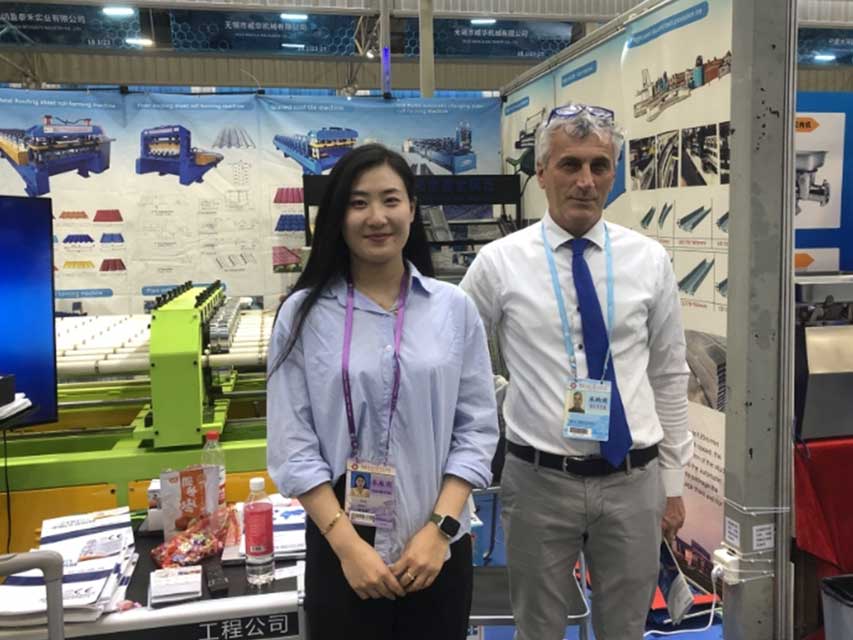
우리는 국가 수준의 첨단 기술 기업입니다. 우리는 ISO9001 품질 시스템 인증, 유럽 CE 안전 인증, 북미 CAS 인증 등을 받았습니다. 우리는 수출 무역에 대한 풍부한 경험을 가지고 있으며 다른 국가 고객의 요구를 이해합니다. 한편 우리는 고객에게 만족스러운 디자인 솔루션을 제공 할 수 있습니다. 우리의 기계는 150 개국 이상에 수출되었으며 고객과 장기적이고 안정적인 협력 관계를 구축하여 고객의 찬사를 받았습니다.
글로벌 신뢰: 156개 이상의 국가 및 지역 고객이 신뢰하는 당사의 루핑 시트 제작 기계는 전 세계적으로 뛰어난 성능과 신뢰성으로 인정받고 있습니다.
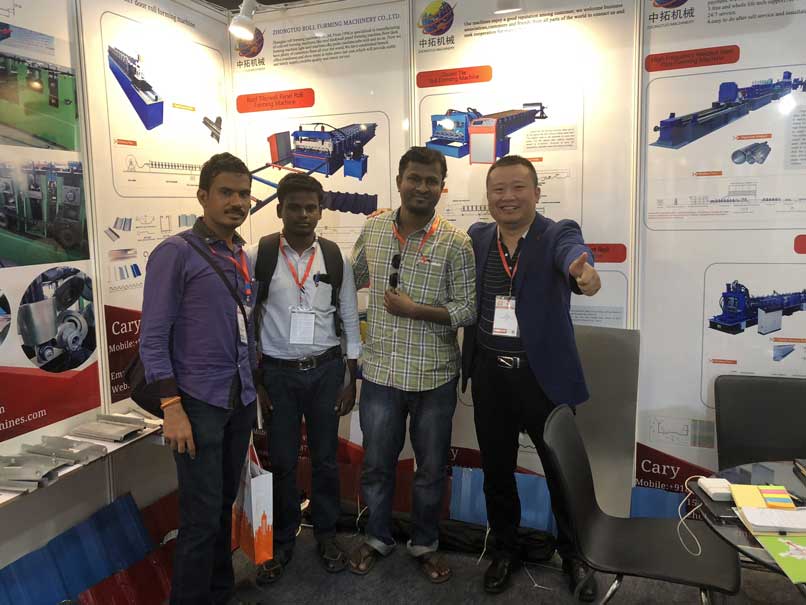
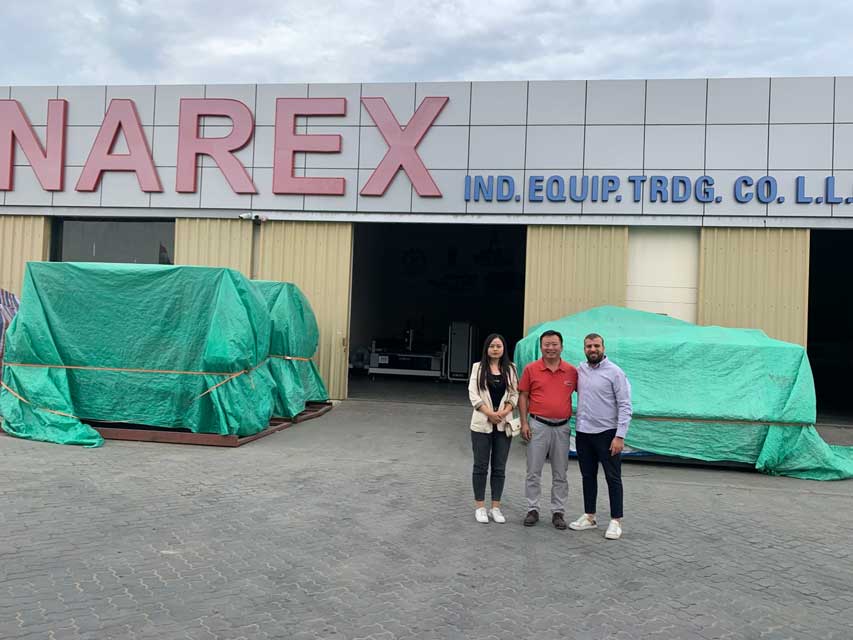
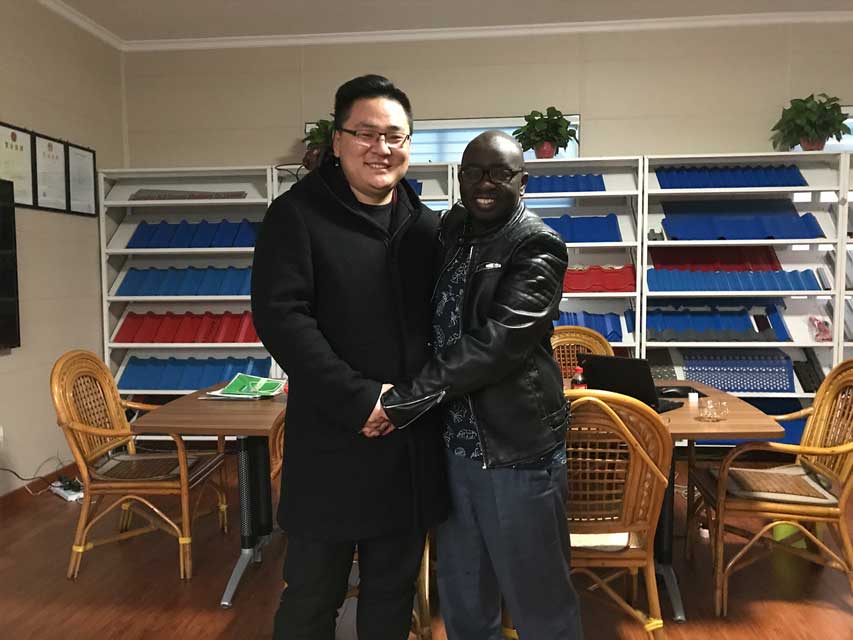
아프리카 잠비아에서 중퉈 롤 성형 기계가 안정적으로 작동하고 있습니다.
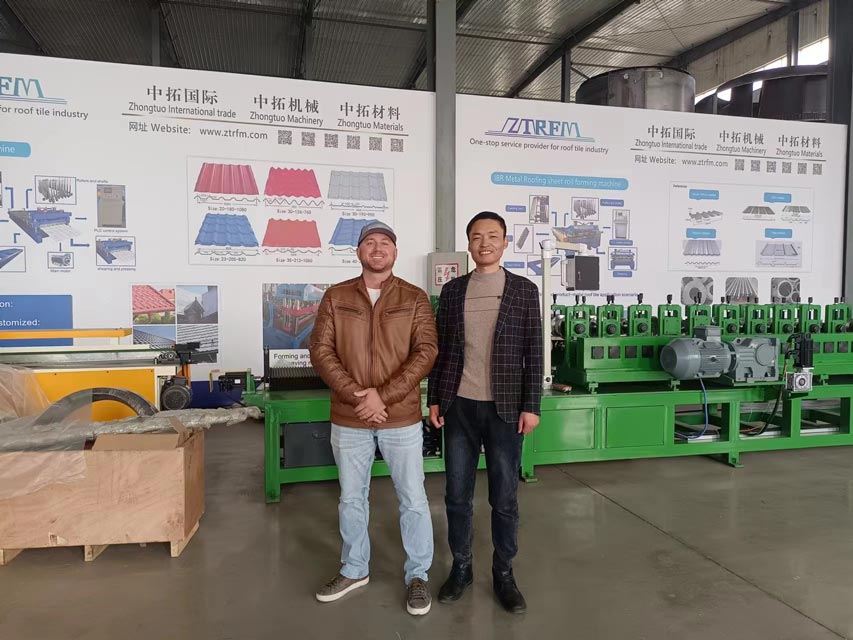
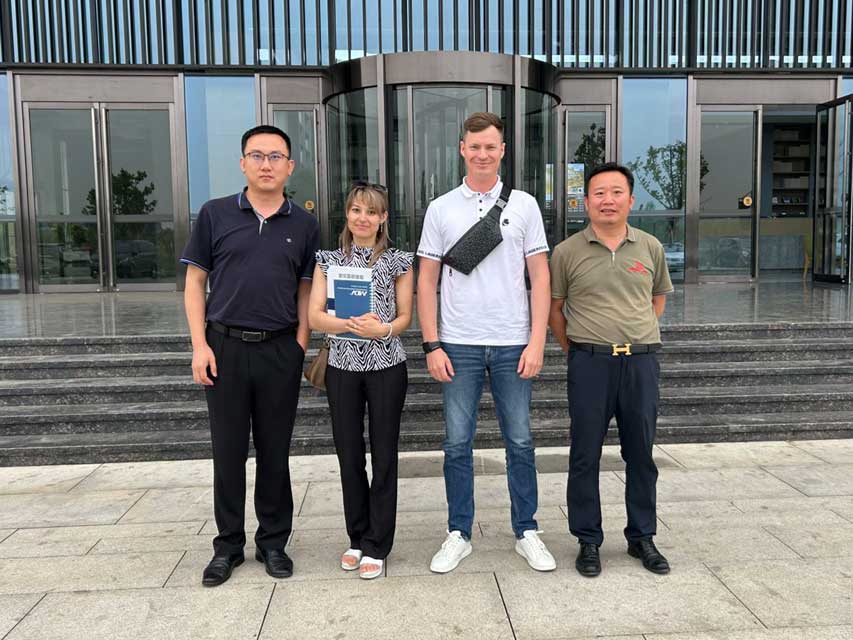
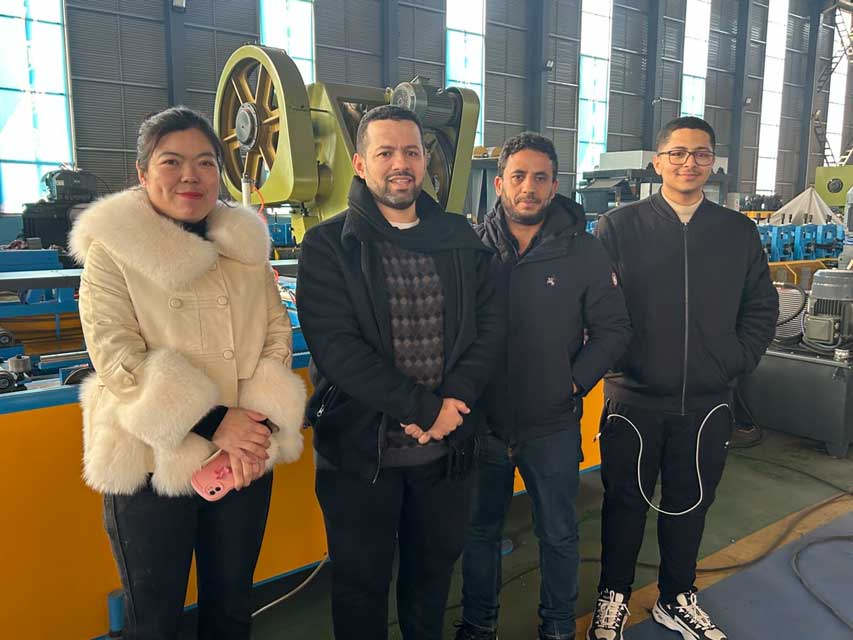
자동 CU 용골 기계-몽골 고객이 공장을 점검하고 우리와 협력합니다.
브라질 고객을 위한 맞춤형 중퉈 금속 슬리팅 라인
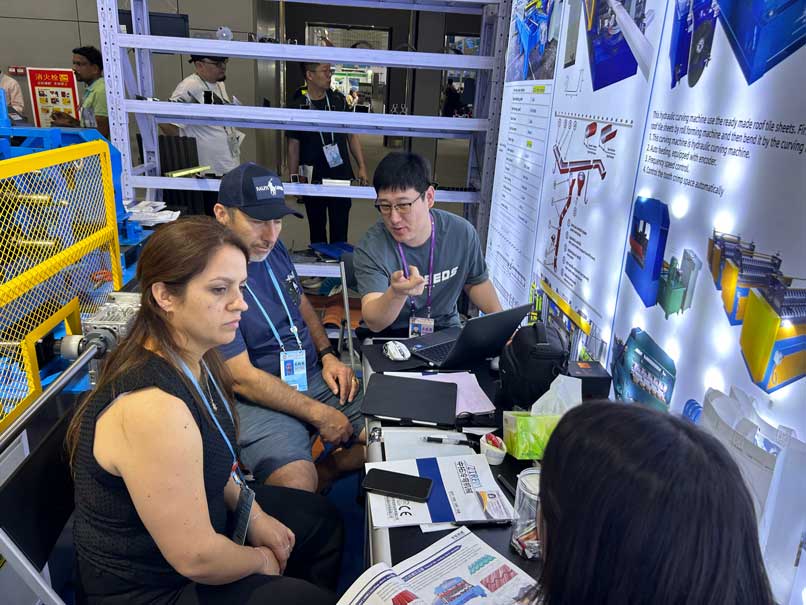
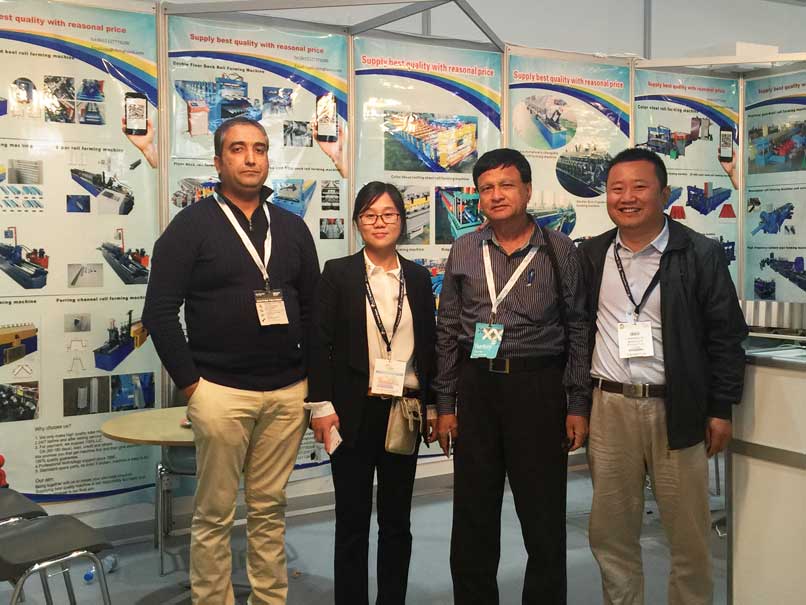
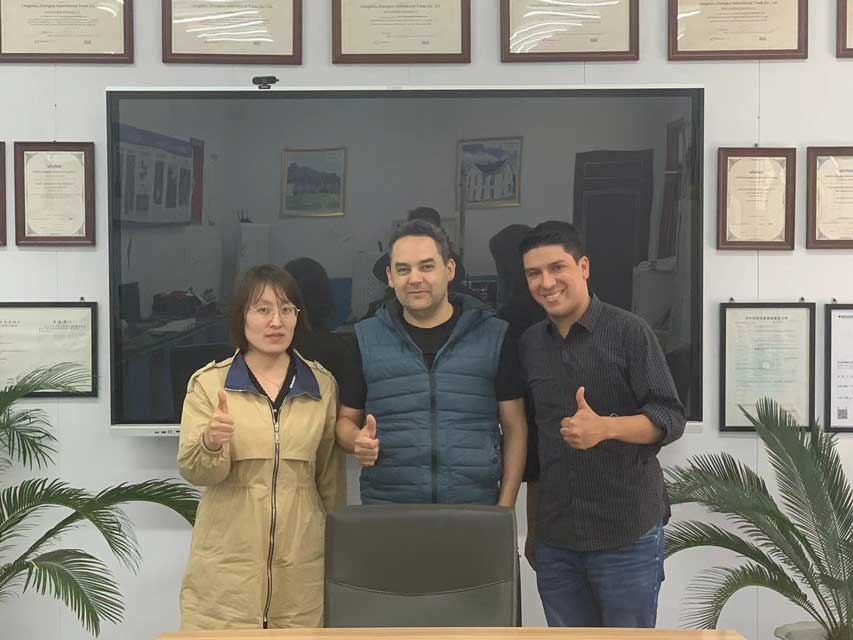
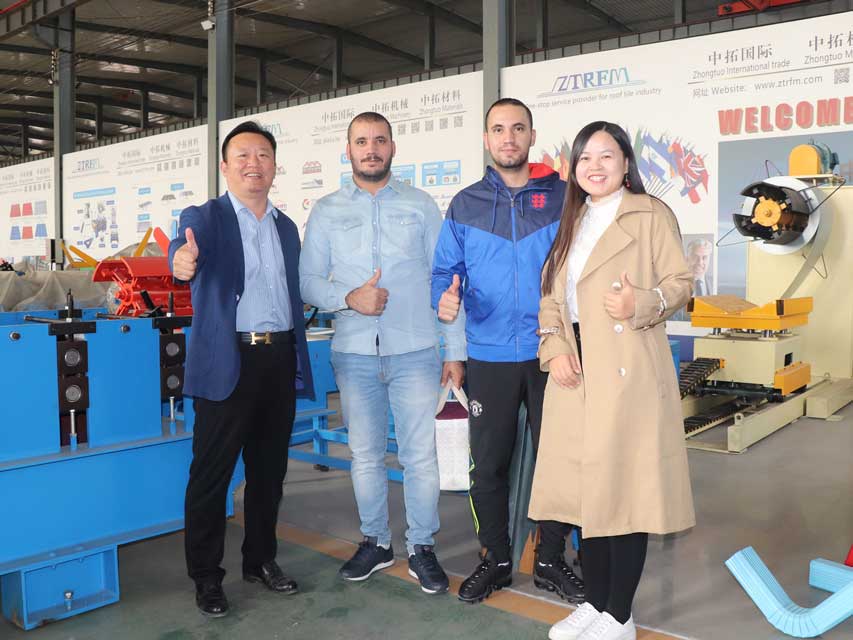
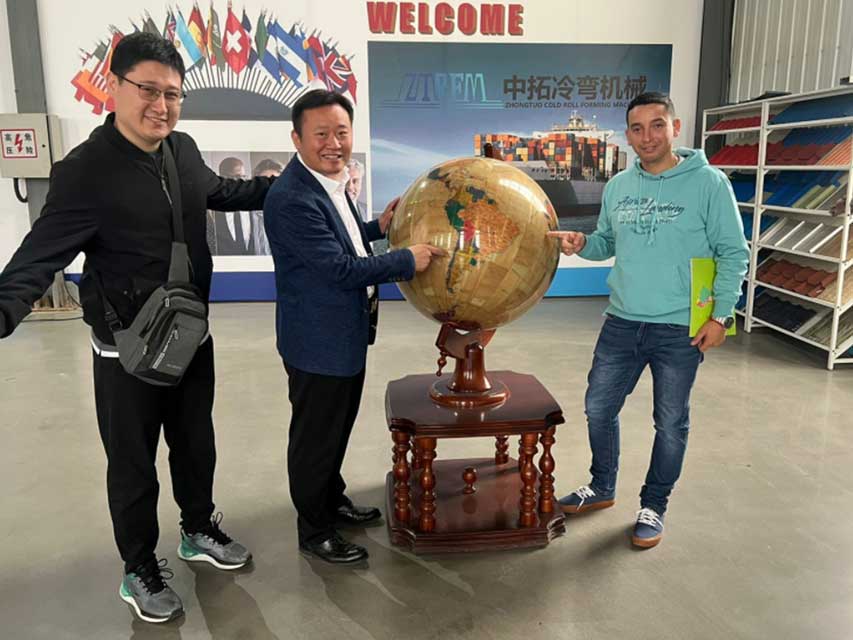
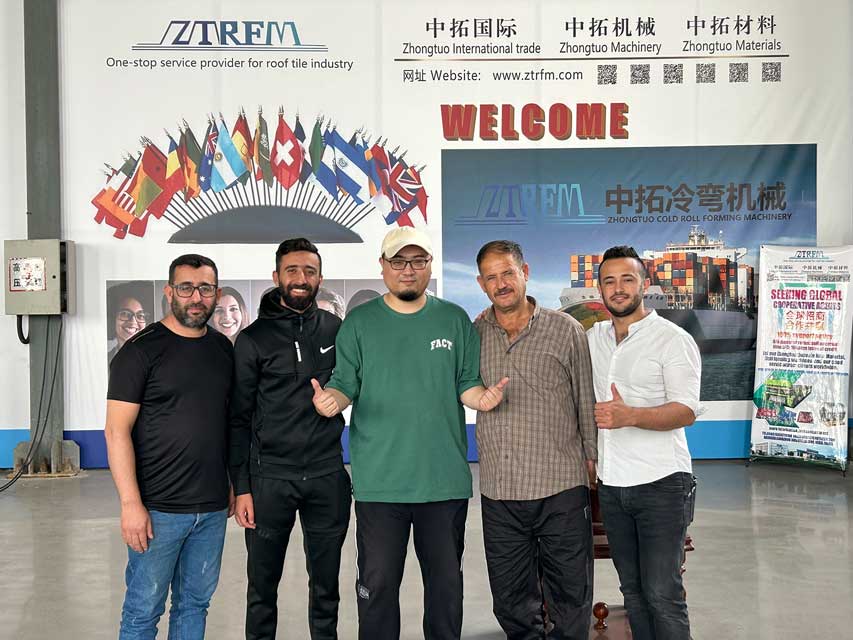
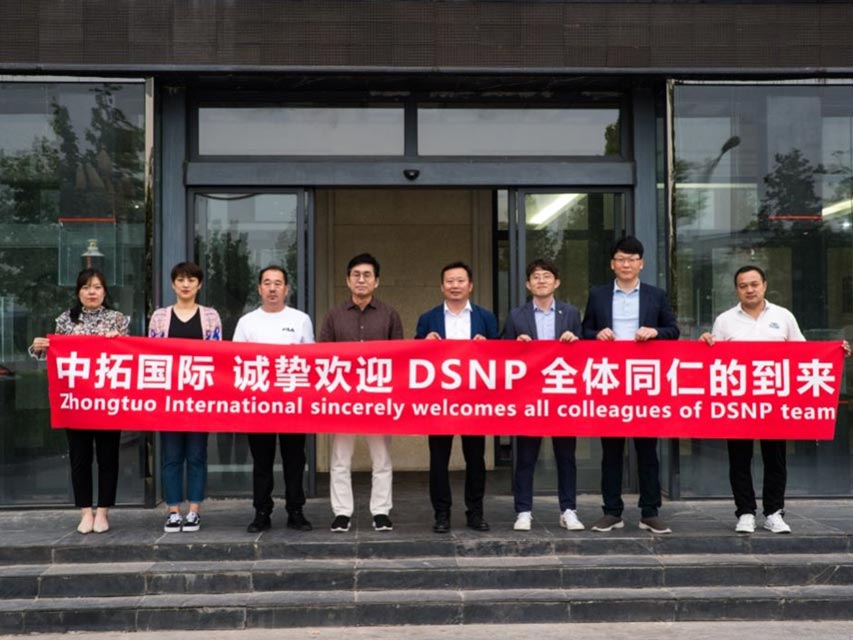
웨도의 롤 성형기 공장 방문을 환영합니다.
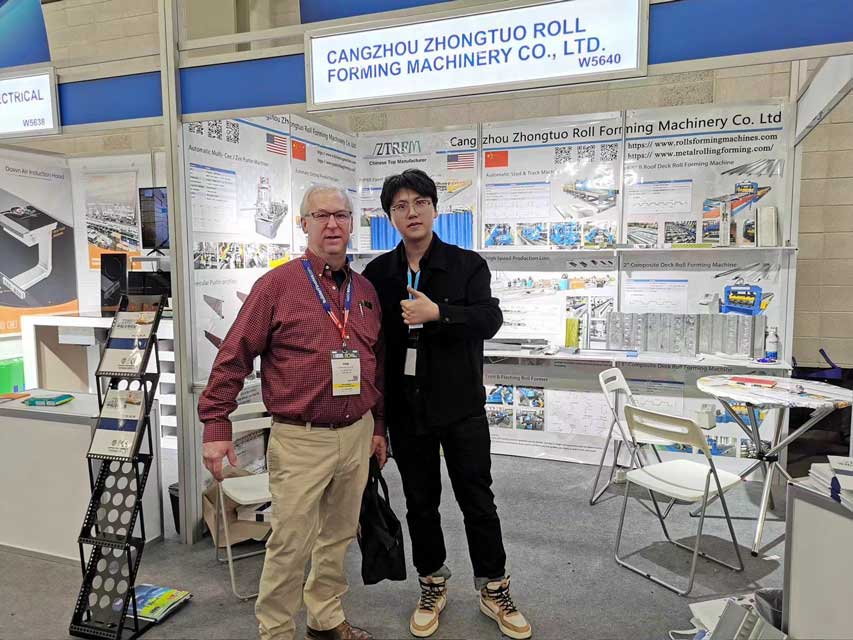
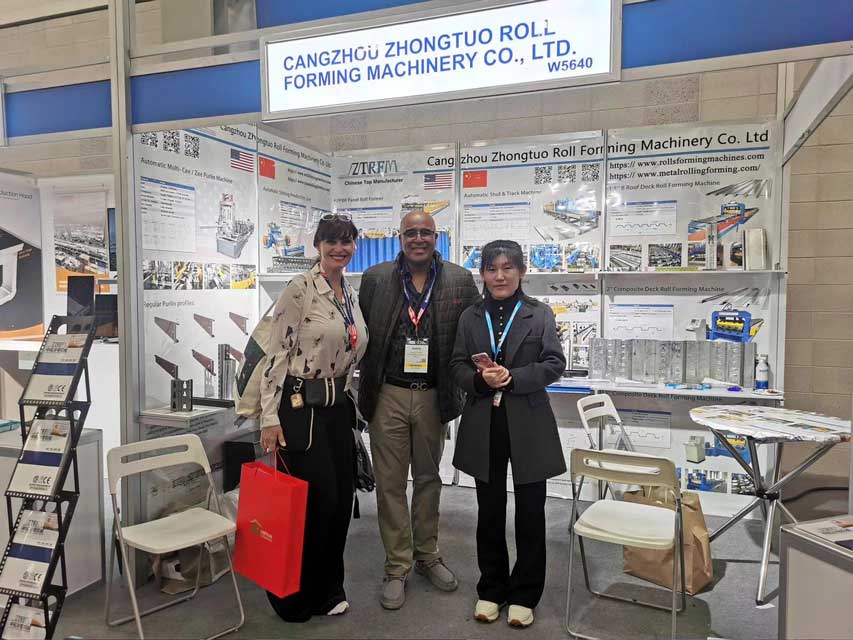
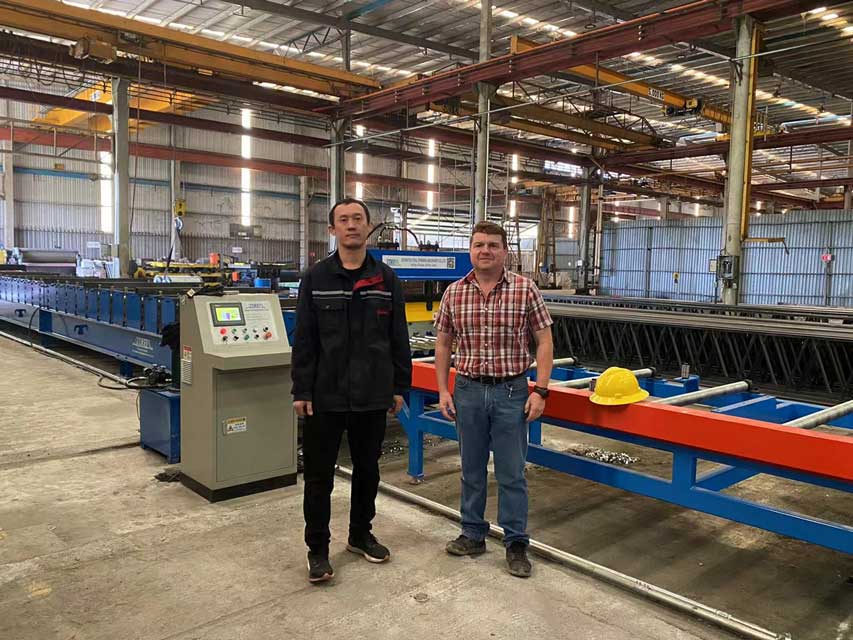
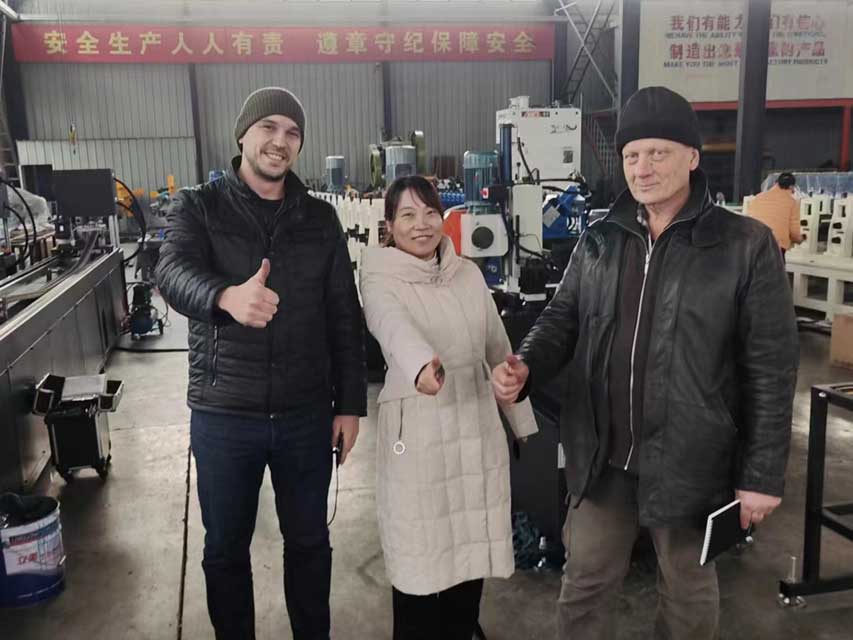
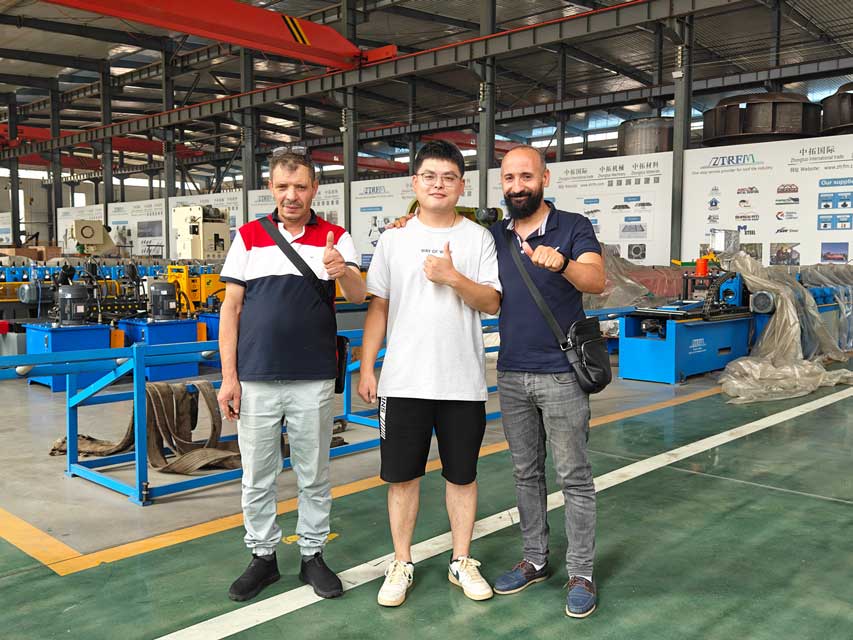
미국 친구들이 창저우 중퉈 롤 성형 기계로 돌아왔습니다.
금속 루핑 롤 성형 기계는 자동 적재 시스템으로 R 패널 및 로우 프로파일을 생산합니다.
롤 성형기 애프터 서비스에 대한 고객의 의견
아제르바이잔 고객이 롤 성형 공장을 성공적으로 방문했습니다!
중퉈 롤 성형 솔루션 | 글로벌 산업을 위한 맞춤형 기계
360° VR 시스템을 통해 중퉈를 방문하면 2014년에 설립된 창저우 중퉈는 다양한 유형의 냉간 압연 성형기를 설계하고 제조하는 데 전념하고 있습니다. 우리는 ODM, OEM 및 원 스톱 서비스를 제공합니다. 원자재, 기계 및 액세서리는 당사에서 구입할 수 있습니다.
360° VR 시스템을 통해 중퉈를 방문하십시오, 창저우 중퉈는 2004년에 설립되었으며, 다양한 유형의 냉간 압연 성형 기계의 설계 및 제조에 전념하고 있습니다. 우리는 ODM, OEM 및 원 스톱 서비스를 제공합니다. 원자재, 기계 및 액세서리는 당사에서 구입할 수 있습니다.