C Purlin Roll Forming Machine: Specifications, Applications and a Practical Buying Guide
A C purlin roll forming machine turns flat steel coil into C-shaped purlins — the long structural members that carry roof and wall loads in steel buildings, warehouses, workshops and light steel framing systems. Because purlins are produced by the kilometre on almost every steel structure project, the machine that makes them directly determines your material cost, delivery speed and profile quality.
This guide explains what the machine does, where its output is used, which specifications matter most when you compare suppliers, and how to configure a machine that fits your market rather than someone else's catalogue.
C Purlin Roll Forming Machine: Specifications, Applications and a Practical Buying Guide
What a C Purlin Roll Forming Machine Actually Does
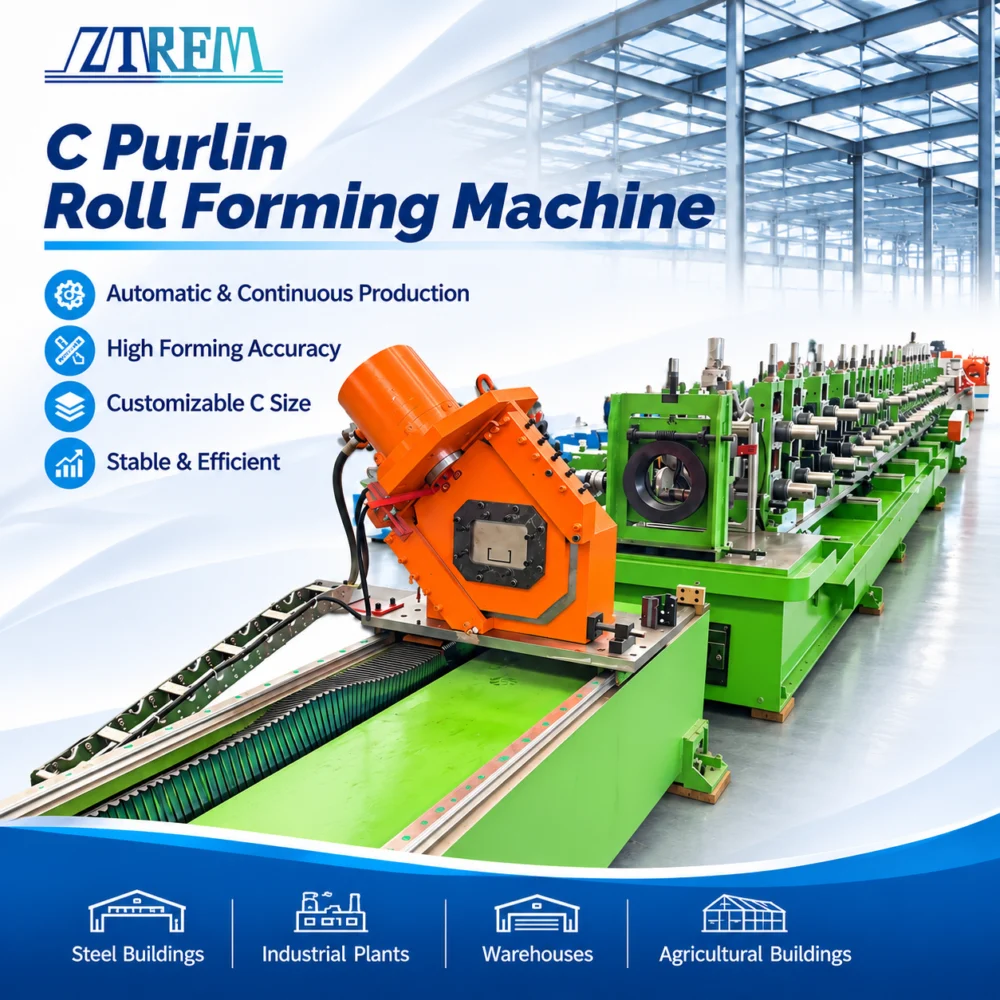
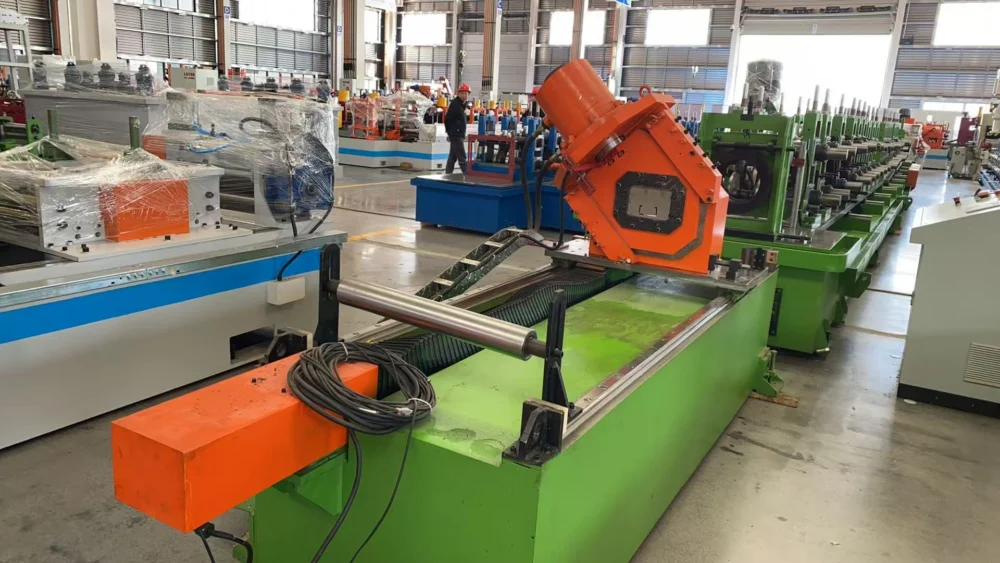
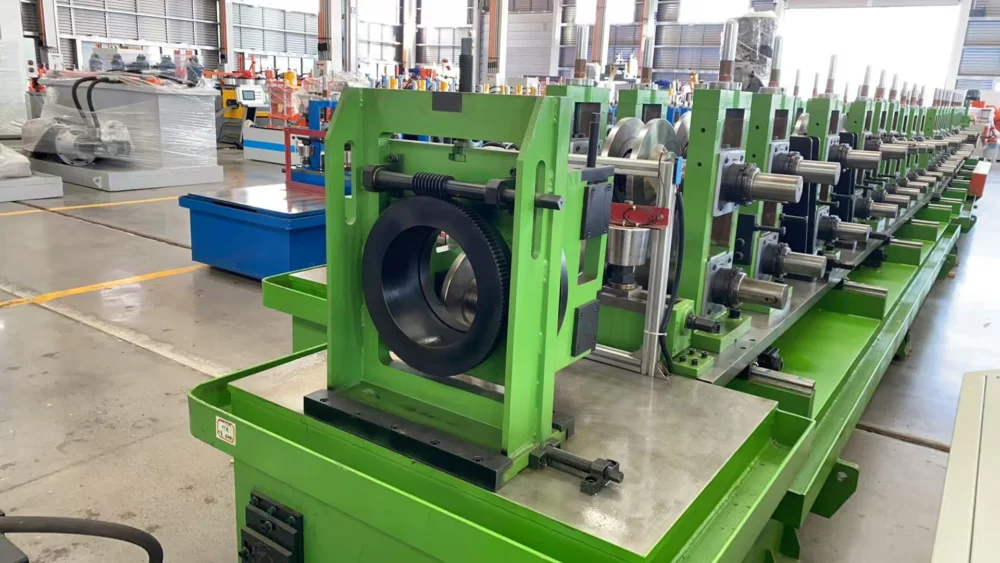
A coil of galvanized or pre-painted steel is uncoiled, levelled and fed into a series of forming stations. Each station carries a pair of rolls that bends the strip a little further, until the flat sheet becomes a C profile with a web, two flanges and two lips. Downstream stations punch holes for bolts or cleats, then a flying or stationary cut-off saw cuts the profile to the ordered length. The finished purlin drops onto a run-out table, ready for bundling.
The process is continuous and automated. Once the operator enters profile size, material thickness, hole pattern, quantity and length into the control panel, the machine repeats the same operation without manual resetting. That repeatability is the real value: every purlin in a batch is identical, so the frames on site fit together without rework.
Where C Purlins Are Used
Roof and wall support in steel structures. C purlins span between rafters or columns and carry the roofing sheets, sandwich panels or wall cladding above them.
Warehouses, workshops and logistics buildings. Large-span projects consume purlins in high volume, usually in a small number of repeated sizes.
Light steel framing and modular construction. Smaller C sections are used as studs, joists and frame members in prefabricated buildings.
Agricultural and temporary structures. Poultry houses, greenhouses, site offices and storage sheds all rely on rolled C profiles.
Support structures and secondary framing. Cable trays, mezzanine floors and equipment supports frequently use C purlins as secondary members.
Because these projects are usually priced per ton or per metre, a machine that runs slightly faster and wastes slightly less coil has a measurable effect on project margin. On a 3,000-square-metre warehouse, even a small improvement in yield and changeover time is worth more than the difference in machine price.
C Purlin Roll Forming Machine: Specifications, Applications and a Practical Buying Guide
Specifications That Decide Your Output
Machine brochures look similar. The differences that matter in daily production are the ones below, and each should be confirmed against your actual order book rather than the supplier's biggest model.
Material thickness range
Most C purlin machines are built for a defined thickness band. A typical light-to-medium configuration handles 0.7–2.0 mm galvanized steel, pre-painted steel or aluminium; heavier structural versions go up to 3.0 mm or more for load-bearing applications. Buying a machine rated far above your normal work adds cost and can compromise roll quality on thin material, while buying below your occasional heavy orders forces you to subcontract.
Profile size range and size adjustment
Check the web height, flange width and lip depth the machine can produce, and how the change is made. Manual adjustment with spacers is inexpensive but slow; motorised or hydraulic adjustment lets one operator change from C100 to C200 in minutes. If your market orders many different sizes in small batches, fast changeover matters more than top speed.
Forming speed and station count
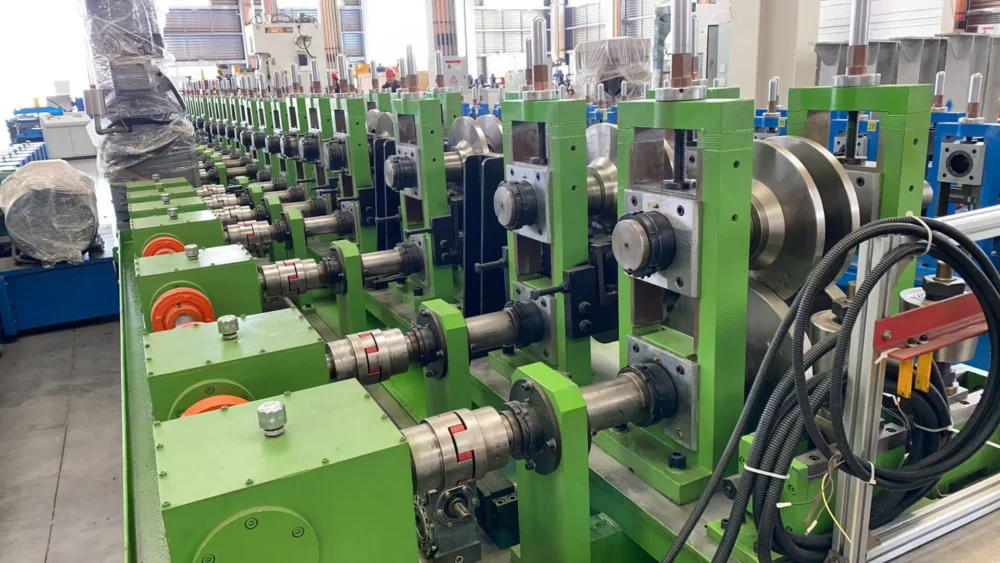
Production speeds of roughly 10–18 m/min are common, with faster lines available. Speed alone is not a quality indicator: more forming stations generally mean gentler bending, lower residual stress and better dimensional accuracy, especially on thicker material. A 16–20 station line usually delivers a cleaner profile than a short 10-station line running at the same speed.
Punching and cutting
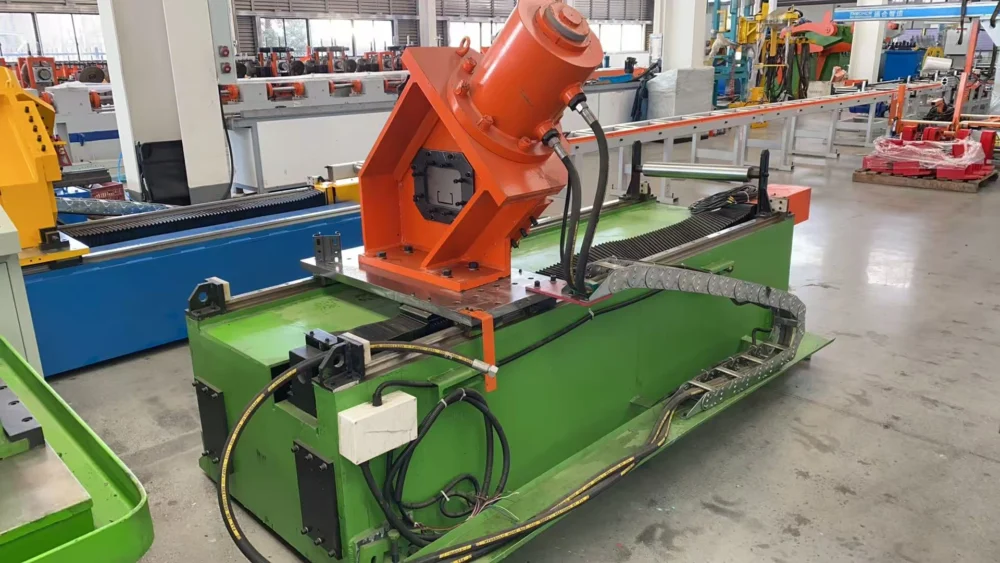
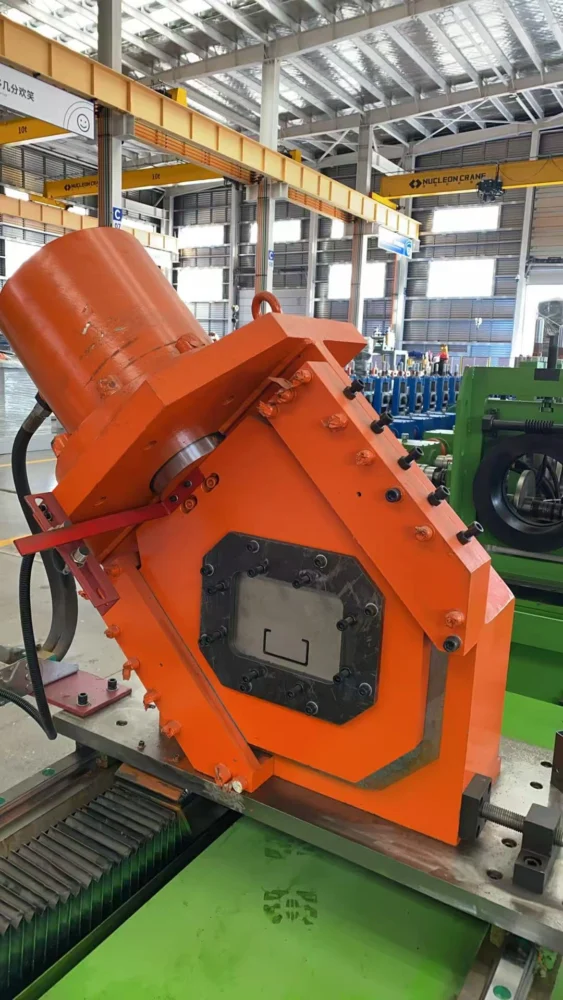
Confirm the hole pattern, hole diameter range and whether punching is done before or after forming. Hydraulic cut-off with a hardened blade gives clean, square ends; a flying cut-off allows cutting on the move, which reduces stop-start losses on long runs. Ask what the changeover involves when the hole pattern changes — this is often where hidden downtime sits.
Control system
A PLC with a touch screen should store recipes for each profile, set batch quantity, length and hole pattern, and count output. Brand choice — Siemens, Schneider, Delta or equivalent — affects spare-part availability in your region. For export markets, confirm the interface language and the voltage and frequency the panel is wired for.
C Purlin Roll Forming Machine: Specifications, Applications and a Practical Buying Guide
Core Components and Build Quality
Two machines can share the same specification sheet and behave very differently after three years of production. The following components are where that difference is decided.
Frame and structure. A rigid, welded and stress-relieved frame keeps the roll shafts aligned under load. Thin frames flex, and flex shows up as inconsistent profile dimensions.
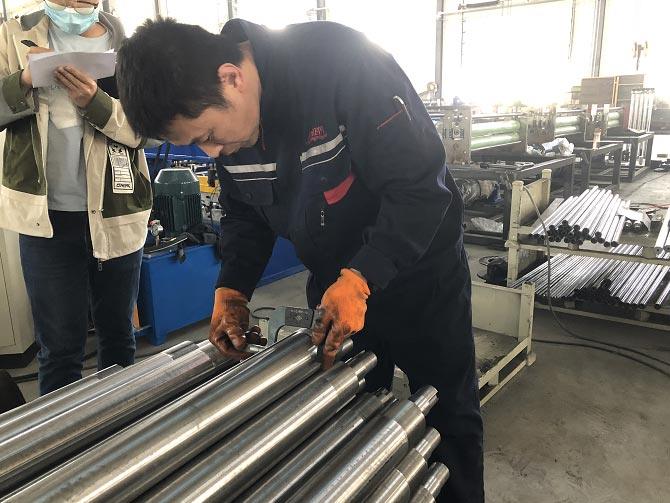
Roll shafts and bearings. Hardened, ground shafts and quality bearings reduce vibration and extend roll life. Ask for the shaft material and hardness, not just the shaft diameter.
Rolls. Roll material, heat treatment and grinding accuracy determine surface finish and how long the profile stays in tolerance. Cr12MoV or equivalent tool steel with proper hardening is a reasonable benchmark for production work.
Transmission. Chain drive, gearbox drive or independent motor drive per station each has trade-offs in maintenance and accuracy. Understand what you are buying and what spares you will need.
Hydraulics. The decoiler, punching and cut-off all depend on the hydraulic station. A well-sized pump, reliable valves and clean oil management prevent the most common downtime causes.
Electrical components. Contactors, inverters and sensors from established brands make troubleshooting predictable and spare parts easy to source locally.
Build quality is best judged by asking specific questions: what is the frame wall thickness, which brand of inverter is used, how are the shafts supported, and what is the warranty on rolls and bearings. Suppliers who answer with detail are usually the ones who build with detail.
Changeover, Efficiency and Labour Cost
Purlin production is rarely one size forever. Real order books mix sizes, thicknesses and hole patterns, so the cost of changing over is a production cost. Three design choices reduce it.
Fast size adjustment. Motorised or hydraulic adjustment removes the need for spacers and manual spanner work, and lets a single operator handle the change.
Recipe storage. Saved programs mean the machine returns to a previously run size with the correct roll positions, punching pattern and cut length, instead of recalibrating from scratch.
Combined C and Z capability. A CZ purlin roll forming machine with a quick-change cassette can switch between C and Z profiles on one line, which is valuable if your market uses both.
The labour side is equally practical. A well-integrated line — decoiler, forming, punching, cutting and stacking — can be run by one or two operators, and the run-out table design determines how easily finished purlins can be bundled and lifted. When comparing quotes, calculate output per operator hour, not just metres per minute.
C Purlin Roll Forming Machine: Specifications, Applications and a Practical Buying Guide
Checks Before You Approve a Machine
Whether you visit the factory or approve a machine remotely, these checks catch most problems before shipment.
Run your own profile. Send a drawing of a size you actually sell and ask for a sample produced on the machine you are buying, not a showroom sample.
Measure the sample. Check web height, flange width, lip depth, angle squareness, twist along the length and hole position tolerance.
Test the changeover. Ask the operator to change from one size to another and time it, including the first-off inspection.
Check the cut end. Look for burrs, deformation and blade marks; these indicate cut-off quality and blade condition.
Review the electrical panel. Confirm component brands, wiring labelling, safety interlocks and emergency stop function.
Confirm documentation. Manuals, electrical diagrams, spare parts list, foundation drawing and a video of the test run should all be included.
An approval test that only confirms the machine switches on is not an approval test. The items above take half a day and prevent months of arguments.
Configuring a Machine for Your Market
The same base machine is sold into very different markets, and configuration should follow the destination.
Voltage and frequency. Confirm the panel matches local power — 380V/50Hz, 440V/60Hz or other — and that motor protection is rated correctly.
Profile standards. Purlin dimensions, lip angles and hole spacing differ between regions and between design codes. Provide your drawings so the rolls are cut to your profile, not to a generic one.
Coil supply. Coil width, inner diameter and maximum weight determine decoiler size. If your supplier delivers 5-ton coils, a 3-ton decoiler will bottleneck the line.
Shipping and installation. Check machine dimensions against container space, and confirm whether the supplier provides foundation drawings, installation supervision and operator training.
After-sales reality. Ask how quickly spare rolls, blades and bearings can be shipped, and whether technical support is available in your working hours. A machine is only as good as the support behind it.
Why Steel Structure Producers Choose ZTRFM
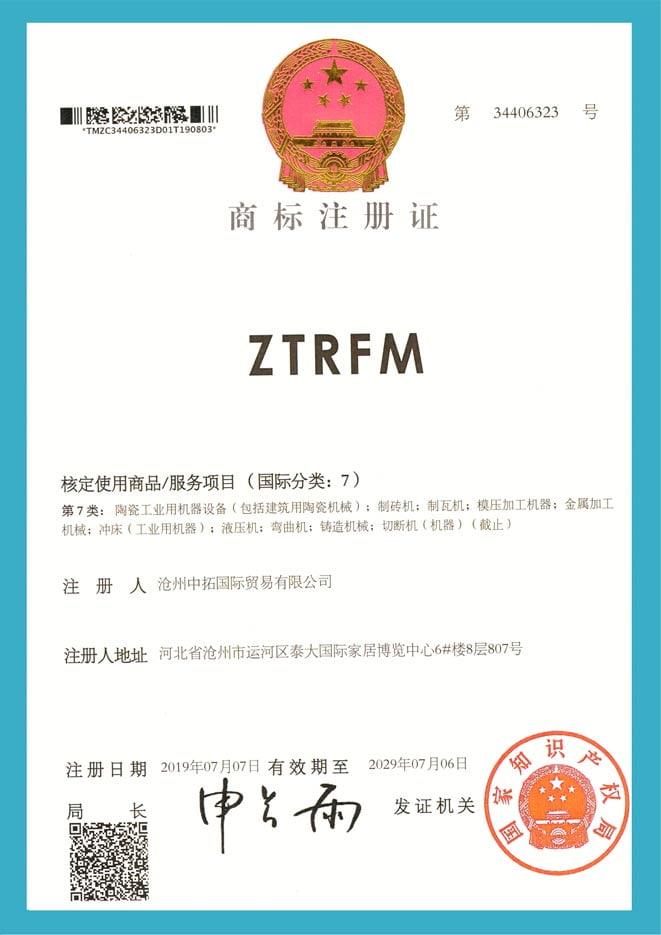
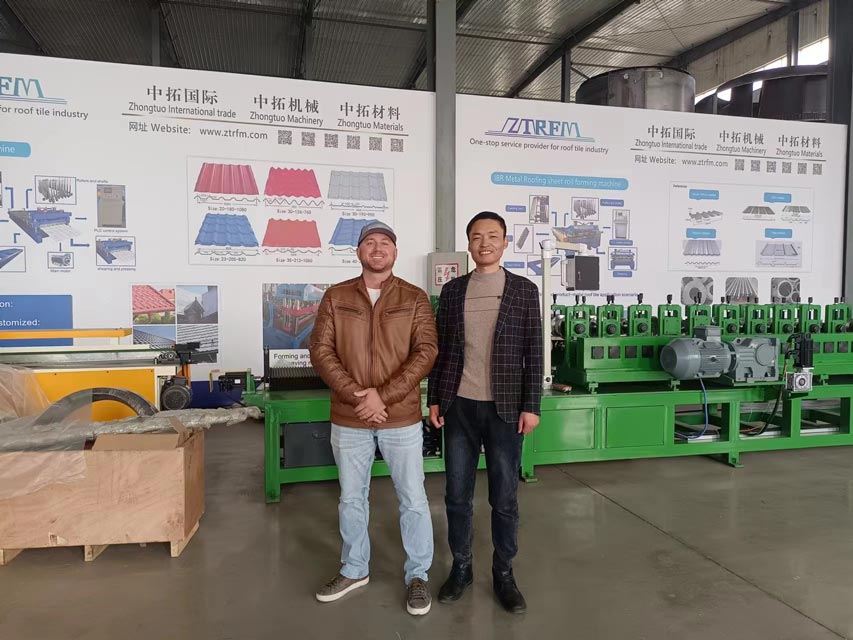
ZTRFM builds cold roll forming machines for steel structure, roofing and cladding producers, and supplies C purlin lines in a range of thickness and profile configurations, including combined CZ purlin machines with quick-change capability. The production approach is practical: rolls cut to the customer's own profile drawings, PLC control with recipe storage, branded electrical and hydraulic components, and a test run recorded and shared before shipment so the buyer knows exactly what is being loaded.
For buyers comparing several suppliers, the useful question is not which machine has the longest feature list, but which supplier will still answer the phone in year four. ZTRFM's lines are built around that expectation — standardised components, documented spares, and configuration decisions taken together with the customer rather than from a fixed catalogue.
C Purlin Roll Forming Machine: Specifications, Applications and a Practical Buying Guide
Frequently Asked Questions
What thickness of steel can a C purlin roll forming machine handle?
It depends on the model. Light and medium lines commonly handle 0.7–2.0 mm, while heavy-duty machines can form up to 3.0 mm or more. Choose the band that matches your regular orders, and confirm the machine has been tested at both ends of that band.
How fast does a C purlin machine produce?
Typical production speeds are around 10–18 m/min, with faster lines available. Real output is lower once coil changes, size changeovers and inspection are included, so ask for hourly output on a mixed order rather than a single top speed figure.
Can one machine make both C and Z purlins?
Yes, with a CZ purlin roll forming machine that uses a quick-change roll cassette or adjustable roll sets. It saves floor space and capital compared with two separate lines, provided the changeover is genuinely quick.
How many operators are needed?
Most automated lines run with one operator at the control panel and one helper handling coils and finished bundles. Highly integrated lines with automatic stacking can run with a single operator.
What should be included in the quotation?
The machine, decoiler, control system, tooling for your profile, hydraulic station, spare blades and bearings, foundation drawing, operation manual, electrical diagram, test-run video, packing list, and the terms of installation support and warranty.