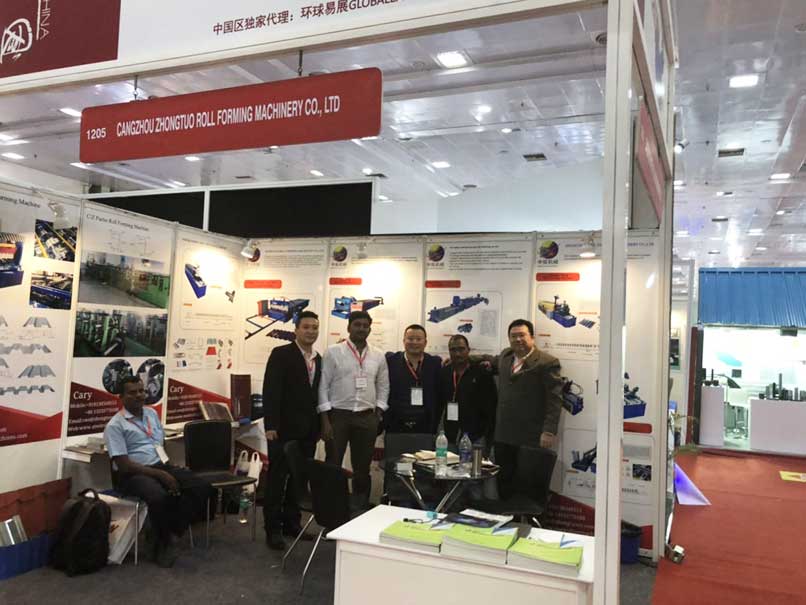
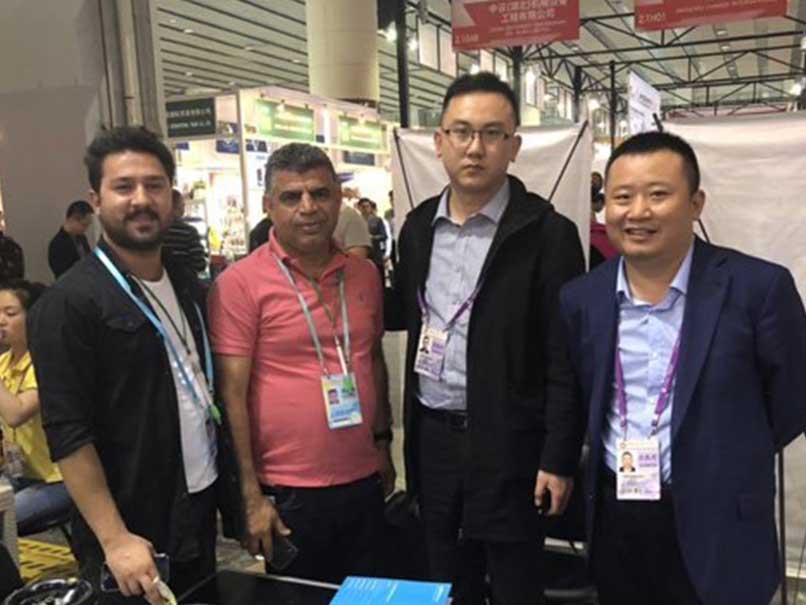
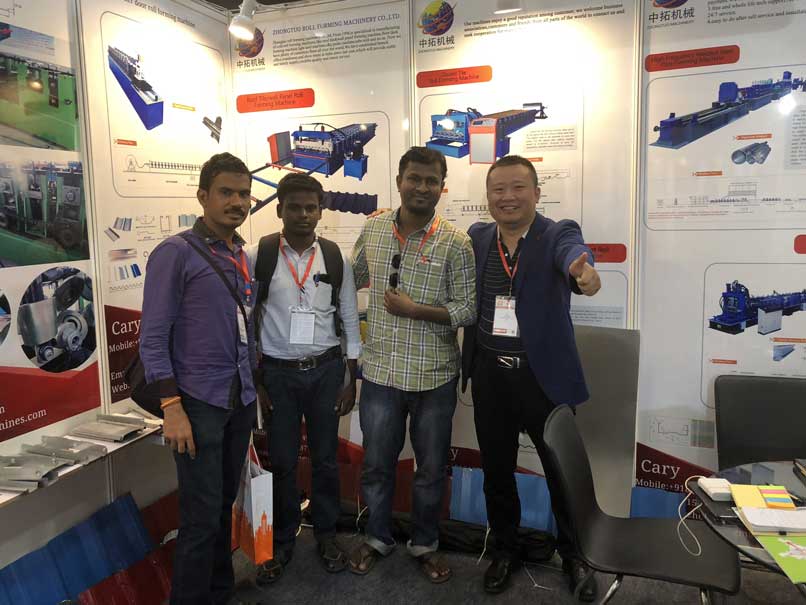
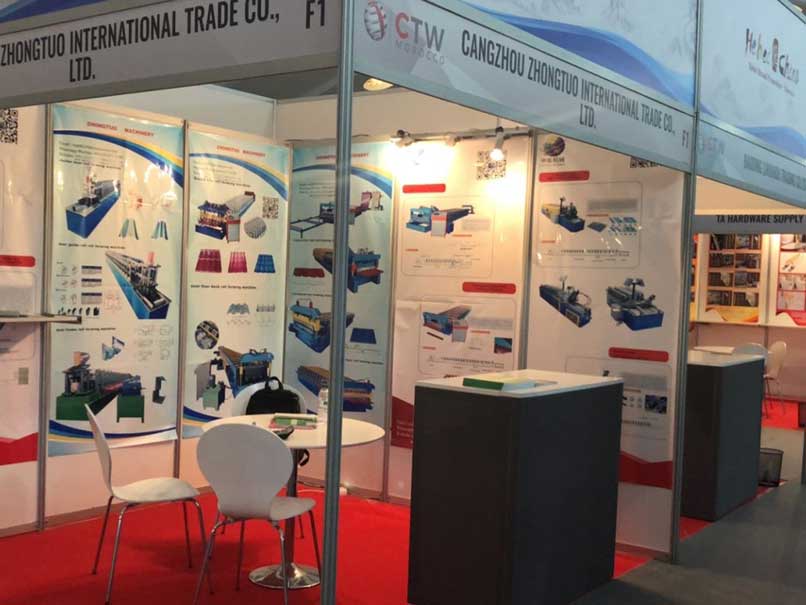
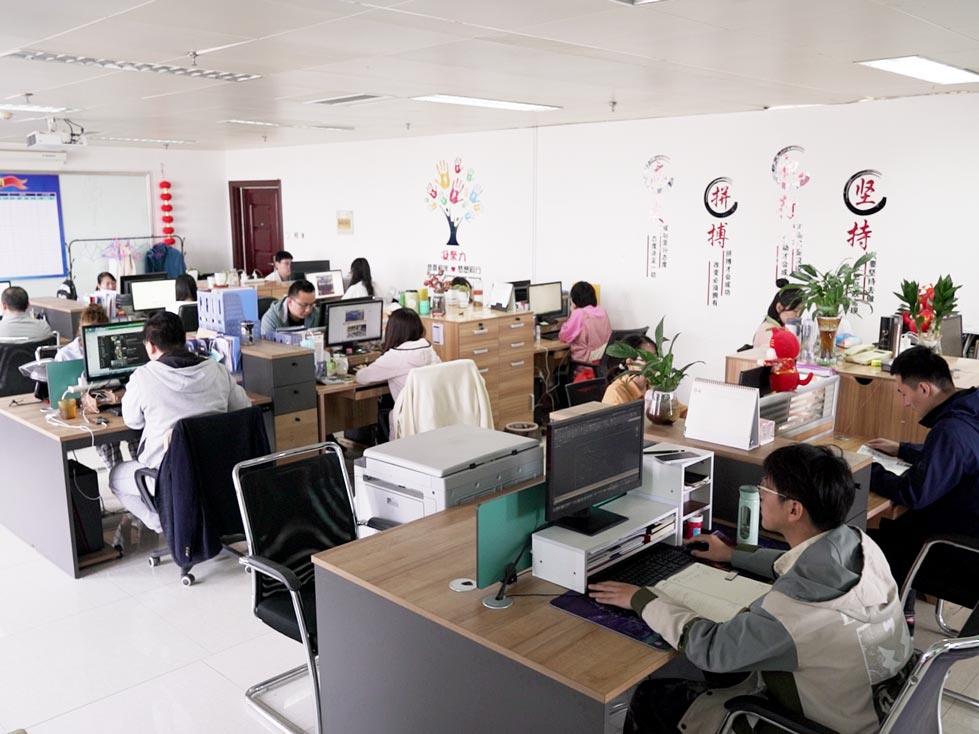
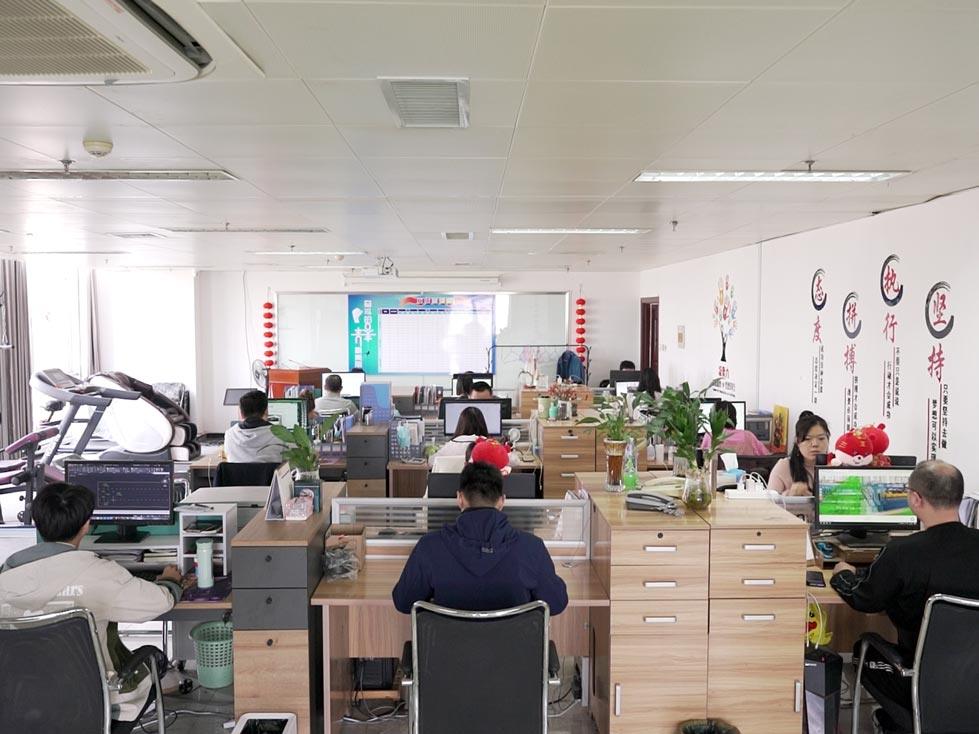
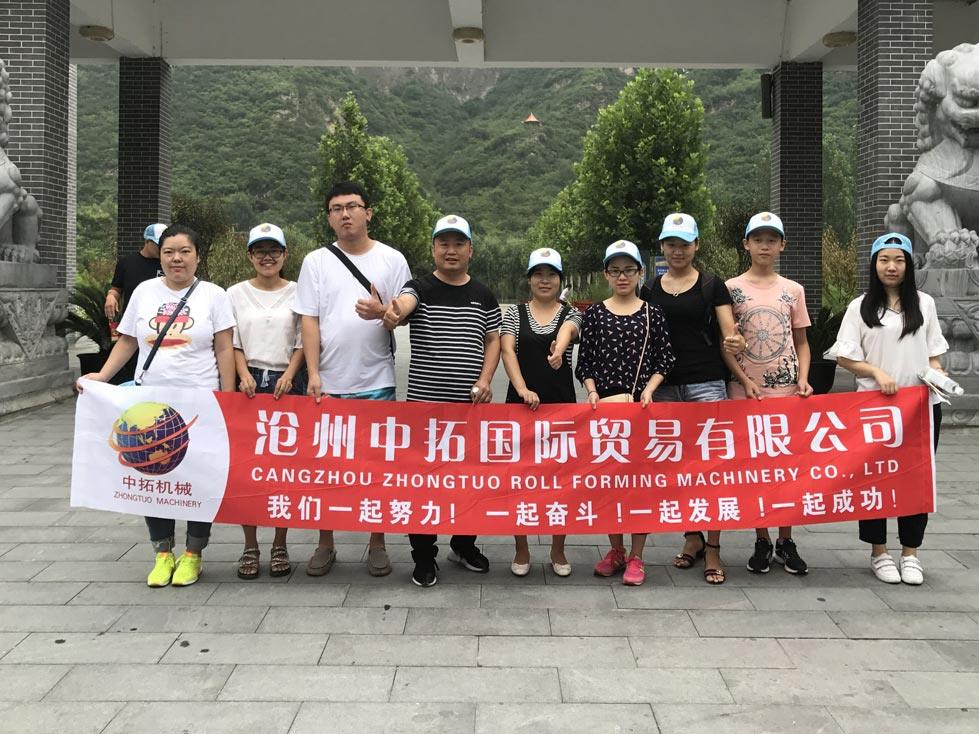
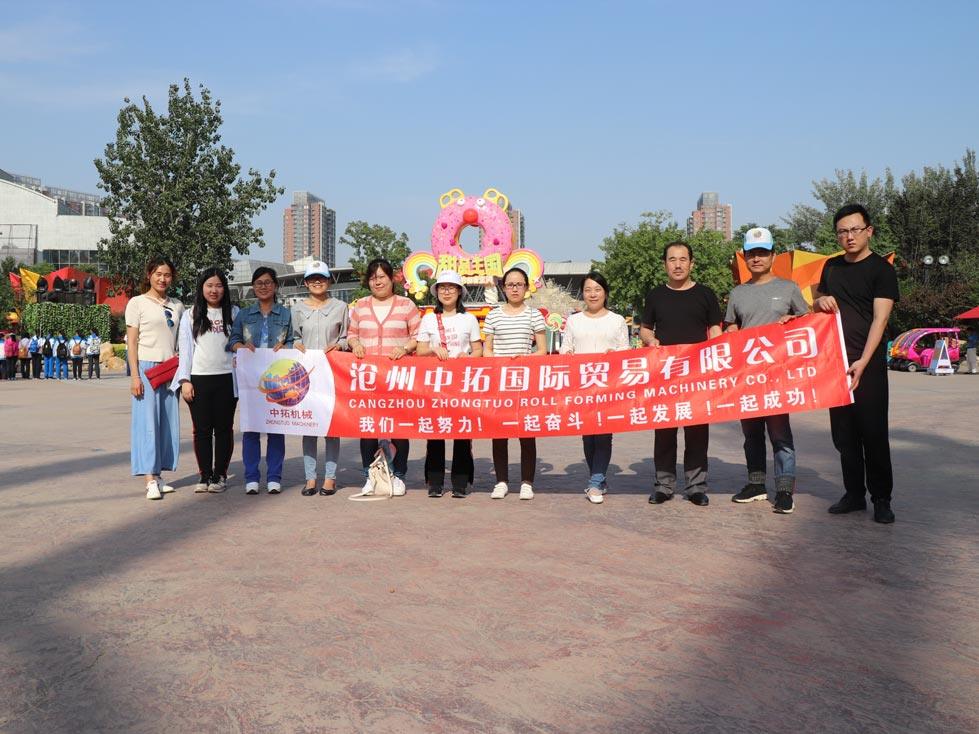
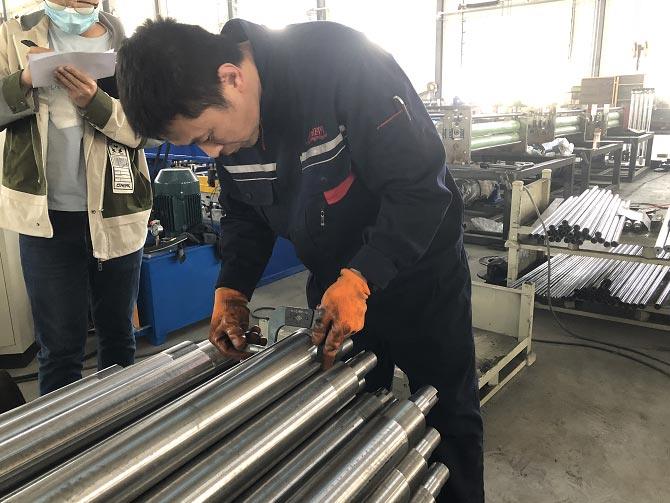
Plus de 24 ans d'expérience et de connaissance des normes internationales, Changements technologiques et systèmes industriels, nous nous consacrons à Fournit à Seds les meilleures solutions économiques à ses clients les plus précieux.
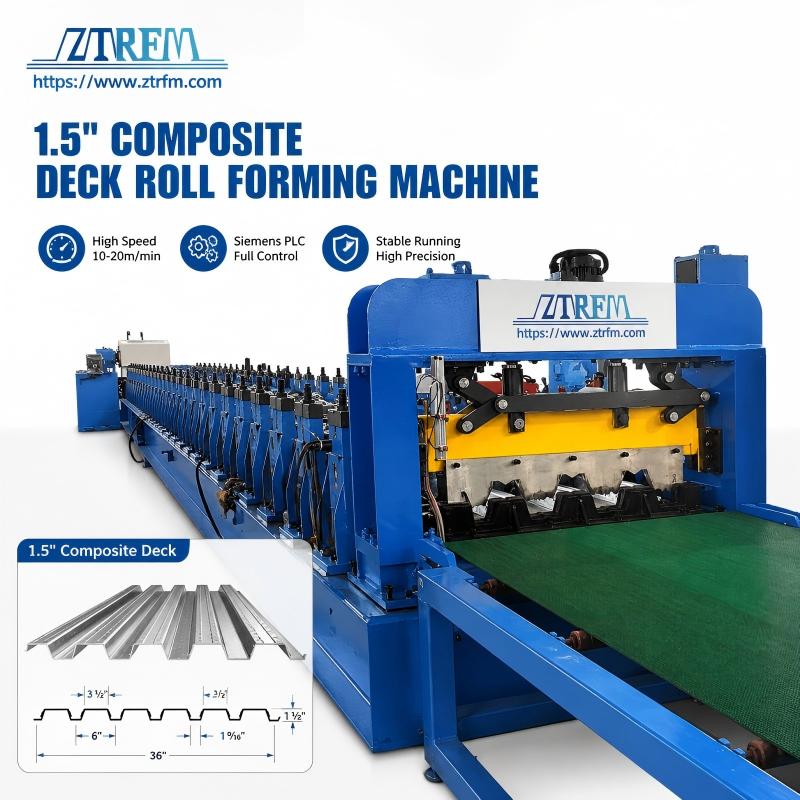
Composite Floor Deck Roll Forming Machine:Steel Deck Sheet Production Line
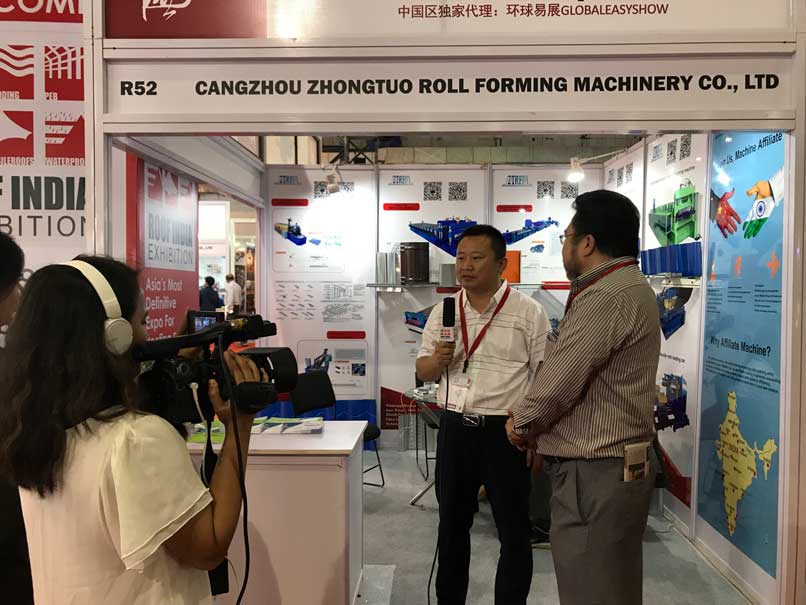
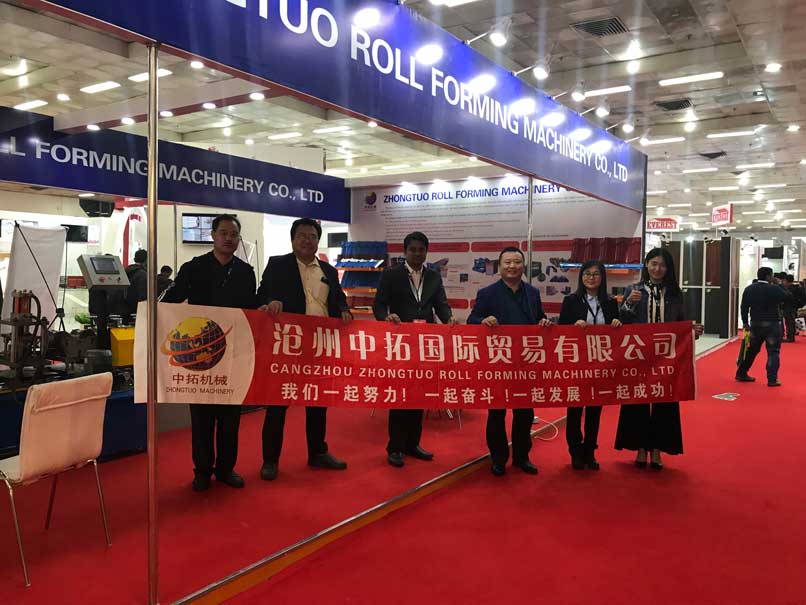
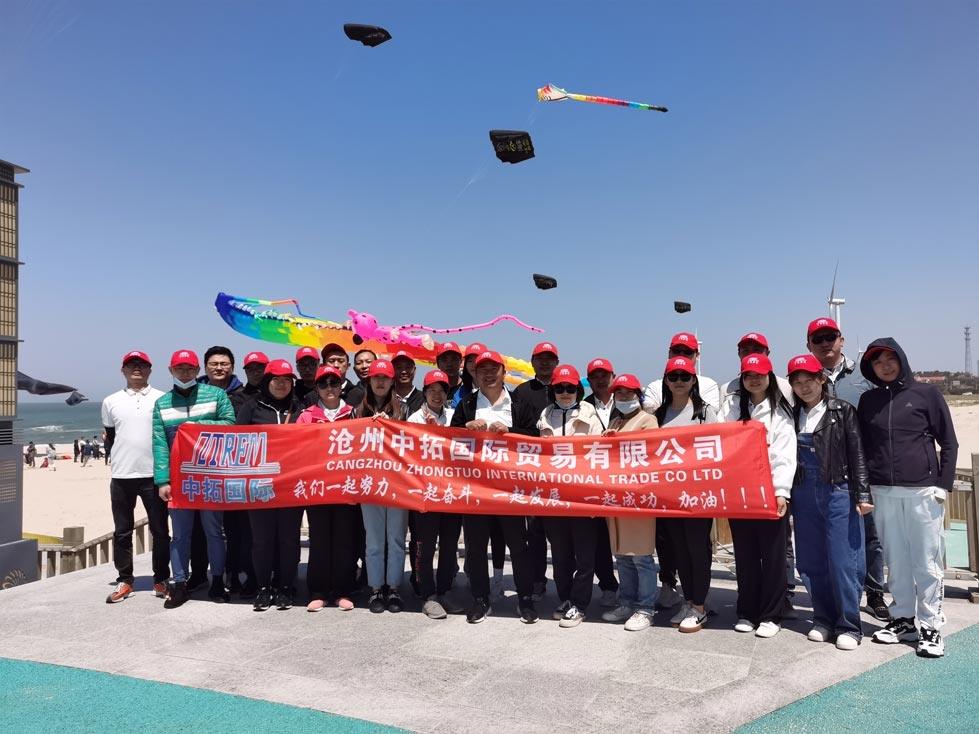
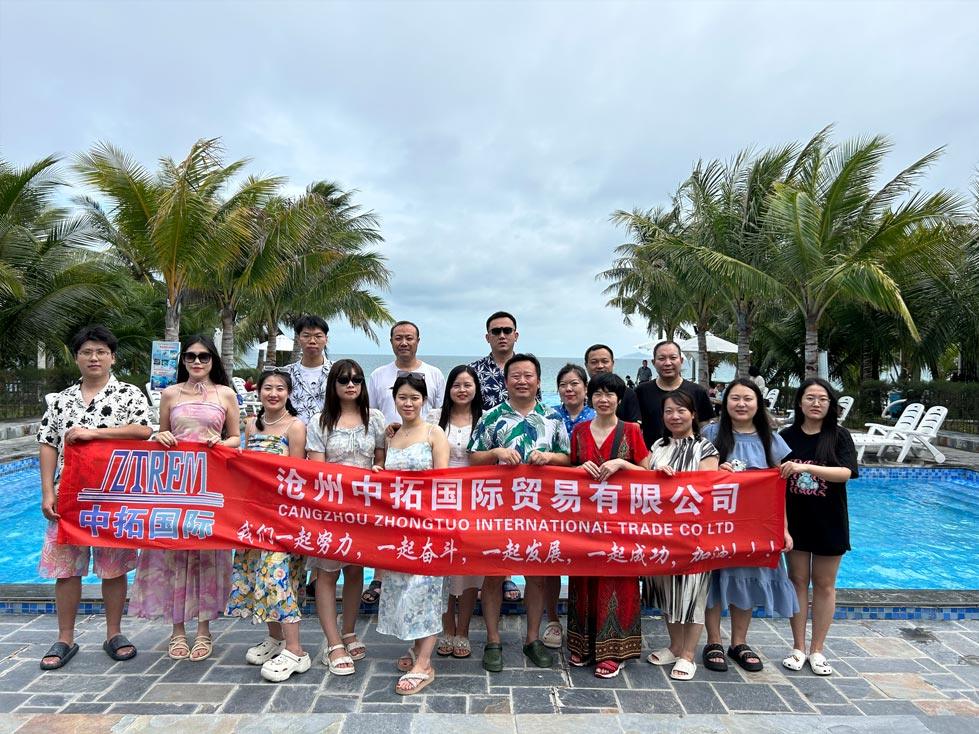
La société Cangzhou Zhongtuo Roll Forming Machinery Co. est originaire du Hebei (Chine). C'est un fabricant qui se consacre à la conception et à la fabrication. différents types de profileuses à froid. Nous sommes une usine avec une longue histoire, engagée dans la conception et la fabrication de profileuses depuis 2006. Les machines que nous pouvons produire comprennent : la machine de fabrication de tuiles, la machine de fabrication de pannes cz, la machine de fabrication de quilles en acier léger, la machine de gaufrage de métal, la machine de formage de systèmes de portes, la machine de formage de systèmes de plafonds, la machine de soudage de tuyaux à haute fréquence, la ligne de refendage, la ligne de coupe à longueur, la machine de formage de systèmes d'étagères, la machine de formage de planchers, la ligne de production de tuiles en pierre colorée, la machine de laminage à chaud filmée, etc.
01.Classification of Floor Deck Roll Forming Machine
The floor bearing plate, also known as profiled steel plate or steel bearing plate, is the core material for floor construction in steel structure buildings. The industry primarily classifies it based on "plate configuration and forming process," dividing it into three main types: open-type, concave (swallow-tail) type, and closed-type. Each type exhibits significant differences in performance and application scenarios. The specific classifications and characteristics are as follows:
02. Classification of Floor Deck Roll Forming Machine
The floor bearing plate, also known as profiled steel plate or steel bearing plate, is the core material for floor construction in steel structure buildings. The industry primarily classifies it based on "plate configuration and forming process," dividing it into three main types: open-type, concave (swallow-tail) type, and closed-type. Each type exhibits significant differences in performance and application scenarios. The specific classifications and characteristics are as follows:
Description:Automatic composite floor deck roll forming machine for galvanized steel deck sheets, embossing, shear stud holes and concrete slab systems. Custom profiles, PLC control, global shipping.
Composite Floor Deck Roll Forming Machine: Precision Production Line for Steel-Concrete Composite Slabs
The composite floor deck roll forming machine is a heavy-duty cold roll forming line that converts galvanized or galvalume steel coil into high-strength profiled floor deck sheets. These decks act as permanent formwork during concrete pouring and, after curing, work compositely with the concrete slab to provide tensile strength, stiffness and fast multi-story construction. In international markets the equipment is also searched as a composite metal deck roll forming machine, steel floor decking roll former, concrete deck sheet making machine or structural floor deck production line.
It is the core machine for steel structure contractors, precast and composite slab factories, high-rise building material suppliers and industrial flooring manufacturers who need consistent rib geometry, reliable concrete bonding and high daily output.
alt="Composite Floor Deck Roll Forming Machine:Steel Deck Sheet Production Line"
Why Composite Floor Deck Sheets Dominate Modern Construction
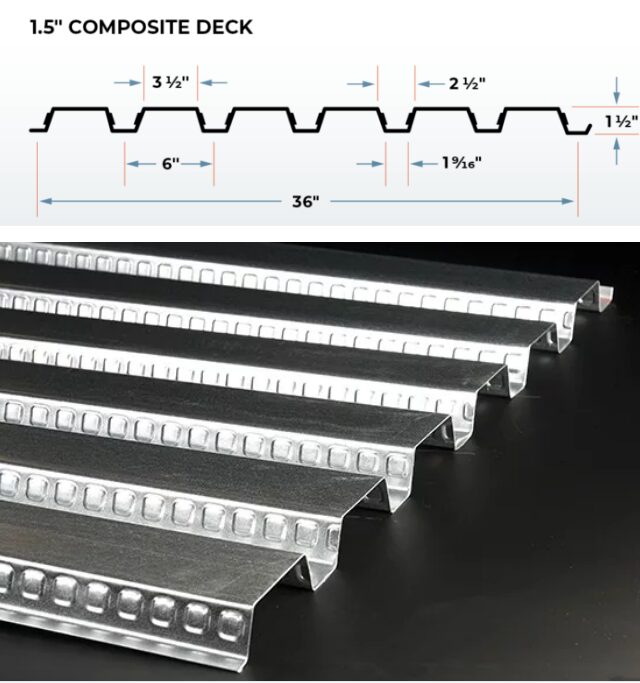
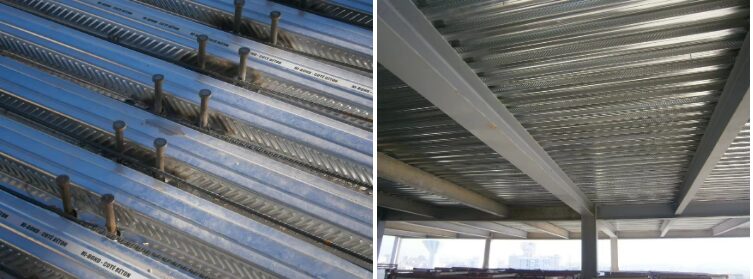
Composite steel decking replaces traditional timber formwork in most medium- and high-rise projects. The rolled sheet becomes a working platform immediately after it is fixed to the steel beams, allowing following trades to start earlier. When concrete is poured, the embossed ribs and optional shear-stud holes create mechanical interlock between steel and concrete, forming a single composite floor system.
Main advantages for the buyer and end user:
Faster floor cycles – no temporary formwork removal, less shoring, simultaneous upper-floor work
Strong composite action – embossing patterns improve steel-to-concrete bond and slip resistance
Material savings – optimized rib design reduces concrete volume and overall dead load
Long spans – deep rib profiles allow wider beam spacing in commercial and industrial buildings
Fire and durability performance – when correct gauge and coating are used, decks suit fire-rated floor assemblies
Repeatable factory quality – every sheet has the same rib height, cover width and flatness
alt="Composite Floor Deck Roll Forming Machine:Steel Deck Sheet Production Line"
How the Composite Floor Deck Roll Forming Machine Works
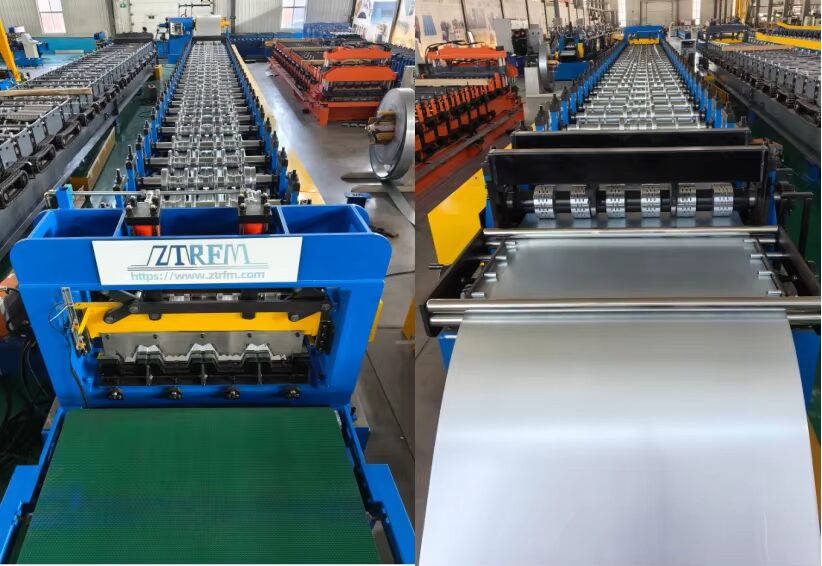
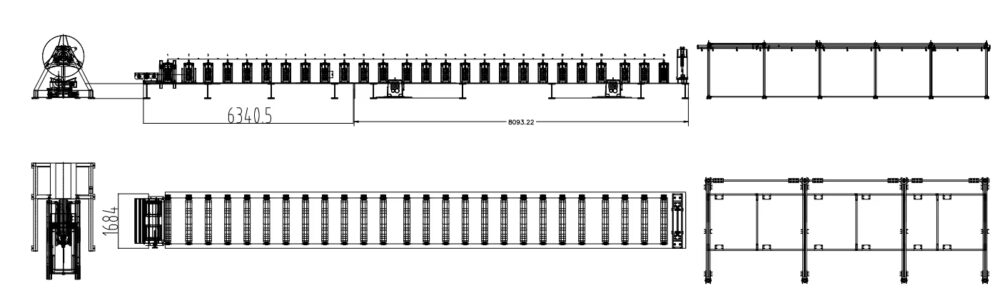
Production starts with a heavy steel coil on the hydraulic or manual decoiler. The strip passes through the entry guide and multi-roll leveler, which removes coil curvature, camber and crossbow before forming. If the profile requires surface bonding lugs, the line uses an embossing station; if shear-stud holes, service holes or edge notches are specified, a punching press is installed before or after forming depending on tooling design.
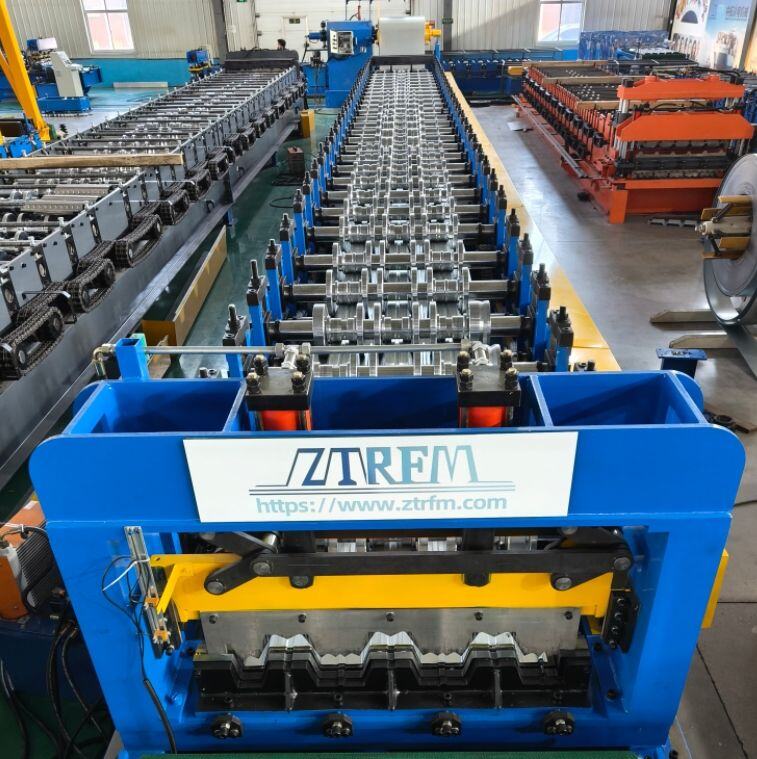
The strip then enters the roll forming mill. Composite deck profiles are deeper and wider than roofing sheets, so the mill uses more stations and heavier rollers. Each station bends the flat strip progressively into trapezoidal, re-entrant or dovetail rib shapes without cutting the steel. Shafts, gearboxes and sidewall plates are sized for thick galvanized coil and high-yield material.
After forming, the panel runs to the cutting system. Most export lines use hydraulic post-cut or flying shear synchronized with the profile movement. The PLC controls length, quantity, batch production and optional punch timing. Finished sheets go to the run-out table, manual stacking area or automatic stacker.
alt="Composite Floor Deck Roll Forming Machine:Steel Deck Sheet Production Line"
Machine Configuration and Build Quality
A composite deck line is not a lightweight roofing machine. It is built for continuous industrial duty.
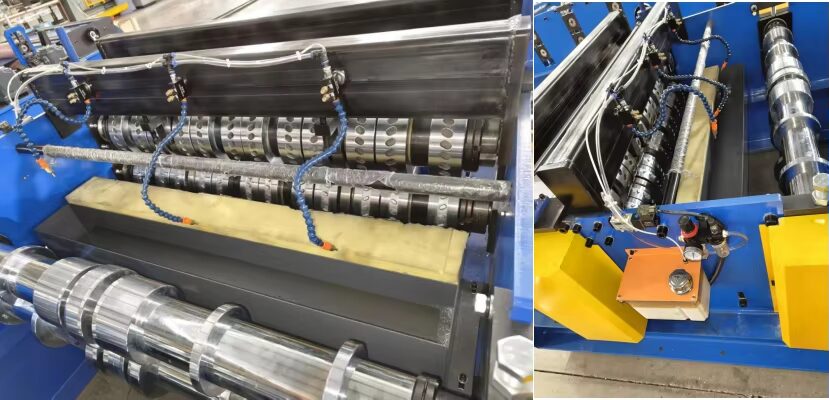
The frame uses heavy H-beam or thick welded plate construction with stress-relief treatment to prevent deflection during long runs. Rollers are machined from GCr15, Cr12 or 45# forged steel, heat-treated to high hardness and hard-chrome plated for wear resistance and a clean surface on coated coil. Shafts are precision-ground alloy steel supported in taper-bearing stands. The drive system is chain or gearbox type, often dual-motor on wide-deck lines to keep rib symmetry.
Embossing rollers are a key differentiator. Proper embossment geometry increases the shear grip between deck and concrete. Punching dies are guided and changeable for round holes, elongated holes, stud-hole patterns and edge notches. Cutting blades are Cr12MoV or equivalent, quenched and ground for burr-free ends. Control is PLC + HMI with encoder length feedback; advanced lines add remote diagnostics, recipe storage and automatic stacker integration.
alt="Composite Floor Deck Roll Forming Machine:Steel Deck Sheet Production Line"
Technical Scope for Export Orders
Each composite floor deck machine is customized to the buyer’s profile drawing. Standard configurable range includes:
Material: galvanized steel GI, galvalume GL, cold-rolled steel, occasionally stainless or aluminum-clad steel for special projects
Thickness: commonly 0.7–1.5 mm; heavy-duty versions up to 2.0 mm
Coil width: 1000–1250 mm typical, depending on effective cover width
Effective width: around 600–1000 mm depending on profile, e.g. YX51-250-750, YX76-305-915, YX75-200-600 and custom Losacero/B-Deck/N-Deck type sections
Rib depth: 50–80 mm standard; deep-deck versions up to 100 mm+
Shopping malls and public buildings – large clear-span floors with reduced beams
Bridges and infrastructure – steel-concrete composite bridge decks and walkways
Precast/composite slab factories – batch production for supply to multiple sites
alt="Composite Floor Deck Roll Forming Machine:Steel Deck Sheet Production Line"
Pourquoi nous choisir ?
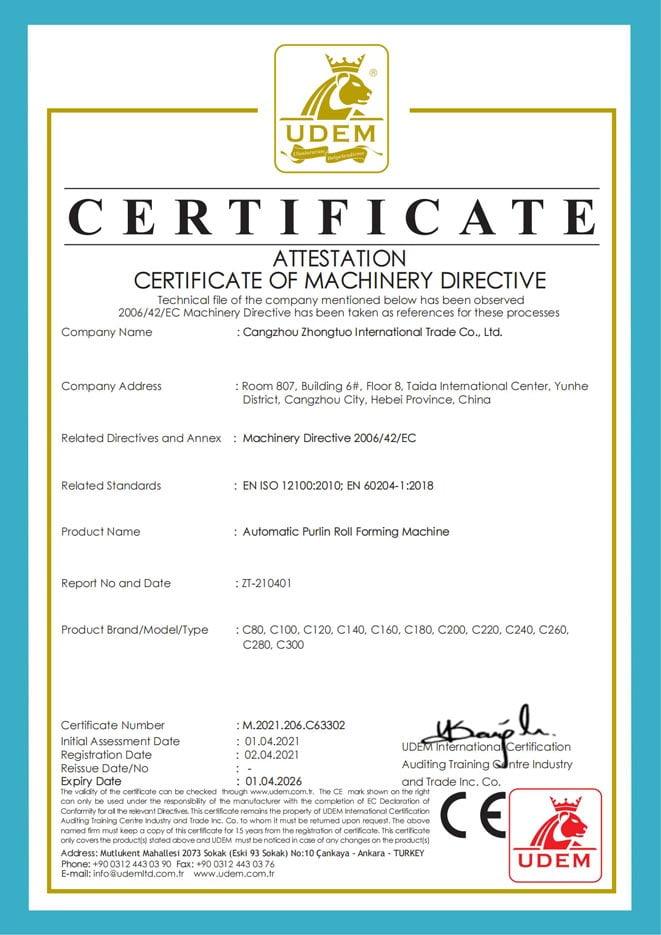
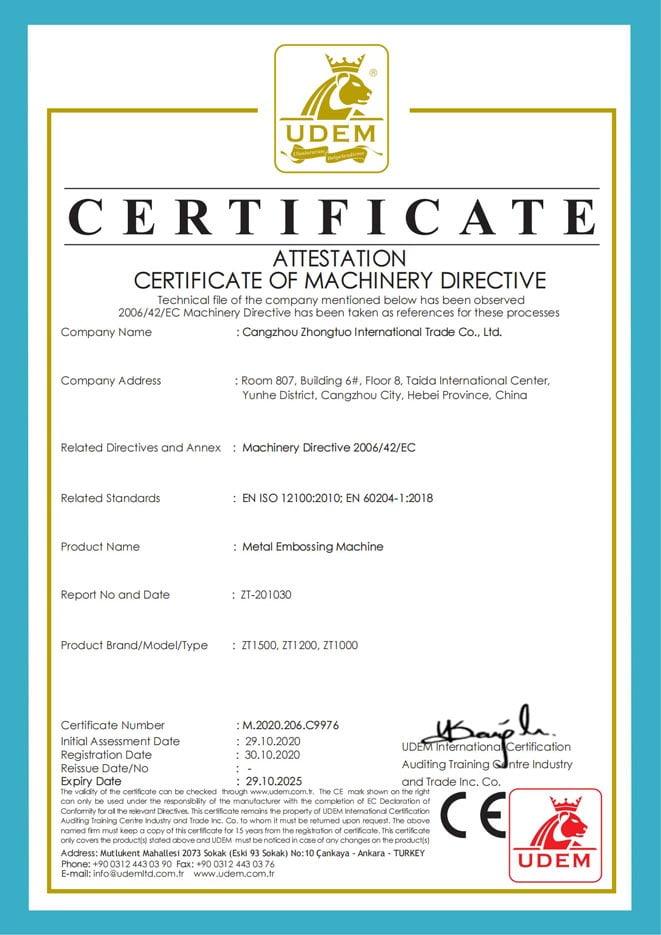
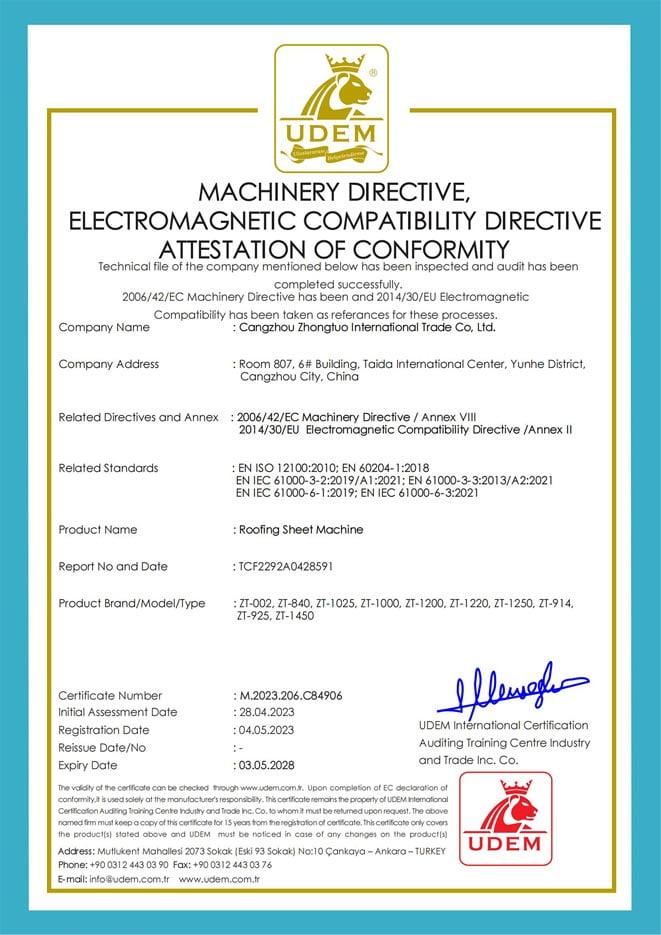
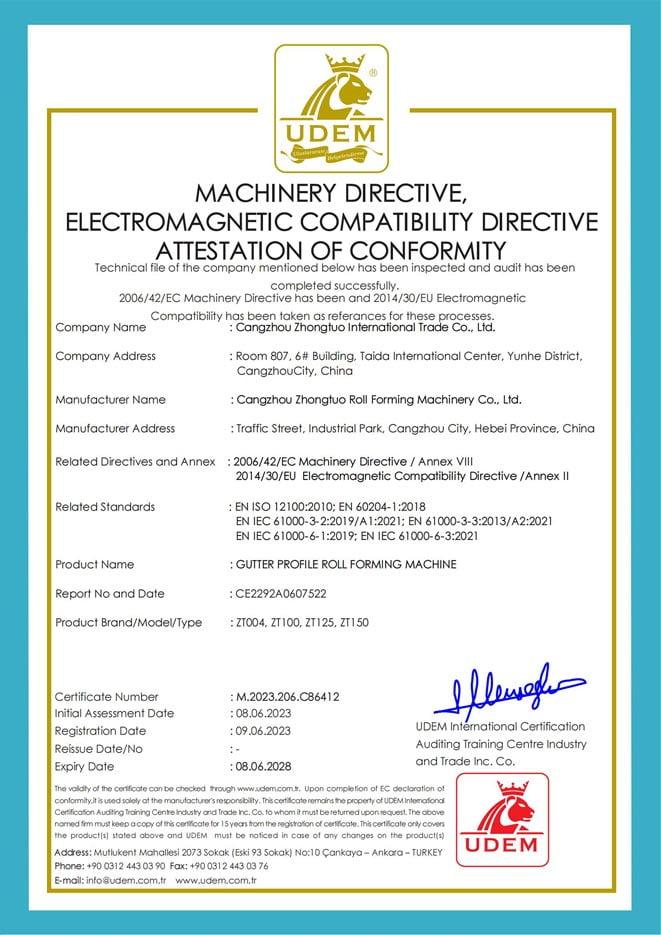
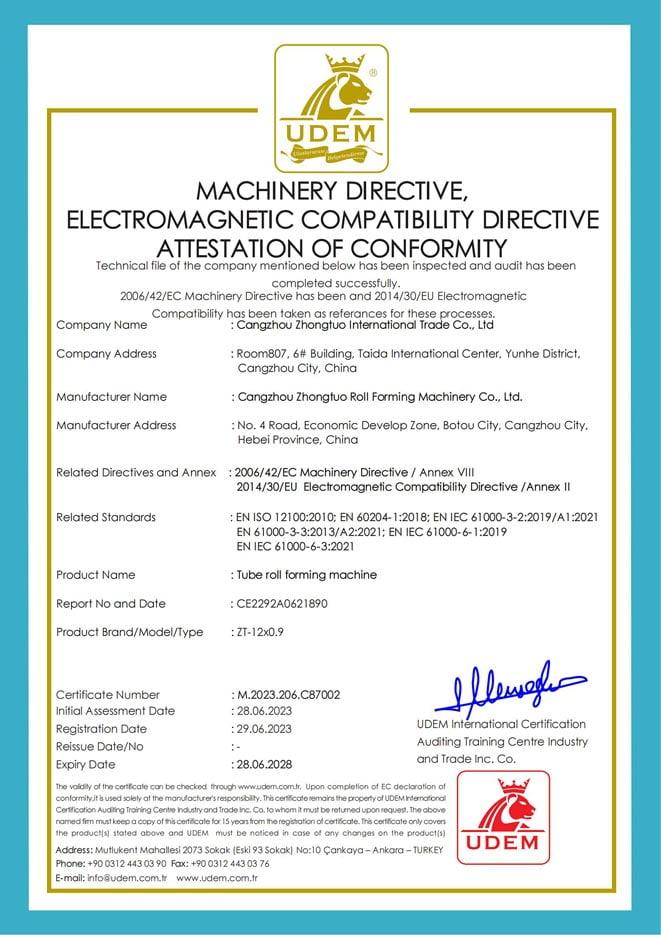
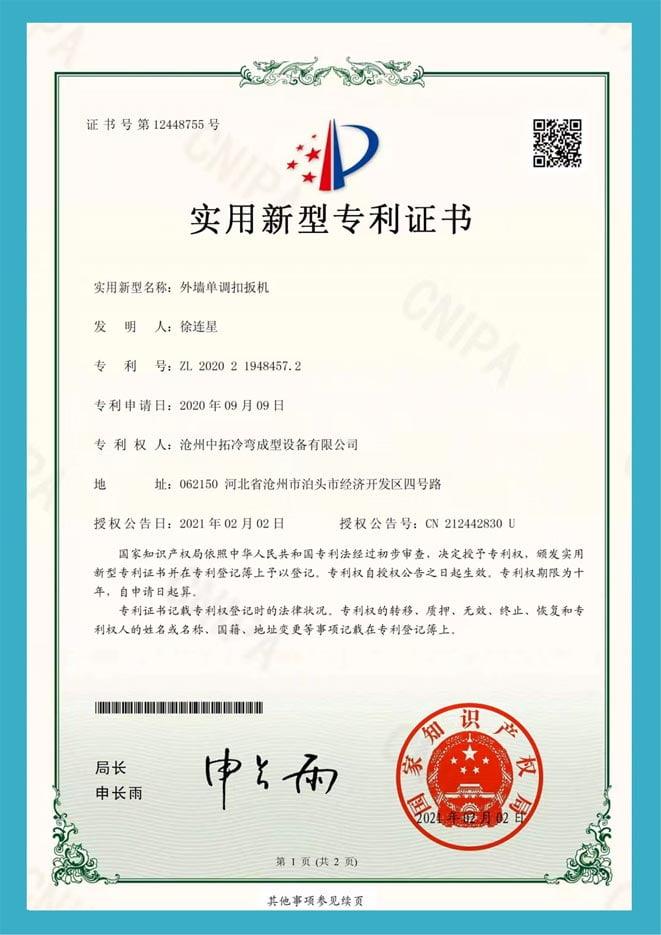
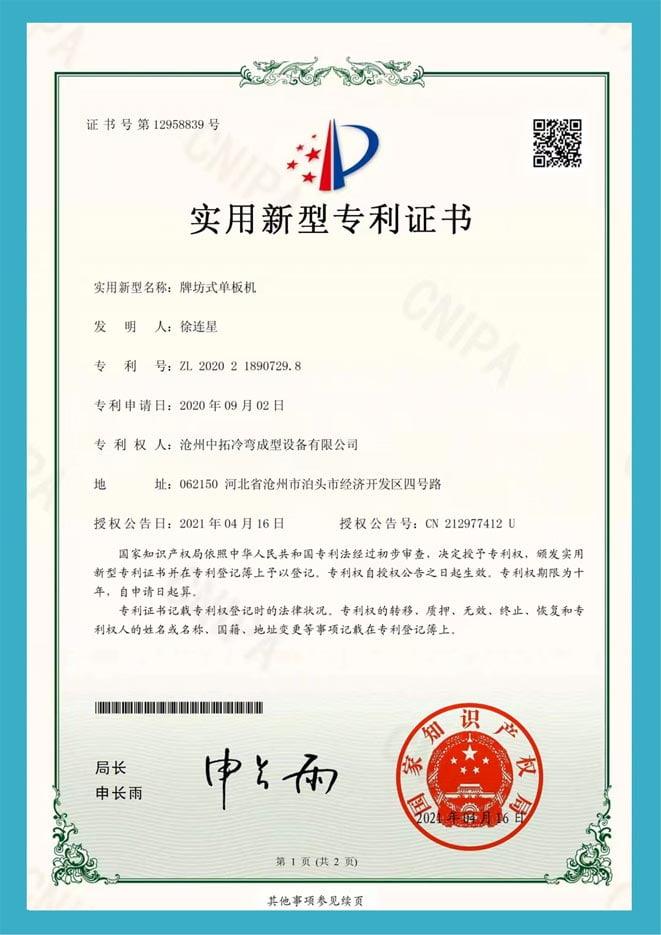
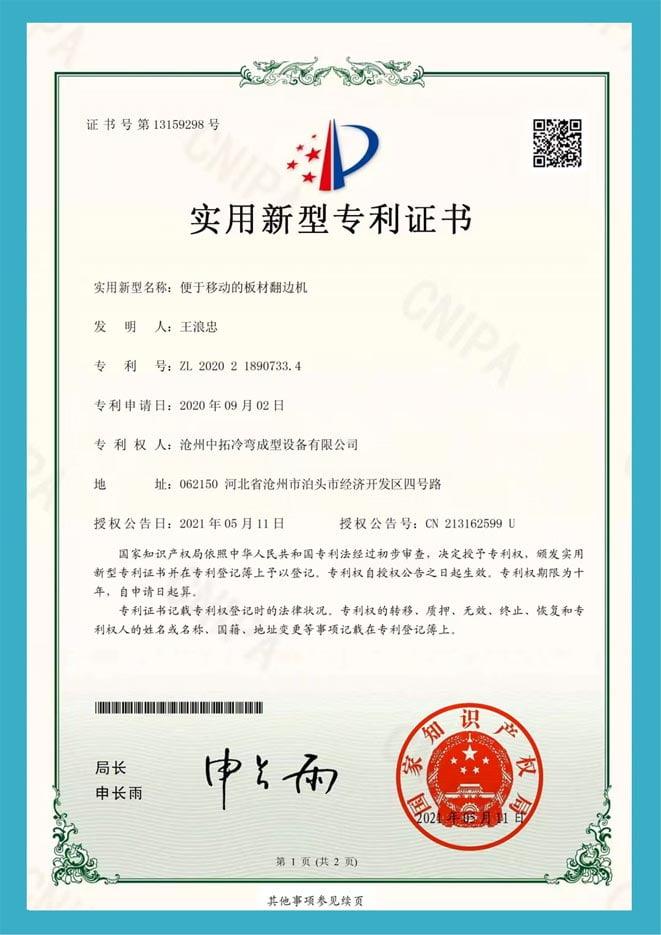
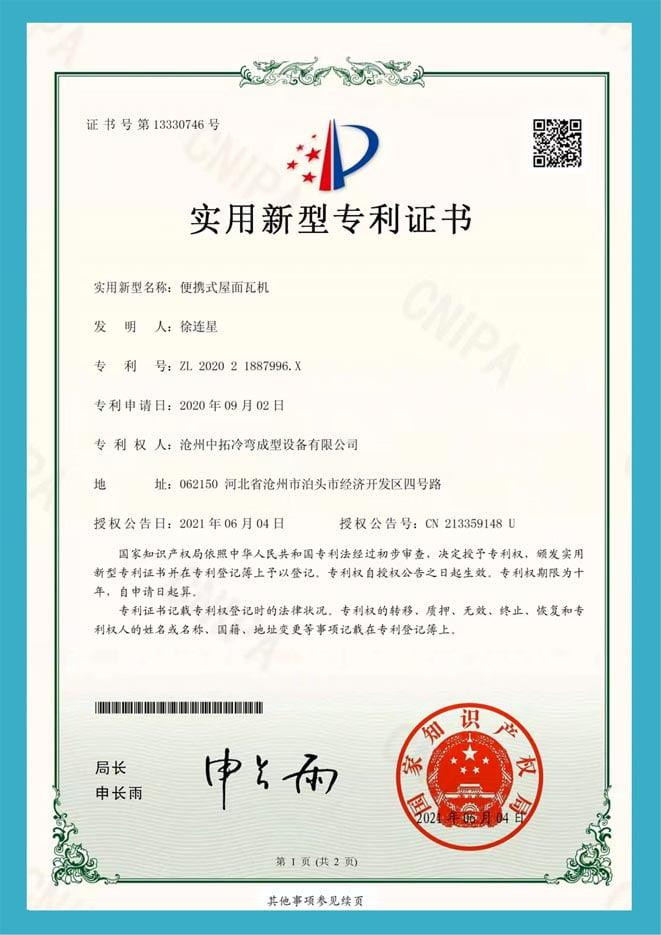
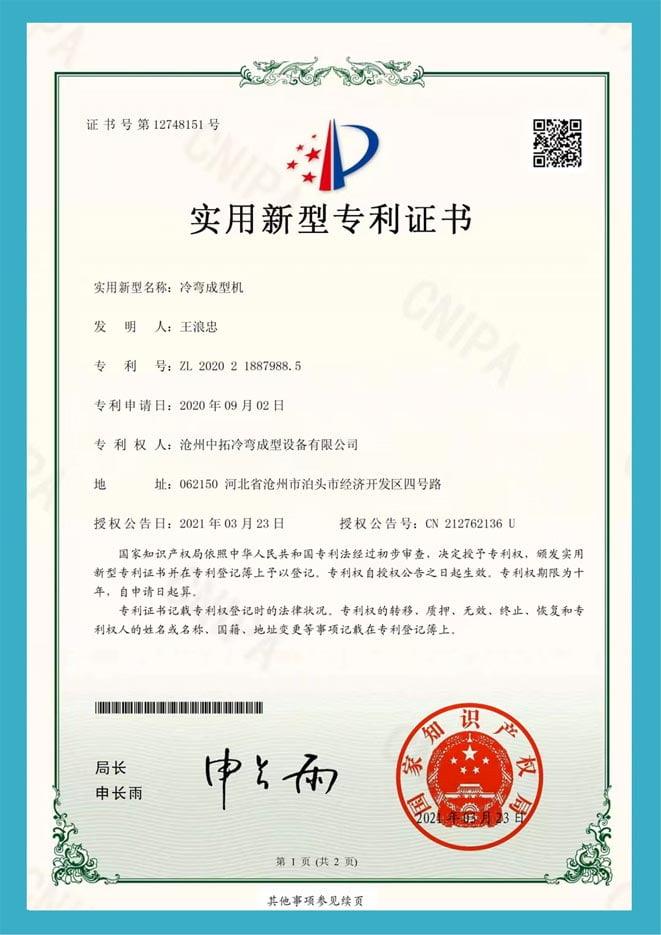
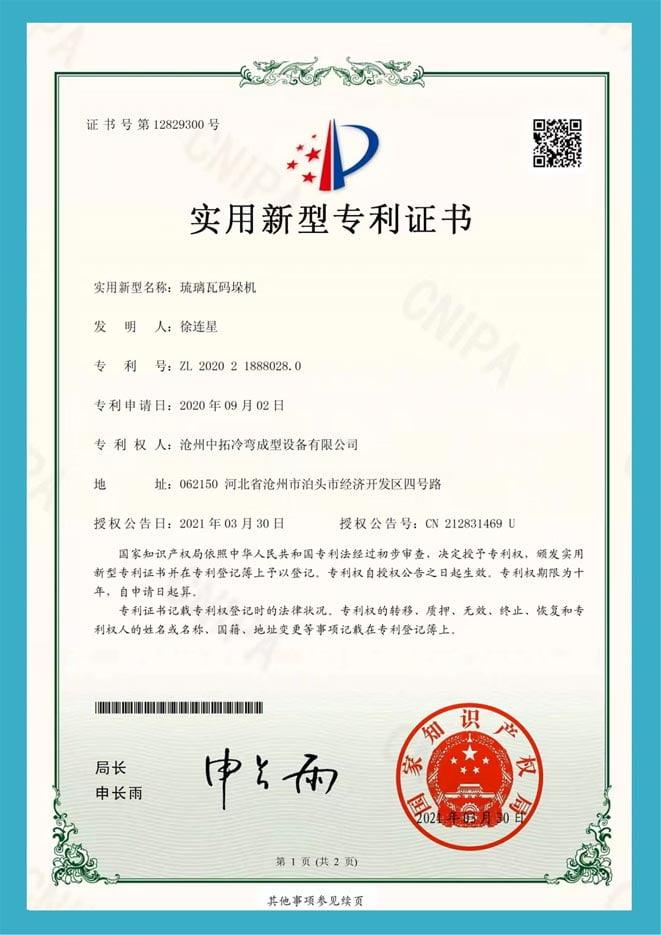
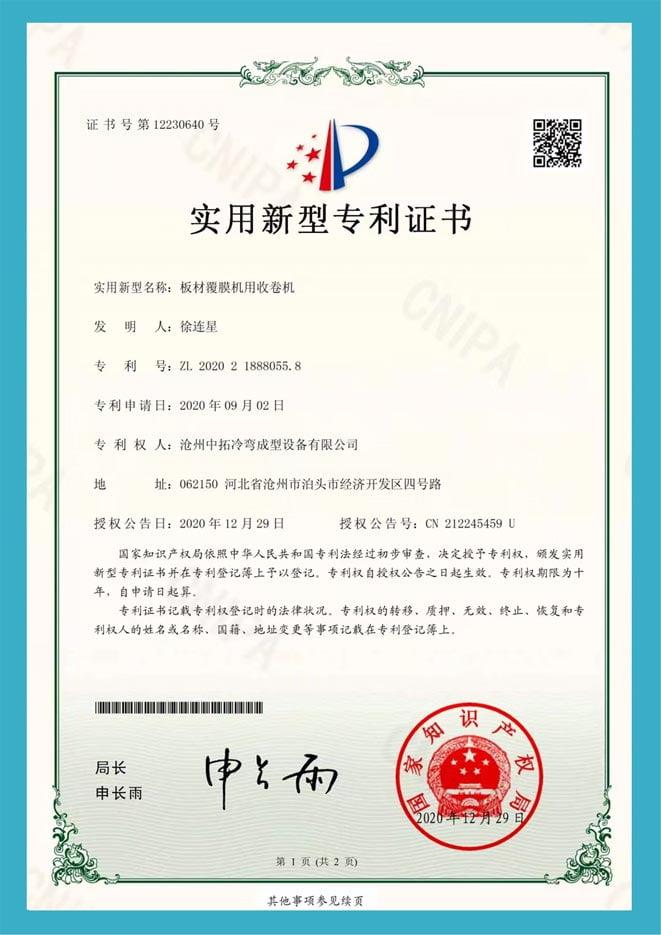
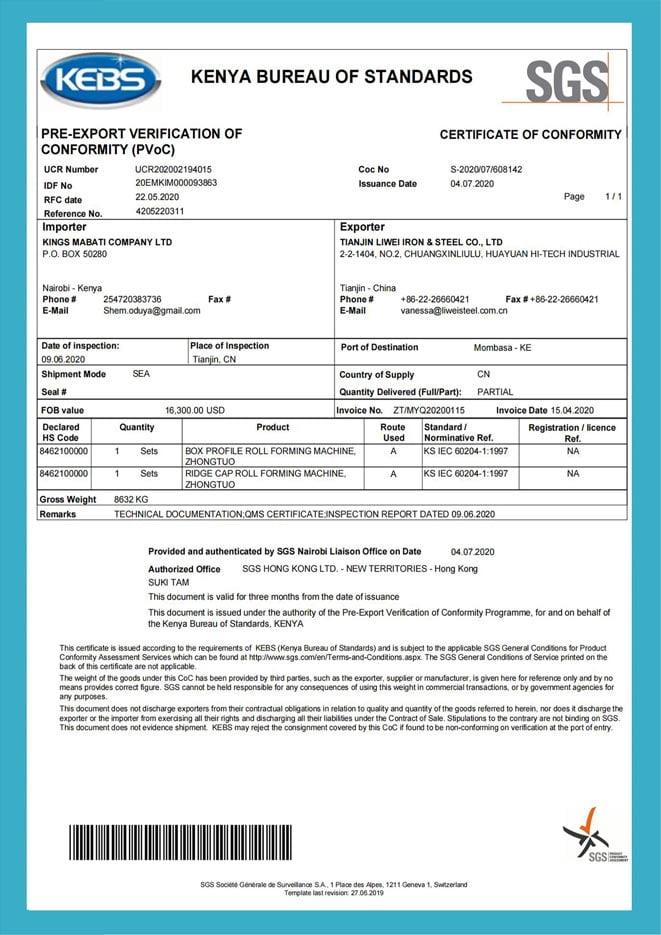
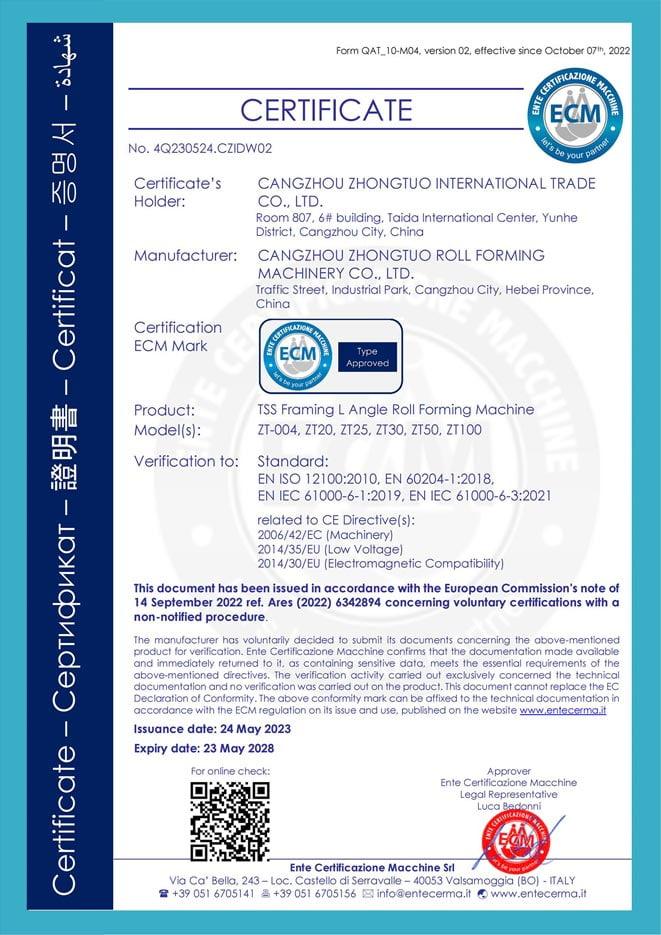
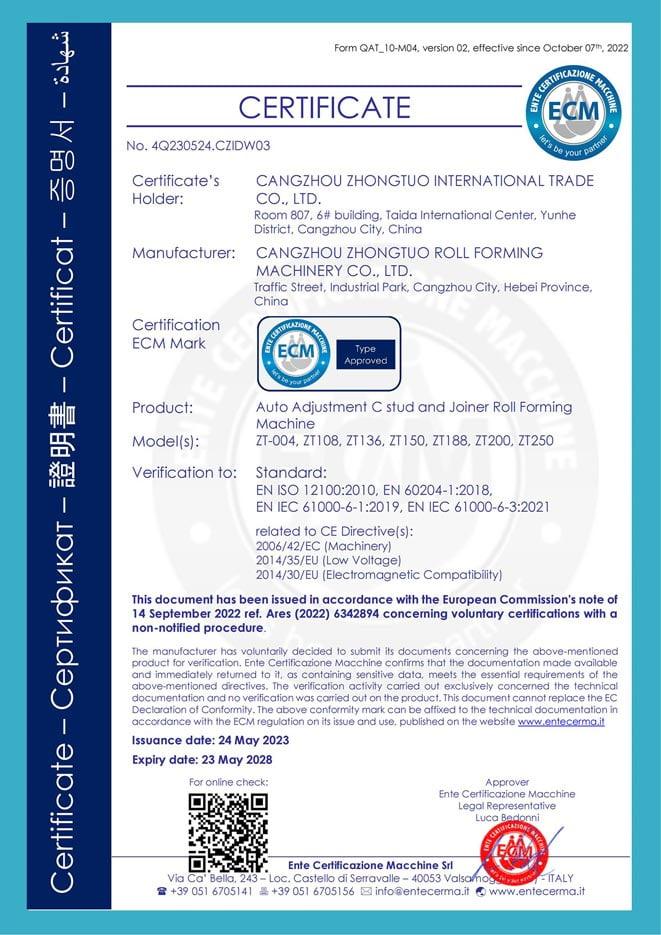
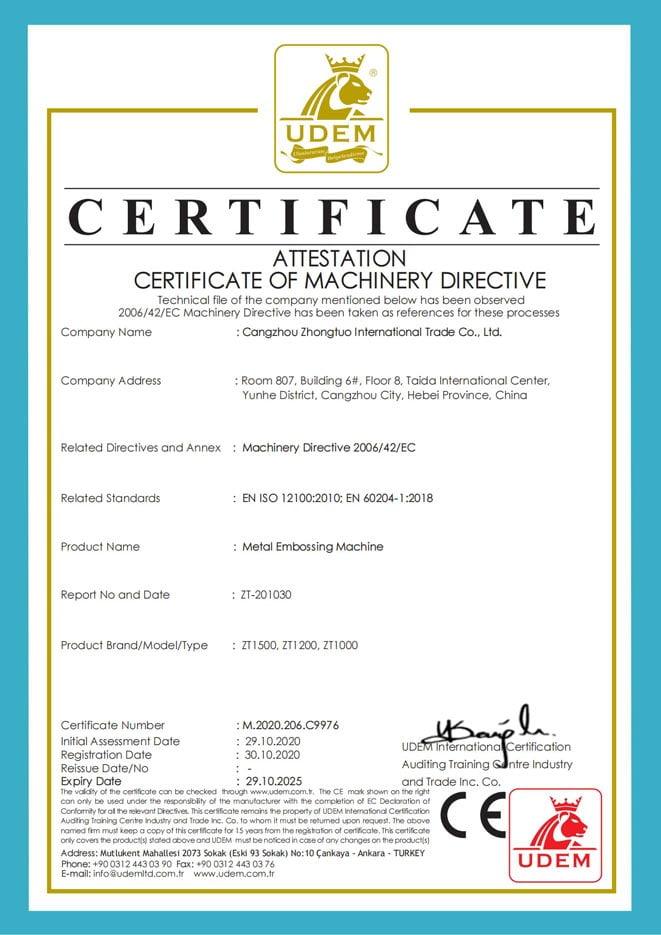
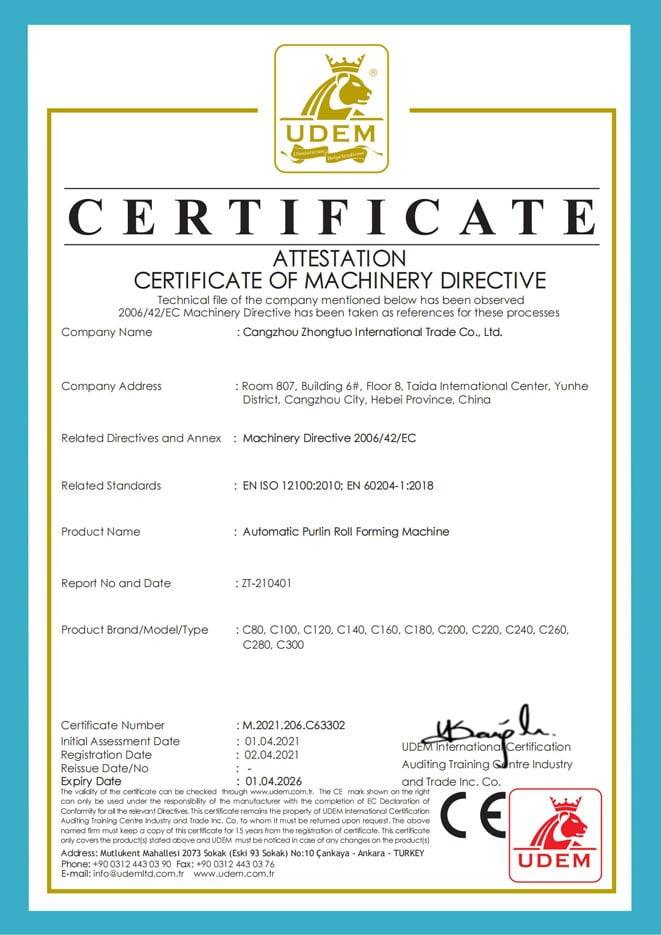
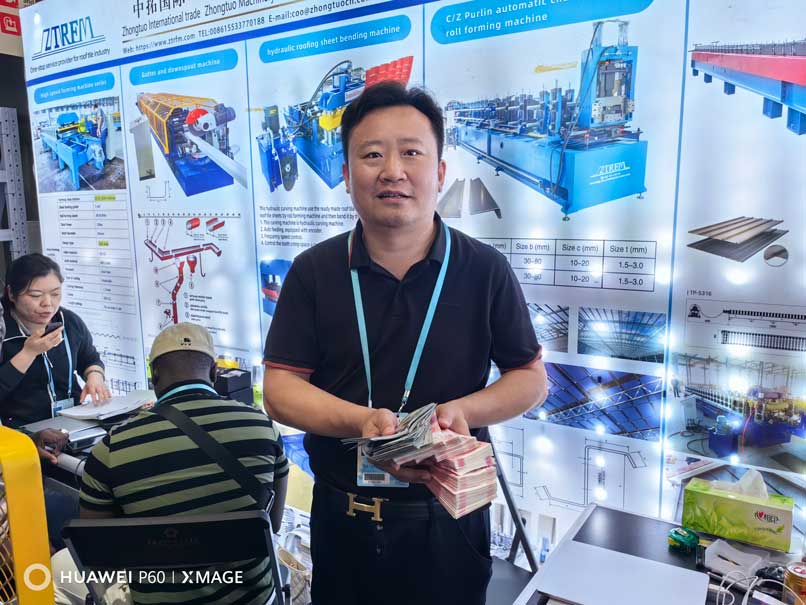
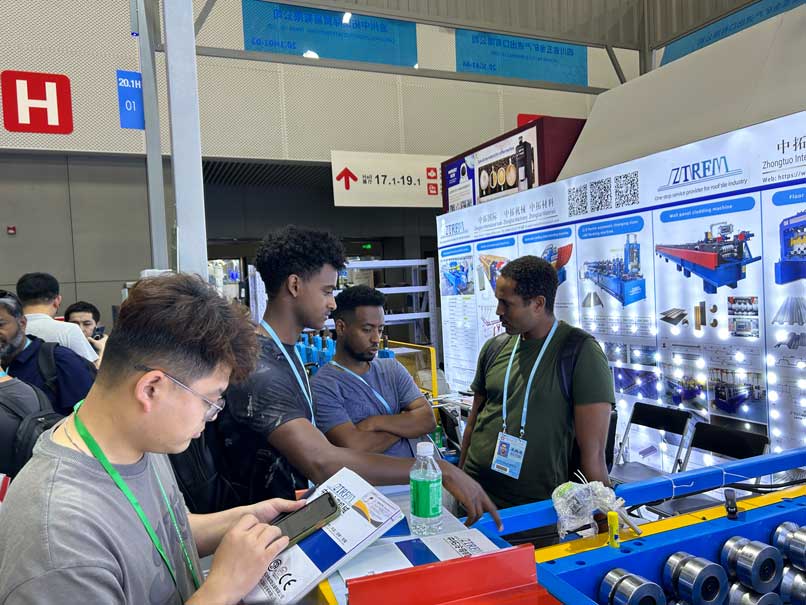
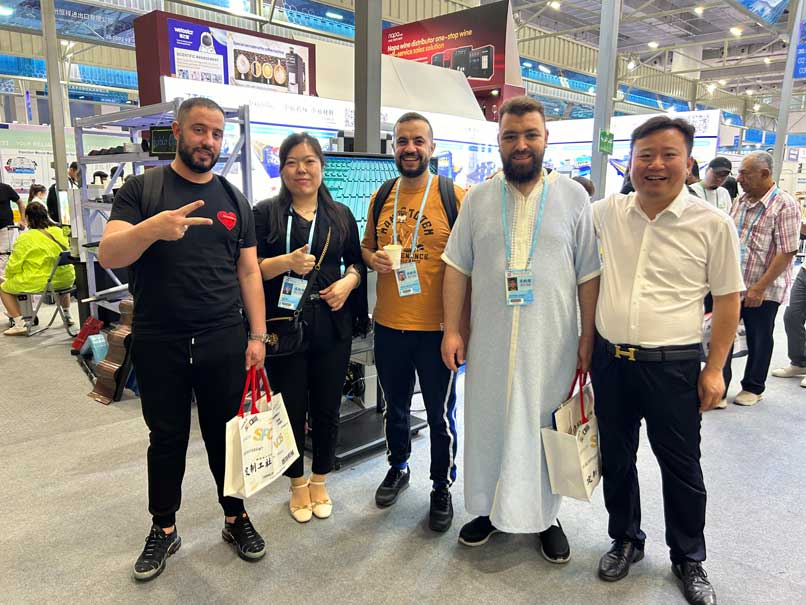
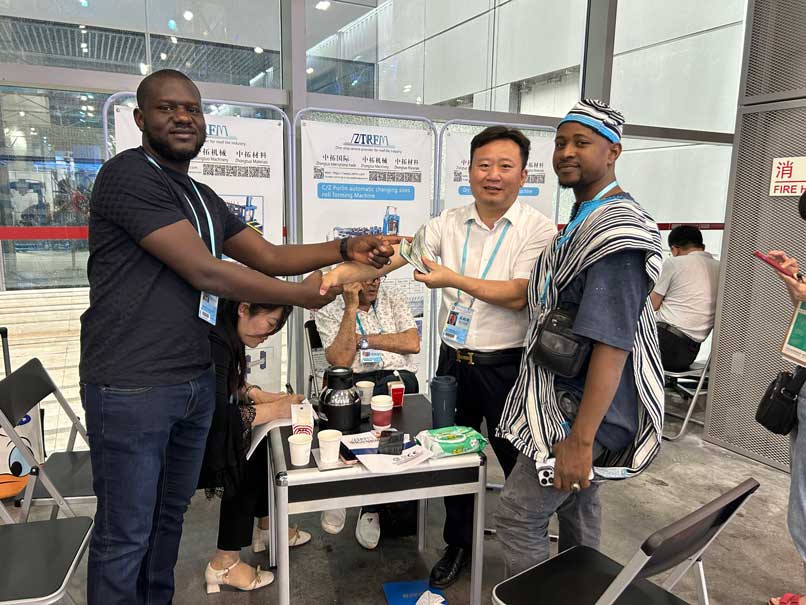
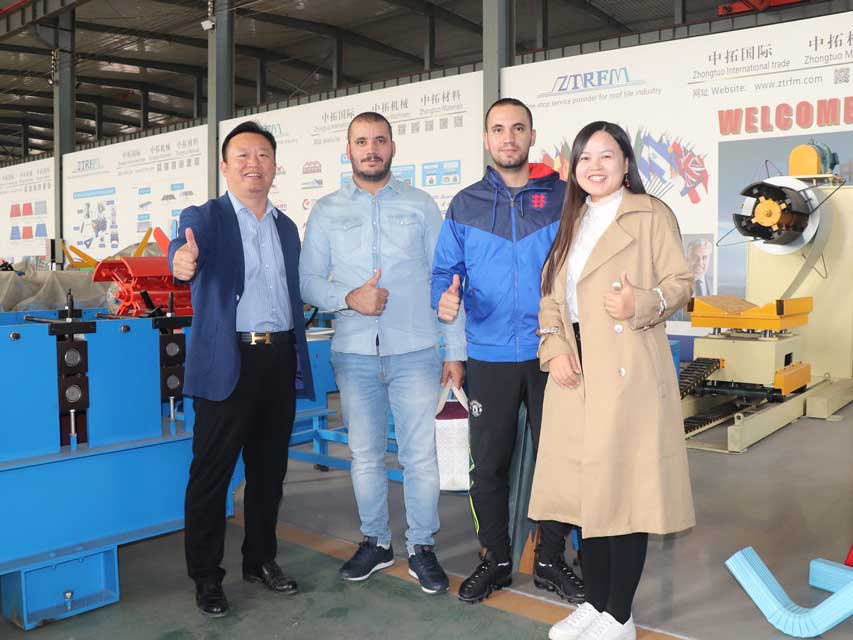
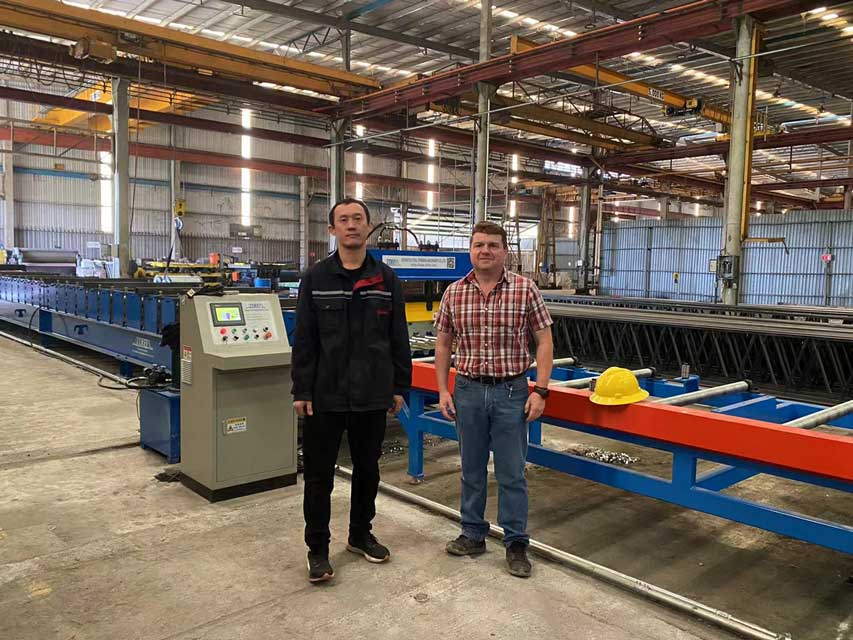
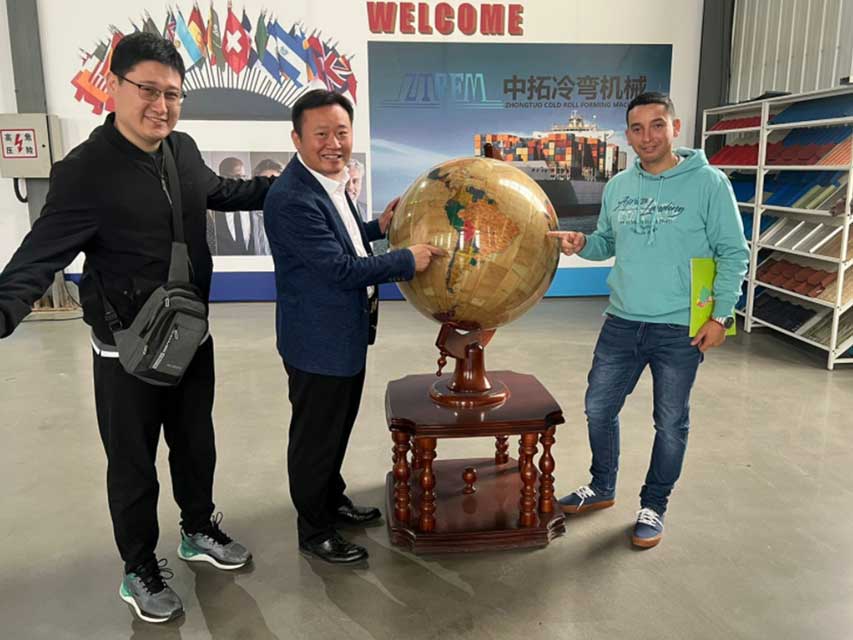
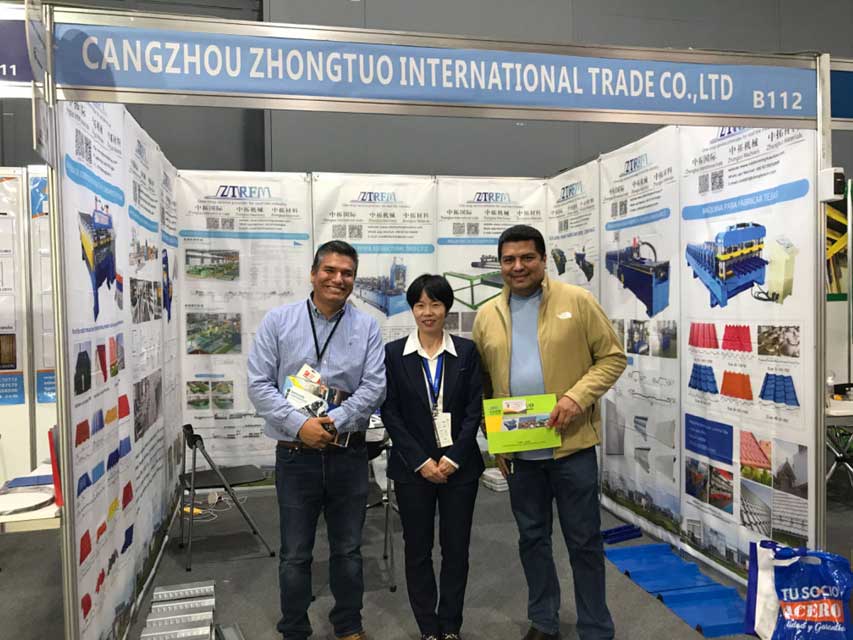
Nous sommes une entreprise nationale de haute technologie. Nous avons obtenu la certification du système de qualité ISO9001, la certification de sécurité européenne CE, la certification nord-américaine CAS, etc. Nous avons une grande expérience du commerce d'exportation et comprenons les besoins des clients de différents pays. Par ailleurs, nous pouvons fournir à nos clients des solutions de conception satisfaisantes. Nos machines ont été exportées dans plus de 150 pays, et nous avons établi des relations de coopération stables et à long terme avec nos clients, qui nous ont fait des éloges.
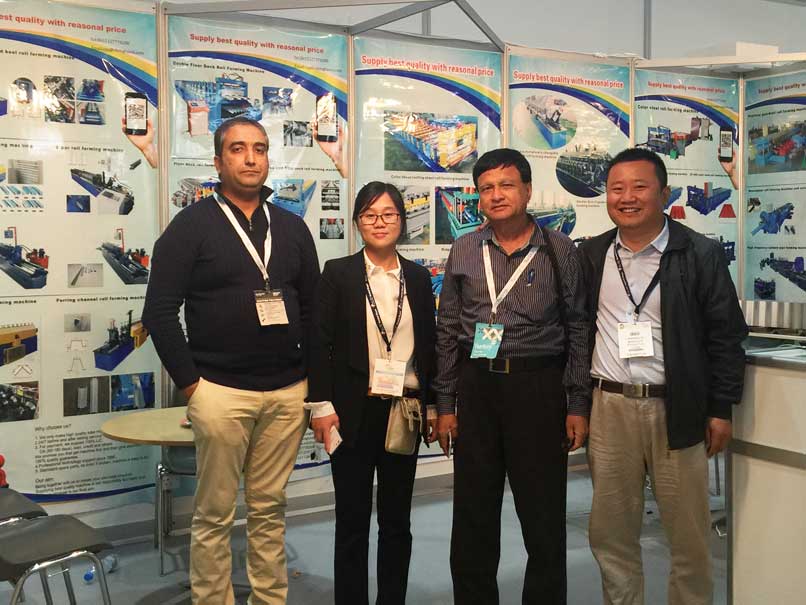
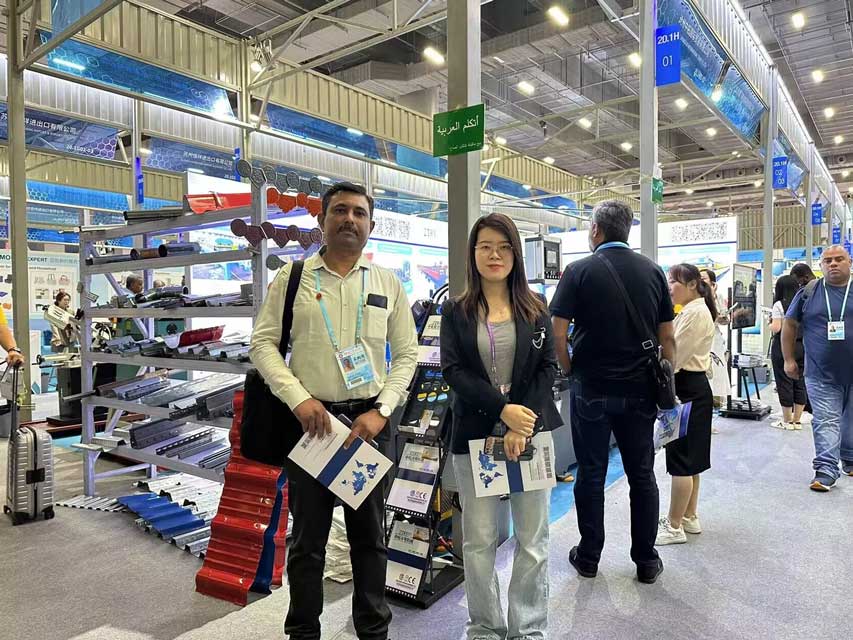
Global Trust : Les clients de plus de 156 pays et régions font confiance à nos machines de fabrication de plaques de toiture, qui sont reconnues pour leurs performances exceptionnelles et leur fiabilité dans le monde entier.
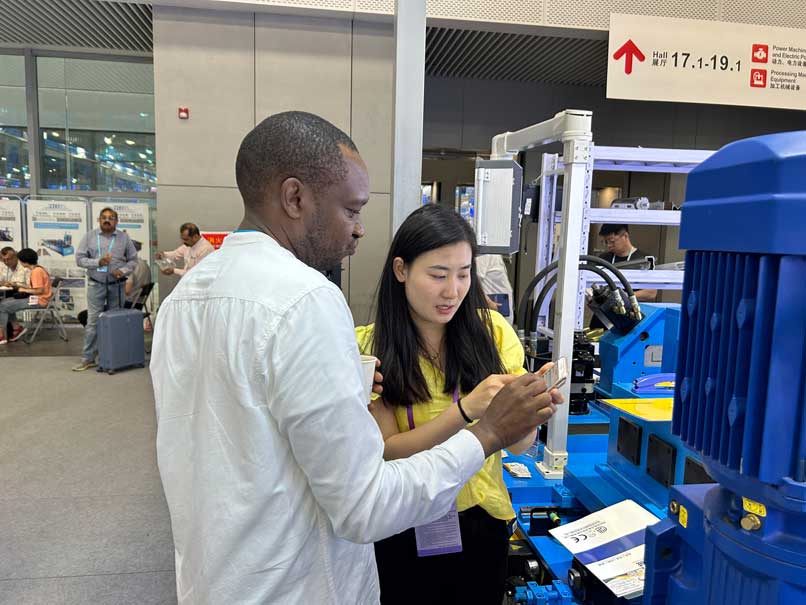
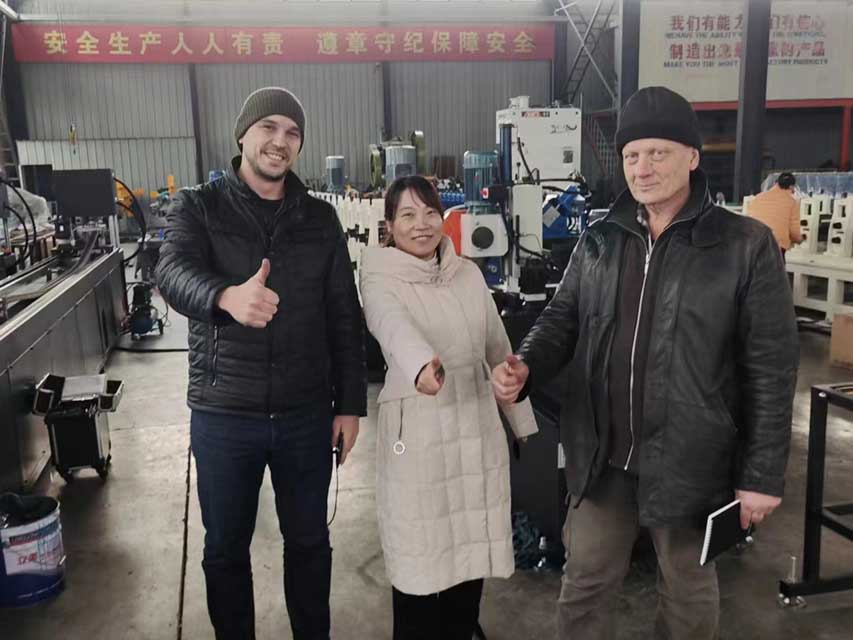
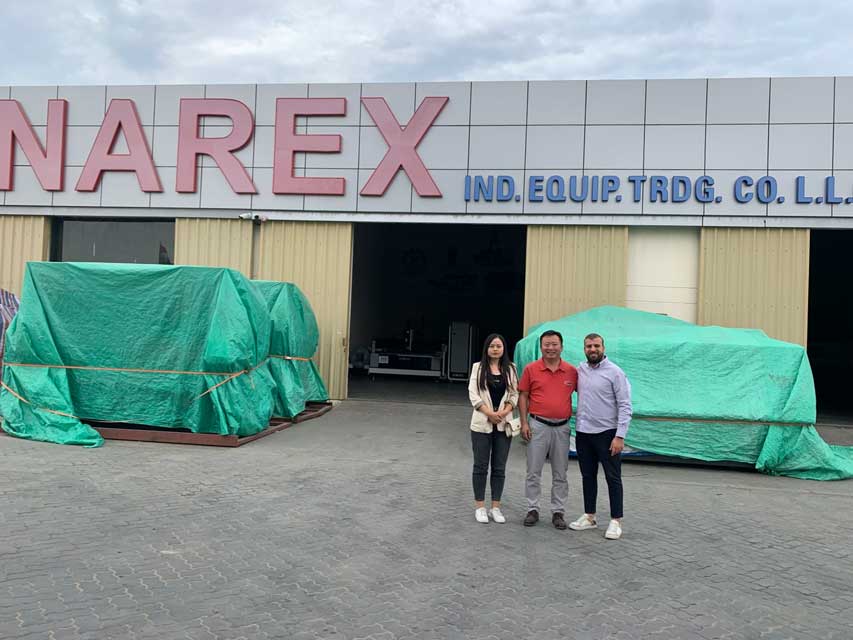
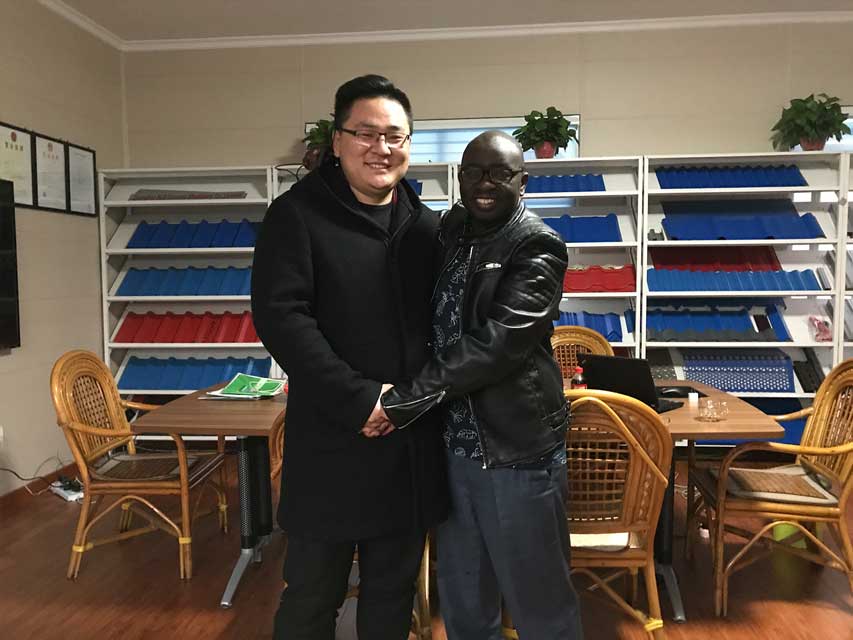
En Zambie, en Afrique, les profileuses Zhongtuo fonctionnent de manière stable.
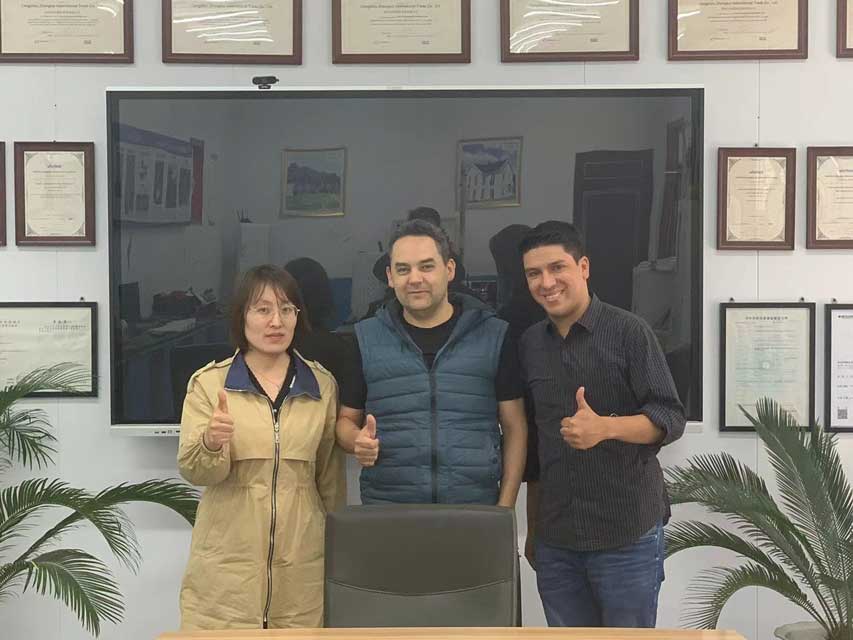
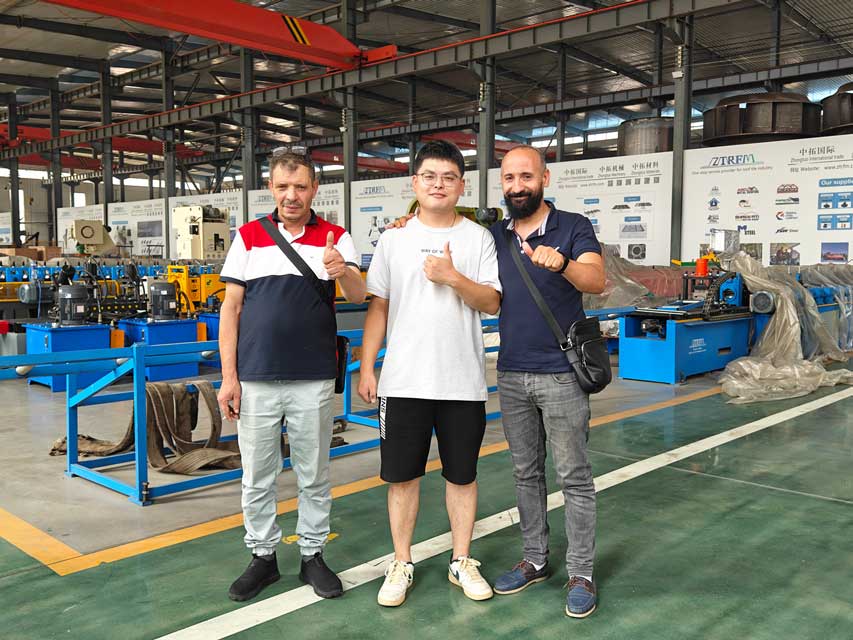
Machine automatique à quille CU - Des clients mongols inspectent les usines et coopèrent avec nous
Ligne de refendage de métaux Zhongtuo personnalisée pour les clients brésiliens
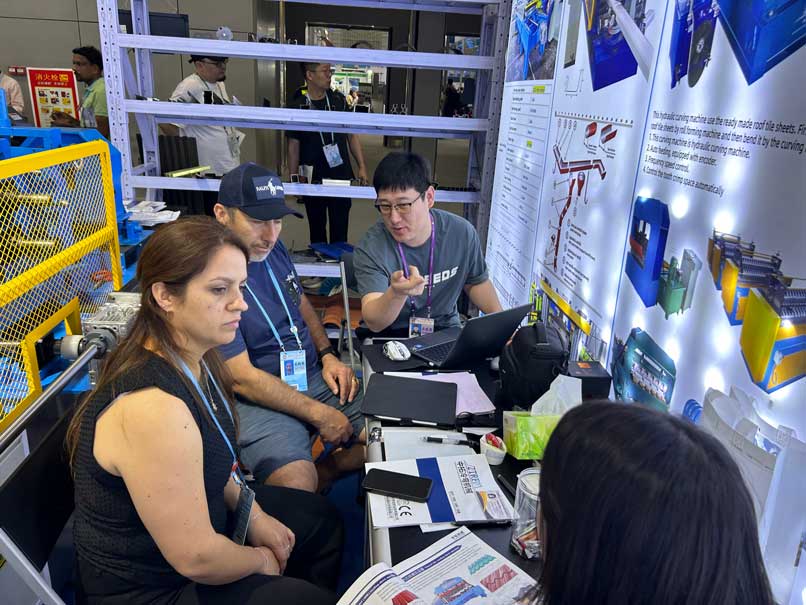
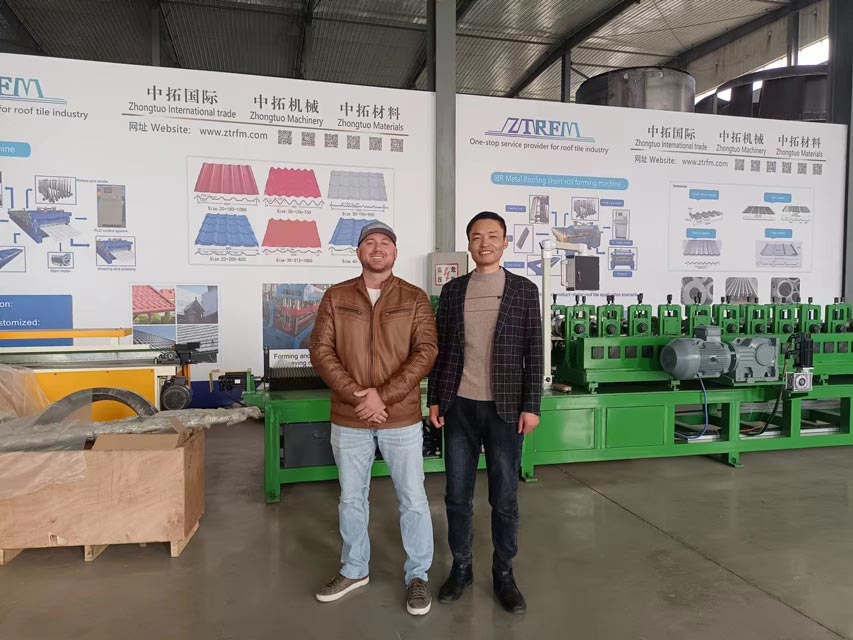
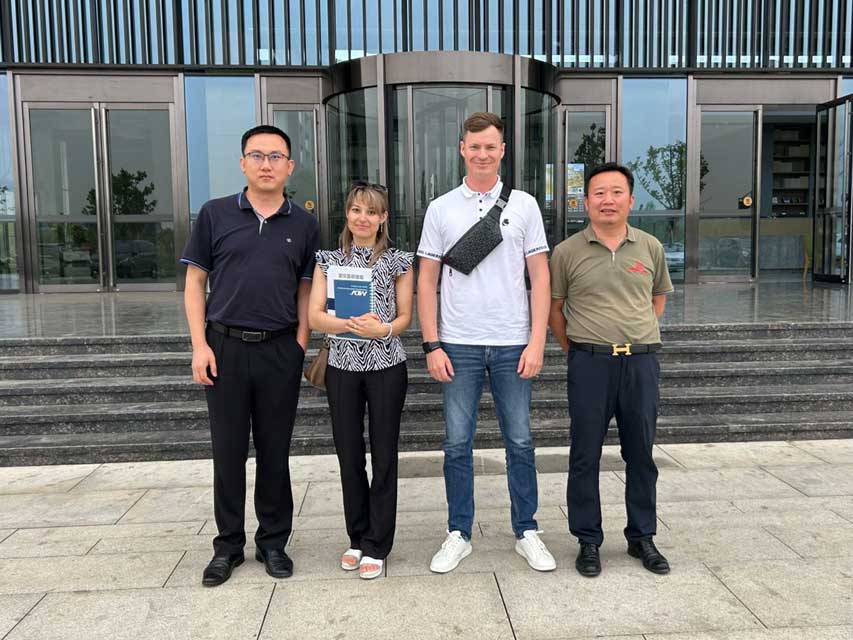
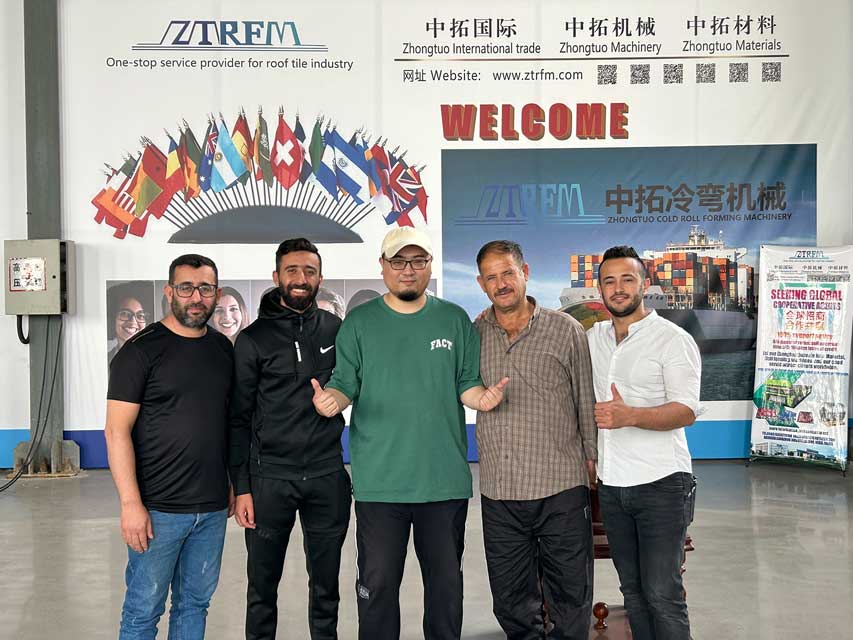
Bienvenue à Wedo LLC pour visiter notre usine de profileuses.
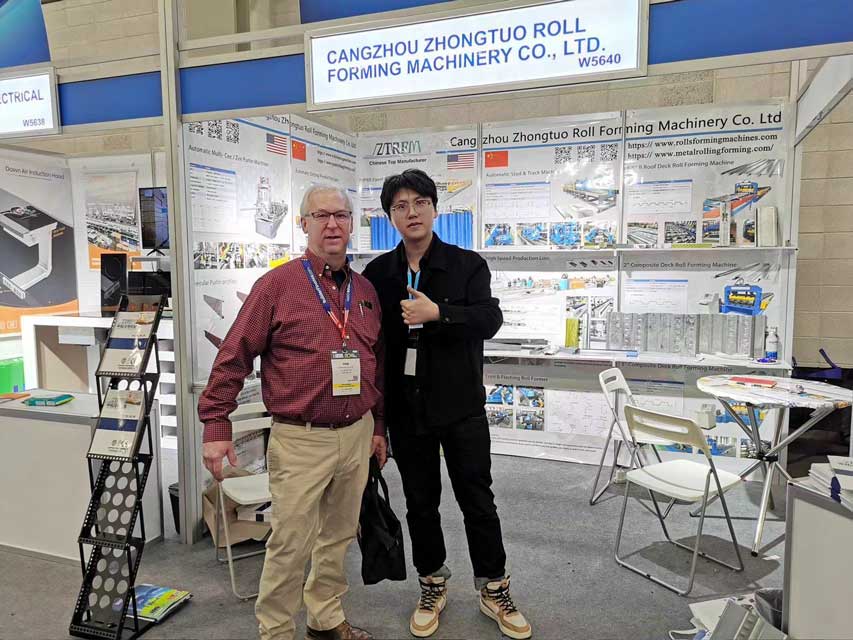
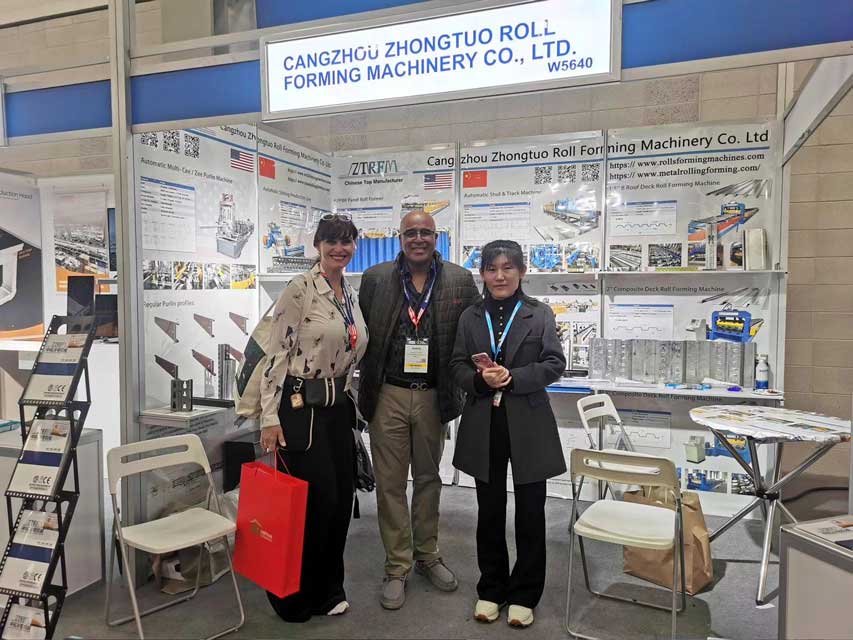
Les amis américains sont de retour à Cangzhou Zhongtuo Roll Forming Machinery
Rouleuse pour toiture métallique produisant des panneaux R et des profilés bas avec système d'empilage automatique
Commentaire d'un client sur le service après-vente de nos profileuses
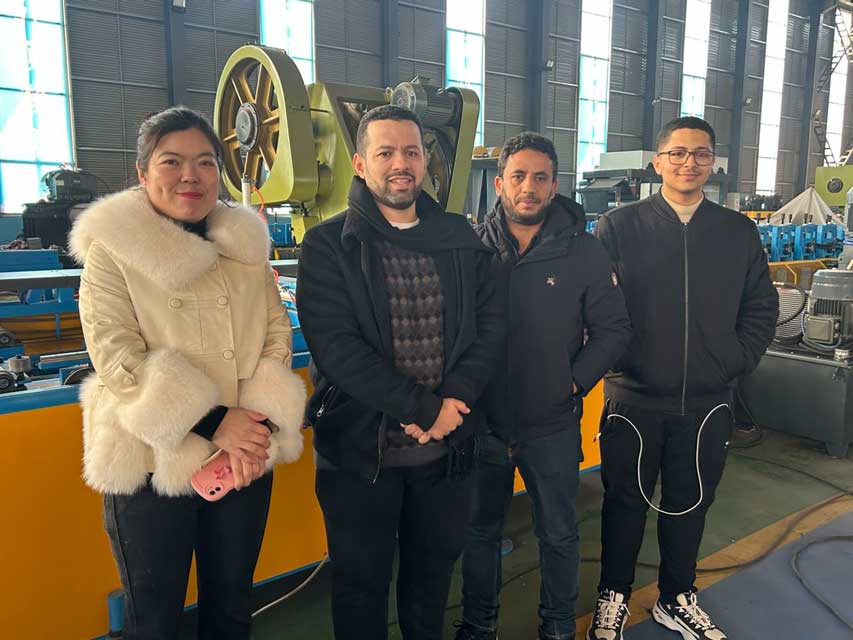
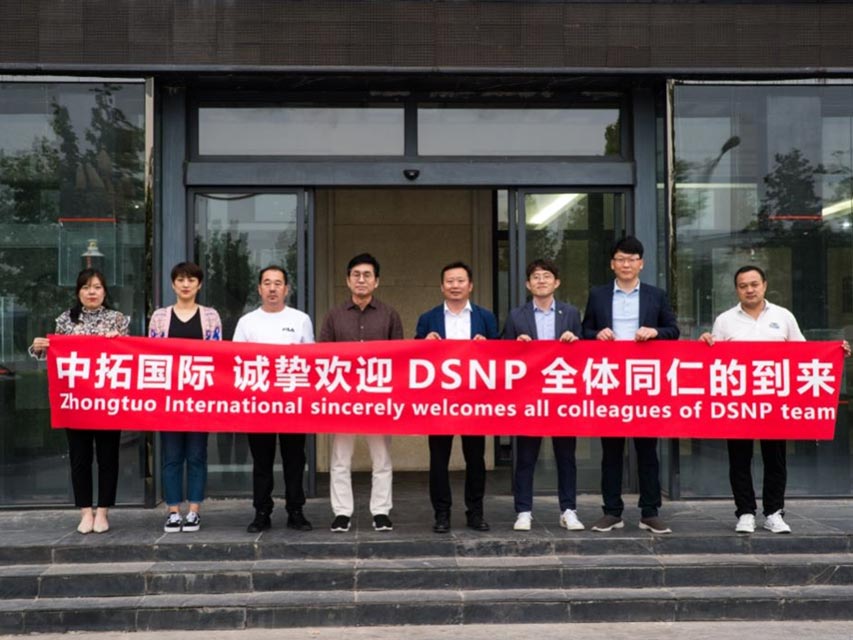
Visite réussie de clients azerbaïdjanais dans notre usine de profilage !
Zhongtuo Roll Forming Solutions | Machines personnalisées pour les industries mondiales
Visitez Zhongtuo grâce au système VR 360°, Cangzhou Zhongtuo a été créé en 2014 et se consacre à la conception et à la fabrication de différents types de machines de formage par laminage à froid. Nous fournissons des services ODM, OEM et des services à guichet unique. Les matières premières, les machines et les accessoires peuvent être achetés chez nous.
Visitez Zhongtuo grâce au système VR 360°, Cangzhou Zhongtuo a été créé en 2004 et se consacre à la conception et à la fabrication de différents types de machines de formage par laminage à froid. Nous fournissons des services ODM et OEM ainsi qu'un service à guichet unique. Les matières premières, les machines et les accessoires peuvent être achetés chez nous.
OEM/ODM et service de personnalisation à guichet unique
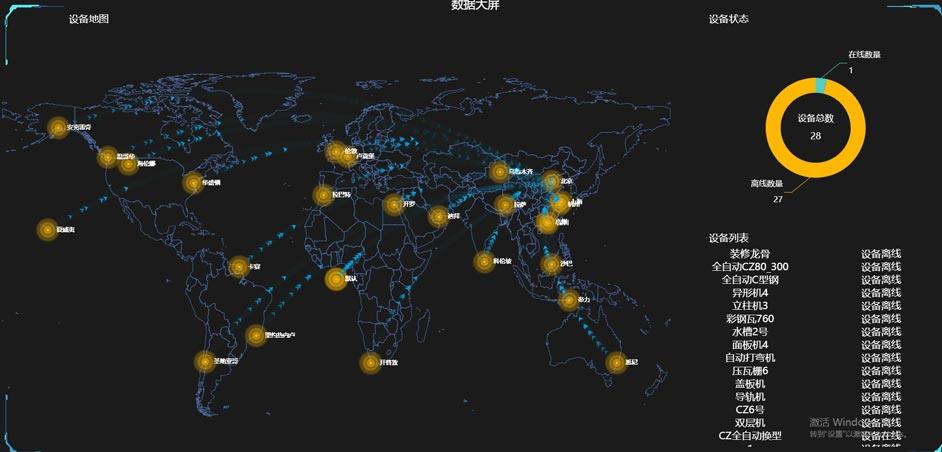
Intelligence dans le suivi de la production : un suivi en temps réel pour prévenir les anomalies de production.
Rappel intelligent : rappel des anomalies, rappel de l'entretien de la machine, etc. - prolonger efficacement la durée de vie de la machine.
Un service après-vente intelligent : réalise véritablement le contrôle à distance du service après-vente, sans qu'il soit nécessaire d'envoyer des ingénieurs sur place, ce qui permet d'économiser le temps du service après-vente et les coûts d'entretien.
Coopération avec Siemens - Garantie globale de Siemens pour les commandes PLC.
Achetez deux machines et recevez cet ordinateur intelligent gratuitement !
Fournir OEM、ODM
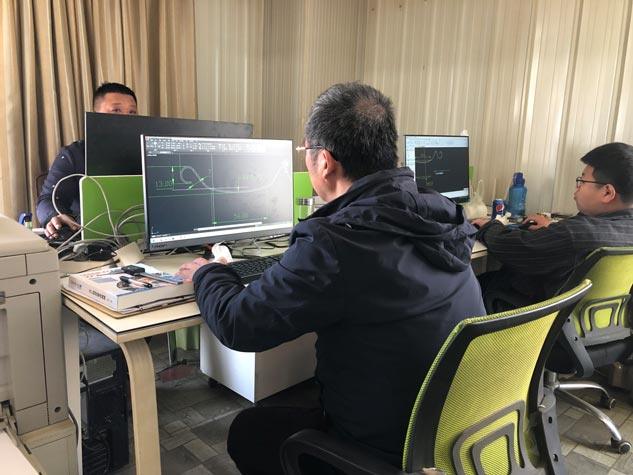
1.communication:confirmer les besoins de l'acheteur. 2.Conception technique : réalisation de dessins de profils et de machines en 3D 3.déterminer la configuration et la production 4.essais avant livraison
5.emballage et livraison 6.Conseils techniques 7.Service après-vente : services d'installation pour les machines complexes et visites régulières des clients
Plus de 95800 entreprises lui font confiance
Nous avons l'honneur de coopérer étroitement avec de nombreux pays. des entreprises de haute qualité. En coopérant avec nous, elles ont reçu Le groupe a bénéficié d'un soutien solide et a réalisé des percées et des développements commerciaux.
0
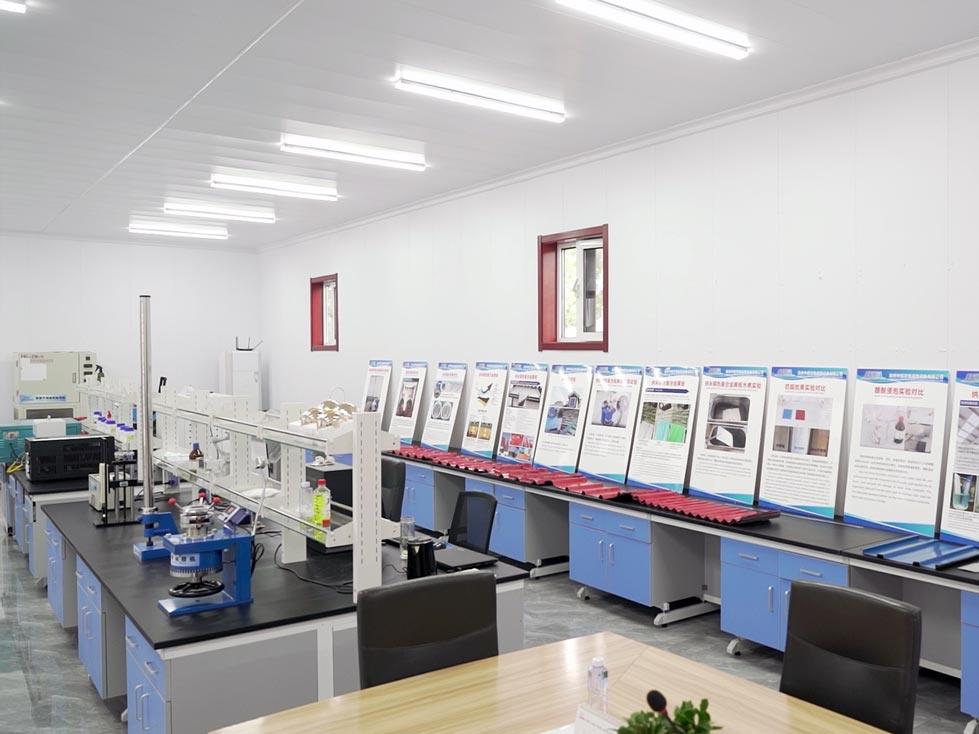
Approuvé ISO9001 et CE
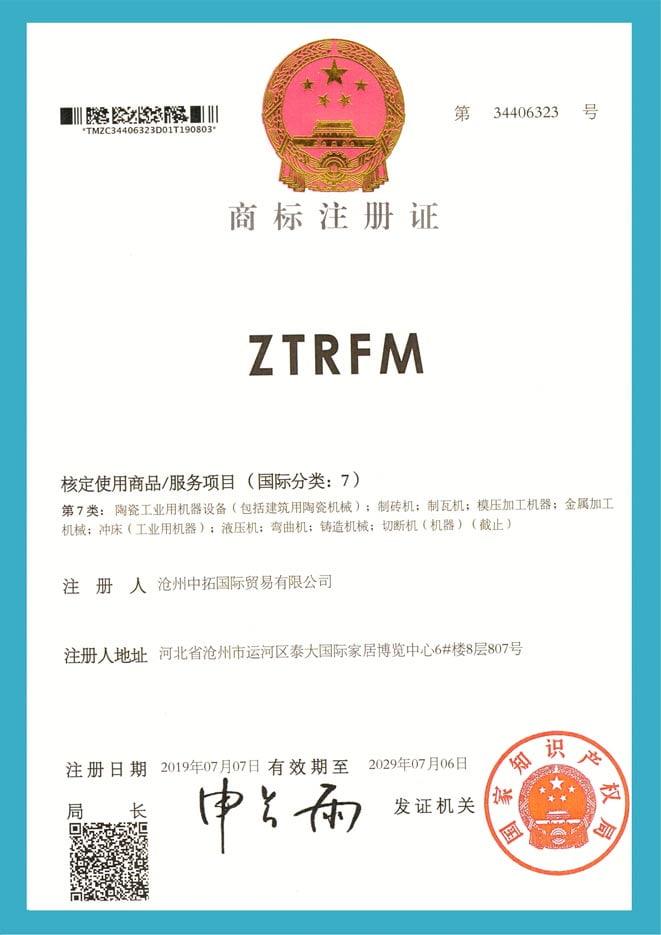
Nous possédons notre propre marque ztrfm, une équipe de conception professionnelle et des techniciens.
0
Pays Clients
Produits populaires auprès des utilisateurs et très appréciés.
0
Solutions à guichet unique
des accessoires aux machines de moulage, en résolvant la complexité de votre approvisionnement.
0
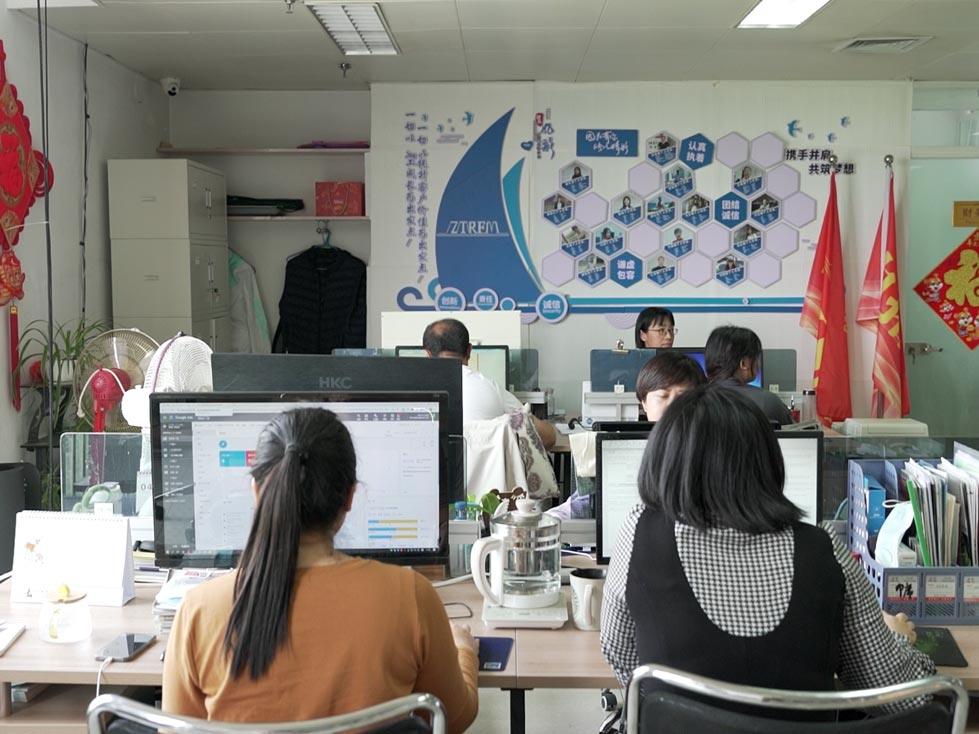
Équipe d'ingénieurs
Nous disposons d'une solide équipe d'ingénieurs composée de plus de 20 personnes, ce qui nous permet de fournir des solutions plus précises et plus rapides.