


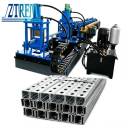


The photovoltaic industry has undergone years of rapid expansion and has transitioned from extensive, large-scale growth to a new phase characterized by refined design, low costs, and high quality. As the "skeleton" of photovoltaic systems, photovoltaic mounting structures may appear structurally simple, yet they directly determine a power plant's disaster resilience, operational lifespan, and overall energy generation efficiency. Traditional manufacturing methods for these structures suffered from issues such as inconsistent precision, low production efficiency, significant material waste, and high labor costs, severely hindering the industry's core objective of cost reduction and efficiency improvement. The photovoltaic mounting profile forming machine, as specialized intelligent equipment designed for renewable energy applications, precisely addresses these production challenges. By adopting standardized, automated, and flexible manufacturing processes, it redefines the production system for mounting profiles and serves as a key driver for high-quality development in the mid-to-lower segments of the photovoltaic supply chain.
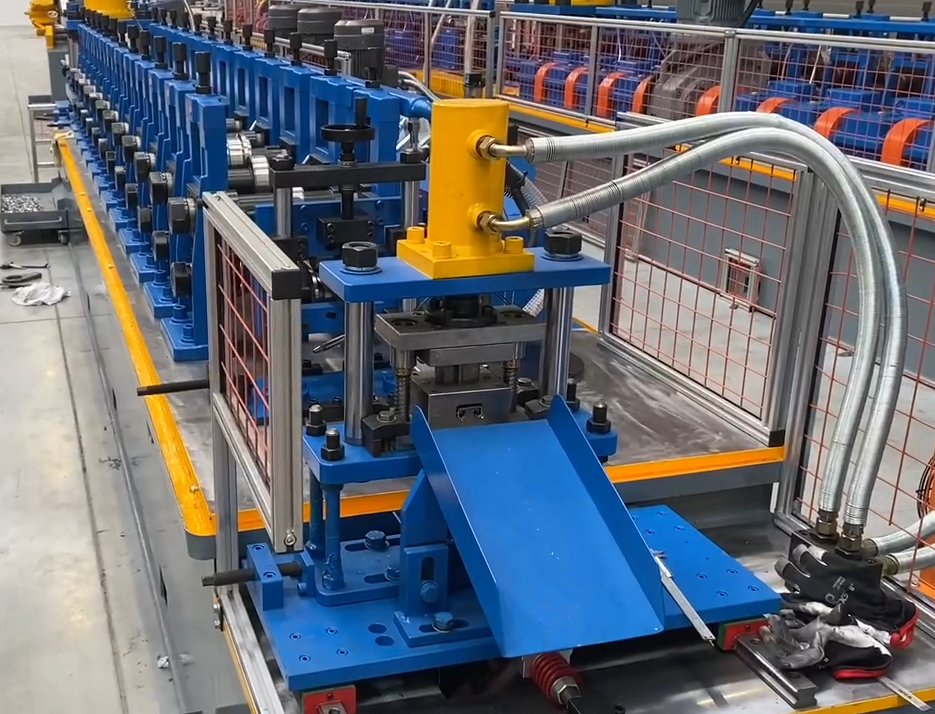
Before the widespread adoption of specialized molding equipment, domestic photovoltaic support profiles were primarily manufactured using modular processing and manual assistance—a method suitable for early-stage small-scale, low-standard projects. However, this approach has long proven inadequate for meeting the demands of modern large-scale photovoltaic parks and the comprehensive deployment of distributed PV systems, with core challenges being particularly pronounced.
The primary issues are inconsistent product precision and poor engineering compatibility. Traditional bending and segmental processing methods rely on manual operation and simple equipment, leading to frequent deviations in profile bending angles, hole dimensions, and cross-sectional specifications, with varying tolerances across different batches. During large-scale installation of photovoltaic power plants, problems such as misalignment during bracket assembly, inadequate module fixation, and uneven force distribution often occur. These issues not only increase on-site installation and commissioning costs but also compromise the plant's wind and pressure resistance, creating long-term safety hazards.
Secondly, there is low production efficiency and inadequate capacity alignment. Traditional manufacturing processes are fragmented, with each stage—including coil unwinding, leveling, punching, forming, and cutting—operated independently, resulting in complex workflow coordination that requires multiple workers to perform separate tasks and leading to slow production speeds. Given the photovoltaic industry's demand for centralized grid integration and mass production, conventional capacity systems struggle to handle large-scale orders, often causing project delays and supply shortages.
Finally, production costs remain high and resource waste is severe. Manual processing has a low tolerance for errors, resulting in significant amounts of scrap and waste materials, with metal material utilization rates generally below 90%. Furthermore, the combined costs of labor, equipment maintenance, and rework requirements keep bracket profile production costs persistently elevated, making it incompatible with the photovoltaic industry's trend toward cost reduction. Additionally, traditional processing equipment consumes high energy and generates significant noise, contradicting the green and low-carbon development objectives of the new energy sector.
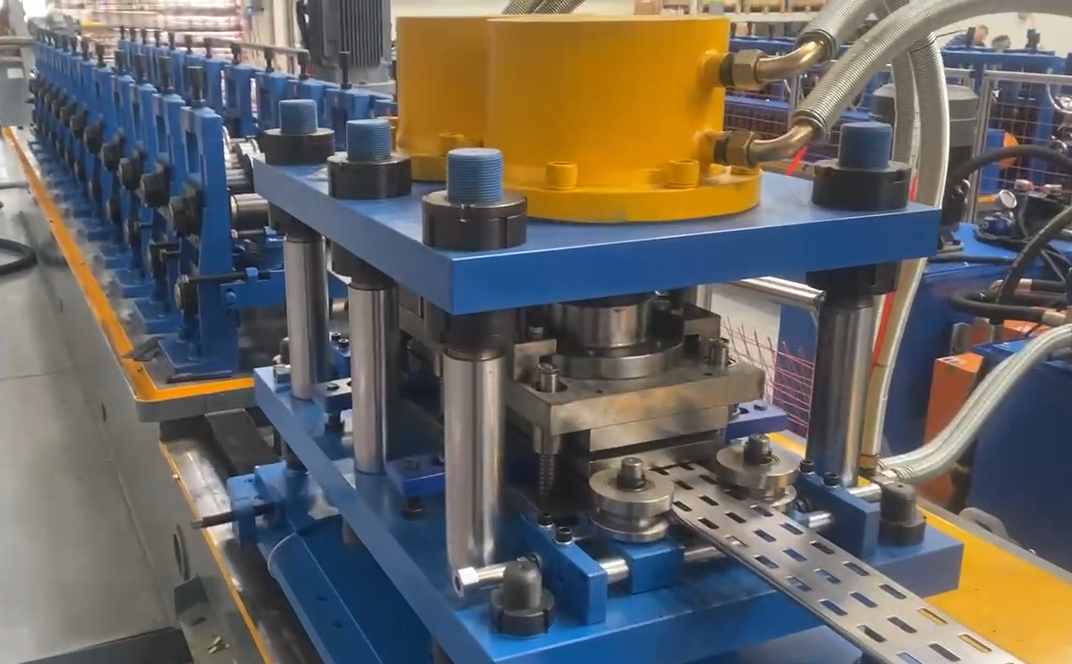
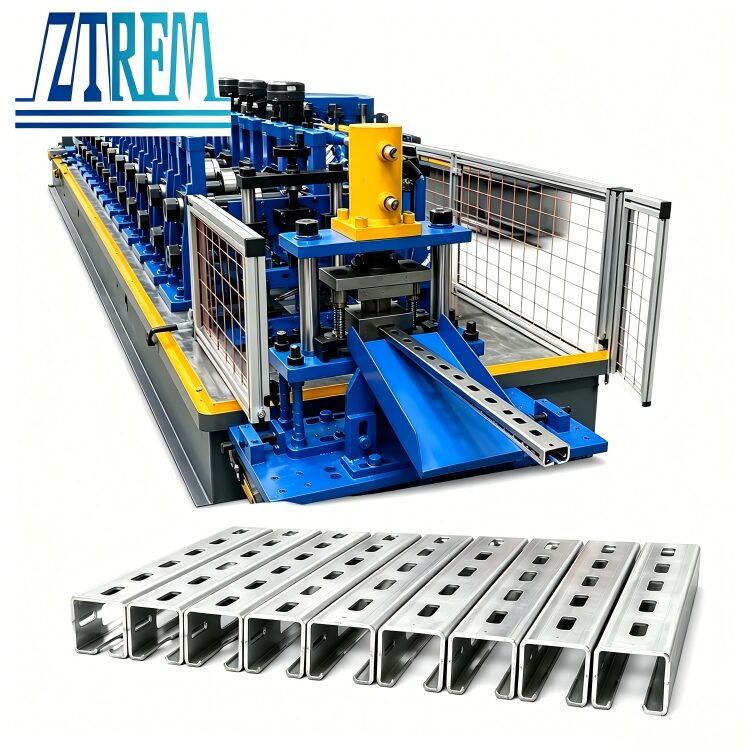
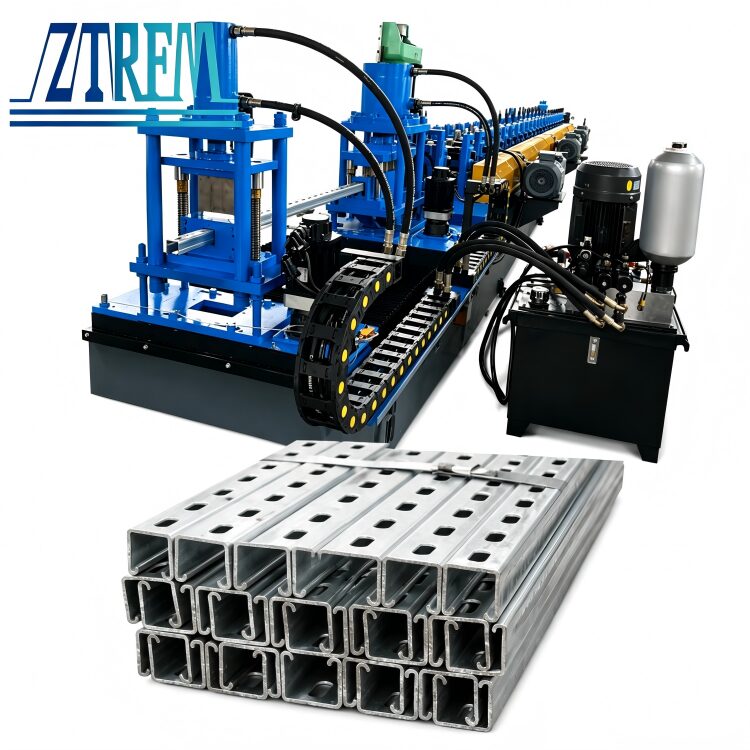
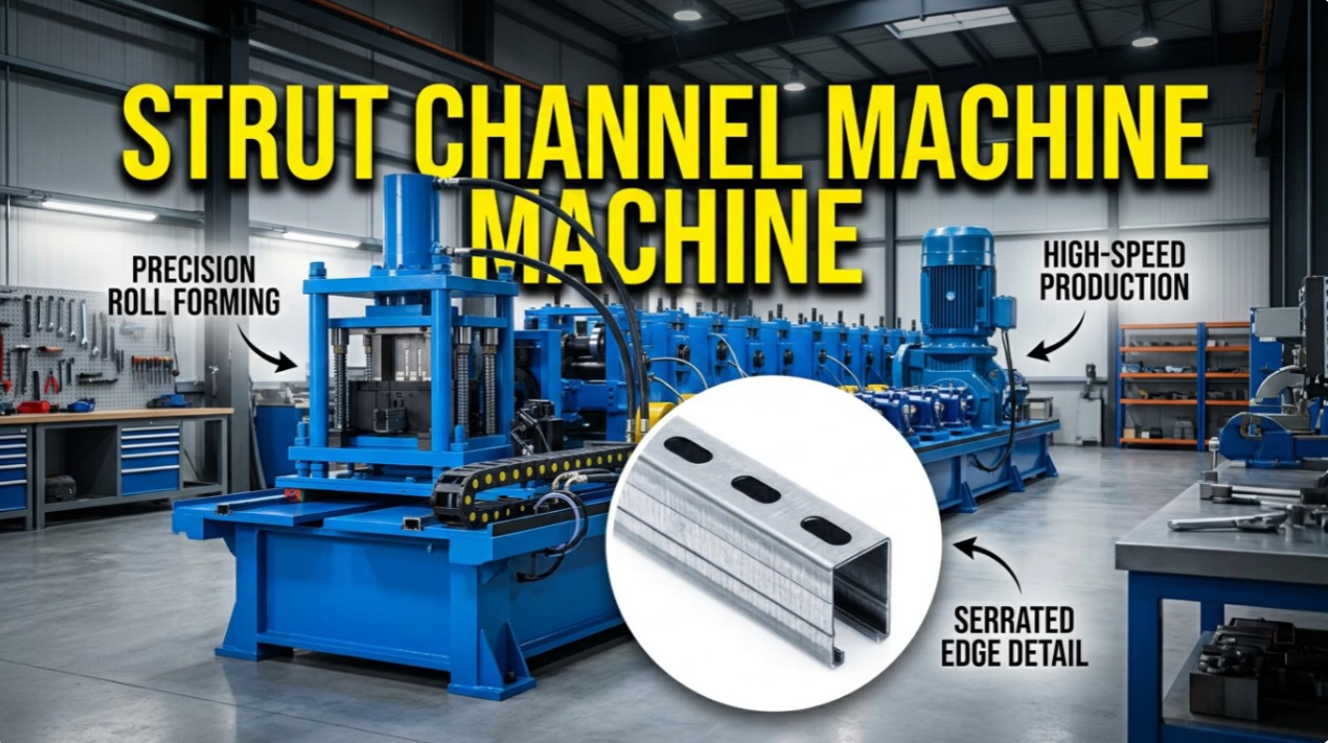
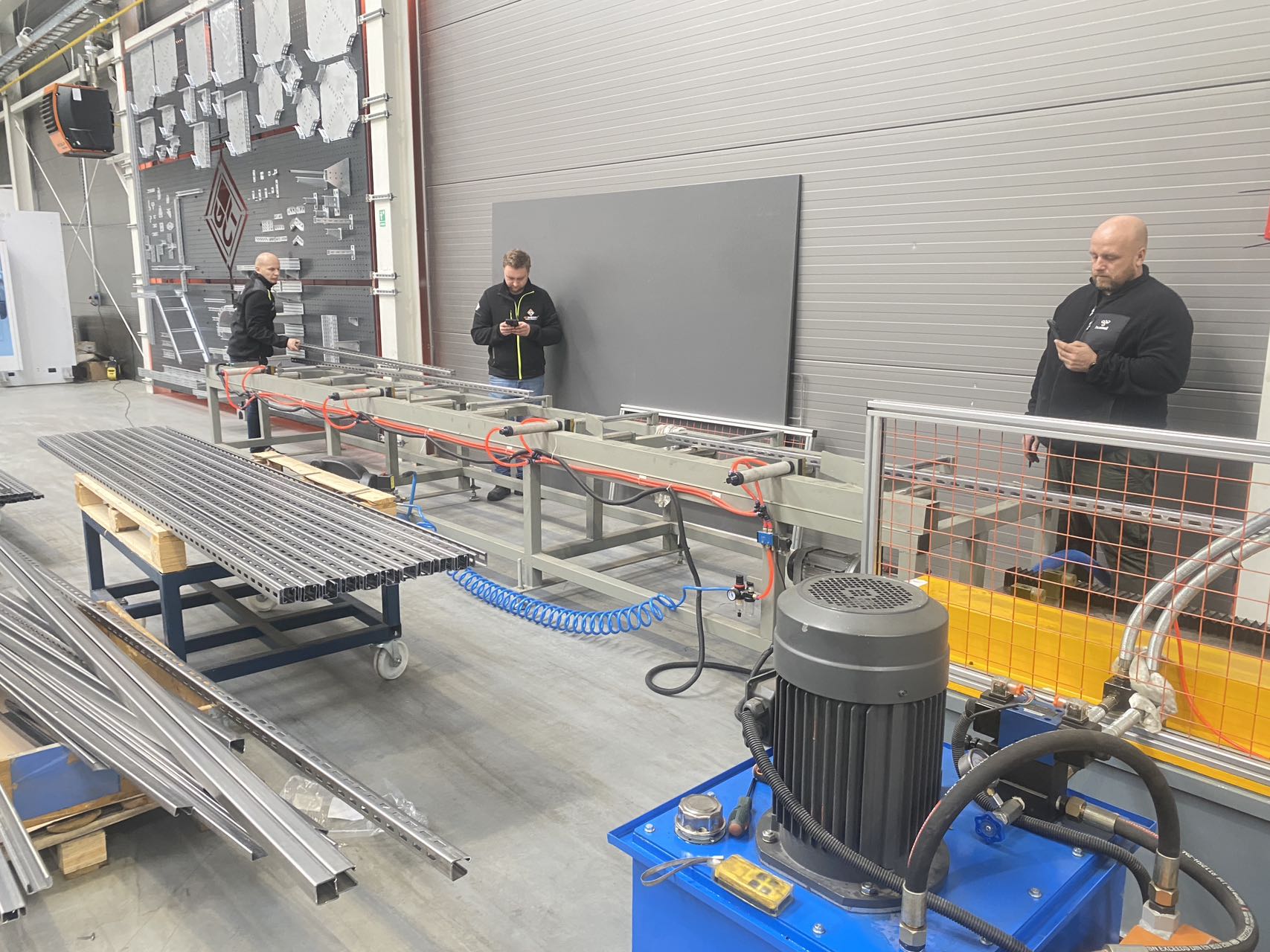
The photovoltaic bracket forming machine addresses the key challenges of traditional production methods by employing an integrated cold bending process that consolidates all manufacturing steps, enabling end-to-end automated production from raw materials to finished products. It drives industry-wide upgrades across four critical dimensions: quality, efficiency, cost, and stability.
At the quality control level, the equipment utilizes a CNC servo linkage system to achieve precise control throughout the entire process. The full cold bending process eliminates material damage caused by high-temperature processing while fully preserving the mechanical strength of base materials such as steel and aluminum alloy. Standardized roll forming, intelligent punching, and tracking cutting design ensure uniform dimensions, precise hole positions, and burr-free cuts for all finished profiles, achieving zero variation across batches and fully complying with national photovoltaic engineering construction standards. This approach eliminates potential installation risks for support structures during production, significantly enhancing the stability and service life of photovoltaic power stations.
In terms of production efficiency, the integrated closed-loop manufacturing model completely eliminates the drawbacks of fragmented processes, eliminating the need for manual intervention at each stage and enabling 24/7 continuous production. The equipment operates with stable and efficient performance, capable of rapidly producing large quantities of photovoltaic mounting profiles in various mainstream specifications; a single unit's capacity can meet the supply demands of major photovoltaic projects, significantly shortening production cycles and perfectly aligning with the industry's characteristics of centralized construction and mass production. Additionally, the intelligent operation mode requires minimal personnel oversight, substantially reducing labor costs and optimizing the company's workforce structure.
In terms of cost control, high-precision automated production significantly reduces product defect rates, while the waste-free tracking and cutting process elevates material utilization to over 98%, minimizing raw material loss. Additionally, energy-efficient equipment design lowers production energy consumption, and intelligent operation and maintenance systems reduce equipment downtime and repair costs, comprehensively reducing the overall production costs of photovoltaic mounting structures. This enhances market competitiveness for photovoltaic enterprises and contributes to a sustained decline in the total construction costs of photovoltaic power stations.
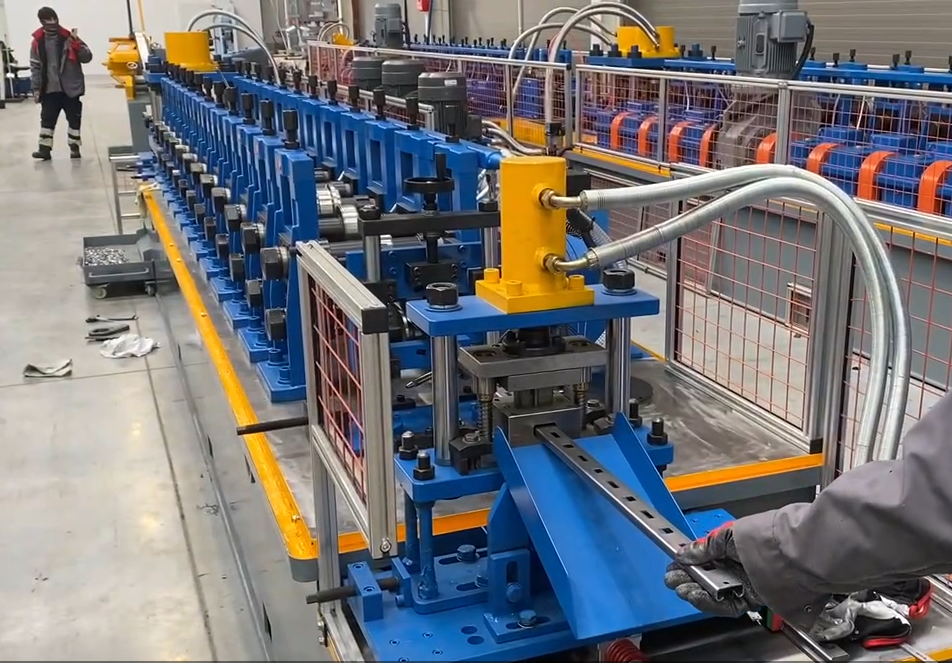
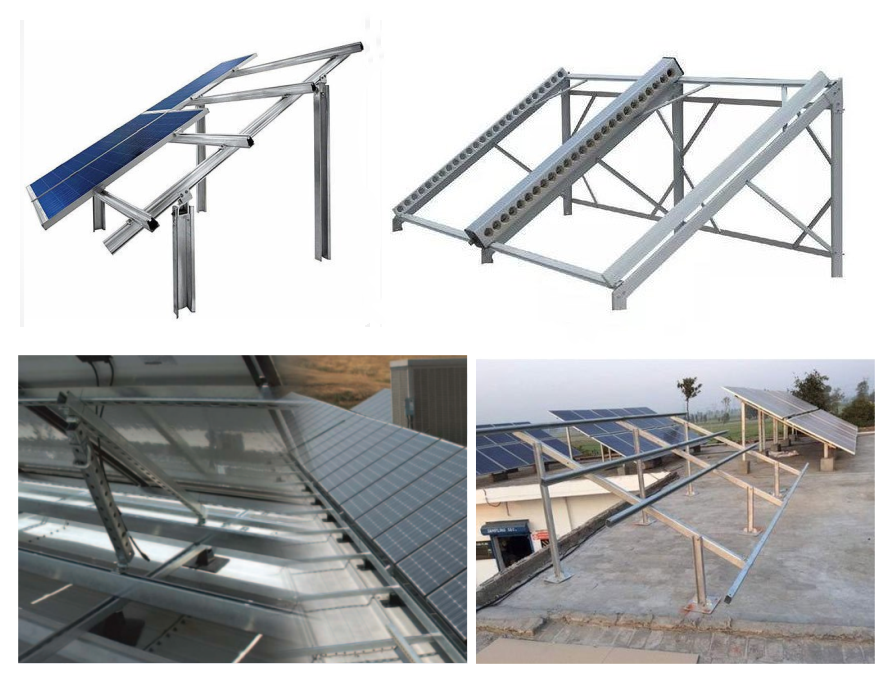
Today, photovoltaic applications have become increasingly diverse, encompassing ground-mounted centralized systems, commercial and industrial distributed installations, residential PV projects, fishery-photovoltaic hybrid systems, and agricultural-photovoltaic integration projects. These varied applications impose significant differences in requirements for bracket specifications, materials, and structural strength, demanding exceptional flexibility in production equipment adaptation.
The photovoltaic bracket forming machine exhibits exceptional production compatibility, accommodating various specialized photovoltaic substrates such as galvanized steel, high-strength steel, and aluminum alloy without requiring replacement of core equipment. By simply adjusting system parameters, it can rapidly switch between producing bracket profiles with different cross-sections and specifications—including C-shaped, U-shaped, and Z-shaped profiles. This capability enables both mass production of high-strength standard brackets for large-scale power plants and customized manufacturing of lightweight, compact irregular-shaped brackets, perfectly addressing both large-volume standardized production and small-batch personalized requirements. Such flexible production capacity allows profile manufacturers to supply solutions for all types of photovoltaic projects without investing in multiple pieces of equipment, significantly reducing capital expenditure on machinery while enhancing production flexibility.
With continuous advancements in photovoltaic technology, the power output and dimensions of PV modules have steadily improved, while construction standards for solar power plants remain increasingly stringent. Consequently, market demands for photovoltaic mounting systems—including load-bearing capacity, precision, corrosion resistance, and compatibility—have escalated significantly, driving manufacturers to adopt smarter and more precise production equipment.
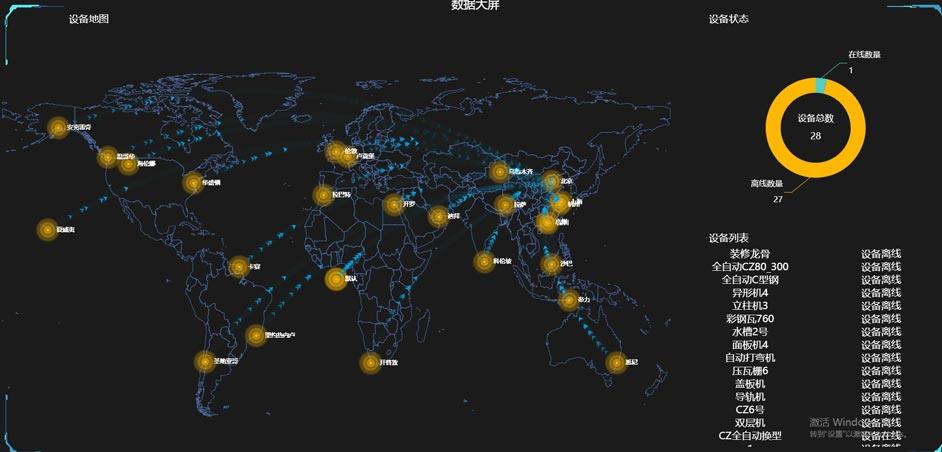
The new-generation photovoltaic mounting frame forming machine is no longer a standalone processing device, but an intelligent production unit. Equipped with an IoT-based smart control system, it enables real-time collection of production data, automatic capacity calculation, intelligent fault detection and warning, as well as remote operation and maintenance management, helping enterprises achieve digitalized and intelligent production management while moving away from traditional extensive production models. Furthermore, the equipment continues to be optimized for higher speed, lower noise levels, and energy efficiency; its production process is environmentally friendly with zero emissions of waste gases, wastewater, or solid waste, truly realizing a closed-loop green production system for new energy products that aligns with the development requirements of the new energy industry under the dual-carbon strategy.
The widespread adoption and evolution of photovoltaic bracket forming machines represent not only an advancement in the production process for photovoltaic profiles but also a key indicator of the high-quality development of the photovoltaic industry. These machines address fundamental challenges associated with traditional brackets—such as inconsistent quality, low efficiency, and high costs—at the production stage. Leveraging standardized, automated, flexible, and intelligent manufacturing capabilities, they continuously contribute to cost reduction, quality improvement, and efficiency enhancement within the photovoltaic sector. Against the backdrop of accelerated global transition to renewable energy and sustained growth in domestic photovoltaic installations, photovoltaic bracket forming machines will continue to serve as essential equipment, supporting the ongoing refinement of the photovoltaic supply chain and laying a solid foundation for the large-scale, high-quality development of the new energy industry.