标题图层
超过 24 年的经验和国际标准知识、
技术变革与工业系统,我们致力于
为 Seds 的尊贵客户提供最佳和经济的解决方案。
技术变革与工业系统,我们致力于
为 Seds 的尊贵客户提供最佳和经济的解决方案。

Regarding Issues With High-Speed Guardrail Forming Machines
沧州中拓滚压成型机械有限公司来自中国河北。它是一家致力于设计和制造的制造商。
不同类型的冷弯成型机。我们是一家历史悠久的工厂,自 2006 年以来一直从事冷弯成型机的设计和制造。我们能生产的机器包括:屋面瓦成型机、CZ 檩条成型机、轻钢龙骨成型机、金属压花机、门系统成型机、天花板系统成型机、高频焊管机、分切生产线、定长切割生产线、货架系统成型机、地板装饰板成型机、彩石瓦生产线、热贴膜机等。
不同类型的冷弯成型机。我们是一家历史悠久的工厂,自 2006 年以来一直从事冷弯成型机的设计和制造。我们能生产的机器包括:屋面瓦成型机、CZ 檩条成型机、轻钢龙骨成型机、金属压花机、门系统成型机、天花板系统成型机、高频焊管机、分切生产线、定长切割生产线、货架系统成型机、地板装饰板成型机、彩石瓦生产线、热贴膜机等。
如需了解更多信息、交货时间和价格,请给我们发邮件!
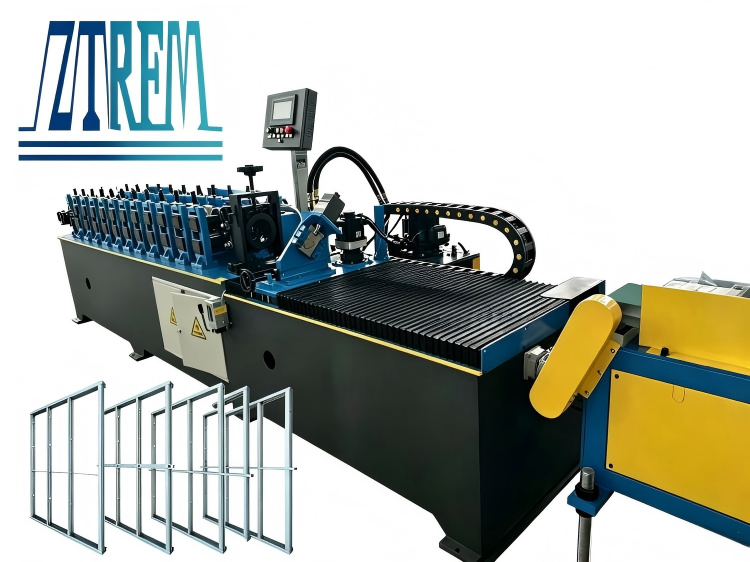


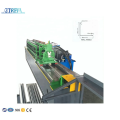
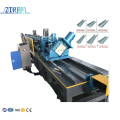


How does the high-speed guardrail forming equipment accomplish the production of both two-wave and three-wave guardrails with a single machine?
The core principle of the two-wave/triple-wave guardrail integrated machine is as follows:the front forming frame remains universal, requiring only replacement of the end-forming roller module, punching die, and flying shear cutting die; it features PLC-controlled dual-program switching. The front section shares common components for unwinding, leveling, conveying, and power transmission, while the rear section employs two independently interchangeable wave-forming tooling systems, enabling dual functionality in a single unit.
What are the different configurations for using a single machine to simultaneously produce two or three waves of high-speed output? The first solution involves replacing specific rollers; the second employs a quick-change mechanism for adjustment. What are the respective advantages and disadvantages of these approaches?
Option 1: Modular design – The rear roller assemblies can be removed and replaced separately (Economy model)
Advantages
- This equipment offers the lowest overall procurement cost, eliminating the need for two separate sets of independent quick-change bases, guide rails, and rapid locking mechanisms. Its total cost is 25%–40% lower than that of quick-change magazines, making it ideal for small manufacturing plants with limited budgets.
- The cost of subsequent roller components is low,as each roller sheet operates independently. If a specific set wears out, only a single roller needs to be replaced individually, eliminating the need to replace the entire cassette assembly and significantly reducing spare parts costs.
- The device features a simple structure with low maintenance requirements. Its conventional design allows even ordinary mechanics to assemble, disassemble, and adjust it, while all components are commercially available—no specialized repair skills are needed.
- It occupies less space, requires no external card cassette storage, and is ideal for compact workshops or fixed locations with a single production line.
Disadvantages
- The model replacement process is extremely time-consuming:complete disassembly, leveling, and test plate calibration require 1.5–3 hours. Frequent switching between two-or three-wave orders results in significant loss of production hours and low capacity utilization.
- The forming accuracy is unstable with poor repeatability. Each roller replacement requires manual insertion of washers to adjust the roller gap and align the upper and lower rollers, involving significant operational errors that often result in asymmetric wave profiles, plate width deviations, and edge collapse. Sample cutting must be repeatedly performed for each batch.
- The process involves high manual labor intensity due to heavy guard roller components (suitable for steel plates 2.0–4.0 mm thick), requiring multiple workers for loading/unloading and assembly/disassembly, which is time-consuming and labor-intensive, with risks of roller damage or bearing scratches.
- The long-term production waste rate remains relatively high;each model replacement requires multi-stage trial production and calibration of steel plates, resulting in higher raw material consumption compared to quick-change models; additionally, significant rework is required for batch exports and high-standard engineering orders.
- Frequent disassembly and assembly can lead to wear of bearings and drive shafts; repeated removal of shaft end locking components, bearing housings, seals, and bearings may cause loosening and oil leakage, thereby shortening the service life of transmission components and increasing maintenance frequency.
Solution 2: Integrated Quick-Change Card Chamber Modular Design (High-end Automated Version)
Advantages
- The equipment switching speed has been significantly improved, with minimal downtime losses. Standard switching takes only 30–60 minutes, making it ideal for processing plants and export-oriented factories that handle multiple two-wave or three-wave order batches daily, thereby effectively extending the equipment's operational availability and boosting daily production capacity.
- The molding accuracy is uniform, ensuring high product consistency. Both cassette assemblies undergo precise calibration and locking with gaskets before shipment, guaranteeing zero dimensional deviation during replacement. Waveforms, plate widths, and bending angles remain stable, achieving high pass rates in engineering acceptance inspections and international quality controls. Trial production samples are minimal, reducing waste material loss by over 15%.
- The operation is effortless, allowing single-person operation for model switching. The card cassette features a sliding rail system for easy pushing and pulling, eliminating the need to manually handle heavy rollers, thereby reducing labor intensity and minimizing the risk of roller damage from impacts.
- The transmission components have a longer service life and require less maintenance. The internal bearings and drive shafts in the cassette remain permanently fixed without disassembly, ensuring stable sealing performance and clearance levels. This significantly reduces failure rates due to oil leakage or bearing damage while extending the maintenance interval.
- Designed for batch production and high-standard international orders, this system integrates automated palletizing, online film coating, and servo-driven precision punching, making it ideal for handling large-scale orders of three-wave reinforced guardrails installed along high-speed highways and bridges with enhanced order flexibility.
Disadvantages
-
- The overall procurement cost is high,as two additional complete sets of cassette bases, guide rails, and quick-lock mechanisms must be manufactured. The final price is approximately 30% higher than that of modular roller-replace models, resulting in greater initial investment costs.
- Each idle setstorage requires additional workshop space; each idle set demands a dedicated storage area, which can occupy valuable material storage space in small, cramped workshops.
- Roll maintenance and replacement incur higher costs. When a single roll wears out, the entire cassette must typically be removed for inspection; customized integrated casings require even longer customization periods and higher pricing.
- Operators must possess a solid understanding of electrical control systems and be proficient in using PLC functions such as configuration switching and automatic limit adjustment; novices require considerable time to master debugging procedures.
What are the advantages of Zhongtuo's leveling system for high-speed guardrail unwinding machines? What are the key features of the leveling wheel design at the feed opening of Zhongtuo's high-speed guardrail forming machines?
Advantages
The Zhongtuo guardrail production line employs a hydraulic unwinding system combined with an independent seven-roll precision leveling linkage system, specifically designed for two-wave or three-wave integrated guardrail machines. It addresses common issues such as galvanized steel coil warping, edge corrugation, internal stress, and feed deviation, and is compatible with steel strips of thickness 2.0–4.0 mm and widths 485/506 mm.
Design highlights
The integrated widened and thickened leveling wheel maintains its shape when handling heavy materials.
Layered composite roller surface process: scratch-resistant galvanized coating + high friction coefficient
Independent hydraulic clamping with upper and lower rollers, featuring adjustable pressure levels.
Both sides are equipped with adjustable side guide leveling wheels for simultaneous alignment correction.
The quick-release bearing housing design eliminates the need for complete disassembly during maintenance or material replacement.
With a buffered transition slope design, the steel strip features a smooth transition without wrinkles.
How does Zhongtuo's high-speed guardrail equipment achieve rapid switching between different punching die configurations?
The Zhongtuo servo punching unit features a three-in-one design combining integrated die frame with slide-rail quick-change mechanism, zero-point positioning, and eccentric rapid locking. Unlike traditional methods requiring complete disassembly of bolts, it is specifically designed for rapid interchangeability between two types of punches: single-row holes on one side (two-wave configuration) and widened double-row holes for three-wave guardrails. The entire process requires no removal of hydraulic cylinders or the servo transverse movement base, with die replacement completed within 10 minutes.
What is the forming speed of Zhongtuo's high-speed guardrail equipment? How is automation achieved? How many operators are required? What is the power consumption? What is the daily productivity at an eight-hour workday, and what are the associated costs?
Forming production speed (measured range for Zhongtuo standard models)
The entire production line operates continuously with uninterrupted forming, punching, and flying shear processes, featuring stepless variable frequency speed control.
- Two-wave W-shaped guardrails (thin plates, 2.0–3.0 mm): production rate 8–15 m/min; standard stable mass production rate 10–12 m/min.
- Three-wave reinforced guardrails (thick plates, 3.0–4.0 mm): production rate 6–10 m/min; standard mass production rate 7–9 m/min.
Reasons for speed differentiation: the three-wave raw material has a wider profile, involves more bending turns, and requires twice as many punching holes, resulting in greater forming resistance; the system automatically reduces speed to ensure punching and forming accuracy. - The maximum speed under no-load operation without punching reaches 15 m/min; actual effective production is calculated based on the punching condition.
Zhongtuo employs a comprehensive system integrating Siemens PLC, touch screens, HMI interfaces, servo motors, variable frequency drives, and encoders for closed-loop control, enabling fully automated coordination across all production processes without manual segment-by-segment operation.
Basic Standard Model (no automatic palletizing): 2 people
High-end fully automatic palletizing machine: 1 operator
The total installed power of all motors, hydraulic systems, and servos in the entire production line is 42 kW, broken down as follows:
- Main forming drive motor: 22 kW
- Servo punching system: 7.5 kW
- Hydraulic unwinding + Flying shear hydraulic station: 8.5 kW
- Auxiliary components: leveling traction, fan, control circuit, etc.: 4 kW
Actual Average Operating Power Consumption (Key)
The device will not operate continuously at full load of 42 kW:
- Average load for mass production of two-wave thin plates: 24–28 kW
- The average load during mass production of Sanbo thick plates ranges from 28 to 33 kW, while the standby power consumption under no-load conditions is only 3–5 kW.
Daily electricity cost for production (calculated based on industrial tariff rates) over 8 hours
Set Conditions
- Industrial electricity rates are divided into two tiers: off-peak hours at the plant site at ¥0.5 per kWh, and standard industrial usage at ¥0.75 per kWh.
- The daily average load is set to the midpoint value of 28 kW, with actual operation lasting 7.5 hours per day.
- Total daily electricity consumption: 28 kW × 7.5 h = 210 kWh
- Low-cost electricity rate: 0.5 yuan per kWh: 210 × 0.5 = 105 yuan per day
- Conventional industry: 0.75 yuan/kWh; 210 × 0.75 = 157.5 yuan/day for electricity costs
Power consumption cost per unit meter (using a 4,500-meter route with two waves per day as an example)
- Off-peak electricity rate: 105 ÷ 4500 ≈ 0.023 yuan/meter
- Conventional industrial electricity: 157.5 ÷ 4500 ≈ 0.035 yuan/m²
Other daily consumables expenses (small, fixed daily expenditures)
- Hydraulic oil, gear lubricating oil: average daily cost of 15–25 yuan
- Amortization of punch, blade, and roll wear consumables: RMB 40–70 per day (amortized monthly)
- Total daily production energy consumption + total material costs range: Off-peak electricity rate: ¥160–¥200/day; Regular electricity rate: ¥210–¥260/day
Regarding the cutting configurations for two-wave and three-wave highway guardrails, what types are available on the market? What are their respective advantages and disadvantages? Which configuration do we recommend? How should this cutting configuration be integrated with punching operations during design to ensure precise punching, accurate cutting, and exact clearance distances between holes and leaf edges?
- The market has eliminated four types of cutting machines: hydraulic stop-cutters (low-cost, low-precision, low-capacity); servo follow-cutters (mid-range linear motion with travel lag); servo rotary flying saws (high-end, high-speed, high-precision – the primary recommendation); and flying saws (outdated models with substandard appearance).
- Prioritize servo-synchronous rotary cutting blades, as they are ideal for frequent model changes in two-wave and three-wave integrated machines, high-speed mass production, and export orders as well as high-standard engineering projects.
- Core Precision Assurance Solution: ① A single main-axis encoder is shared across the entire line to provide a unified metering reference; ② Mechanical calibration ensures consistent center distances for punching and flying shear operations, with built-in program parameters for end-hole clearance; ③ Dual servo electronic cams synchronize punching and flying shear actions, eliminating relative slippage during cutting; ④ Independent length compensation algorithms for two-wave and three-wave configurations ensure zero-point positioning without deviation during rapid die changes; ⑤ Central alignment guidance combined with a synchronized material pressing mechanism prevents dimensional deviations caused by steel strip movement.
Why do Zhongtuo's two-wave and three-wave high-speed guardrail systems incorporate water-cooling systems, while air-cooling systems are used at the hydraulic stations? What type of hydraulic pump station is employed in Zhongtuo's high-speed guardrail hydraulic system? What are its advantages and disadvantages? Compared to conventional hydraulic pump stations on the market, what competitive advantages does it offer in terms of price range?
The primary reason for requiring water-cooling systems at punching and flying shear stations is that these hydraulic units—particularly those equipped with servo-driven rotating mechanisms—are the hottest and most impact-prone components along the entire production line.
Reason for selecting air cooling for the main hydraulic station (uncoiling, leveling, and clamping cylinders): The main hydraulic station operates with a steady load and intermittent workload, generating low heat generation.
The synergistic advantages of dual cooling systems
- Water-cooled: A high-precision hydraulic workstation with constant temperature to maintain accuracy, designed for continuous production of thick plates using three-wave processing technology.
- Air-cooled: Auxiliary low-pressure hydraulic station that simplifies installation and reduces total equipment costs; two independent temperature control circuits operate independently without interference, enabling seamless switching between two or three operating cycles without oil temperature exceedance issues.
The Zhongtuo integrated high-pressure variable-displacement plunger hydraulic pump station for guardrail forming stands out from conventional gear pump-based pump stations in the market. It features a split-path integrated valve block and a multi-circuit independent oil supply design, with the system comprising two power units: a main/auxiliary air-cooled pump station and an independently water-cooled servo pump station equipped with a hole-punching shear mechanism.
Advantages and disadvantages of Zhongtuo's specialized hydraulic pump stations:
Advantages
- Stable pressure ensures high precision in punching and cutting dimensions.
- The zones are supplied with independent fuel, and switching between two or three fuel phases does not cause pressure interference.
- Energy conservation reduces consumption, resulting in lower electricity costs over the long term.
- Low failure rate and durable performance, suitable for 24-hour continuous mass production
- Compatible with both two-wave thin plates and three-wave thick/wide plates under all operating conditions.
- Comprehensive intelligent security protection
Disadvantages
- The overall procurement cost exceeds that of a standard gear pump-based simple pumping station, requiring higher initial equipment investment.
- Water-cooled units require a circulating water supply within the facility; for sites without water access, additional small cooling towers must be installed, increasing associated costs.
- The unit price of components for plunger pumps and integrated servo valve assemblies is higher than that of standard valve parts for conventional gear pumps.
Summary of the core competitive advantages of this Zhongtuo hydraulic pump station compared to ordinary pump stations available on the market:
- Precision advantage: Dual cooling temperature control combined with energy storage pressure stabilization ensures stable punching and flying shear pressures, maintaining long-term accuracy in hole spacing and end dimensions to meet national standards and export quality requirements; conventional gear pump stations experience high-temperature pressure relief, dimensional variation during mass production, and frequent rework.
- Production capacity advantages: High-pressure, high-flow piston pumps with three-wave thick plate technology enabling continuous high-speed operation; conventional pumping stations exhibit limited high-pressure performance, low speed limits, and restricted production capacity.
- Durability and maintenance advantages: impact-resistant, heat-resistant, equipped with advanced filtration systems, ensuring stable continuous mass production; conventional pumping stations frequently experience oil leakage, valve jamming, or nozzle erosion during summer high temperatures, requiring multiple monthly shutdowns for maintenance.
- meets all-in-one machine model upgrade requirements: features independent multi-channel pressure regulation and one-touch hydraulic pressure matching for two-wave or three-wave switching, eliminating manual adjustment; conventional single-channel valve blocks require re-pressure calibration during upgrades, wasting labor time.
- Energy efficiency benefits: Variable displacement pumps deliver oil on demand, resulting in significantly lower long-term electricity costs compared to fixed-displacement gear pump systems.
What type of mold material is used for the Zhongtuo two-wave and three-wave high-speed guardrails? How many types of frame structures and gearbox configurations are available? What is the diameter of the drive shafts? Why was this design chosen?
Complete set of mold materials (roll forming dies + punching dies + cutting tool dies)
1. Forming rolls (main rolls with two-wave or three-wave profiles; core forming mold)
Material: GCr15 bearing steel
Process: Overall forging → CNC precision machining → Overall quenching and tempering → Surface hard chrome plating.
Hardness: Matrix HRC 58–62; chromium layer thickness 0.08–0.12 mm; suitable thickness range 2.0–4.0 mm. Suitable for Q235/Q345 galvanized steel strips, as well as two-wave thin plates and three-wave thick-wide plates.
2. Punching die (punch, die cavity, ejection plate)
Material: Cr12MoV high-chromium cold work die steel Heat treatment: Vacuum quenching; hardness: HRC 60–64
Selection Reason
The three-wave guardrail features double-row dense punching and high-frequency, high-pressure stamping. Made of Cr12MoV alloy, it exhibits excellent toughness, resistance to chip formation, and impact durability; whereas conventional thick Cr12 material is prone to edge chipping, requiring frequent punch replacement and significant downtime due to operational losses.
3. Flattening shear blade / Cutting die core
Material: Cr12MoV; three-piece wave-shaped bonding die with overall quenched structure
Selection Reason
The 4.0 mm thick three-wave steel plate exhibits high shear impact resistance; this material demonstrates excellent bending and fracture resistance, producing smooth cut surfaces free of burrs and significantly reducing scrap generation.
Frame structure types, parameters, and design advantages
The complete rack consists of two main structural components: the base main beam and an independently molded archway.
1)The bottom host base is constructed from thickened H-shaped steel conforming to national standards, integrated with a 20 mm thick steel plate fully welded together; the entire unit undergoes stress-relief annealing after welding, followed by portal milling for precision machining of the installation reference surface.
2) Formed arches (each roll supported independently): 48 mm thick integral cast iron open arches, comprising 16 independent arch groups in a single row (representing 16 progressive forming stages), with the final three positions designated as quick-change cassette module mounting points specifically designed for two-wave or three-wave rapid roller replacement systems.
Why was the composite structure of "an H-shaped steel base combined with a thickened cast iron archway" chosen?
- The anti-deformation rigidity is maximized: the raw material for three-wave guardrails measures 506 mm in width with a maximum plate thickness of 4 mm, requiring significant forming and bending forces; thin steel plates welded to frames may develop lateral bending or vibration under prolonged heavy loads, resulting in uneven wave profiles (one side deeper than the other); cast iron arches exhibit consistent resistance to compression and torsion without deformation, while the parallelism of the 16 rolling rolls remains permanently stable.
- Annealing eliminates welding stresses:Conventional manufacturers assemble components directly after welding, leading to base distortion and shaft misalignment within six months of use; Zhongtuo's complete machines undergo annealing to release welding stresses, ensuring consistent performance under long-term high-speed production without deviation.
- The modular independent arch design facilitates maintenance and rapid replacement: each roll is equipped with its own arch, while the last three arches can be removed as a single unit for quick cartridge replacement without disassembling the entire frame, meeting the frequent model-switching requirements of two-wave or three-wave integrated machines.
- It provides shock absorption and noise reduction while protecting transmission components. Cast iron exhibits superior shock-absorbing performance compared to steel plates; high-speed molding minimizes impact wear on gearboxes and bearings, resulting in lower equipment noise levels and reduced failure rates.
The transmission configuration, number of gearboxes, and design rationale
Gearbox Configuration Scheme
Transmission configuration: Independent gearboxes with separate drive systems for lower-stage transmission (16 independent gearboxes per row, providing one-to-one drive for each roll).
Structure: Each roll is equipped with a dedicated ZQ heavy-duty gearbox, connected via universal joints to ensure synchronous drive between upper and lower rolls; the main motor drives a high-power reducer to provide unified power input, enabling synchronized operation across the entire line.
Comparison of the two transmission options available on the market (why Zhongtuo does not use a chain drive)?
- Low-end model: uses a single long chain for shaft-driven transmission. Disadvantages: thick material formed chains become elongated and exhibit tooth skipping; the upper and lower rollers operate at asynchronous speeds, causing plate tearing and wave misalignment; completely unsuitable for three-wave thick plates.
- Standard configuration of Zhongtuo: 16 independent gearboxes providing one-to-one drive.
Five major design advantages of independent gearboxes for power transmission:
- The upper and lower rolls operate in perfect synchronization with no speed discrepancy, ensuring that thick three-wave steel plates are pressed without deviation or scratching of the galvanized coating.
- The torque reserve is sufficient, with each gearbox independently distributing bending loads; thick material forming occurs smoothly without machine stagnation or lagging.
- A single track failure only affects the corresponding gearbox; other tracks remain unaffected, and no full-line disassembly is required for maintenance.
- The clearance during operation is extremely small; continuous operation at high speeds (6–15 m/min) ensures dimensional stability and consistent accuracy from the hole to the end.
- Adapted for the end module of the quick-change card匣: only the three gearboxes at the end need to be removed or installed; the 13 transmission reference points at the front remain unchanged, ensuring no loss in model replacement accuracy.
Standard for formed roller shaft diameter: Φ76 mm solid quenched and tempered shaft (made of 40Cr alloy steel)
Core Parameters
Axle material: 40Cr alloy structural steel with overall tempering treatment; solid forged shaft with a diameter of Φ76 mm, featuring integral keyway milling without hollow design for weight reduction; Number of stages: 16 uniformly configured stages using 76 mm large-diameter shafts without gradual size reduction.
The core objective of the comprehensive structural design is to meet the specific requirements of two-wave and three-wave integrated machines.
- The system features a long-lasting, high-precision GCr15 wear-resistant roller with dual-purpose functionality, a Φ76 solid shaft, a cast iron frame, and an independent gearbox—all configured for exceptional rigidity. Switching between two or three wave configurations ensures no drift in waveform, pitch, or end dimensions, eliminating the need for frequent adjustments.
- Compatible with 2.0–4.0 mm full-thickness double-wave and triple-wave guardrails for mass production,offering sufficient bending pressure, transmission torque, and structural rigidity while achieving both high-speed processing of thin materials and stable forming of thick materials.
- Reducing long-term operation and maintenance costs: wear-resistant molds, deformation-resistant frames, and stable transmission systems result in significantly lower wear rates for rolls, punches, bearings, and gears compared to low-end models on the market, thereby saving substantial expenses on consumables and maintenance labor over time.
- Designed for high-speed continuous automated production, its rigid structure eliminates vibration while transmission synchronization prevents slippage. Combined with water-cooled hydraulic systems and servo-controlled flying shears, it ensures stable mass production rates of 8–15 m/min for two-wave operations and 6–10 m/min for three-wave operations, outperforming conventional chain-driven fine-shaft equipment in productivity.
What is the palletizing efficiency per minute? What is the approximate floor space required? How can efficiency be improved by integrating with high-speed barrier systems and forming machines? How can speed compatibility be achieved? Why is Mato equipment recommended? How can the packaging process be optimized? Are there any other recommended automation solutions?
Per-minute palletizing efficiency (for two mainstream models: gantry servo palletizer / simple stacker)
1. Standard servo palletizer (standard or high-end model from Zhongtuo, equipped with electromagnetic suction cups for material handling)
The standard length of each guardrail panel is 4.32 m, with a cycle time of 7–10 seconds per panel, equivalent to 6–8 panels per minute.
- Two-wave thin plate high-speed production (10–12 m/min): stable at 7 pieces per minute, fully matching the forming speed
- Low-speed production of three-wave thick plates (6–9 m/min): 6 pieces per minute, with a buffer allowance to prevent material blockage
- Dual-station alternating palletizing machine: capable of processing 9–11 pallets per minute, ideal for large manufacturers with daily production volumes exceeding 4,000 meters.
2. Simple Pneumatic Plate Stacking Machine (Economic Option)
Rhythm: 12–15 seconds per block, 4–5 blocks per minute. Suitable only for small processing plants with low output and intermittent production; high-speed mass production may cause clogging.
The footprint of the palletizing equipment
1. Single-workstation standard gantry palletizing system (the mainstream standard configuration)
Total length × Total width: 6.2 m × 2.8 m ≈ 17.4 m². Includes: finished product conveyor roller track, gantry travel track, palletizing area, and forklift discharge station; no additional passageway required.
2.Dual-station alternating palletizing (high-capacity optional configuration)
Space requirement: 7.5 m × 3.2 m ≈ 24 m²; the system automatically switches from storage zone A to storage zone B upon full capacity, eliminating forklift downtime and ensuring uninterrupted production flow.
3. Simple Stackable Board Mechanism (Economic Type)
With a compact size of only 9–11 square meters, this unit features a streamlined design but lacks automatic stacking functionality, requiring manual stacking operations—making it ideal for narrow workshops and low-volume production scenarios.
Five Core Solutions to Enhance Palletizing Efficiency
- The dual-stack alternating caching system features two palletizing stations (A and B). When one stack is full, the gantry automatically switches to the other. Forklift transfers of finished products never interrupt production at the forming machine, eliminating maximum waiting losses and boosting overall productivity by over 25%.
- High-power electromagnetic suction cup gripping tool featuring a custom-made U-shaped permanent magnet that ensures stable single-barrier capture in one operation, with complete gripping and release completed within 0.8 seconds; replaces pneumatic clamps without issues of misalignment or galvanization layer damage, achieving a 30% improvement in operational speed.
- The entire PLC system employs a unified configuration with synchronized operation for two-wave and three-wave guardrails, featuring independent palletizing parameters: stack height, number of blocks per layer, and alternating stacking arrangement. The system automatically adjusts the gantry travel distance when switching configurations, eliminating manual mechanical adjustments.
- Pre-buffer conveying roller track + photoelectric buffer detection:An extended buffer roller track is installed at the flying shear discharge end, with 5–8 guardrails reserved for buffer space; photoelectric sensors provide real-time feedback on material quantity, enabling the forming machine to automatically fine-tune speed to prevent clogging or emptying.
- Optimization of multi-stage speed curves for the servo gantry: segmented speed adjustments for gripping, translating, and pallet deposition—achieving precise low-speed positioning near plates, high-speed operation during intermediate travel to minimize idle movement, and reducing the processing time per unit to under 7 seconds.
The palletizer and guardrail forming machine are designed with speed matching and synchronized operation.
1. Hardware signal interoperability (standardized PLC bus control, included as standard in Zhongtuo's complete production lines)
The forming machine, servo flying shear, and palletizing gantry share a single master PLC with real-time bidirectional signal communication: Upon completion of cutting by the flying shear, the photoelectric sensor sends a "material arrival" signal to the palletizer, which immediately picks up the material; when the palletizing station becomes full or encounters a fault, it triggers a reverse reduction or shutdown signal for the forming machine, preventing deformation caused by stacked finished products.
2. Speed Dynamic Adaptive Matching Logic (Core Design for Preventing Material Blockages)
1) The forming machine serves as the primary speed reference, with the palletizing servo system following passively; 2) The system sets safety buffer thresholds: when the buffer roll bed is below 3 units, the forming machine operates at full speed; when the buffer reaches 7 units, the forming machine automatically reduces speed; when the buffer fills to 8 units, feeding is suspended across the entire line; 3) For producing three-wave thick plates (forming speed 6–9 m/min), the palletizing system automatically decreases the gantry travel speed to accommodate low-speed material discharge; for two-wave thin plates production at high speed, the gantry automatically increases speed, ensuring continuous speed progression without interruptions.
3. The mechanical transition is seamless and smooth.
The shear discharge port is directly connected to the palletizing buffer roller track, eliminating height differences and transfer dead zones. The roller track features variable frequency speed regulation, ensuring complete synchronization with the material feeding speed of the forming line, thereby preventing impacts or damage to the galvanized surface during barrier conveyance.
4. Slot parameter interaction with two-wave/triple-wave patterns
When switching between two-wave or three-wave configurations, the system automatically adjusts palletizing width positioning and stacking spacing: with wider three-wave plates, the gantry automatically expands its travel range without requiring manual limit adjustments.
Enhanced packaging process upgrade solution (from manual simple packaging to fully automated bundling)
1. Basic Enhancement Solution (Low-cost modification; simply install on existing palletizing systems)
- Two servo-driven horizontal fully automatic packaging machines, featuring dual bundling points at the front and rear with electronically adjustable packaging force; one-button switching between two-wave and three-wave stacking configurations for customizable packaging belt length, achieving single-stack packaging in just 8–12 seconds.
- The packaging machine is equipped with lifting rollers that automatically adjust stacking height, eliminating the need for manual stacking and packaging. It features tension buffering mechanisms and thick galvanized guards that prevent deformation of the board surface.
2. Mid-range Integrated Packaging (Palletizing + Packaging Integration)
Upon completion of palletizing, the entire stack is automatically conveyed to the packaging station without requiring forklift transfer; after packaging, it is automatically dispatched to the finished product area, forming a closed-loop production line encompassing forming → cutting → palletizing → packaging.
3. High-end comprehensive package upgrade (standard for major export manufacturers)
- Automatic winding film packaging machine: Wraps entire stacks of waterproof protective film for maritime export, providing rust and moisture resistance.
- Steel tape bundling machines replace plastic packaging tapes: they prevent pile collapse during long-distance transportation of heavy engineering materials and offer greater load-bearing capacity.
- Weighing and scanning module: automatically weighs each stack, records length measurements, and uploads production data to the workshop management system.
Advanced Full Automation Upgrade Recommendation (available in three tiers to choose from)
Solution 1: Cost-effective upgrade (for limited budgets or retrofitting existing production lines)
The combination of a Longmen servo palletizer, automatic buffer roller conveyor, and standalone servo packaging machine offers the following advantages: low initial investment, eliminates the need for one handling worker, and is suitable for small to medium-sized manufacturing plants.
Solution 2: Standard fully automated system (primarily recommended by Zhongtuo; optimal configuration for two-wave or three-wave integrated machines)
Dual-station alternating gantry electromagnetic palletizing system + dual-point fully automatic packaging machine + automated finished product conveyor belt. Advantages: No production interruptions; single-operator operation; frequent switching between two or three production modes without affecting final stacking and packaging processes; suitable for factories serving both domestic and international markets.
Solution 3: Top-tier intelligent unmanned production line (for large-scale, export-oriented enterprises)
- The front-end system features a fully automated hydraulic feeding cart for automatic steel coil feeding, eliminating the need for manual handling.
- Middle section: Quick-change card magazine forming + servo water-cooled punching + synchronized rotating flying shear;
- End-of-line equipment: dual-station electromagnetic gantry palletizing system + fully automated steel tape packaging system + automatic film wrapping machine;
- Storage-related equipment: AGV unmanned transfer forklifts automatically move products to the finished goods warehouse after palletizing and packaging is completed.
- The entire system is equipped with an IoT data module that monitors production output, material consumption, and equipment failures in real time, enabling remote monitoring.
Add a niche, highly efficient automated optional feature.
- Automatic guardrail reversal mechanism: The pallets are stacked alternately in opposite directions, ensuring more uniform load distribution during loading.
- Visual positioning-assisted palletizing: automatically corrects slight deviations in board alignment during stacking to ensure zero deviation in pallet shape.
- Automatic waste collection and conveying line: automatically gathers and recycles punching edge materials, eliminating the need for manual waste disposal.
为什么选择我们?
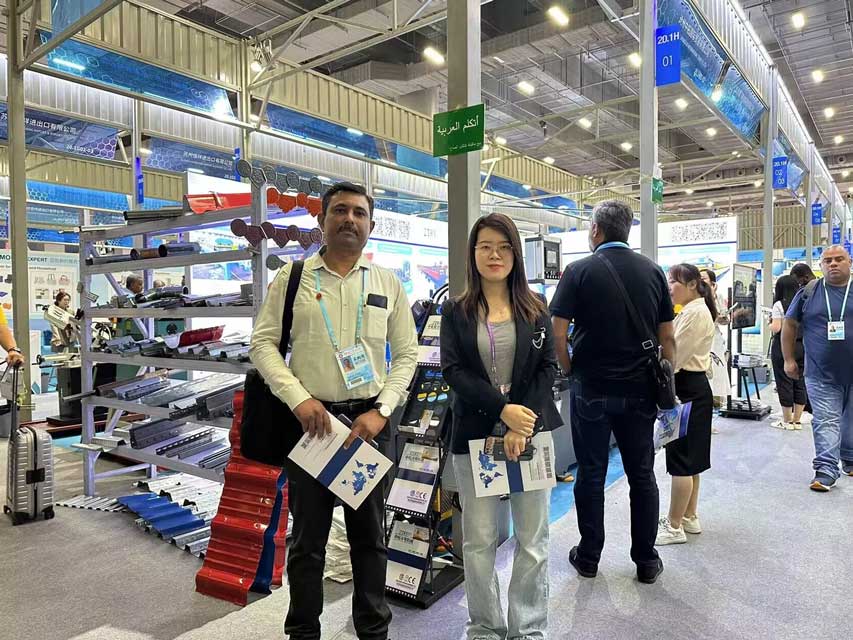
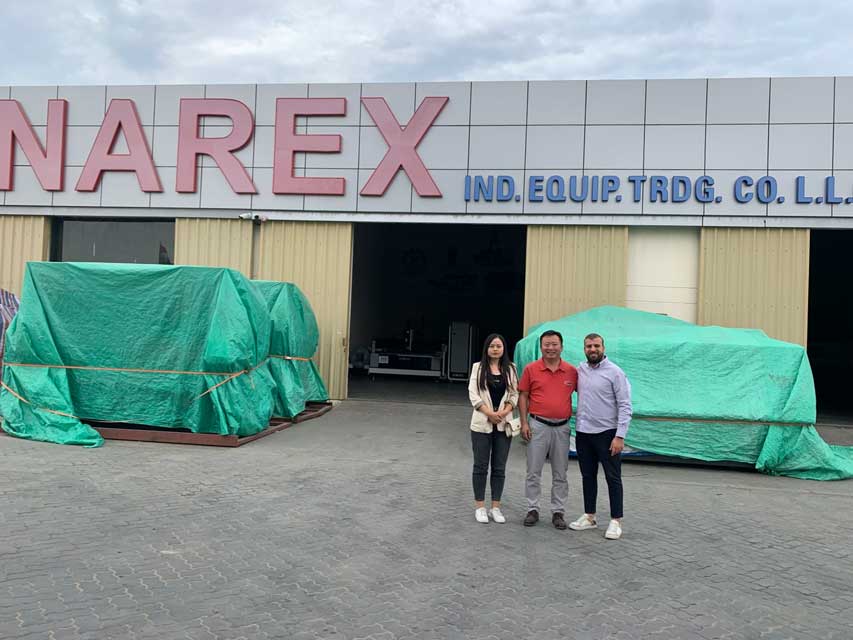
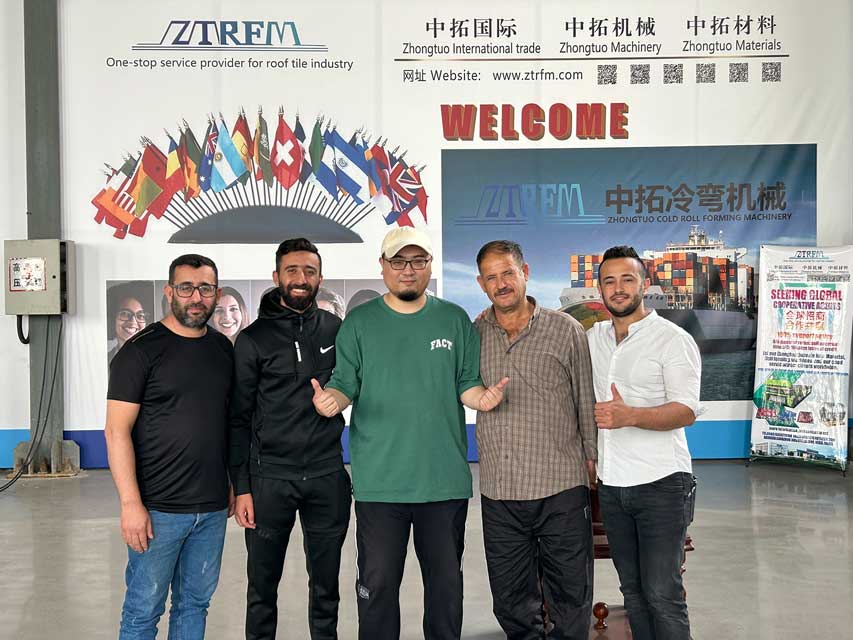
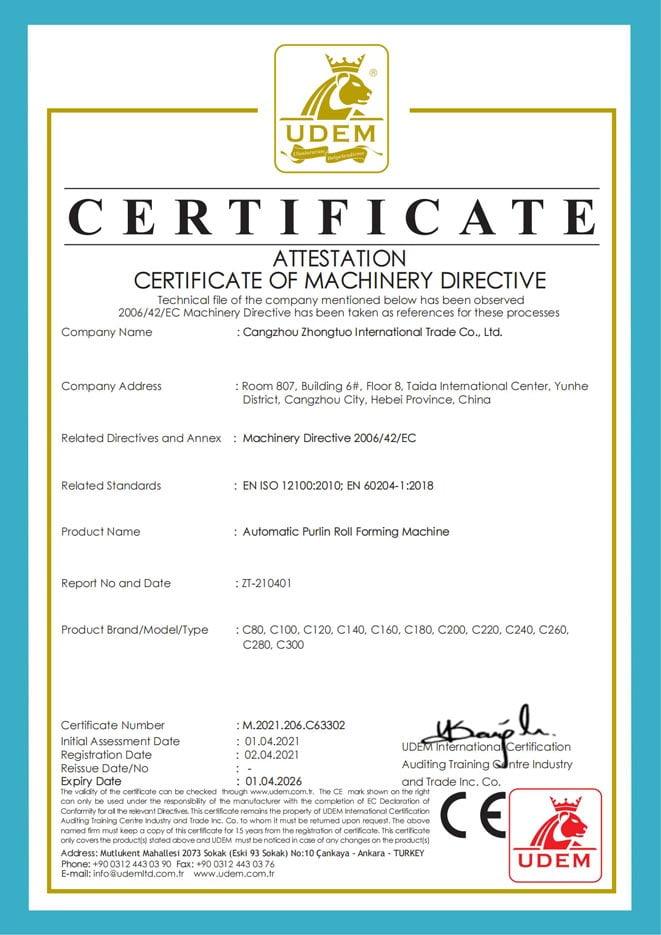
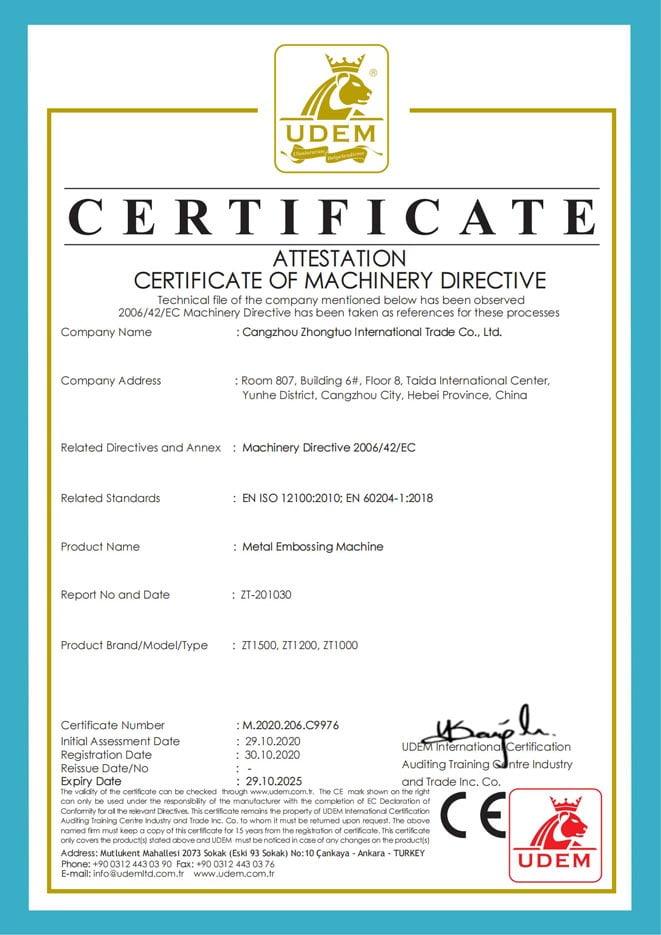
我们是国家级高新技术企业。公司通过了 ISO9001 质量体系认证、欧洲 CE 安全认证、北美 CAS 认证等。我们拥有丰富的出口贸易经验,了解不同国家客户的需求。 同时,我们还能为客户提供满意的设计方案。我们的机器已出口到 150 多个国家,并与客户建立了长期稳定的合作关系,赢得了客户的一致好评。
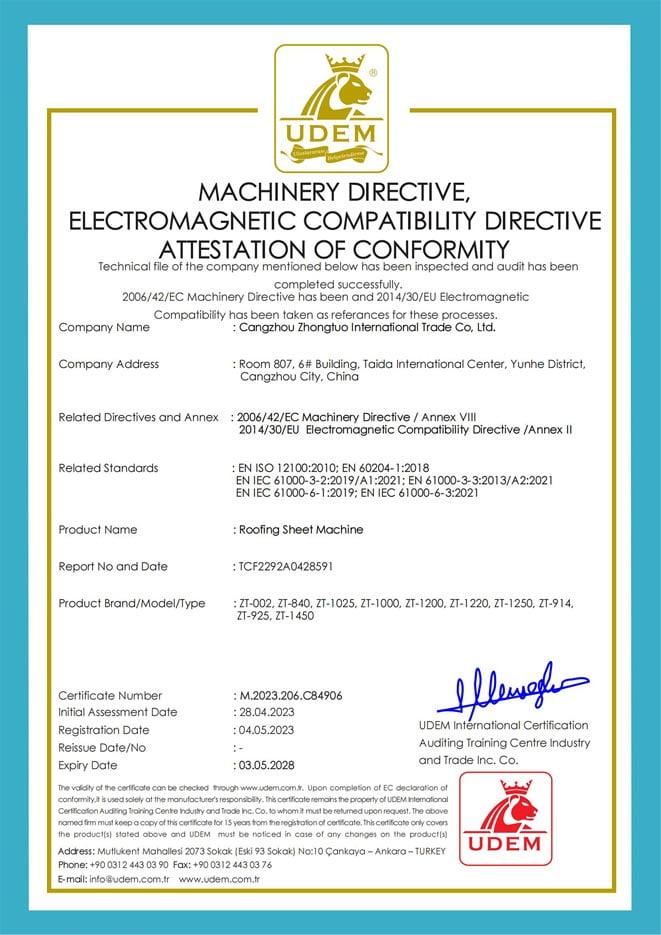
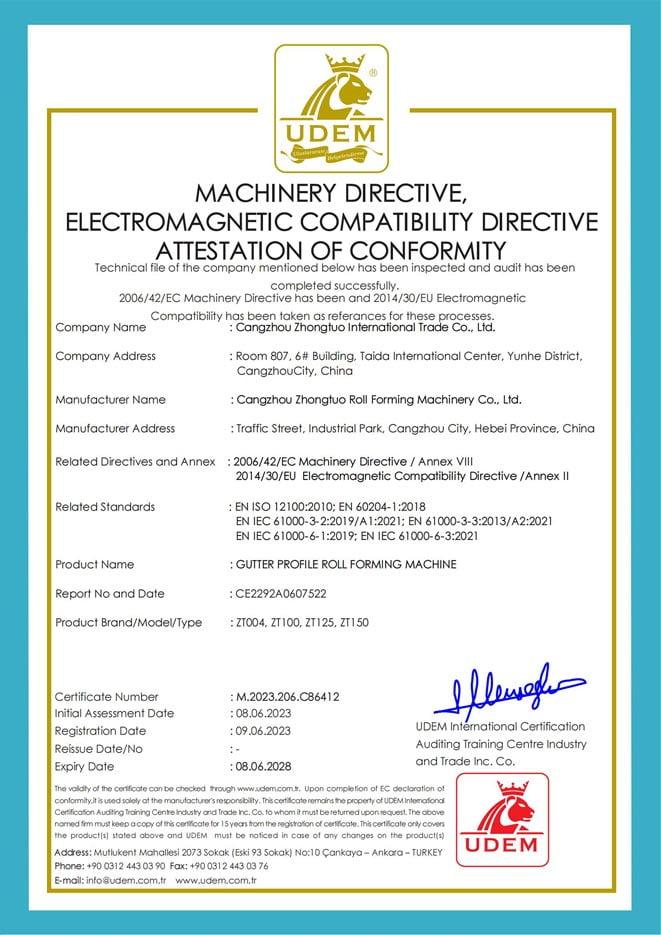
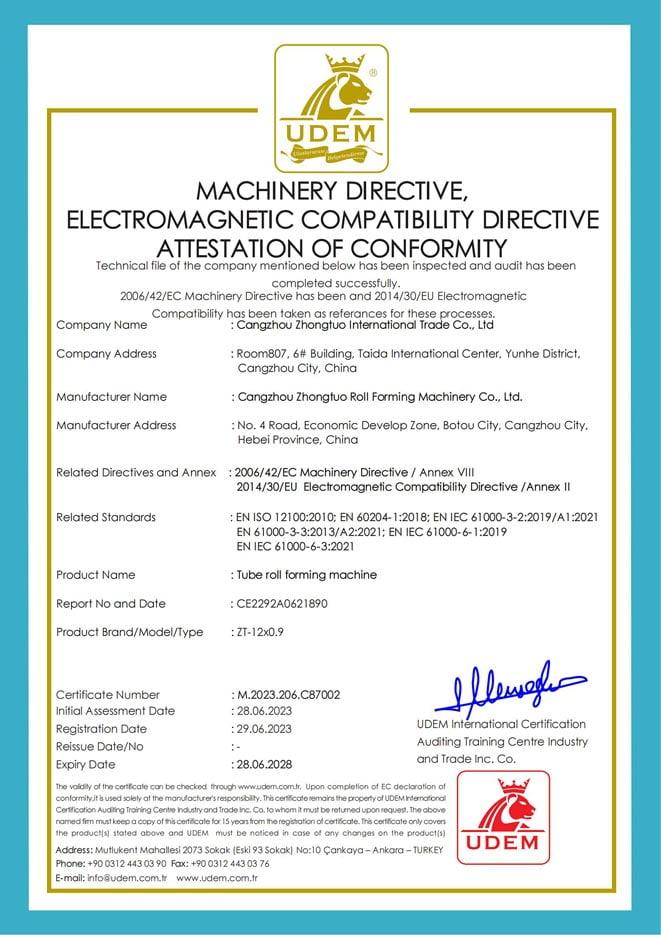
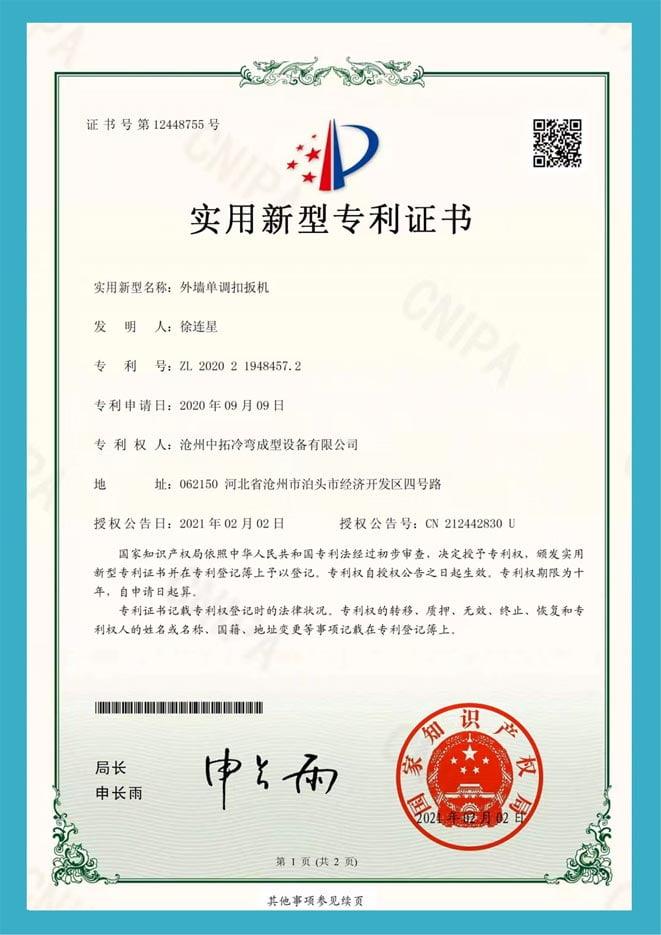
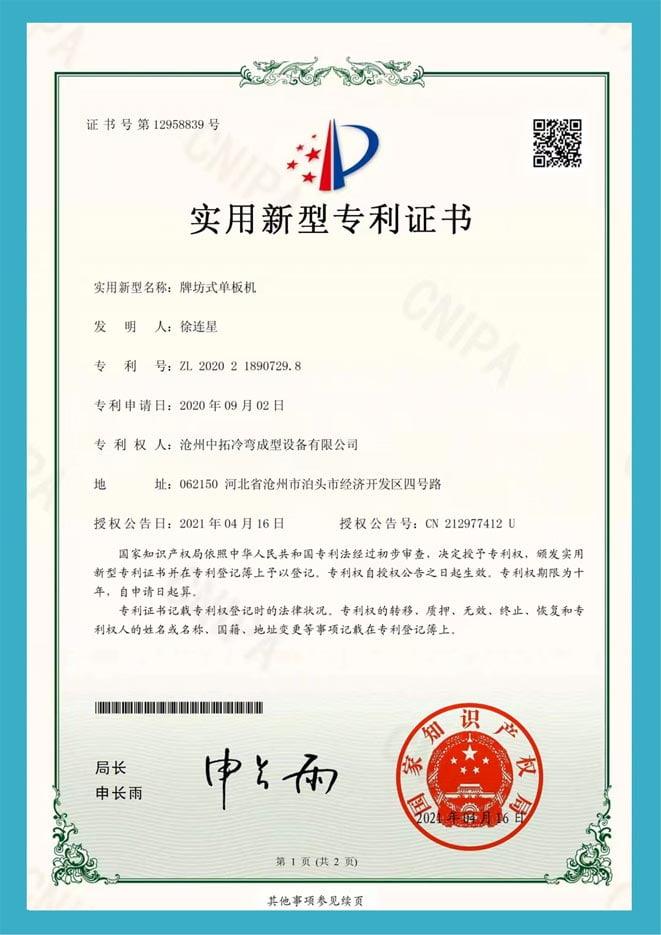
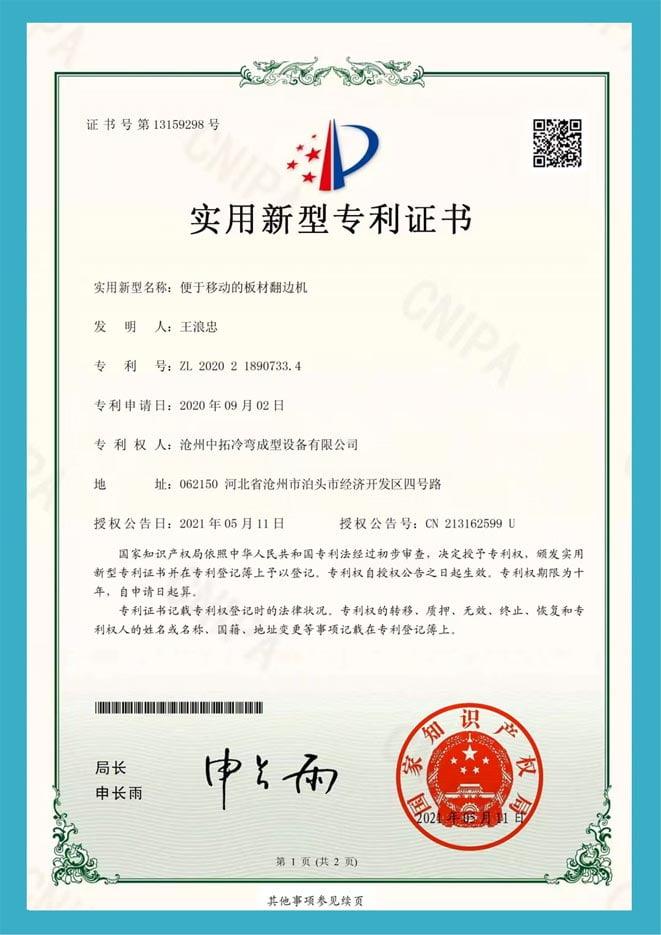
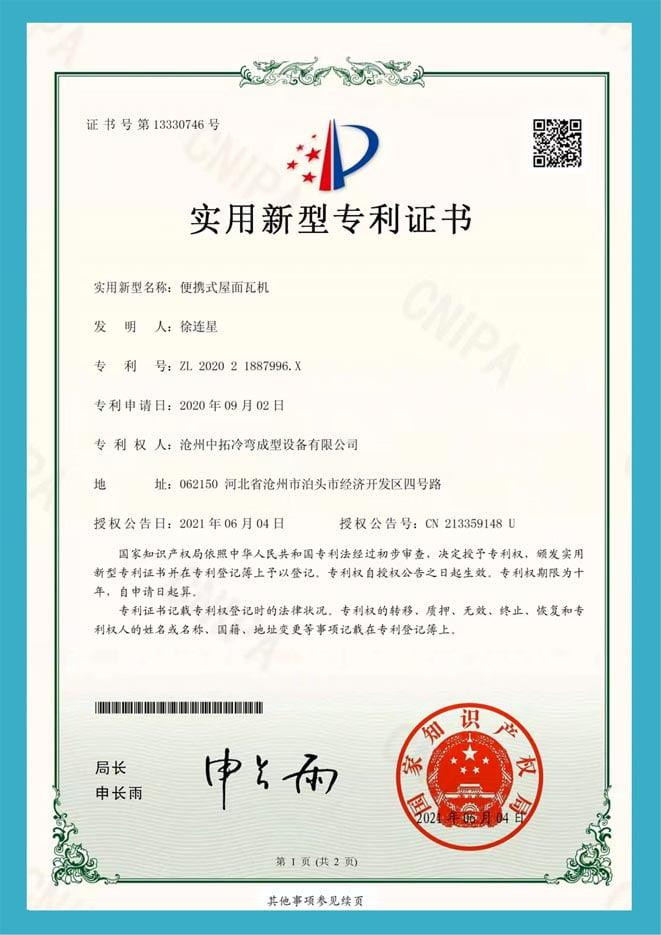
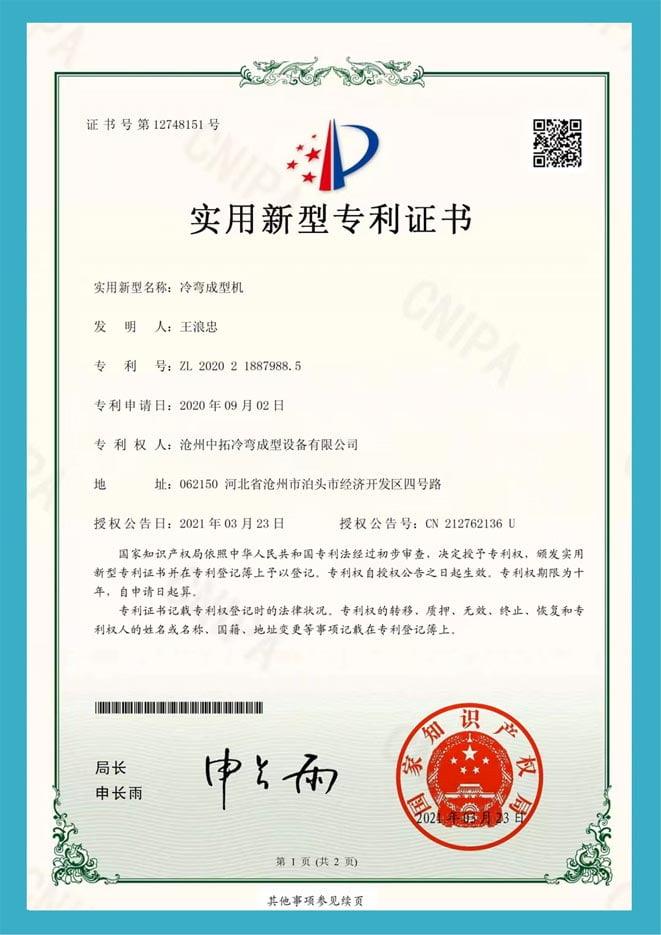

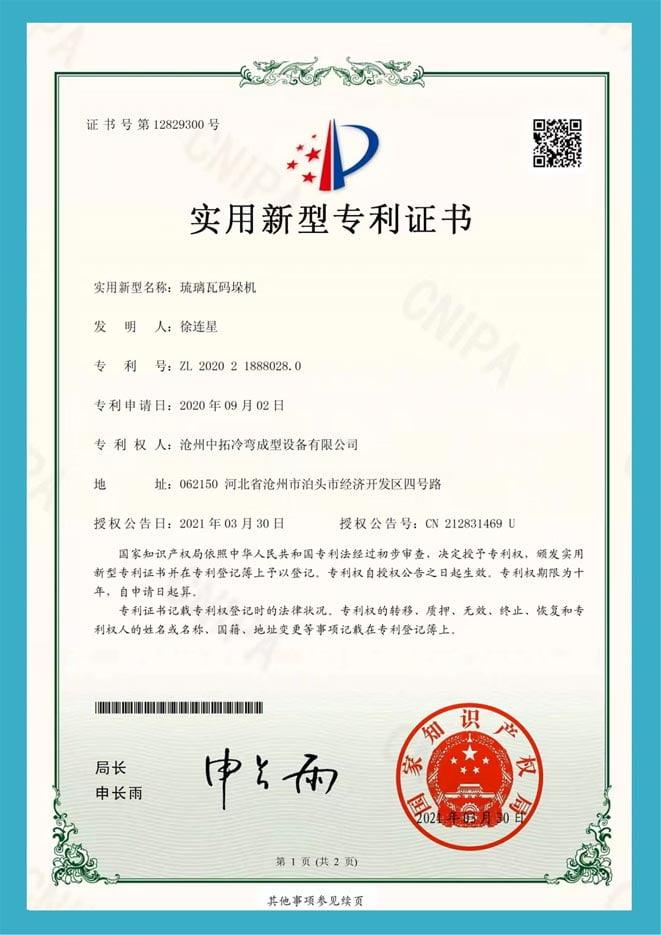
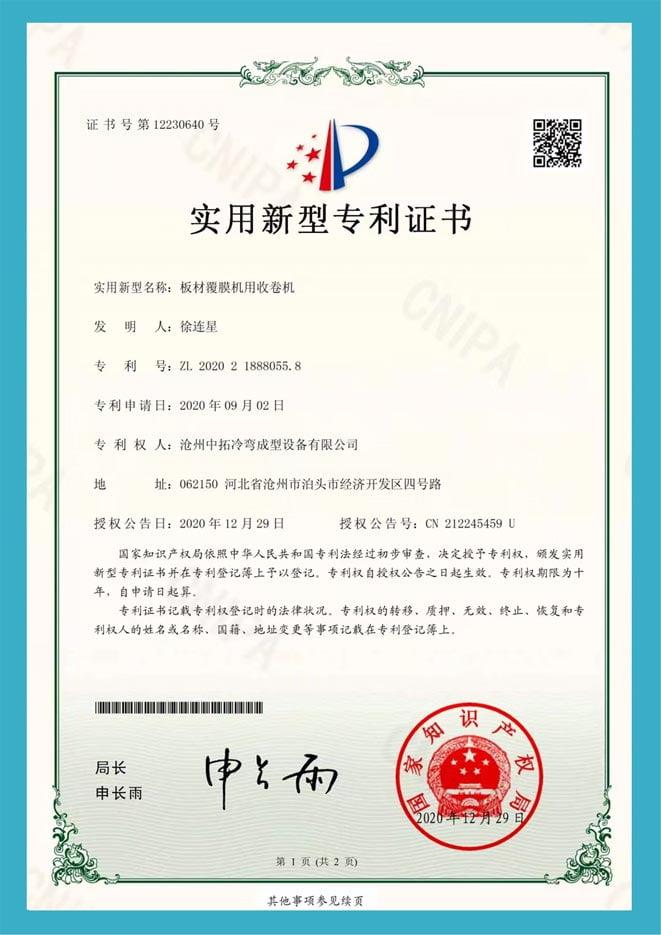

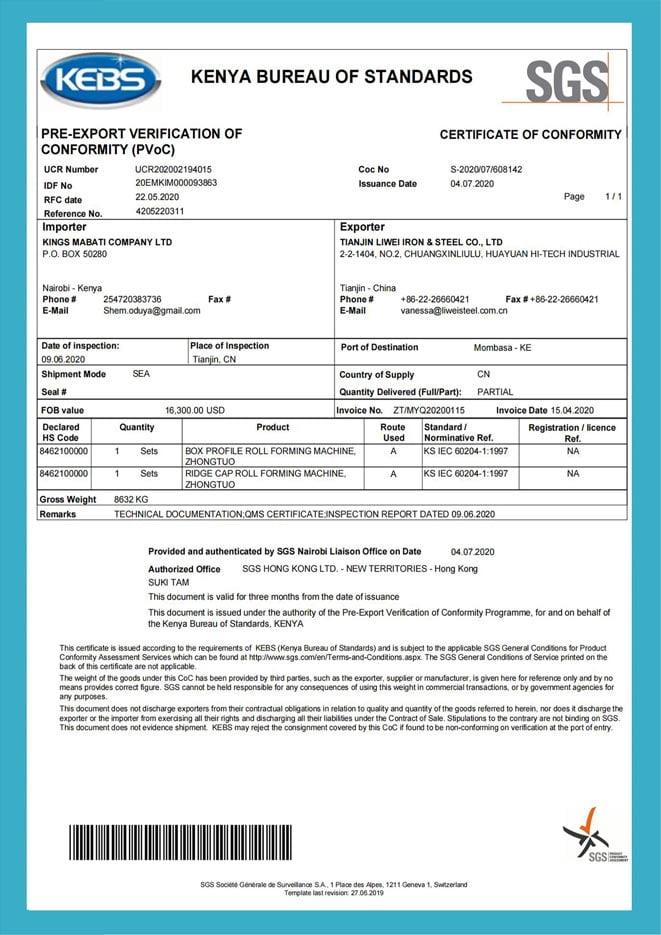
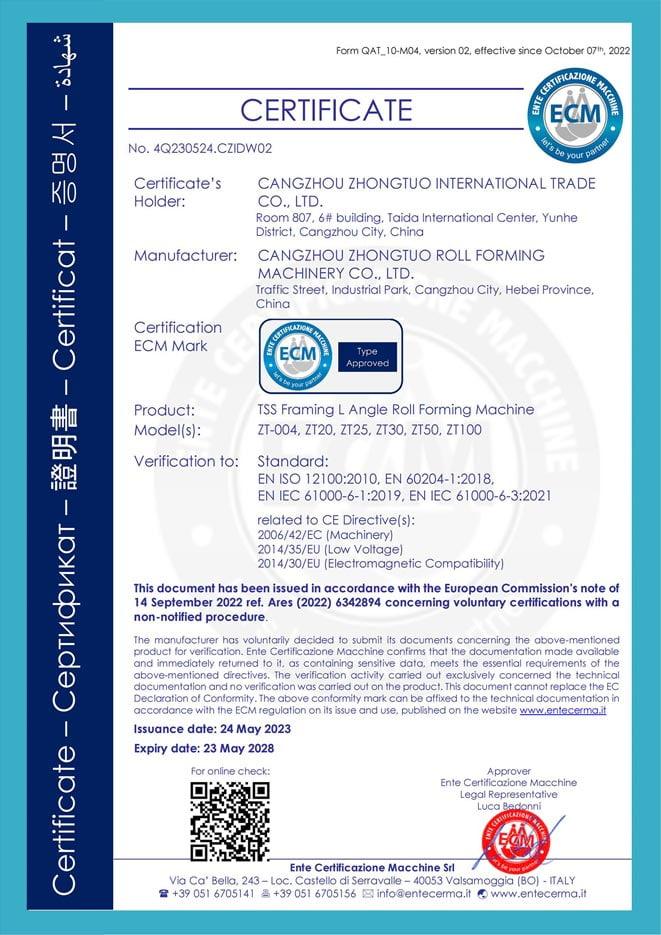
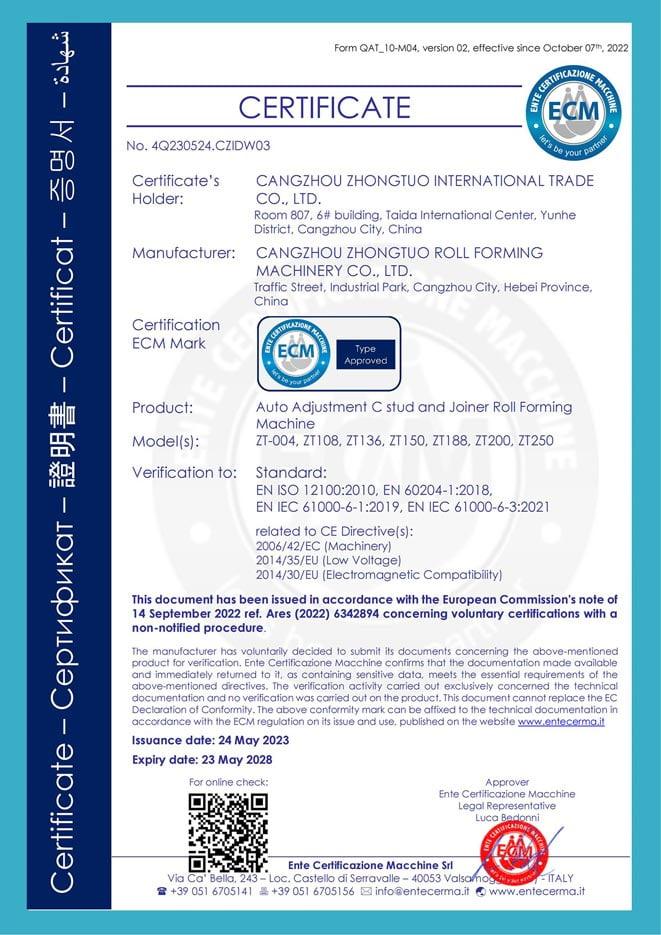
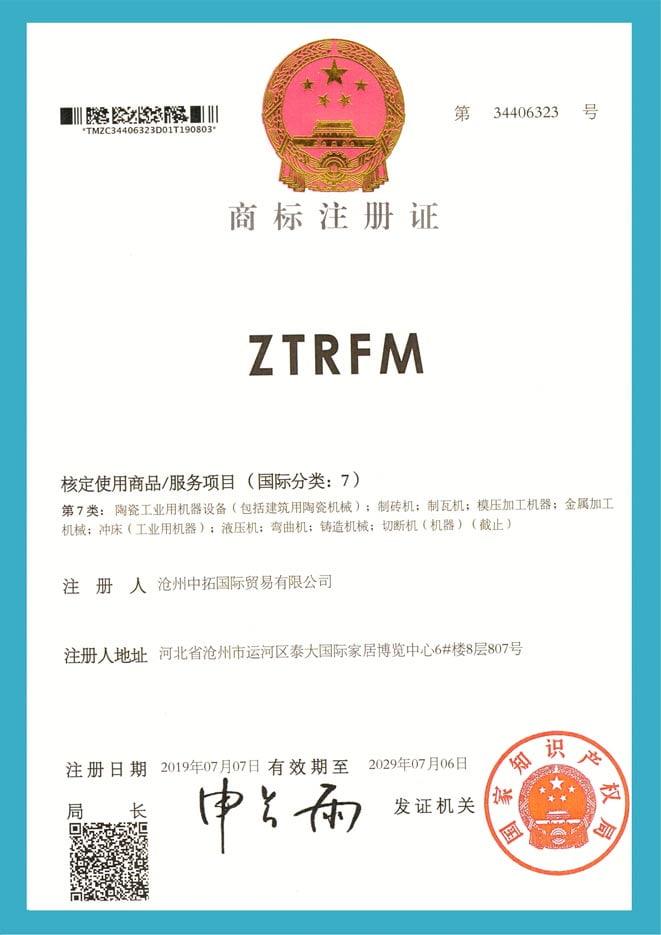
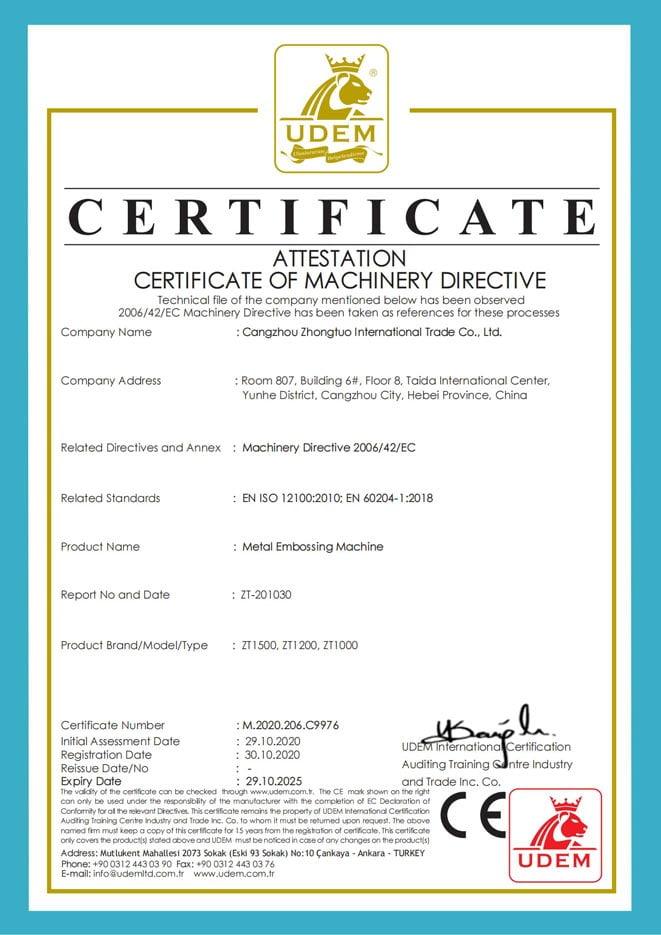
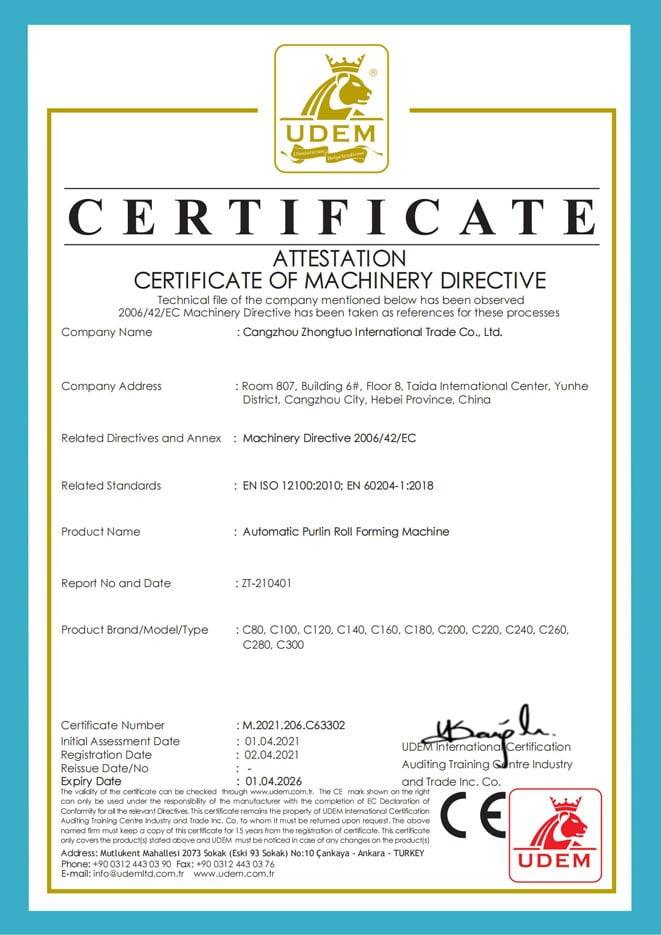
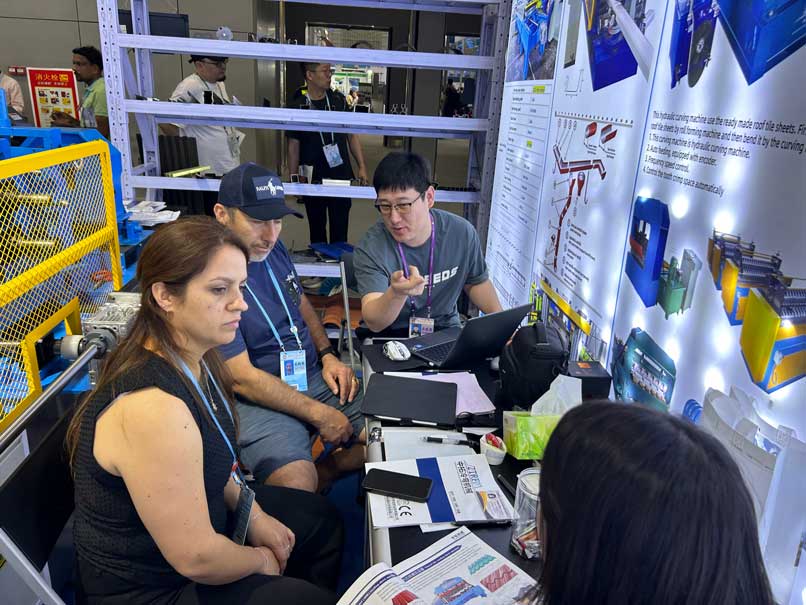
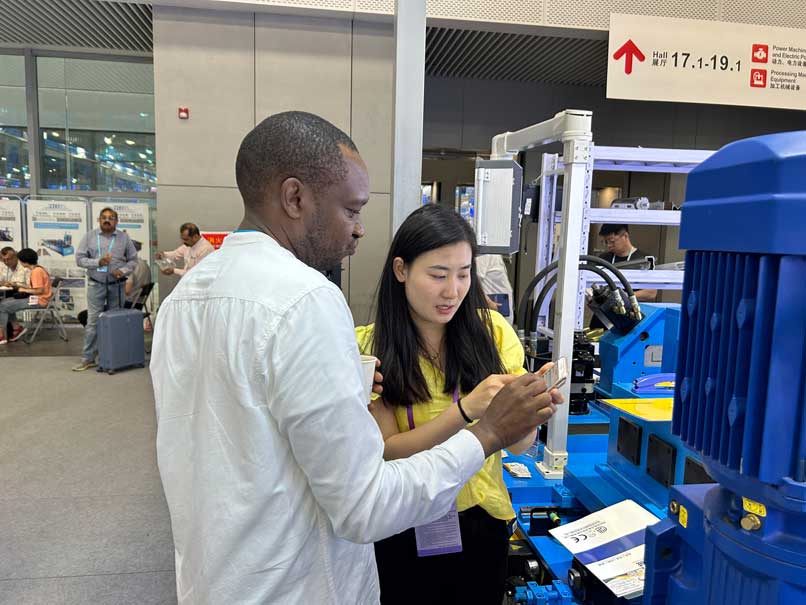
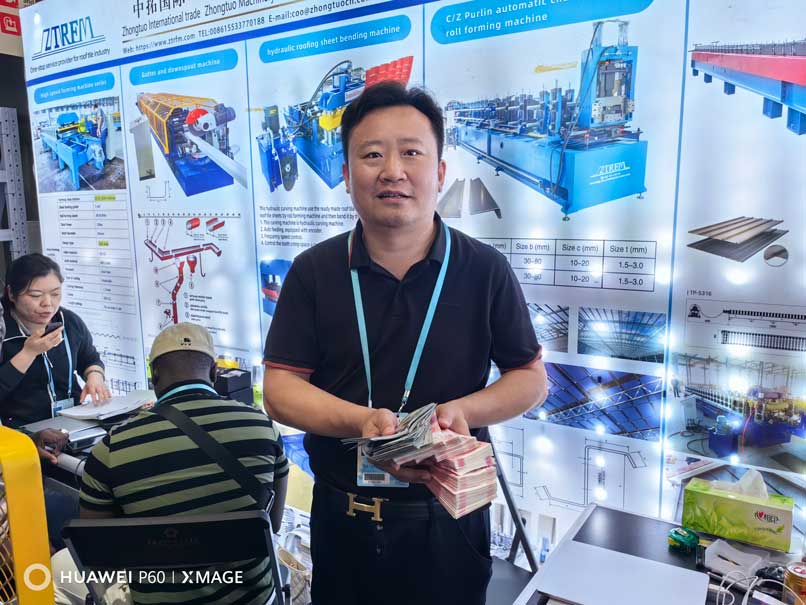
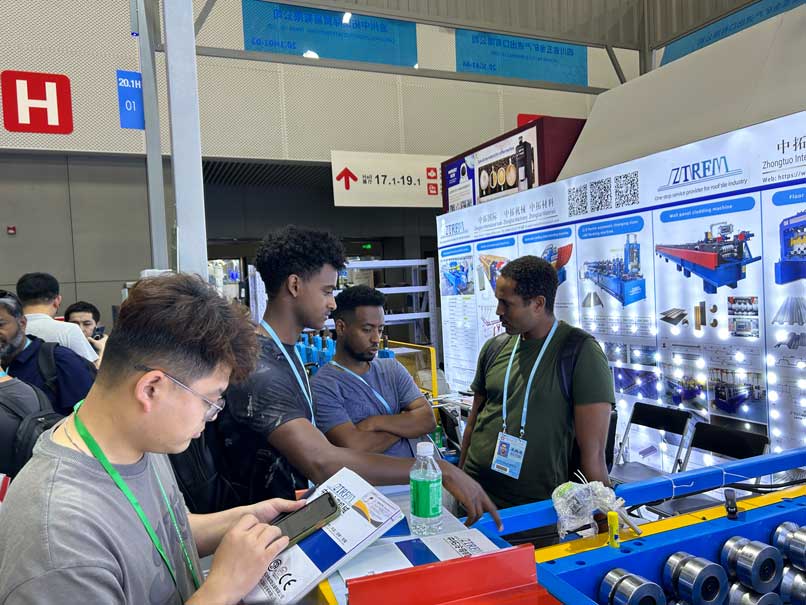
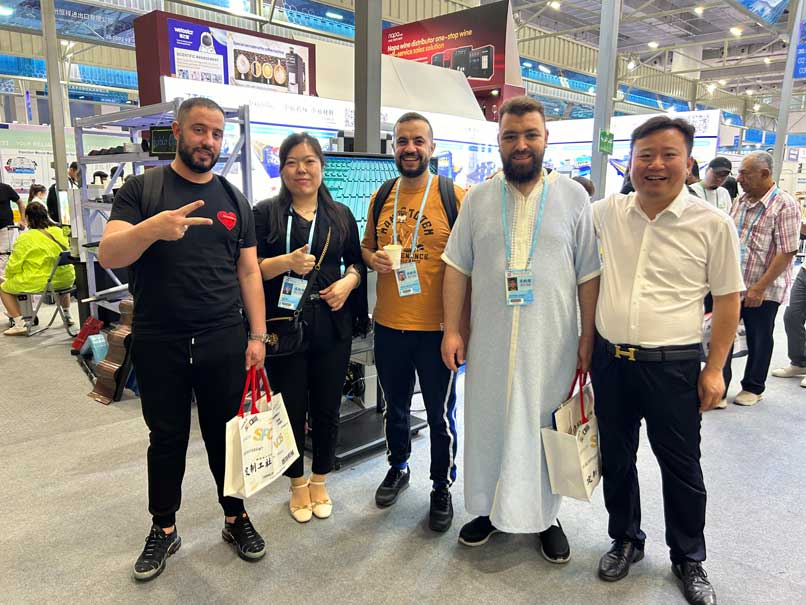
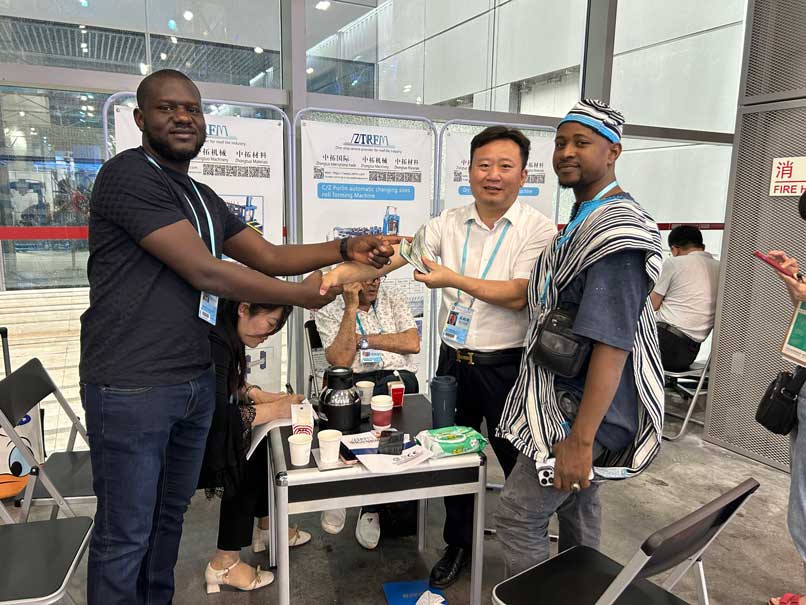
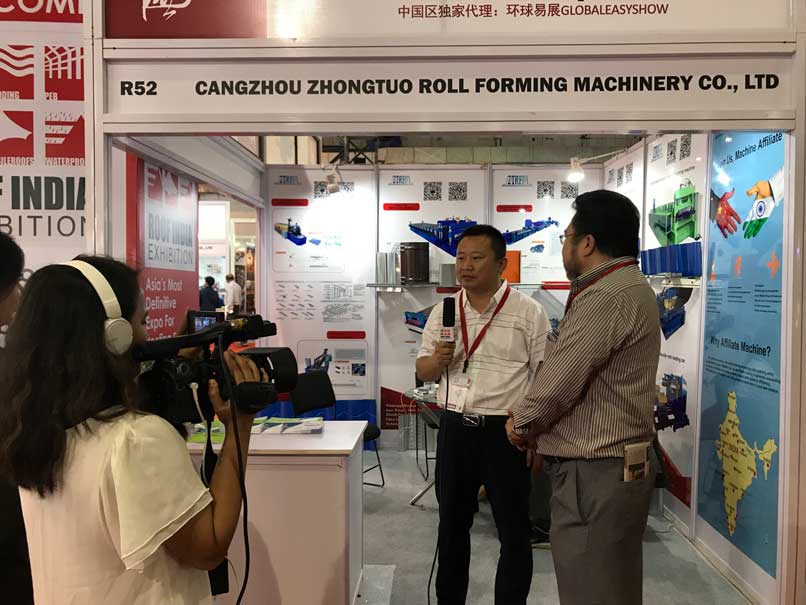
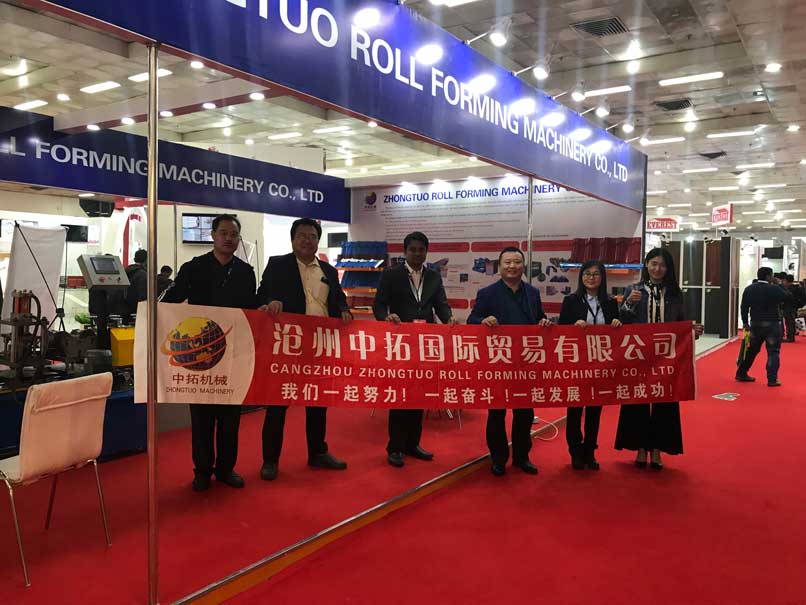
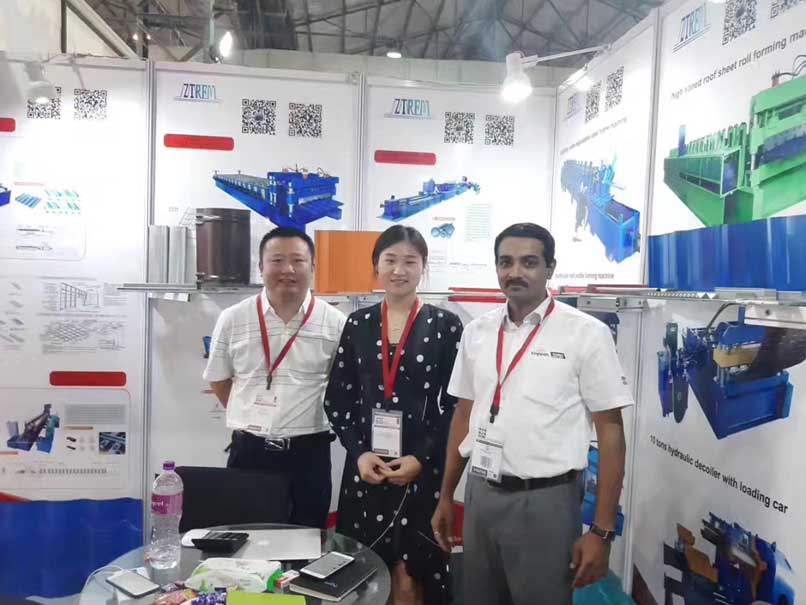
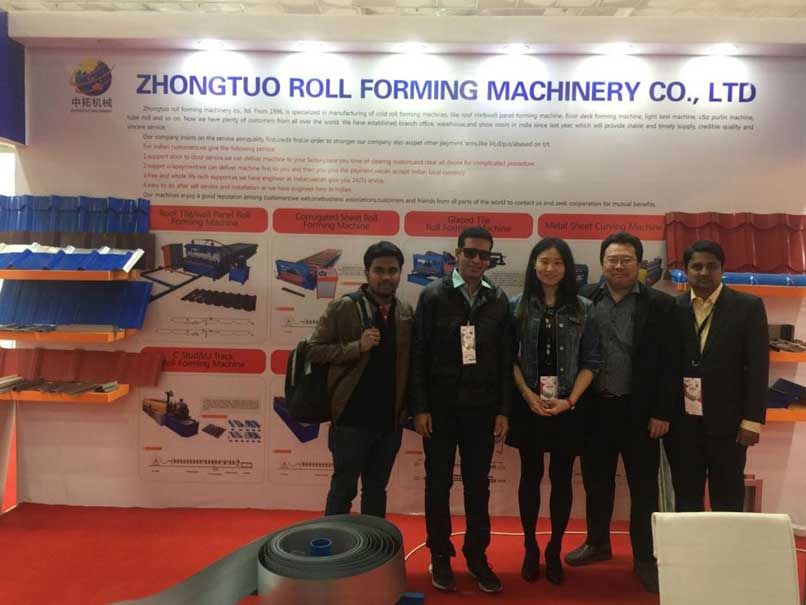
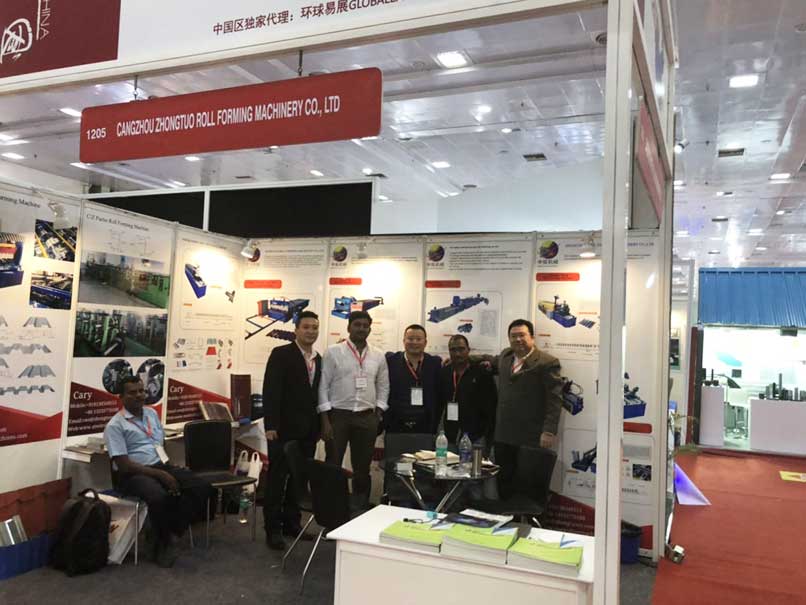
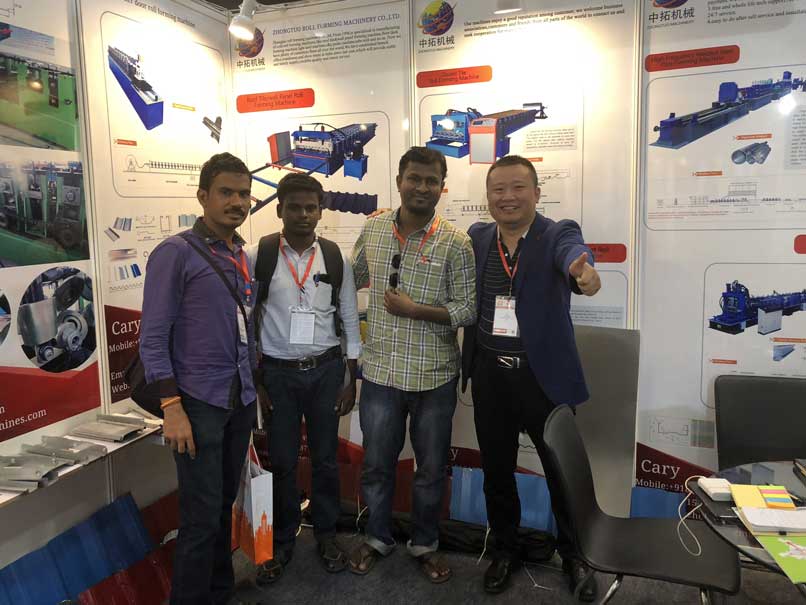
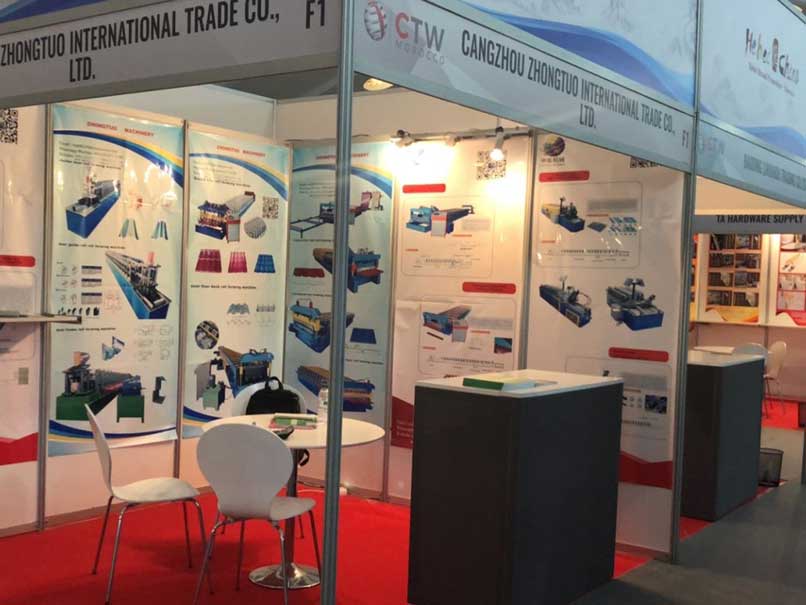
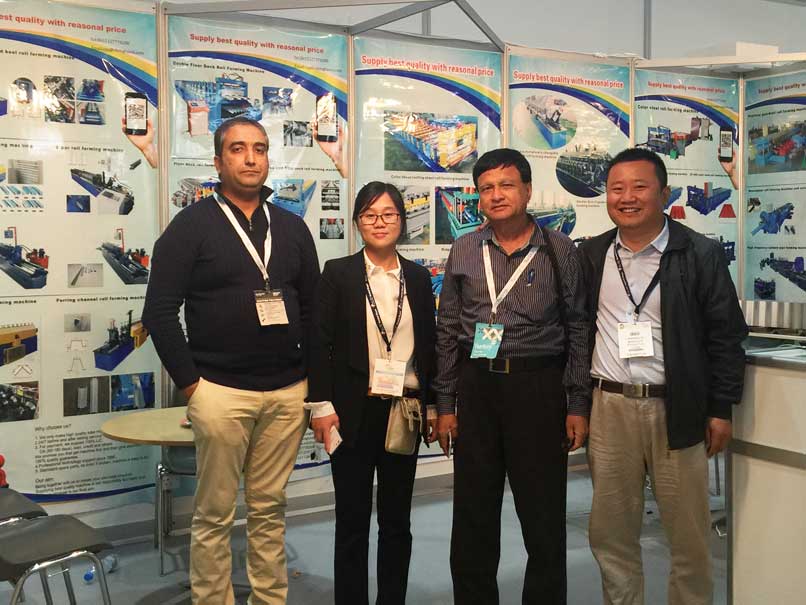
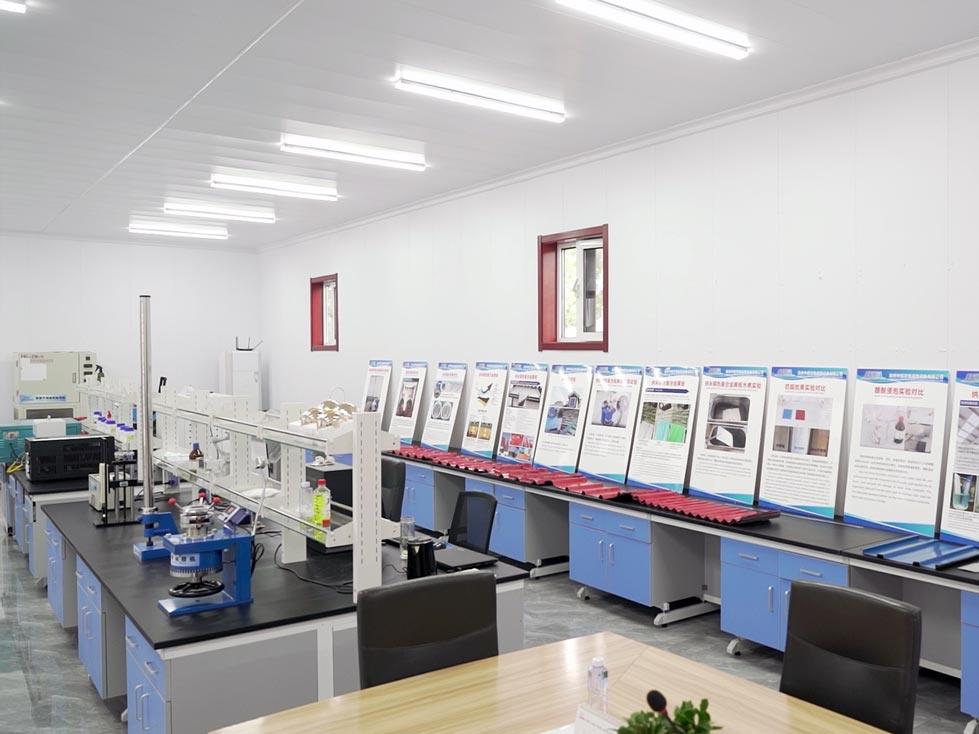
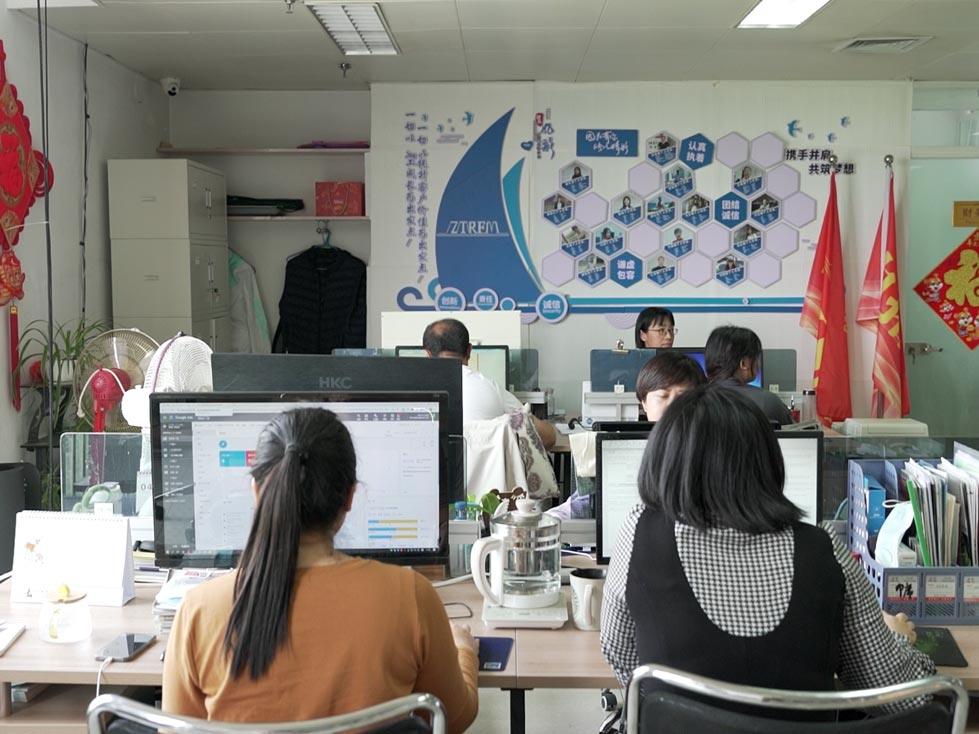
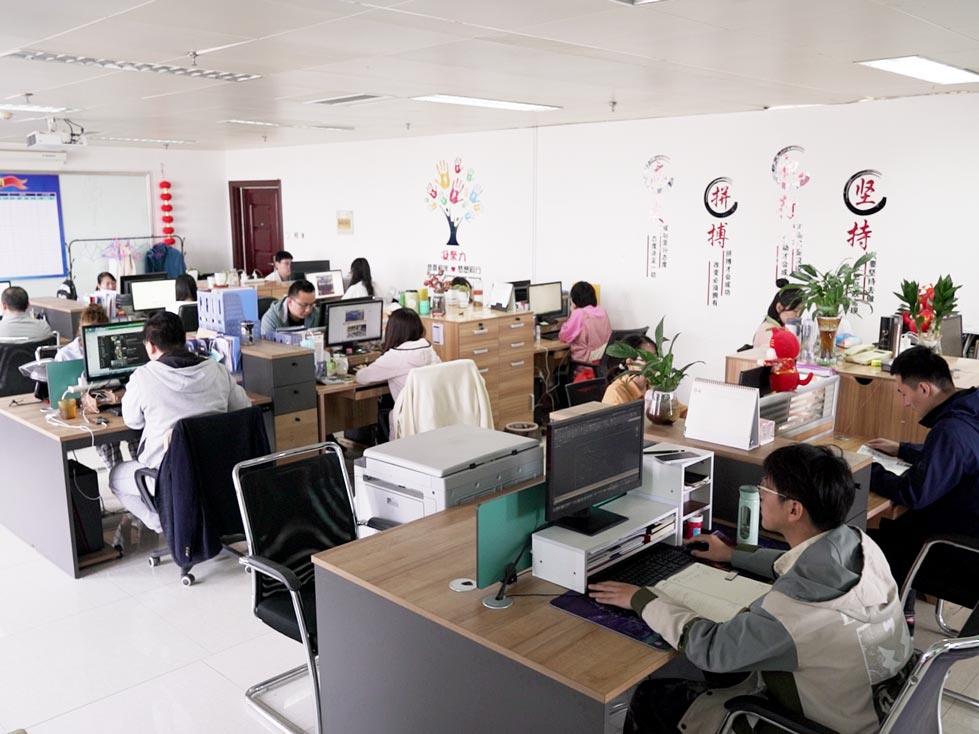
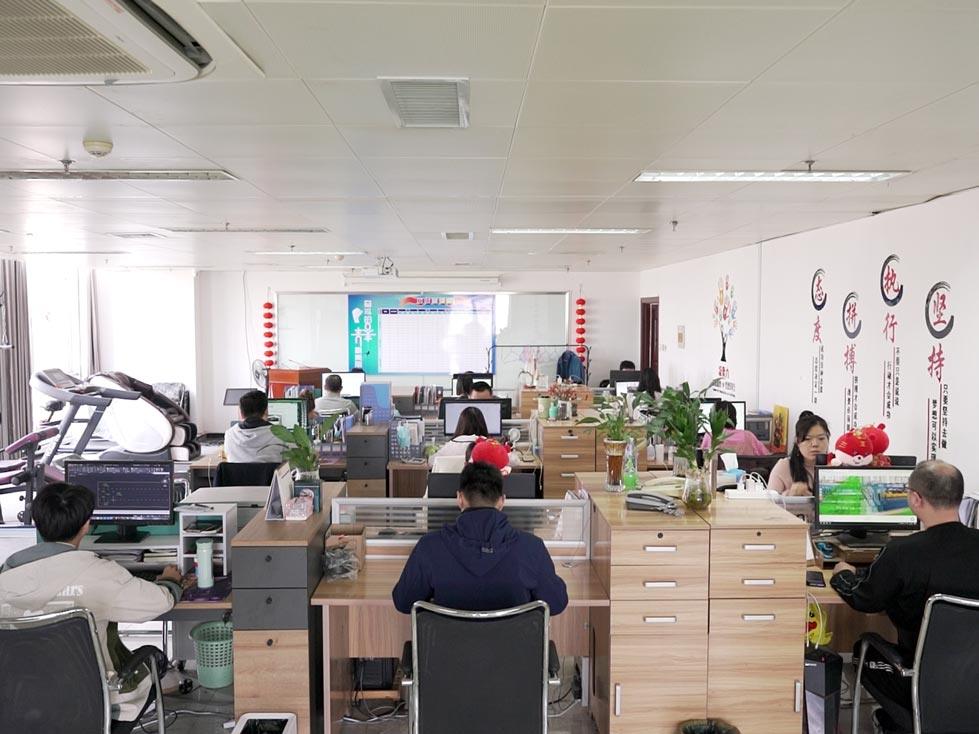
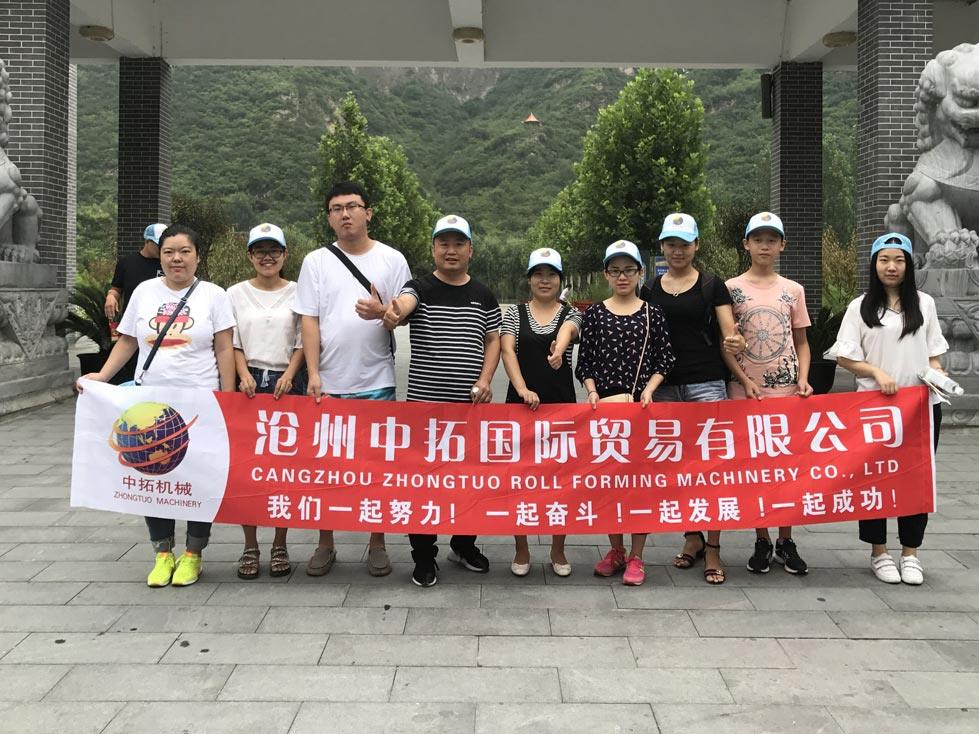
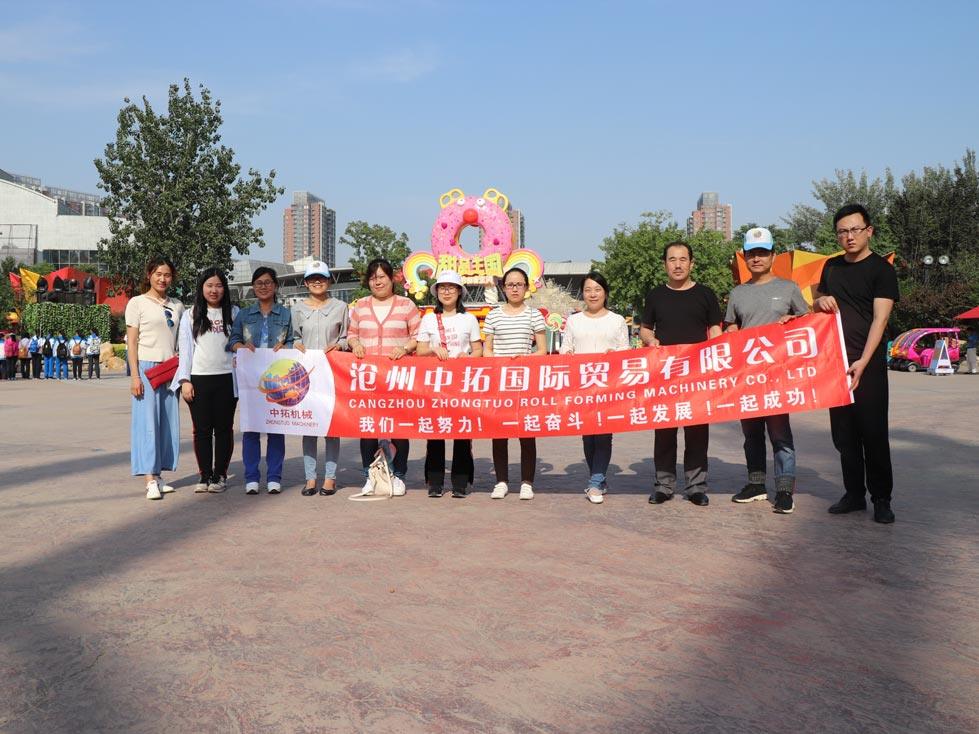
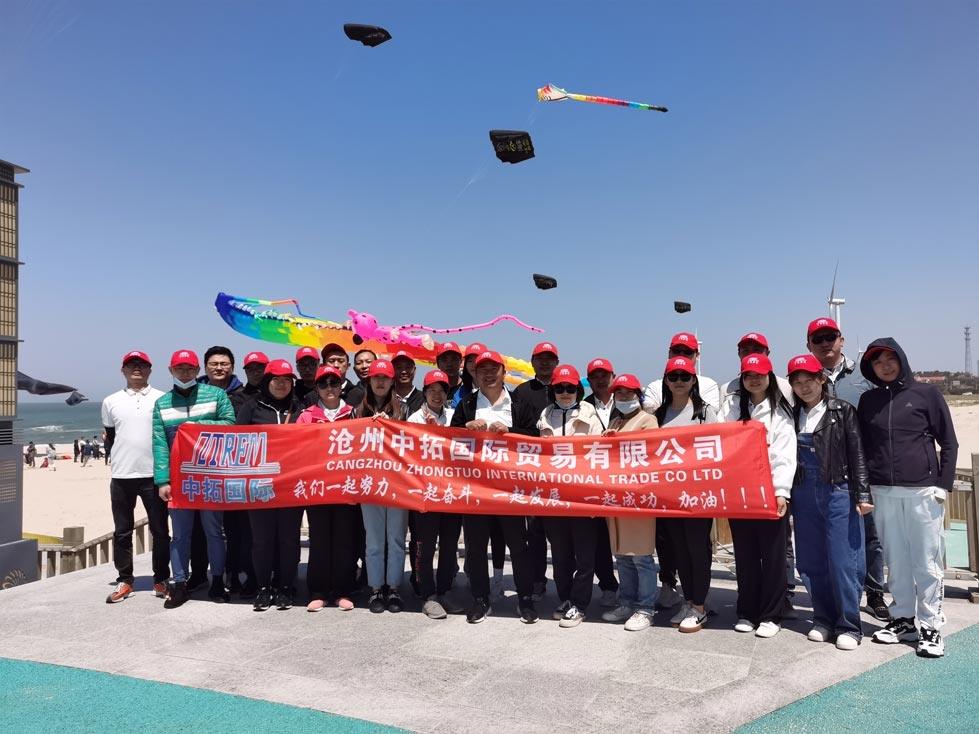
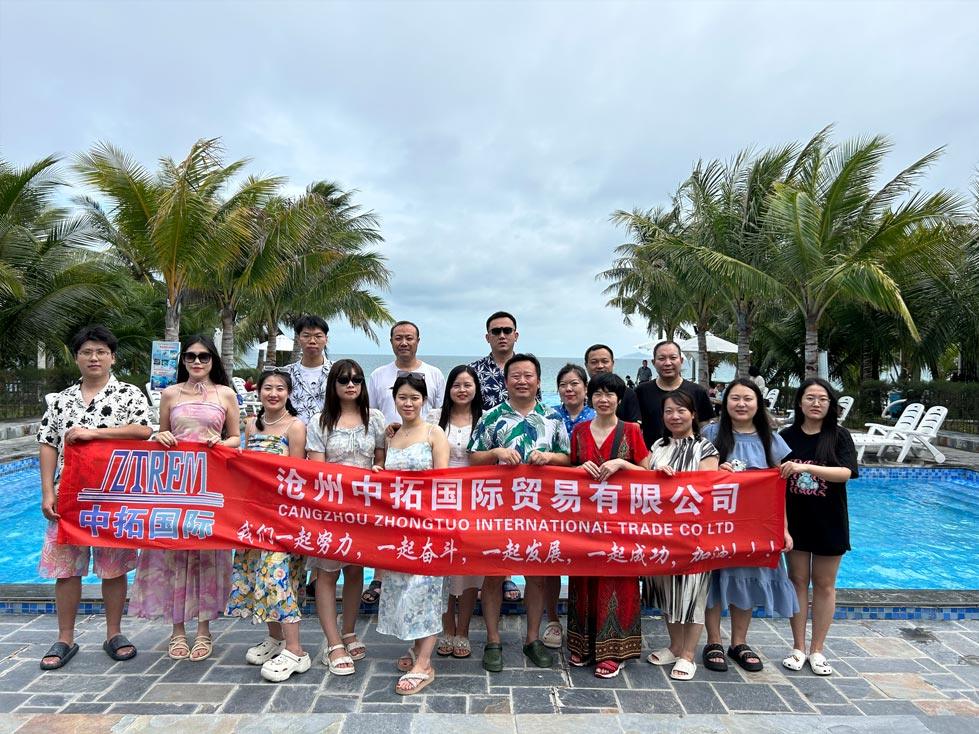
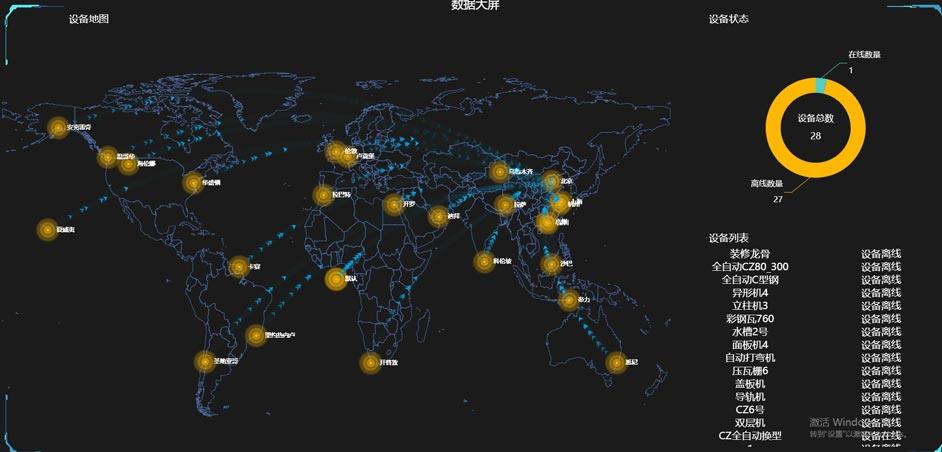
通过 360° VR 系统访问中拓,沧州中拓成立于 2014 年,致力于设计和制造不同类型的冷弯成型机。我们提供 ODM、OEM 和一站式服务。原材料、机械和配件均可从我们这里购买。
OEM/ODM 和定制一站式服务
全面的售后服务支持
提供 OEM、ODM
1.沟通:确认买方要求。
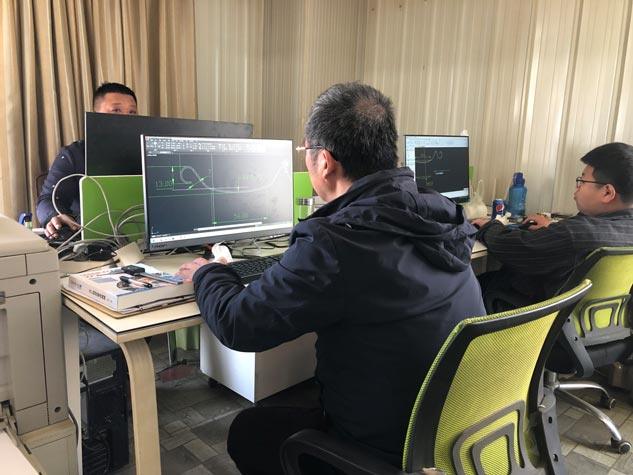
2.技术人员设计:绘制型材图和 3D 机器图
3.确定配置和生产
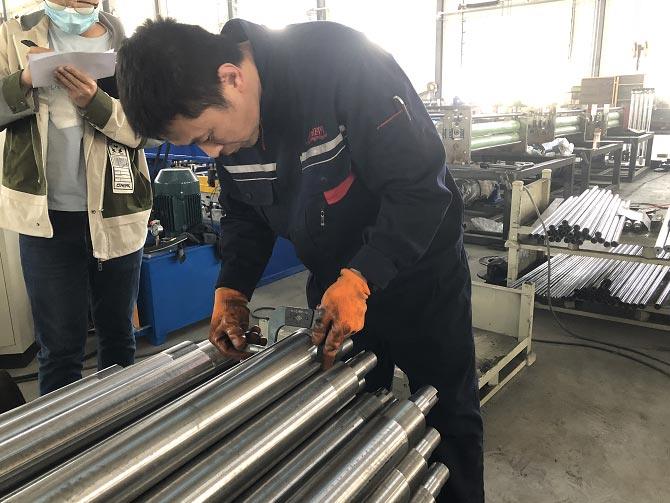
4.交货前测试
2.技术人员设计:绘制型材图和 3D 机器图
3.确定配置和生产
4.交货前测试
5.包装和交付
6.技术指导
7.售后服务:复杂机器的安装服务和定期客户回访
6.技术指导
7.售后服务:复杂机器的安装服务和定期客户回访
受到 95800 多家公司的信任
我们很荣幸能与许多
优质企业。通过与我们的合作,他们获得了
大力支持,实现了业务的突破和发展。
优质企业。通过与我们的合作,他们获得了
大力支持,实现了业务的突破和发展。
0
通过 ISO9001 和 CE 认证
我们拥有自主品牌 ztrfm、专业的设计团队和技术人员。
0
国家 客户
深受用户欢迎和好评的产品。
0
一站式解决方案
从配件到成型机,解决您采购的复杂性。
0
工程师团队
我们拥有 20 多人的强大工程师团队,我们将提供更准确、更快速的解决方案。