Technologische Veränderungen & Industrielle Systeme, wir widmen uns
Bietet Seds die besten und wirtschaftlichsten Lösungen für geschätzte Kunden.

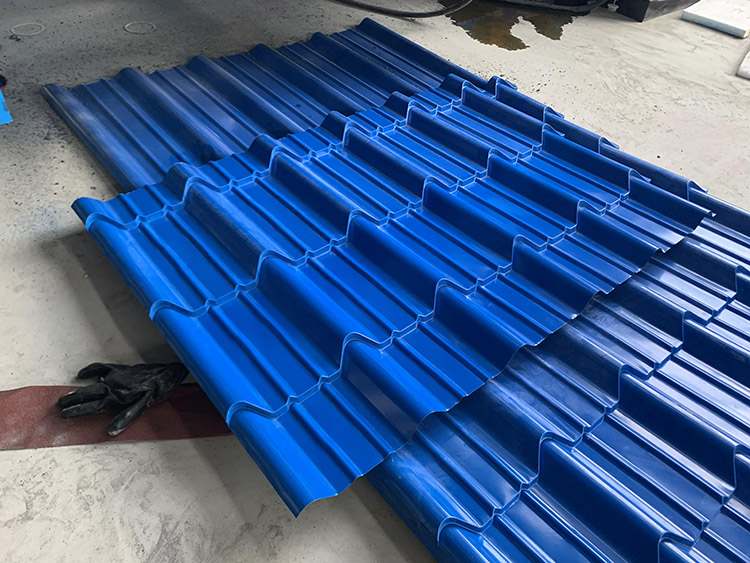
Walzprofiliermaschine für glasierte Dachziegel: Hochwertige Lösung für architektonische Bedachungen
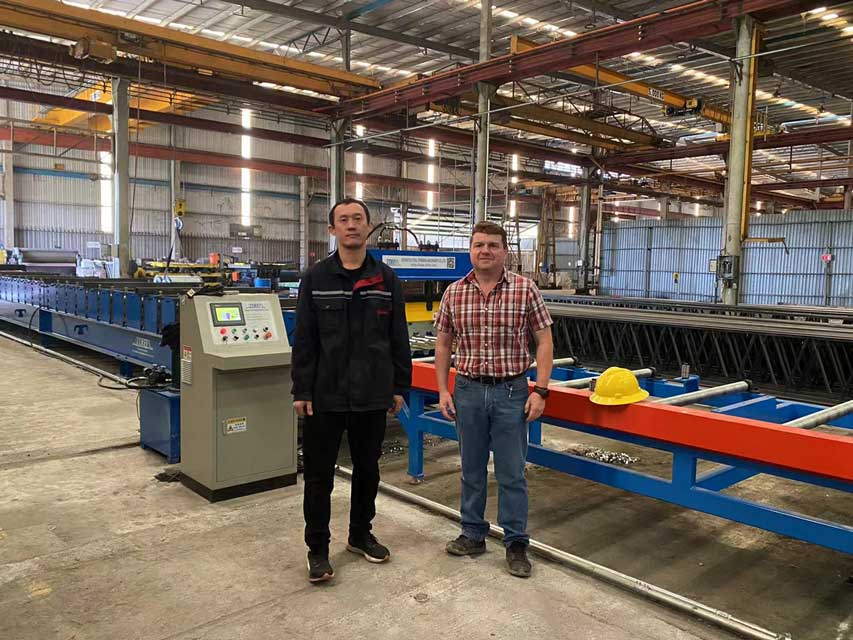
verschiedene Arten von Kaltwalzmaschinen. Wir sind eine Fabrik mit einer langen Geschichte, die sich seit 2006 mit der Entwicklung und Herstellung von Walzprofiliermaschinen beschäftigt. Die Maschinen, die wir produzieren können, umfassen: Dachziegel machen Maschine, cz Pfette machen Maschine, leichte Stahl Kiel machen Maschine, Metallprägung Maschine, Tür System bilden Maschine, Decke System bilden Maschine, Hochfrequenz-Rohr-Schweißmaschine, Schlitz Linie, auf Länge geschnitten Linie, Regal System bilden Maschine, Bodenbelag bilden Maschine, Farbe Stein Fliese Produktionslinie, heiße Laminierung gefilmt Maschine, etc.
The Glazed Roof Tile Roll Forming Machine is a professional automated production equipment specifically designed for manufacturing glazed roof tiles—elegant, durable, and weather-resistant roofing components widely used in global architectural projects. As a core device in the building materials manufacturing industry, it integrates advanced cold roll forming technology and glazing integration capabilities to process metal coils (such as galvanized steel coils, color-coated steel coils, and aluminum coils) into high-precision, aesthetically pleasing glazed roof tiles with uniform dimensions and excellent performance. Widely adopted in residential, commercial, and cultural heritage renovation projects around the world, this specialized machine plays an irreplaceable role in upgrading roofing quality, enhancing architectural aesthetics, and improving production efficiency.
Its working principle combines continuous cold roll forming with automated glazing (optional integrated design), avoiding high-temperature processing that would damage the glaze layer and alter material properties. The entire production process follows a seamless automated workflow: starting with steel coil loading, followed by uncoiling, precision leveling, step-by-step roll forming, glazing (spraying or roller coating, optional), drying/curing, fixed-length cutting, and finally outputting finished glazed roof tiles. This continuous production mode ensures consistent product quality, high production efficiency, and cost-effectiveness, making it the preferred equipment for roofing material manufacturers, construction companies, and distributors worldwide.
The equipment is mainly composed of the following key parts:
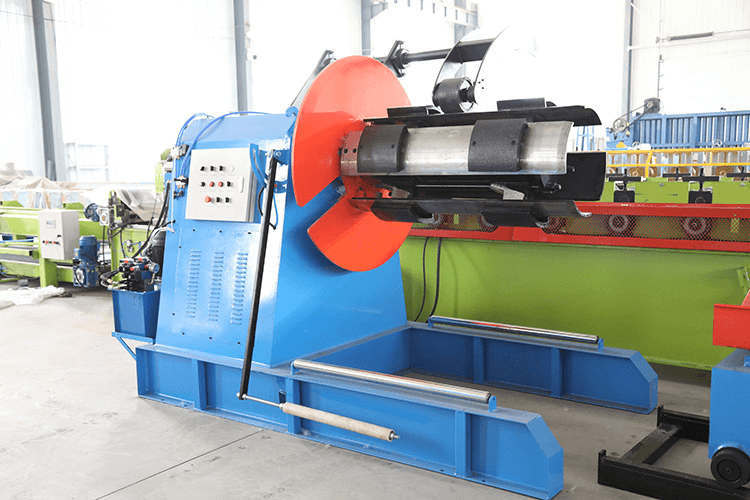
Coil Loading & Uncoiling System: This system is responsible for stably supporting and smoothly uncoiling metal coils of different materials and specifications. Key components include a heavy-duty coil rack (load capacity up to 5 tons), hydraulic uncoiler, feeding guide bridge, and anti-loosening pressure rollers. Designed with strong compatibility, it can adapt to various coil specifications (width: 300-1000mm, weight: 1-5 tons) commonly used in the international roofing material market, ensuring stable feeding, reducing material waste, and adapting to all common metal coils for glazed roof tile production. It is also equipped with safety mechanisms to stop coil rotation immediately when needed, avoiding unnecessary material waste and equipment damage.
Precision Leveling Device: Equipped with 7-11 high-precision leveling rollers, this device eliminates curling stress and surface unevenness of the metal coil, ensuring the metal strip is flat and smooth before forming. It supports adjustable leveling intensity to adapt to metal strips of different thicknesses (0.3-1.2mm), which is crucial for ensuring the dimensional precision and flatness of the final glazed roof tiles—critical for their fitting performance and aesthetic appearance. The leveling system is powered by a 3kw motor to ensure stable operation and consistent leveling effect.
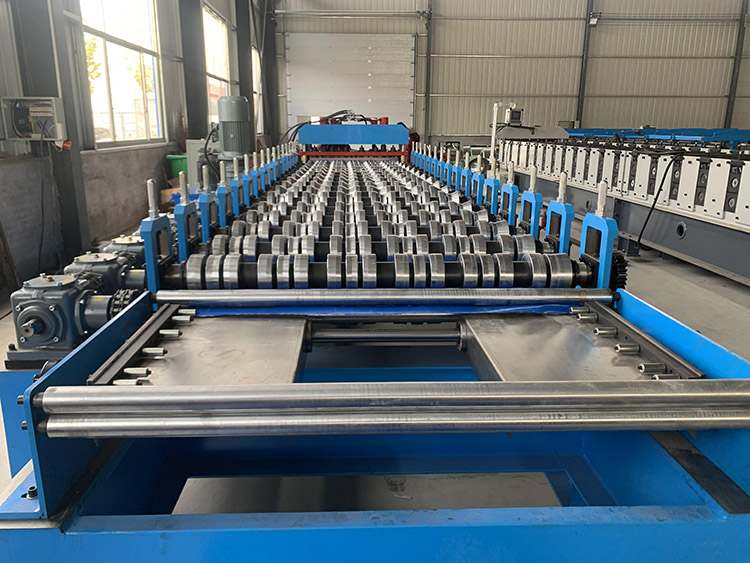
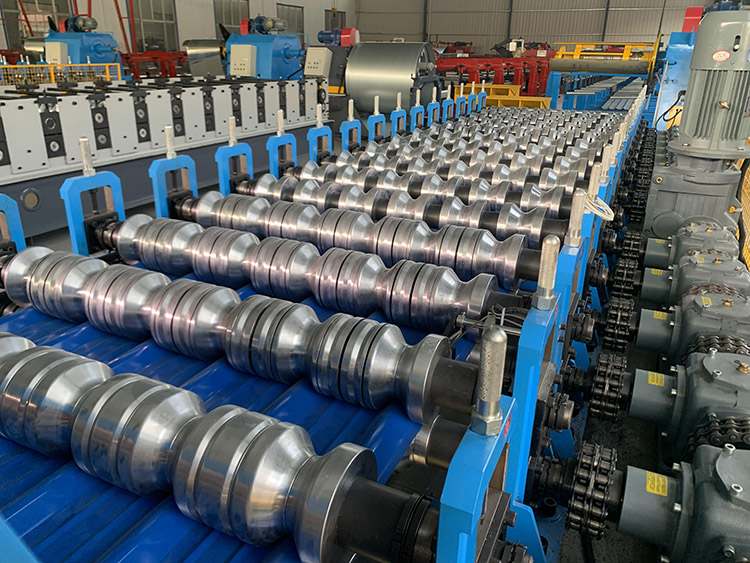
Main Forming Unit: As the core of the machine, the main forming unit transforms flat metal strips into glazed roof tiles of various styles (such as Roman tiles, Spanish tiles, Chinese-style glazed tiles, and custom styles) through a series of sequentially arranged forming roller groups. It consists of 12-22 independent forming frames (depending on tile style), each equipped with forming rollers made of high-quality 45# alloy steel, which are quenched and tempered, hard chrome-plated, and have a hardness of HRC 58-62 for high wear resistance and shape retention. Driven by a high-power servo motor (5.5-15kw), the unit ensures synchronous operation of all forming frames, achieving precise control of the forming process. The modular design allows for quick adjustment or replacement of forming rollers to produce different styles of glazed roof tiles, meeting diverse architectural design needs.
Optional Glazing System: To achieve the characteristic glazed surface of roof tiles, the machine can be equipped with an integrated automatic glazing system. Adopting high-pressure spray or roller coating technology, it evenly applies glaze (ceramic glaze, acrylic glaze, or waterproof glaze) on the surface of the formed tile blanks, with a glazing thickness of 0.1-0.3mm adjustable according to customer requirements. The system is equipped with a glaze circulation device to reduce glaze waste, and a drying/curing unit (infrared or hot air drying) to ensure the glaze layer adheres firmly, with high gloss and weather resistance—meeting international roofing material standards for corrosion and UV resistance.
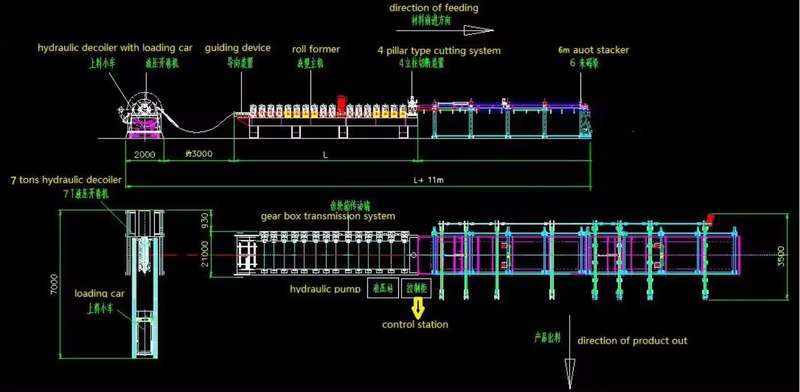
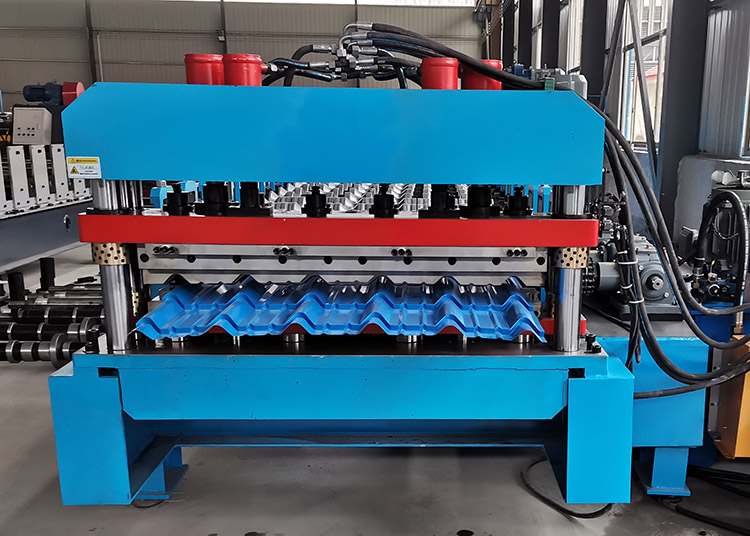
Fixed-Length Cutting System: This system cuts the continuously formed (and glazed) roof tiles into fixed-length finished products according to preset dimensions. Adopting advanced hydraulic or flying saw cutting technology, it uses CR12MOV mold steel blades (after heat treatment) to achieve high-speed and high-precision cutting (cutting accuracy ±0.5mm) without stopping the production line, ensuring smooth cutting surfaces, no burrs, and no damage to the glaze layer. The cutting length can be adjusted freely within 0.5-2 meters, adapting to different roofing tile specifications.
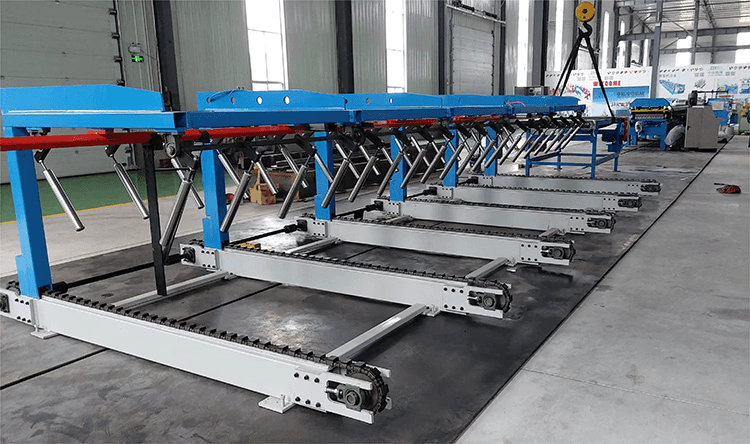
Discharging & Stacking Mechanism: Used to stably receive the cut finished glazed roof tiles and complete automatic stacking or conveying. Common types include inclined discharge racks, belt conveyors, and automatic stacking robots with soft contact rollers to avoid scratching the glaze surface. The mechanism is designed according to the size and weight of the glazed roof tiles, ensuring safe and efficient discharging, reducing manual labor, and protecting the integrity of the glaze layer—critical for the product’s aesthetic and functional performance.
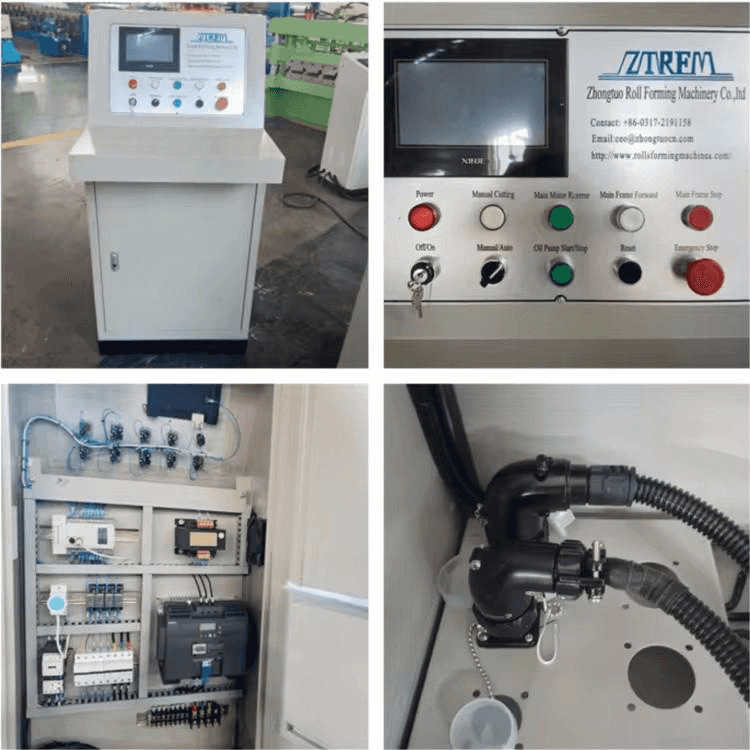
Intelligent Electrical Control System: As the “brain” of the entire production line, it controls all links such as motor start-stop, speed regulation, forming synchronization, glazing parameter setting, drying temperature control, cutting length adjustment, and production counting. Equipped with PLC from international mainstream brands (Siemens, Mitsubishi, Delta), a touch-screen HMI (human-machine interface), and high-precision sensors, the system supports multi-language switching (English, Spanish, Arabic, French, etc.) and is easy to operate. It also has fault alarm and self-diagnosis functions, helping operators quickly solve problems and ensure continuous production. The control system is paired with Schneider or Omron electrical parts for enhanced safety and reliability.
With the characteristics of full automation, high precision, and strong specialization, the Glazed Roof Tile Roll Forming Machine can process various metal coils to produce different styles of glazed roof tiles. The finished glazed roof tiles, with their elegant appearance, excellent weather resistance, and strong waterproof performance, are superior to traditional cement tiles in terms of lightweight, installation efficiency, and service life. They are widely used in various architectural projects, such as residential villas, commercial buildings, cultural relics renovation, tourist resorts, and rural housing projects, providing reliable, aesthetic, and durable roofing solutions for global architectural construction.
Video
http://
Warum sollten Sie uns wählen?
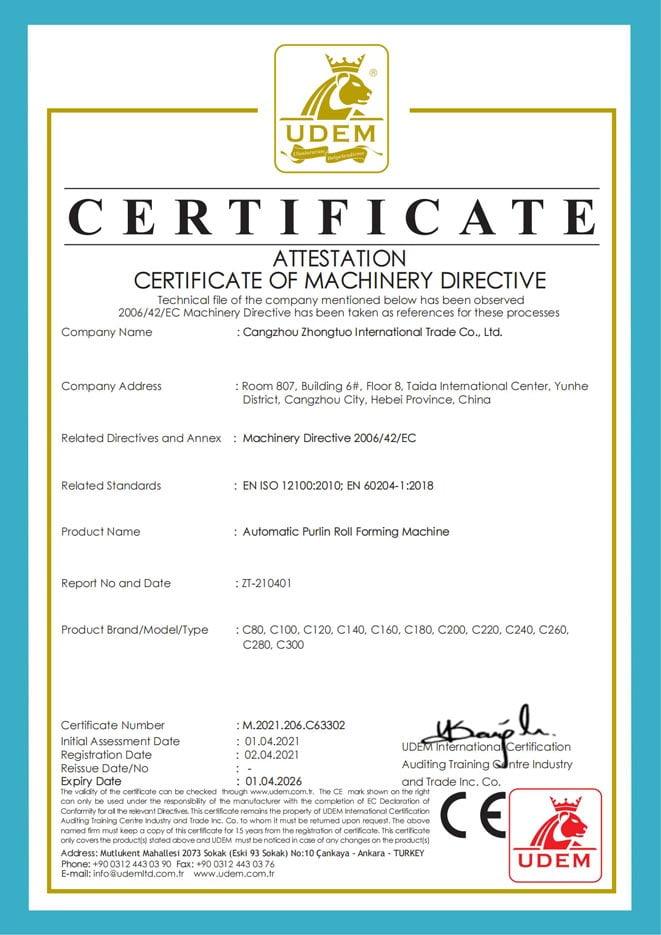
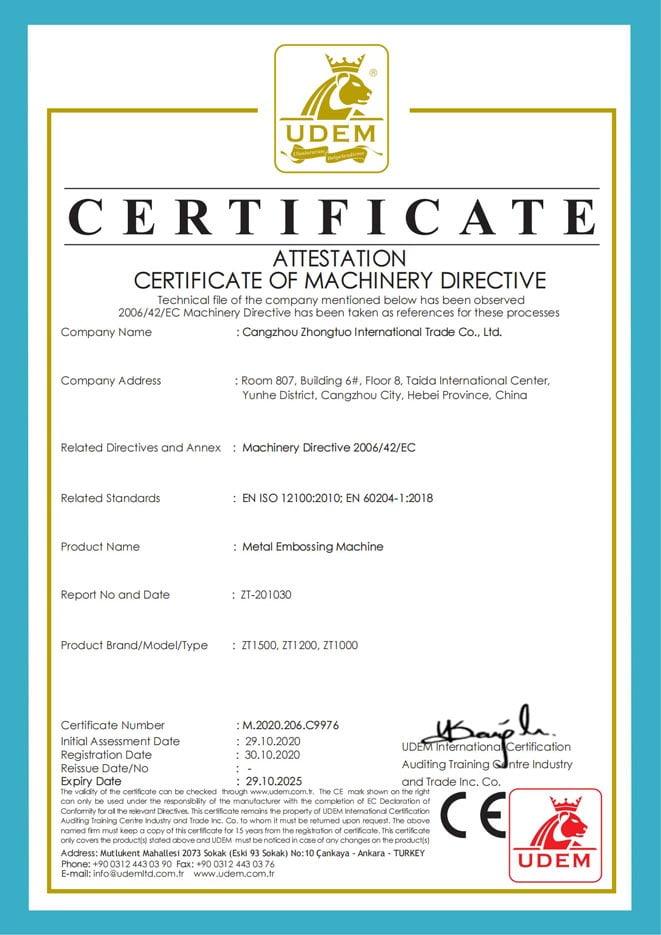
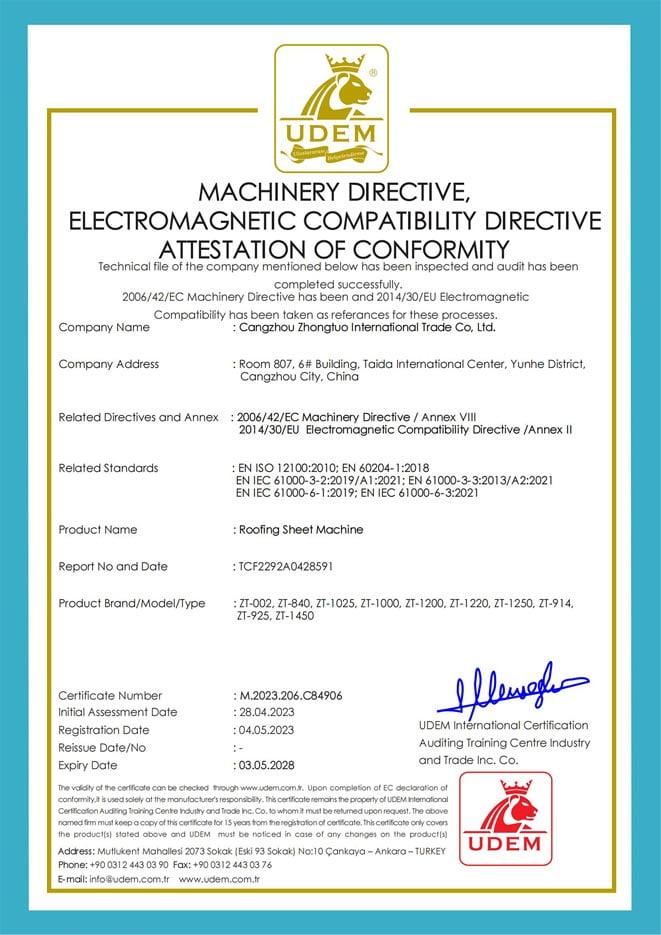
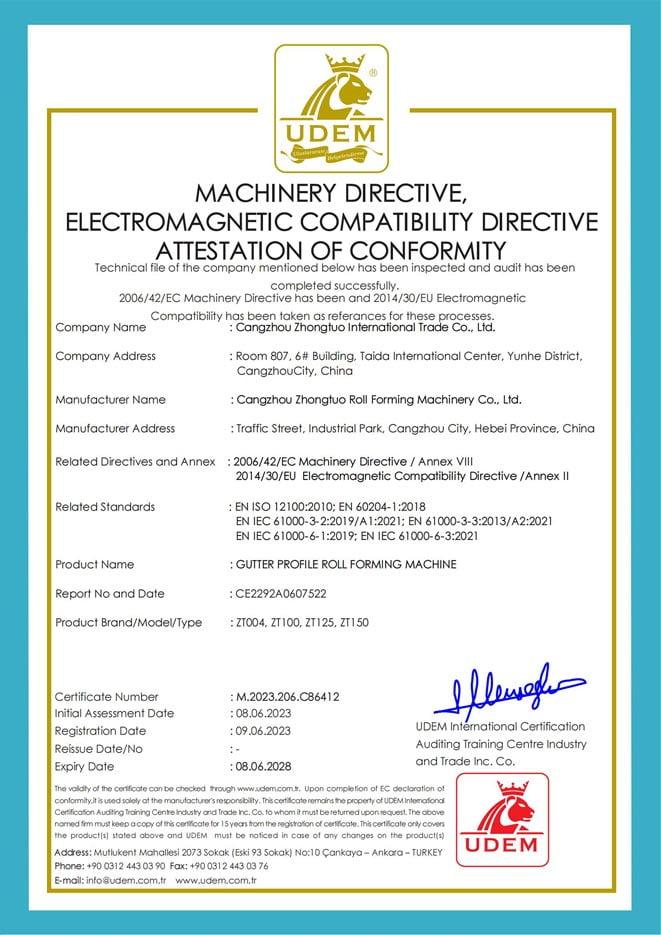
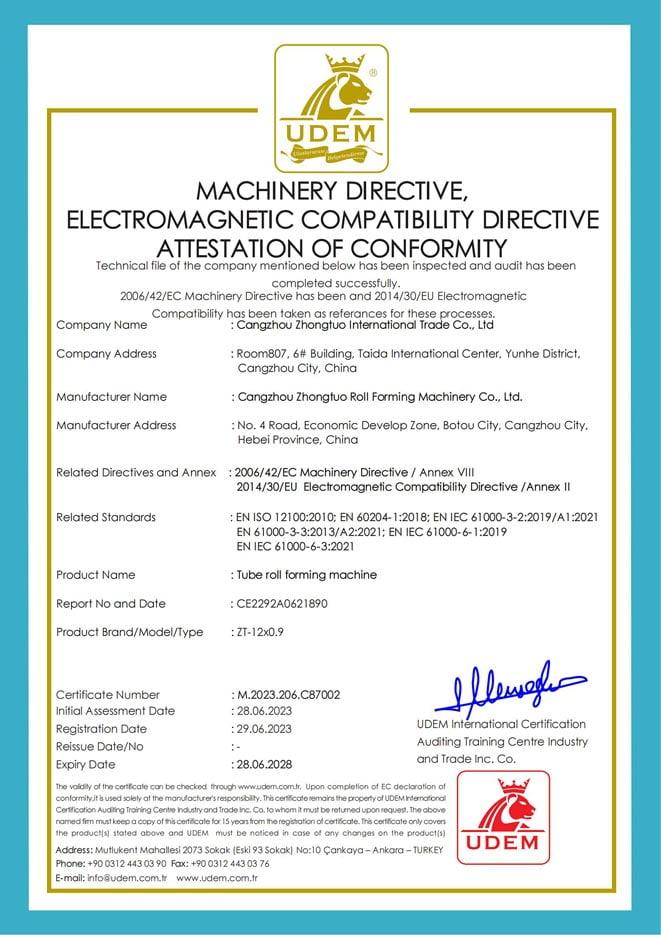
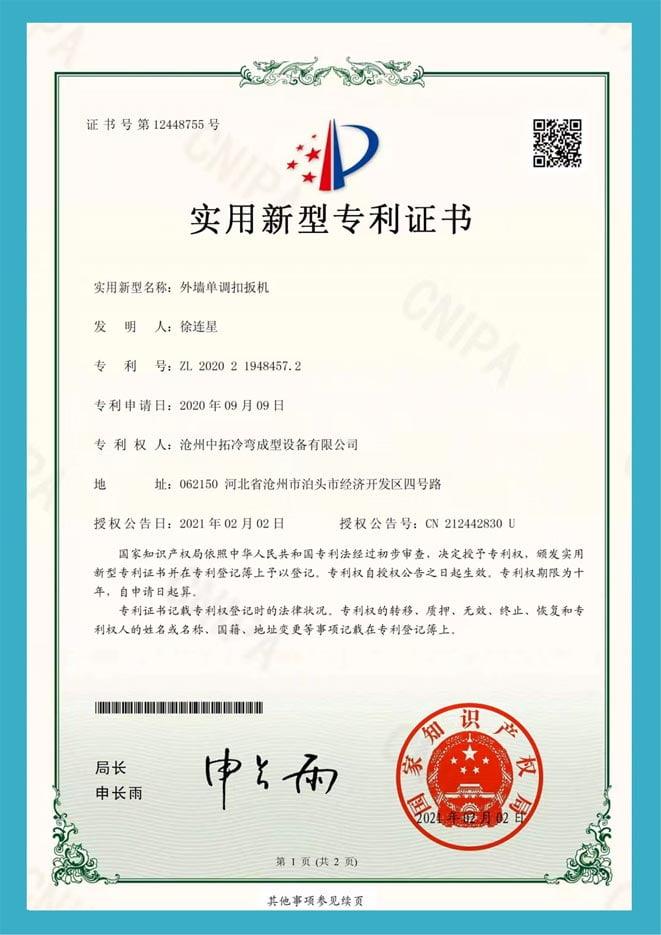
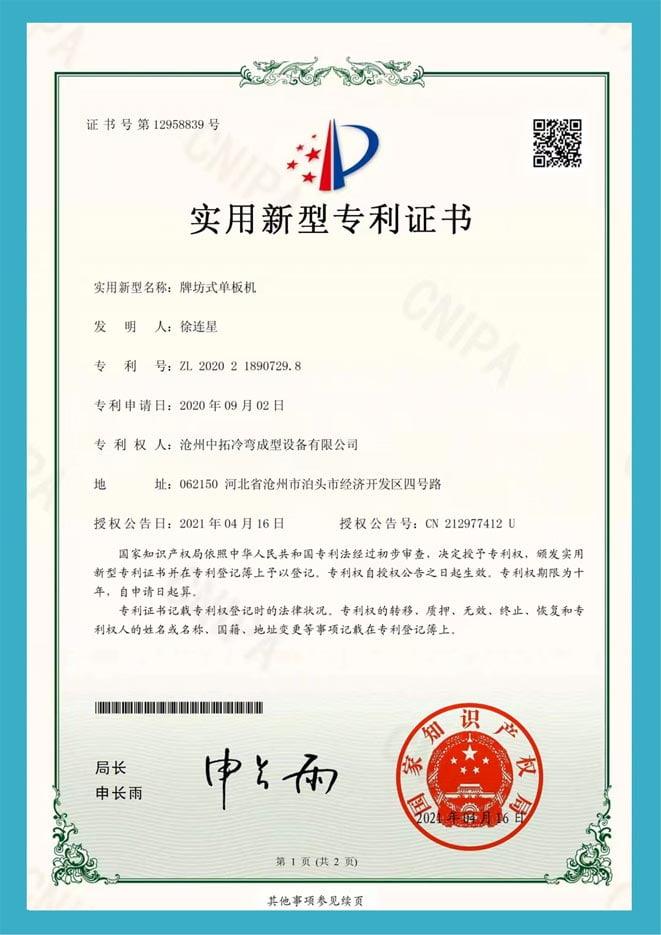
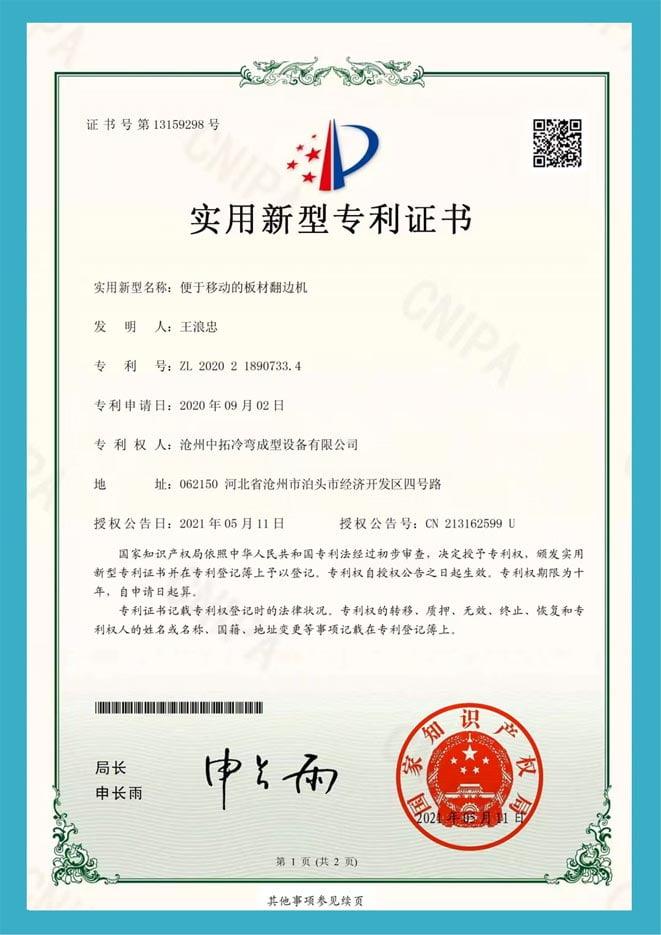
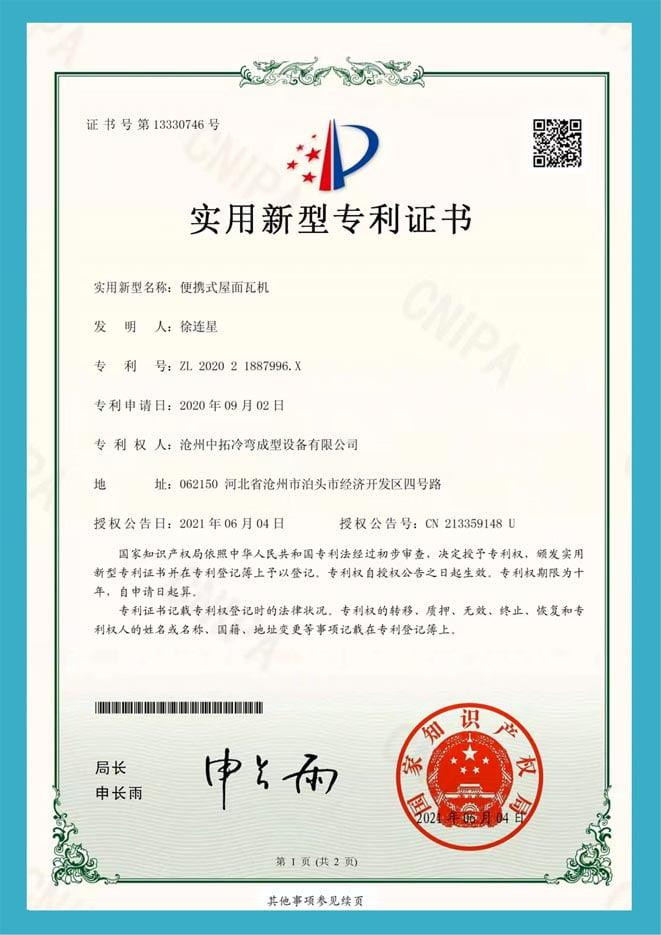
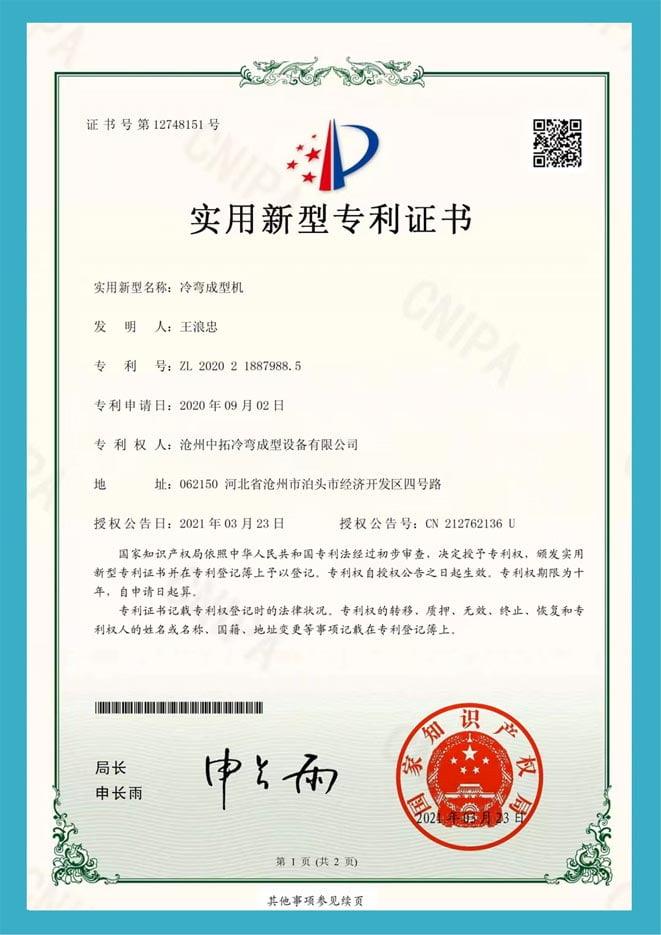

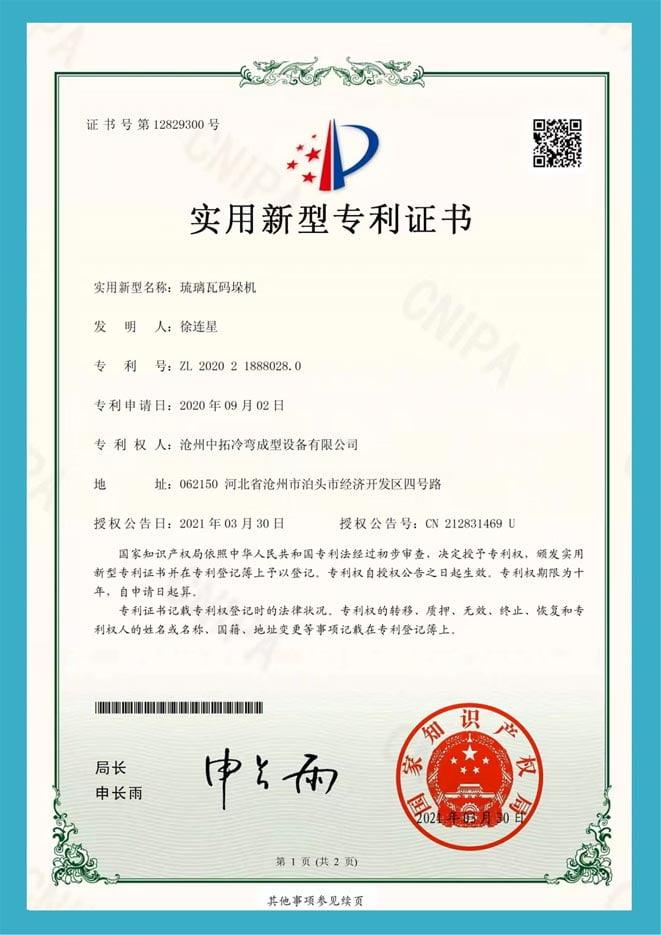
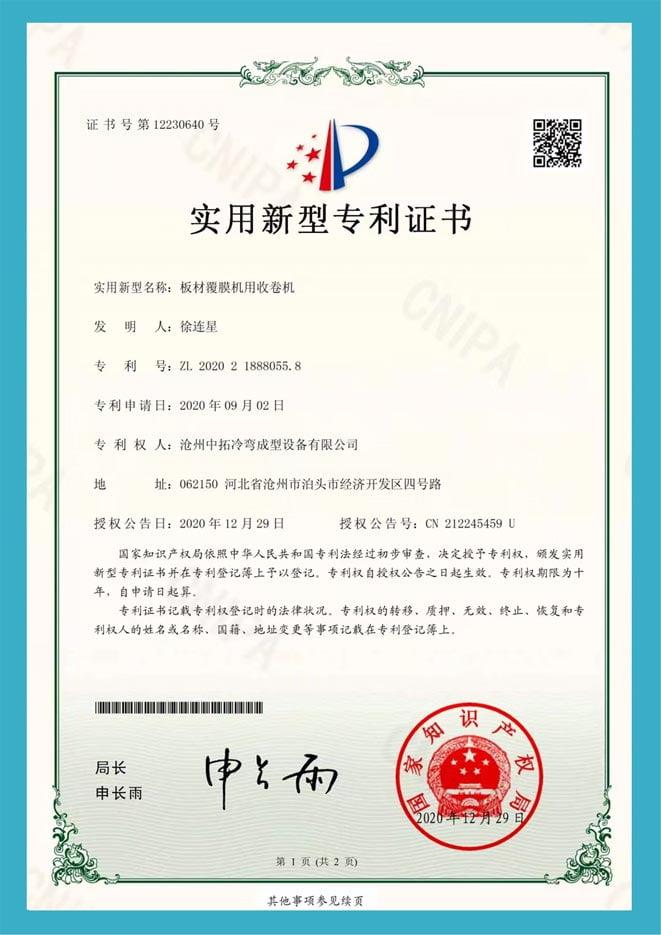

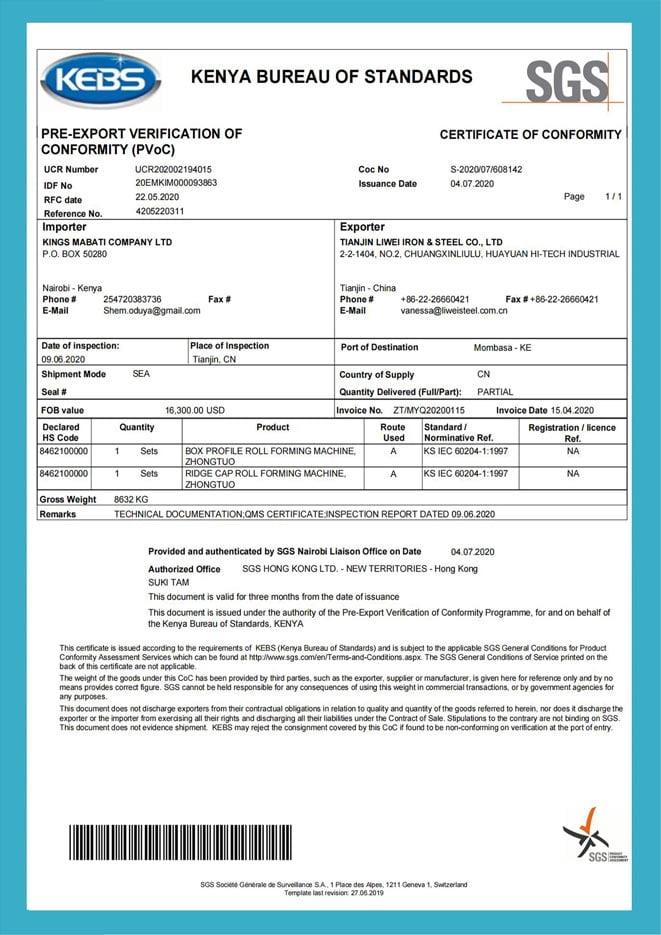
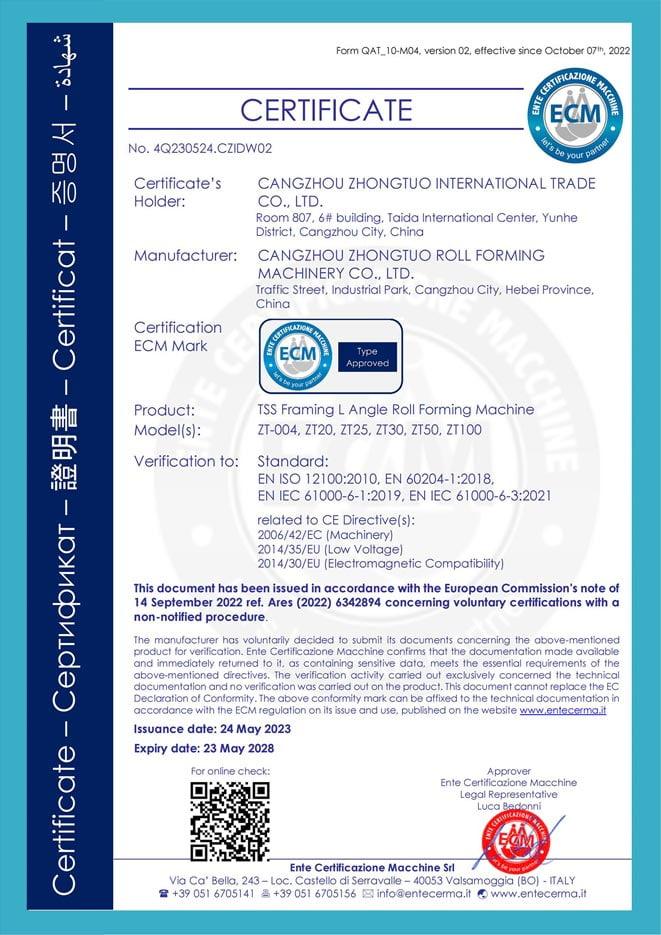
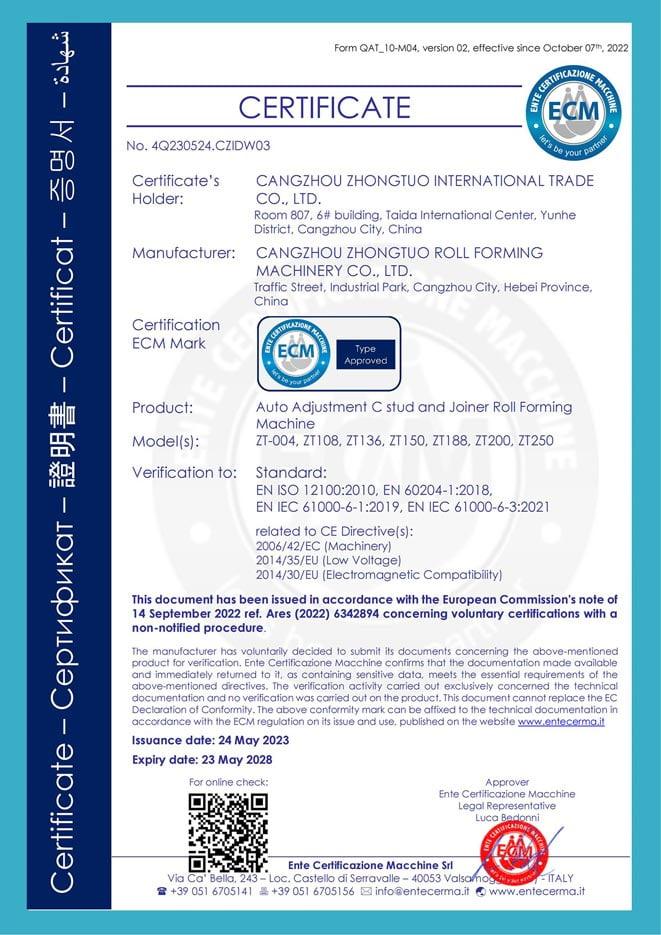
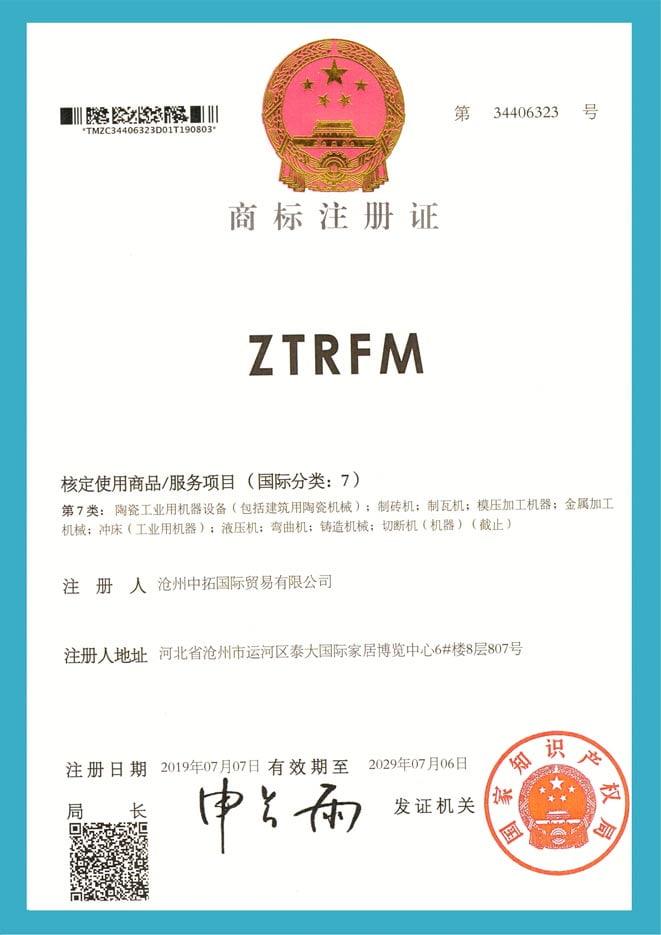
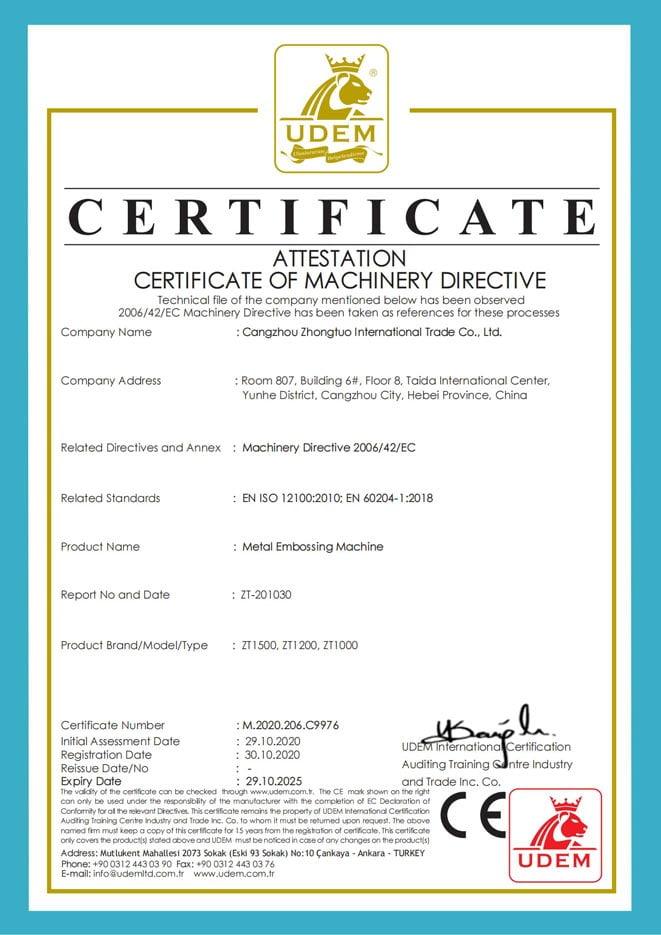
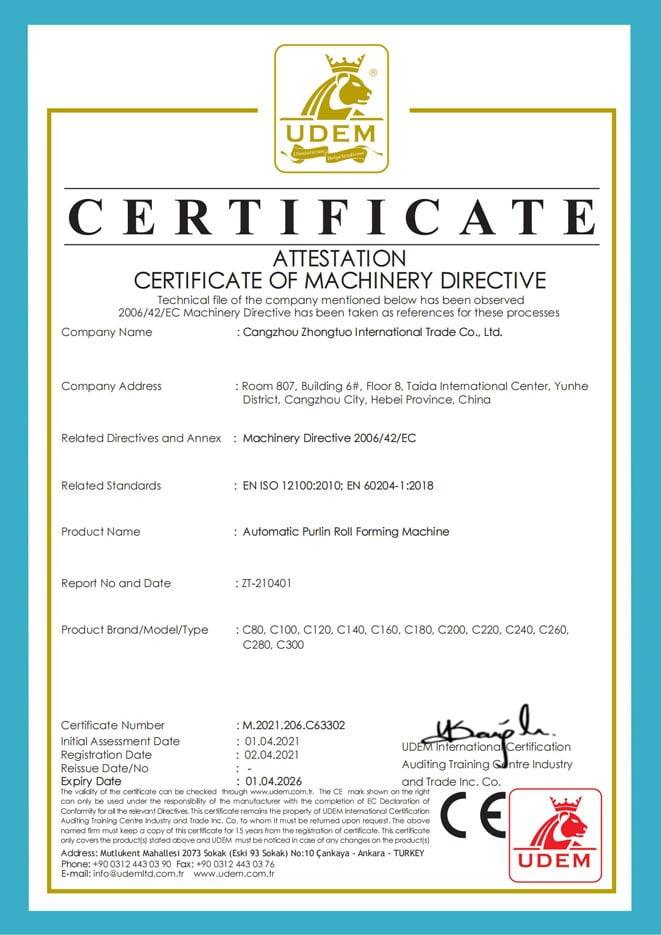
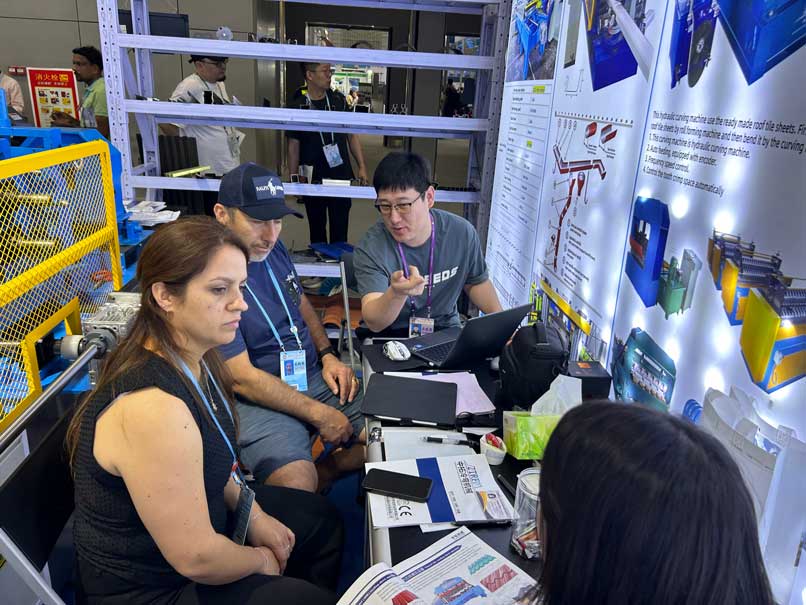
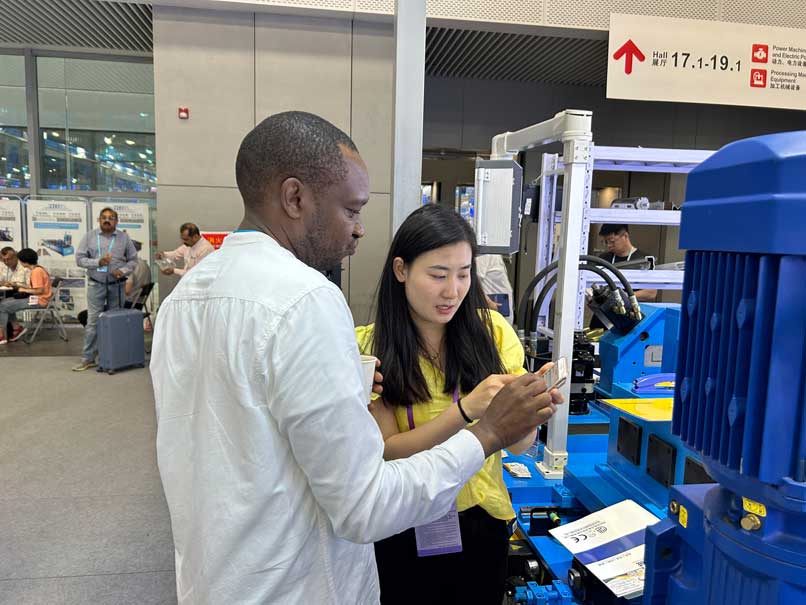
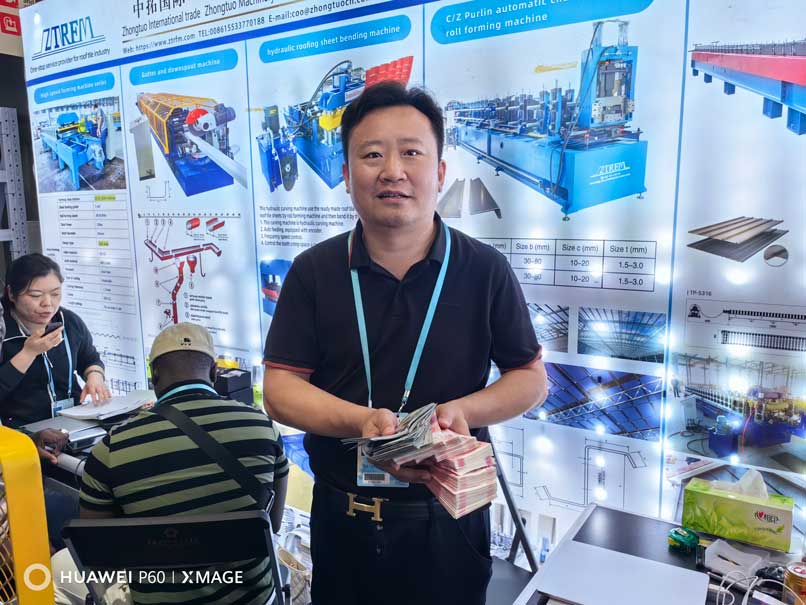
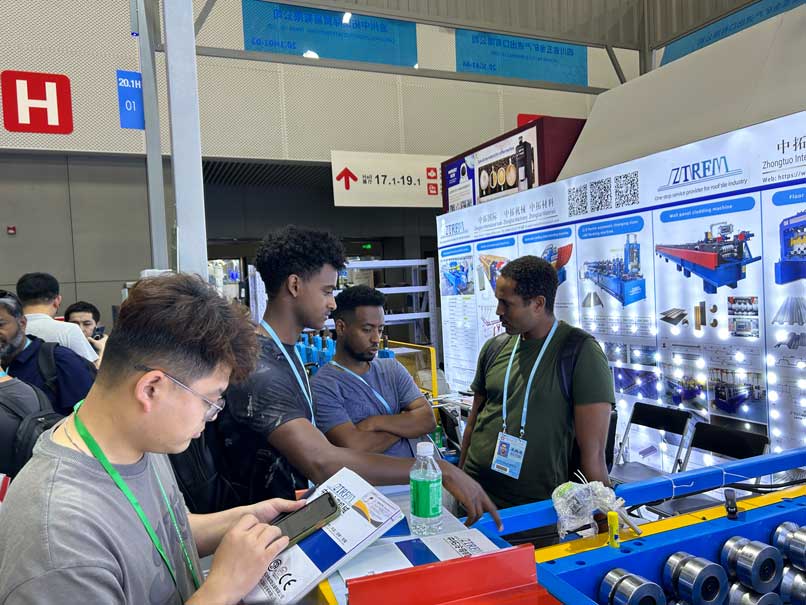
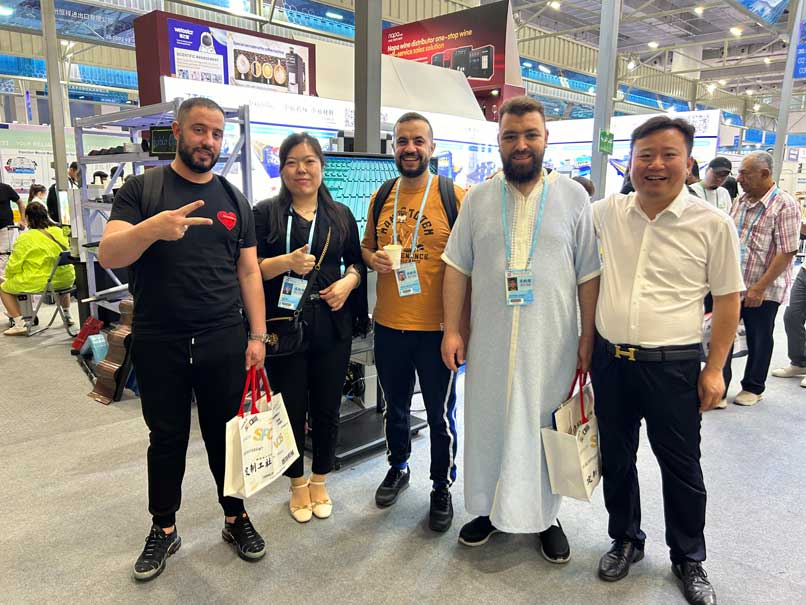
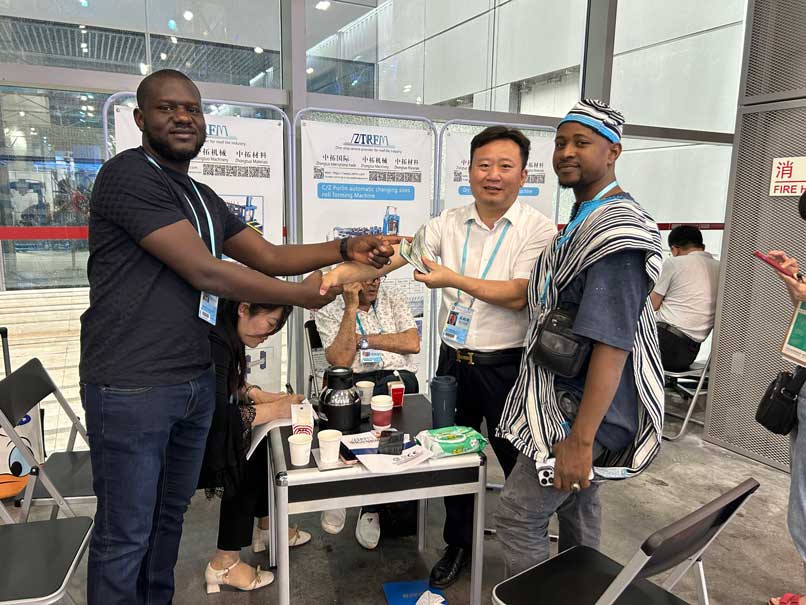
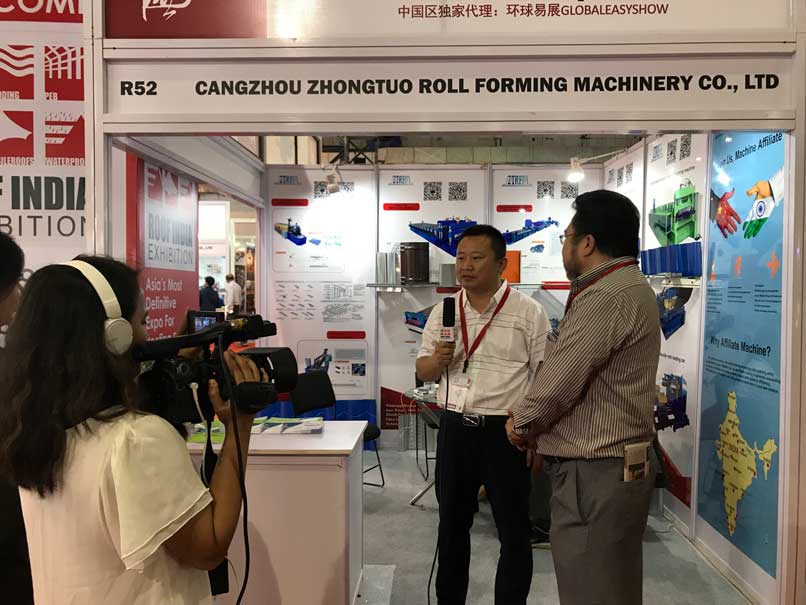
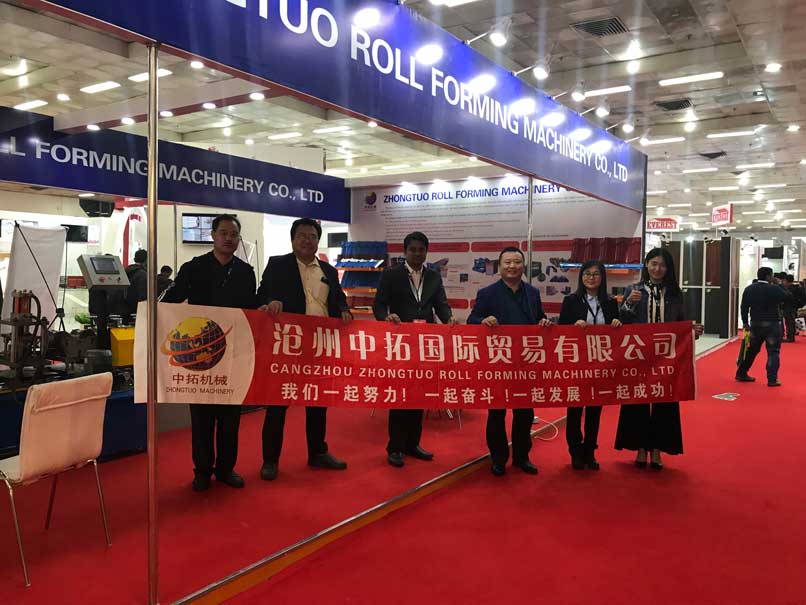
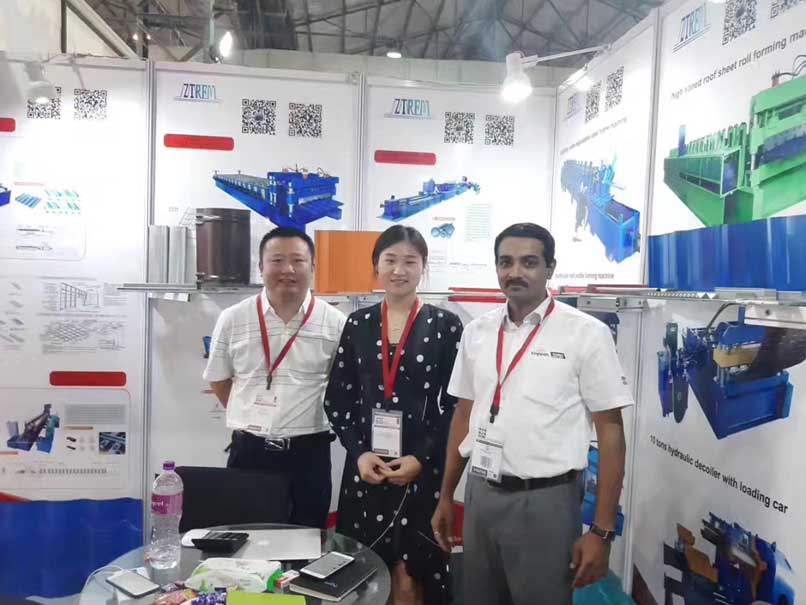
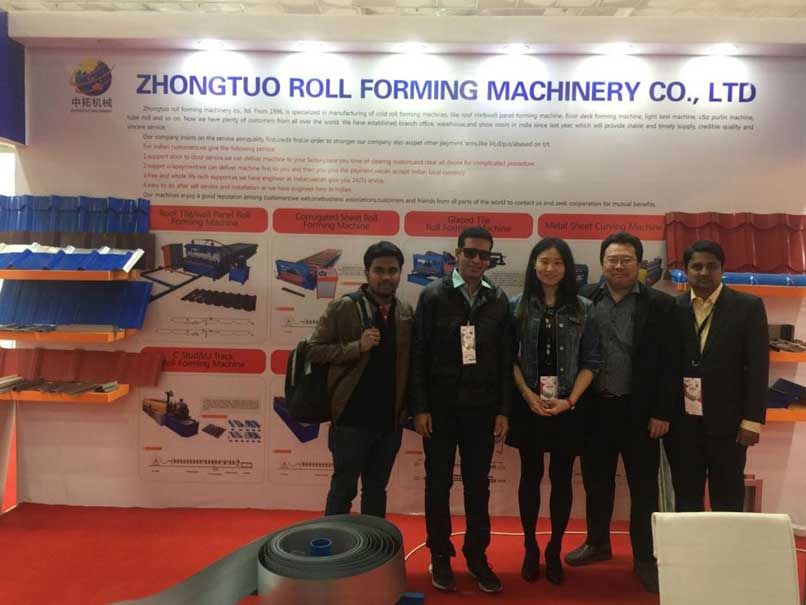
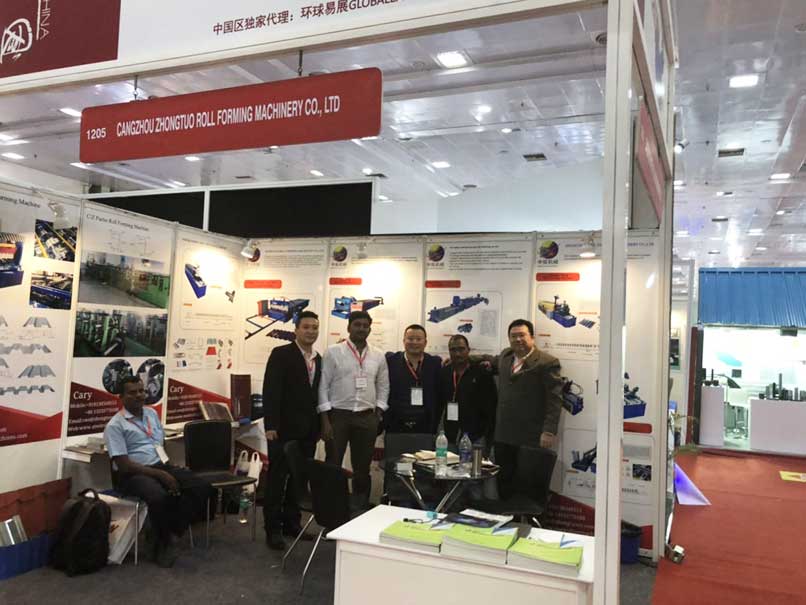
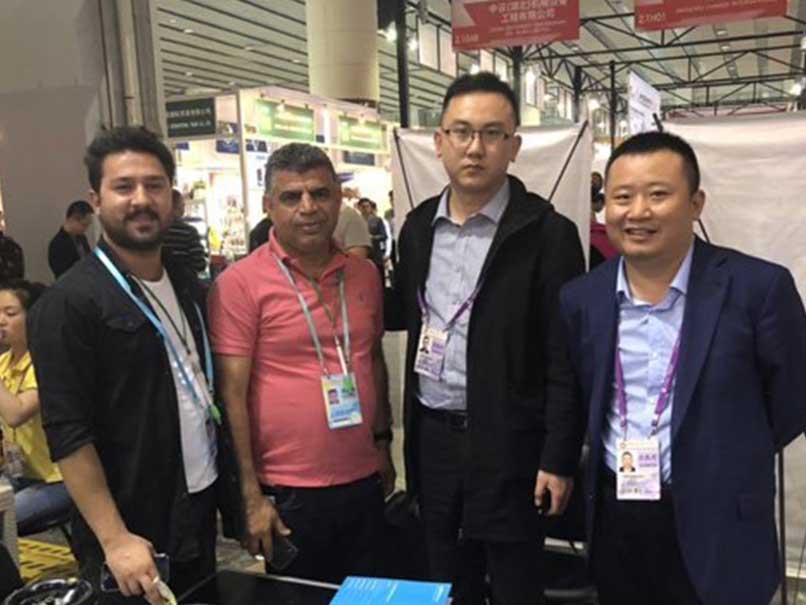
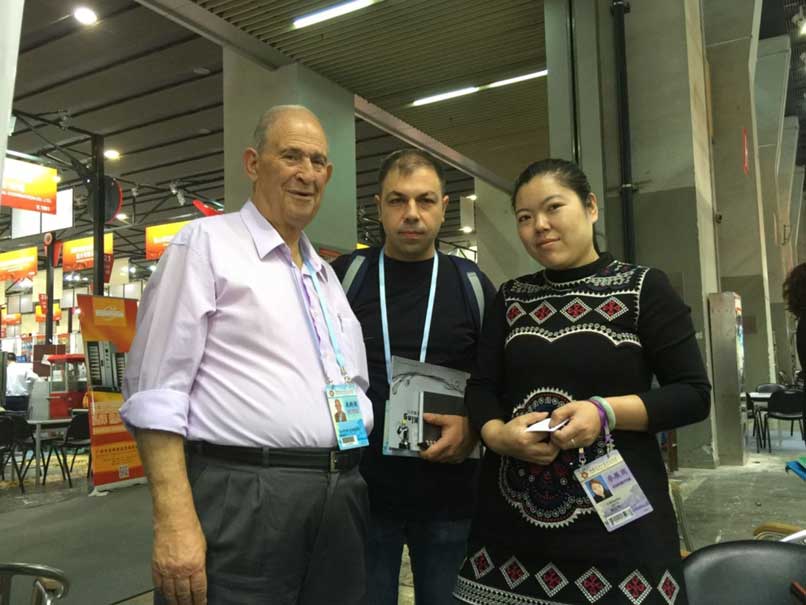
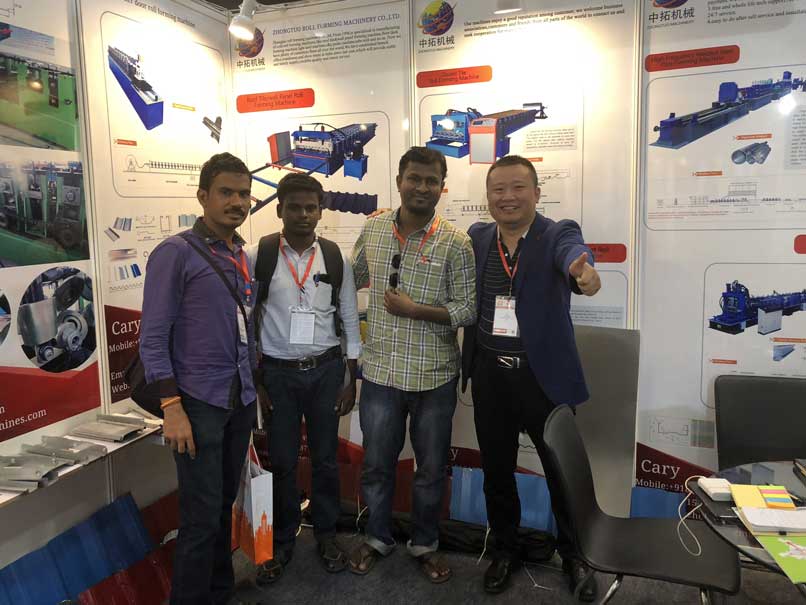
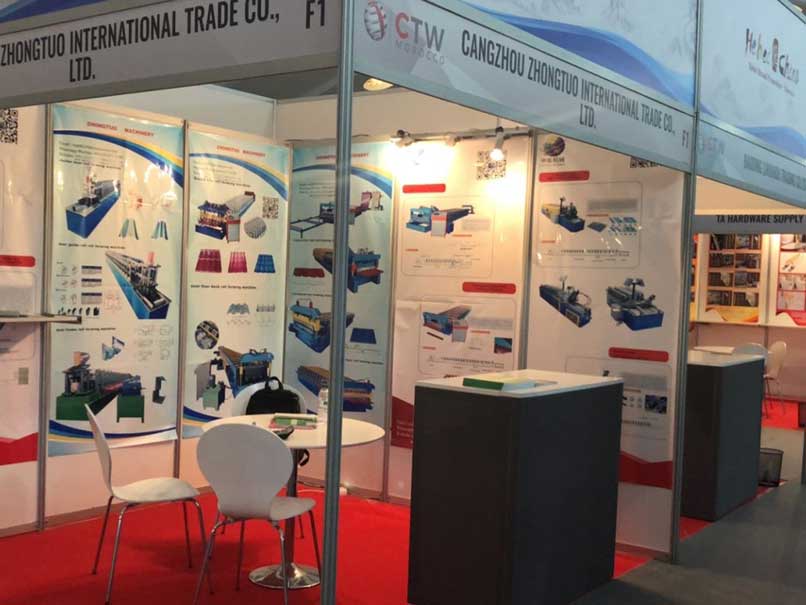
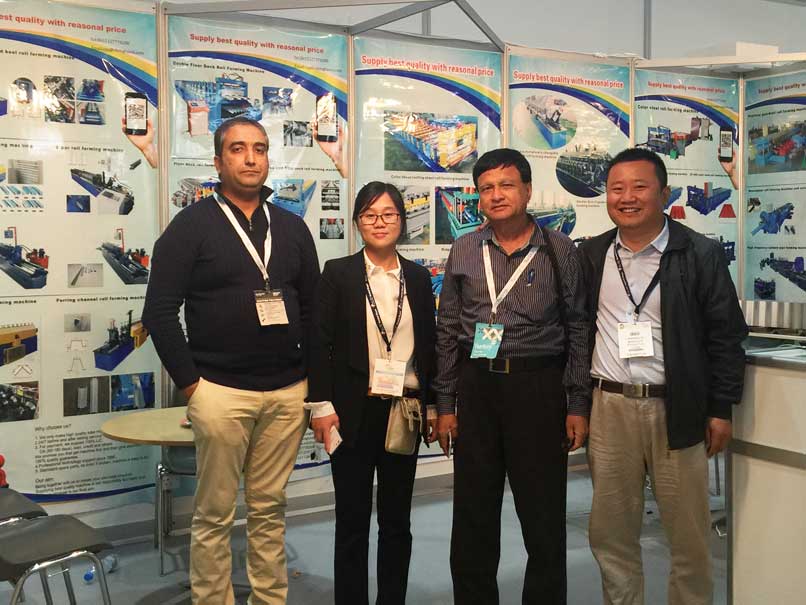
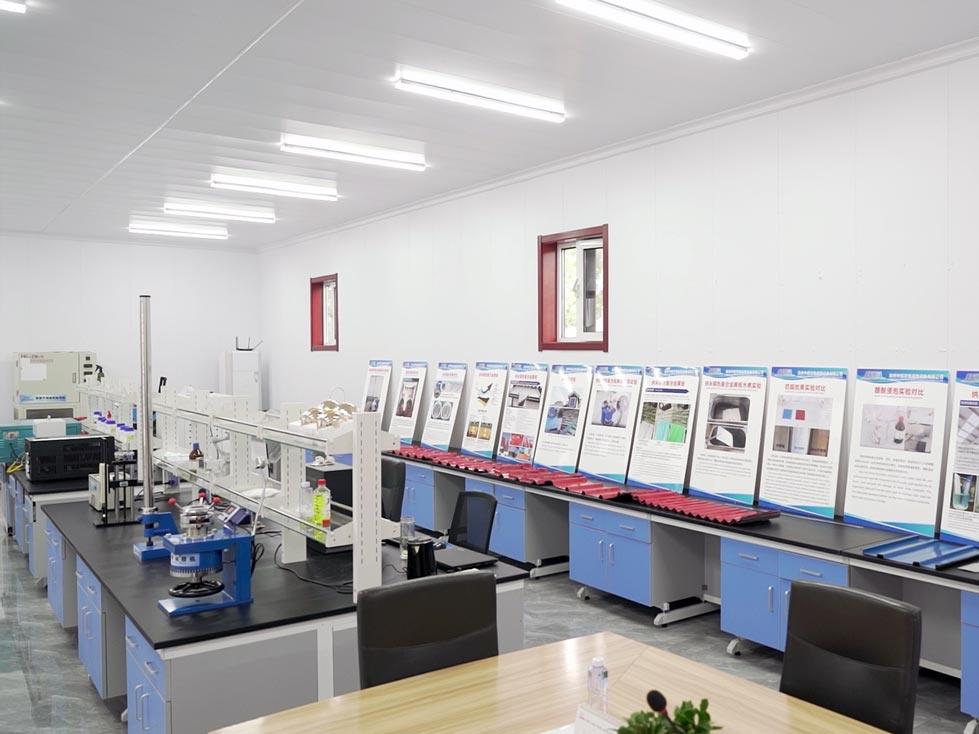
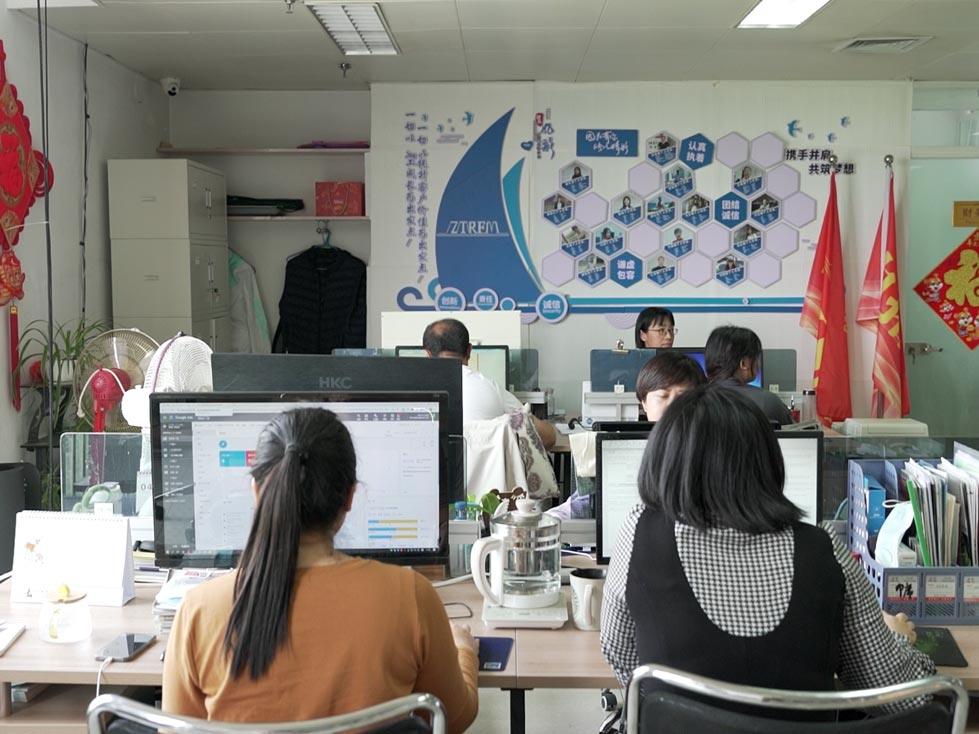
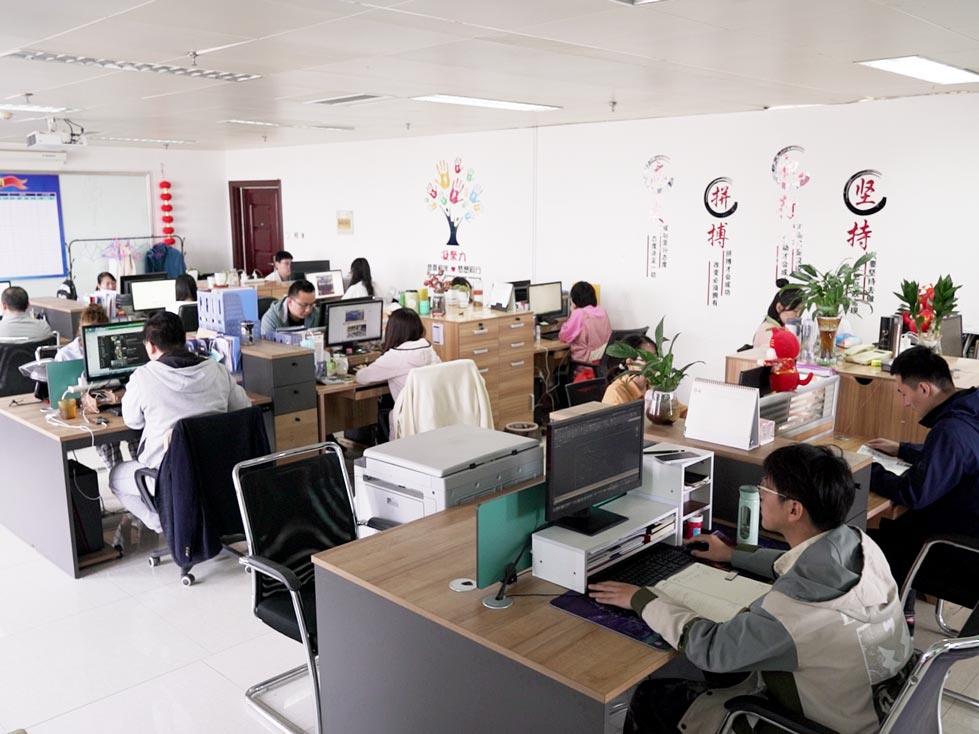
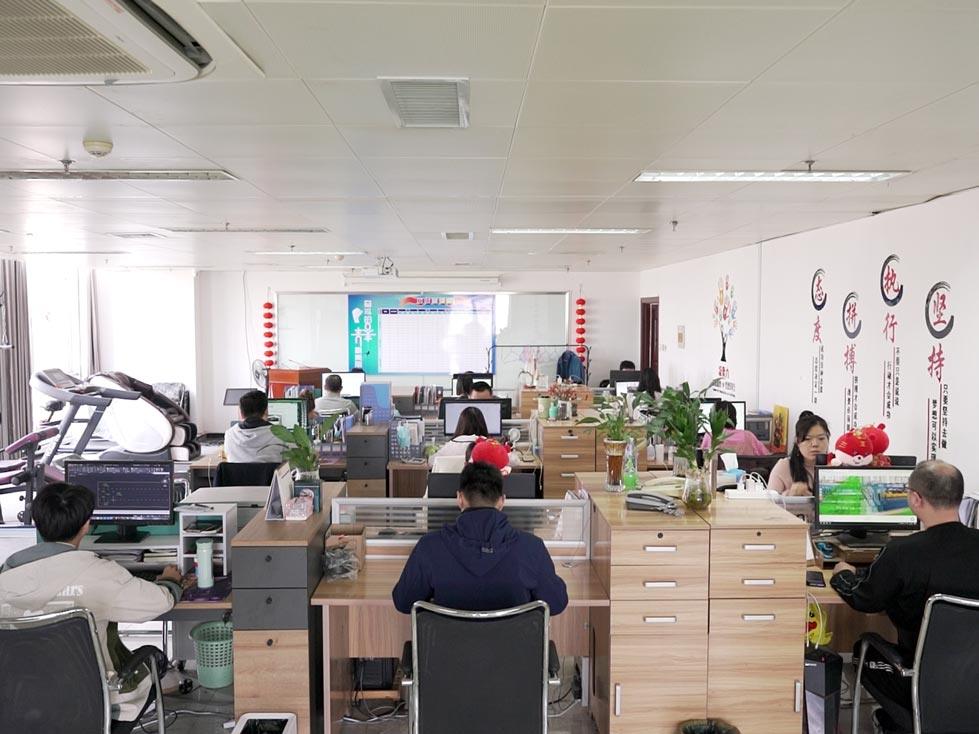
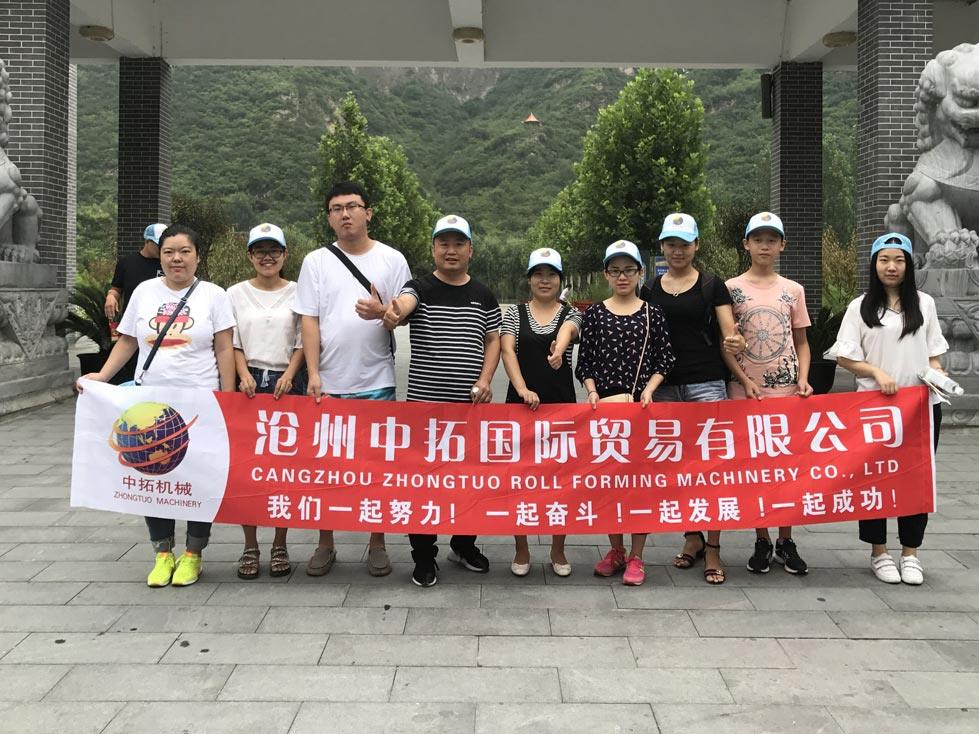
OEM/ODM und kundenspezifische Anpassung aus einer Hand
Umfassende Unterstützung durch den Kundendienst

Bereitstellung von OEM、ODM
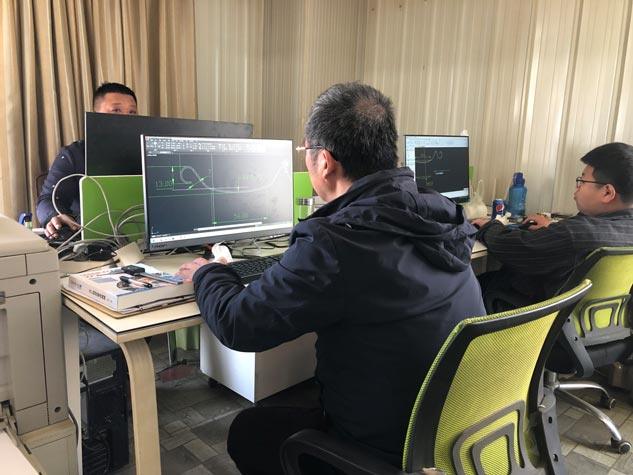
2.Technischer Entwurf: Anfertigung von Profilzeichnungen und 3D-Maschinenzeichnungen
3.die Konfiguration und die Produktion zu bestimmen
4.Prüfung vor der Auslieferung
6.Technische Anleitung
7.Kundendienst: Installationsdienste für komplexe Maschinen und regelmäßige Kundenbesuche
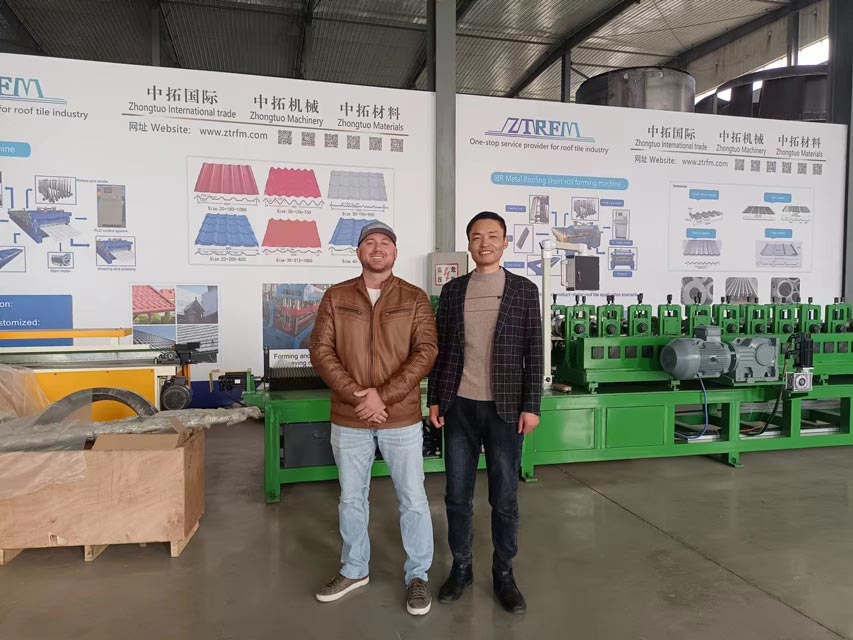
95800+ Unternehmen vertrauen auf uns
hochwertige Unternehmen. Durch die Zusammenarbeit mit uns haben sie Folgendes erhalten
starke Unterstützung und erzielte geschäftliche Durchbrüche und Entwicklungen.